Rail & Labor News from RWU
| | Weekly Digest Number 51 - December 16, 2025 | | Welcome to the RWU Rail & Labor News! This news bulletin is produced and emailed out each Tuesday morning. We hope you find each week's news and information useful. If so, please share with co-workers, friends, and colleagues. If you like, you can sign them up to get all the news from RWU HERE. Or forward them the link. Got a hot tip? Please forward the article and a link to raillabornews@gmail.com. Note: If you read over this news bulletin each week, you will be sure to never miss the important news of what is going on in the railroad world from a worker's perspective! | | THIS WEEK'S RAIL AND LABOR NEWS | | Editor's Note: In just over a week, we have had 2 fatalities, one on Union Pacific, the other here on CSX. While railroad work is inherently dangerous work, the hazards that lead to accident, injury and death can certainly be ameliorated. All accidents, injuries and fatalities are caused by hazards, period. Hence, the RWU safety slogan is - ad will always remain - "Fix the Hazards, Don't lame the Victims!" See the Campaign webpage Support Union-Based Safety Programs. | |
Trains / December 13
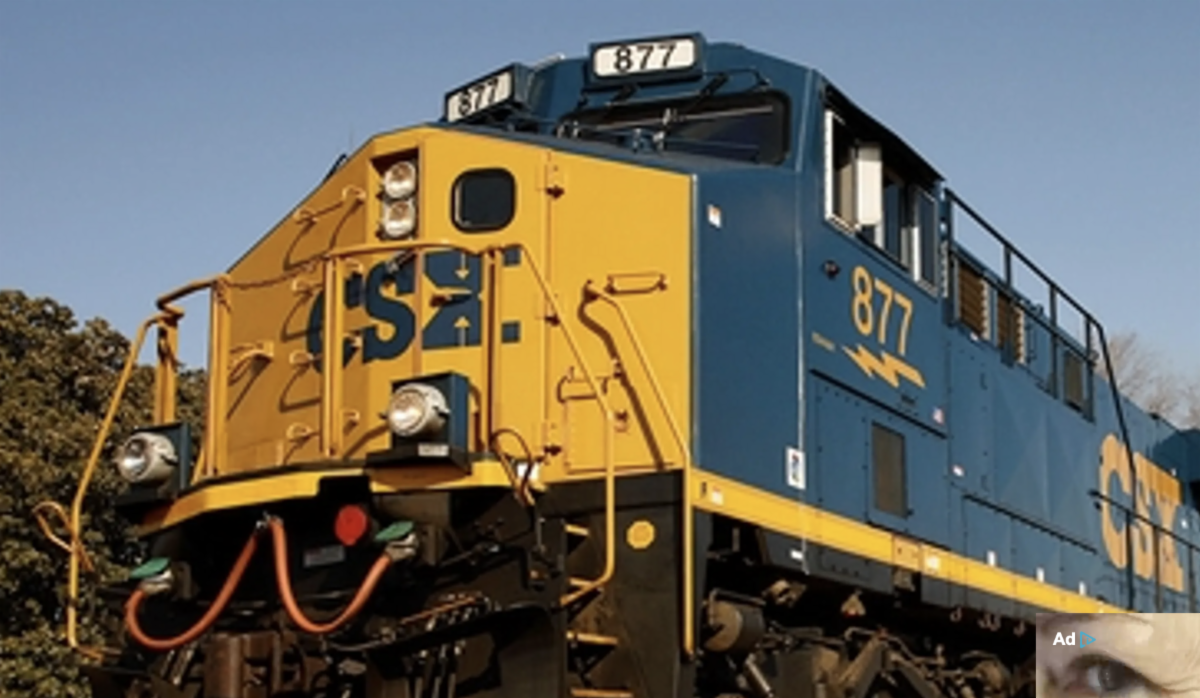
Charles Harrison, 52, a CSX employee, has died in a derailment today near Calera, Ala., the railroad has confirmed.
The railroad said in a statement that the employee was fatally injured in an incident at about 3:49 a.m. “while performing his duties near the Highway 22 crossing in Calera, Ala.
“Our hearts are with the employee’s family, loved ones, and coworkers during this incredibly difficult time. CSX appreciates the swift response of local first responders. The incident is under investigation. We are focused on supporting our employees and the family of our fallen colleague, and we are providing all available resources during this time of loss.”
In a Facebook post, the Shelby County Coroner identified the person killed as 52-year-old Charles Harrison of Mountain Brook, Ala., and said no other details are available for release at this time.
The International Association of Sheet Metal, Air, Rail, and Transportation Workers-Transportation Division, which represents conductors, said in a Dec. 14 post on its website that Harrison had been a member of the union since 2022, employed by Norfolk Southern until moving to CSX in 2023. “Our entire union family is deeply saddened today,” the union said. “Our thoughts and heartfelt condolences go out to the members of Locals 847 and 622, to Brother Harrison’s family and friends, and to all who knew and worked alongside him.” The union said its ability to comment further is severely restricted because the accident is the subject of an active federal investigation.
| | Editor's Note: In the United Sates, rail unions have been slow to catch on the idea of Public Rail Ownership. While there is discussion, only the United Electrical - UE (the union representing locomotive builders and train crew van drivers) - have formally endorsed the concept. Great to now see the largest union in Canada - home to 2 of the remaining "Class One" railroads CP and CN with more than 10,000 rail union members - sign on to the concept! | |
UNIFOR
Unifor’s National Rail Council and Public Rail Now (PRN) are pleased to announce the beginning of a collaborative effort to strengthen and expand public rail systems in Canada and the United States.
“This partnership strengthens our solidarity across borders and brings two important campaigns together with a shared goal of putting rail back into public hands,” said Lana Payne, Unifor National President. “By working alongside Public Rail Now, we are expanding the push for safe, reliable, publicly accountable rail systems that serve workers and communities, not private profits.”
This partnership reflects our shared commitment to rail infrastructure that prioritizes the public interest, strengthens communities, and ensures good, union jobs across the sector. It also reinforces Unifor’s long-term goal of building a safe, reliable, publicly accountable rail system for all.
| | Editor's Note: Opposition to the merger continues to build is the actual date for the official application to the Surface Transportation Board approaches. Earlier this fall, around the time that Union Pacific CEO Vena stated his company's "donation" to Trump's White House rebuild, The President announced his support for the UP-NS merger. Perhaps merger opponents, BNSF, CN and CP, should all get together and "donate" $2 million. Would it then be clear to the public that this is sheer bribery? Pay to play government at its finest? | |
Railway Supply / December 11
What was pitched as a transformative, multi-billion-dollar transaction is now caught up in procedural delays and a direct challenge from a major competitor, making the route to approval far less straightforward.
Pressure on the proposed merger picked up in early December, when BNSF Railway, one of Union Pacific’s main rivals, filed a petition with the U.S. Surface Transportation Board (STB). In this document, BNSF calls on the regulator to revisit and enforce conditions tied to Union Pacific’s 1996 acquisition of Southern Pacific. The petition alleges that Union Pacific engaged in “obstructive behavior” that harmed customers and weakened competitive balance, and insists that these legacy issues be resolved before the STB rules on the new, industry-shaping merger proposal.
At the same time, regulatory scrutiny is complicated by slippage in the formal filing schedule. The merger application, running to more than 4,000 pages, is now expected to be submitted around December 16 instead of in late November as originally planned.
Union Pacific CEO Jim Vena attributes the change in timing to an external service provider needing additional time to complete part of the documentation. This postponement comes just before an expected STB review window of 12 to 18 months for the Union Pacific rail merger, underlining how long the regulatory process may weigh on both companies and their customers.
| | Editor's Note: There is some real politics afoot here. And while we agree that these funds are better spent on the front-line workers than on executive leaders bonuses, this is window dressing. That $900 amounts to less than a 50 cents per hour wage increase over the course of a year of a full-time (2000 hour) job. It is part of the propaganda to make Amtrak management appear to be a waste of public money and a drag on workers wages. In fact, the average Amtrak executive compensation (including base salary and bonuses) is $230,927, with the highest paid at $652,000. Compare this with what the Class One freight execs pull down., for example, Trump's buddy at Union Pacific, James Vena. His yearly compensation is $17.64 million, more than 30 times that of the Amtrak CEO. In addition, Vena owns $27.61 of corporate stock. Perhaps we are missing the forest for the trees when we focus on the relatively paltry compensation of Amtrak executives. | |
Progressive Railroading / December 12
More than 18,000 Amtrak unionized workers will receive a $900 bonus to recognize the railroad's record year of ridership and revenue, President Donald Trump's administration announced yesterday.
At the urging of the Trump administration, Amtrak's executive leaders will forgo 50% of the bonus packages that would have been paid under the previous executive bonus structure. In addition, Amtrak's board agreed to eliminate long-term incentive bonuses for senior executives and voted to distribute those funds to Amtrak unionized front-line workers, according to a U.S. Department of Transportation press release.
“We applaud Amtrak and its executive leadership team for doing the right thing,” said U.S. Transportation Deputy Secretary Steven Bradbury, U.S. Transportation Secretary Sean Duffy’s representative to Amtrak's board.
Some unions endorsed the decision to distribute the $900 bonuses to workers.
"Amtrak is making real progress. The system is seeing record ridership and revenue, expanded service and improved customer service," said Mark Wallace, national president of the Brotherhood of Locomotive Engineers and Trainmen, in the press release.
SMART-TD President Jeremy Ferguson added: "SMART-TD appreciates Amtrak’s decision to prioritize the men and women who keep our passenger-rail system running every day. Providing front-line employees with a meaningful bonus is an important acknowledgment of their dedication and service, especially during the holiday season."
| | Editor's Note: One may ask, whet the hell were they doing with a corporate jet fleet in the first place? They are a rail transportation company and the executives can travel by train, mingle with employees, and maybe learn something about their railroad when in transit to far flung locations around the system. Let's hope this fleet never flies again. For that matter, what about the other Class Ones? Do they have a similar fleet? You can bet the do! Let's push to ground their luxury flette of provate jets too! | |
Trains.com Staff / December 10
CSX has shut down its aviation department, which flew corporate jets to whisk railroad executives around the system and elsewhere.
The department, which had been in operation for 84 years and employed pilots and mechanics, was disbanded on Dec. 1, the railroad confirmed. A spokesman declined to release any details about the move, which comes a little more than two months since new Chief Executive Steve Angel joined the company.
A search of the Federal Aviation Administration registry showed a Gulfstream G280 registered to the company.
| | Editor's Note: Amtrak continues to rack up success stories wherever it adds new routes and frequencies. Sadly, the addition of new services are moving at a snail's pace. Imagine a genuine commitment to a passenger rail renaissance, with ample funding and a government that was not a doormat to the Class One freight carriers. We could take millions of cars off the highways, dramatically reduce carbon emissions along with the highway death toll, and create thousands of good rail union jobs across the country. The demand is there. Build it and they will come! | |
Progressive Railroading / December 8
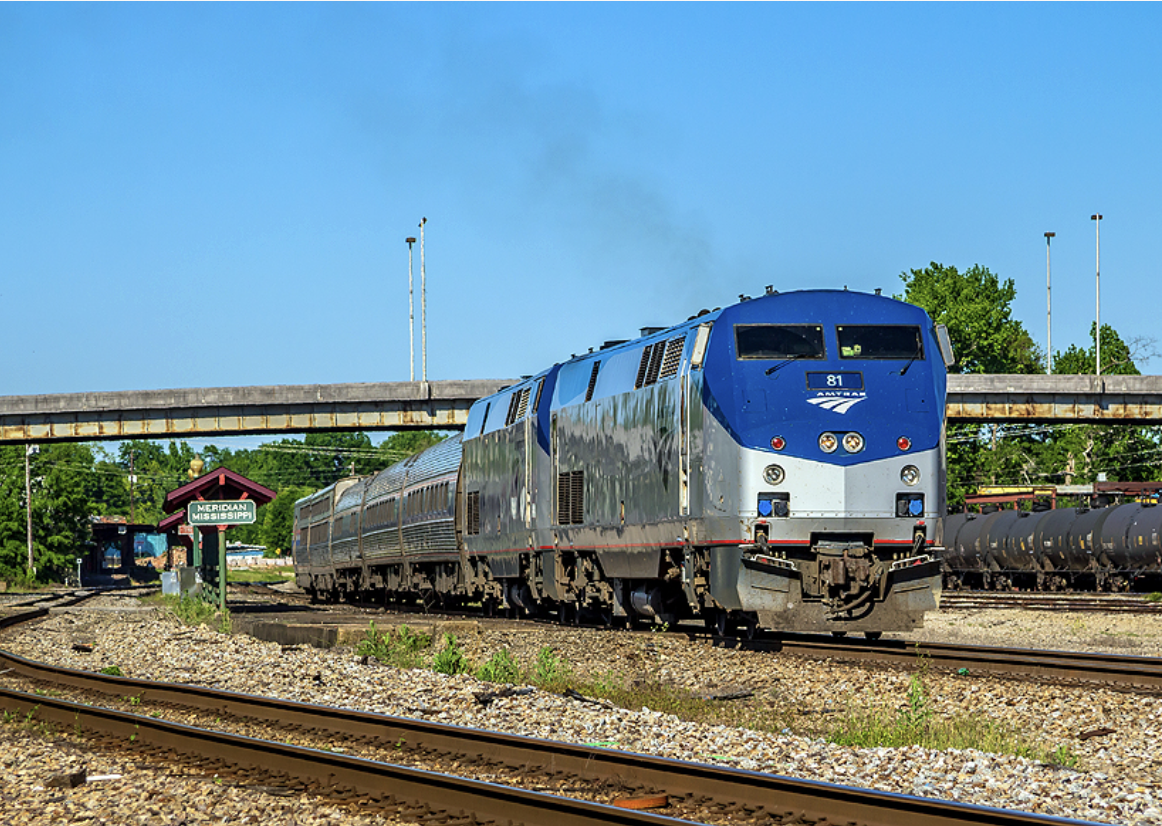
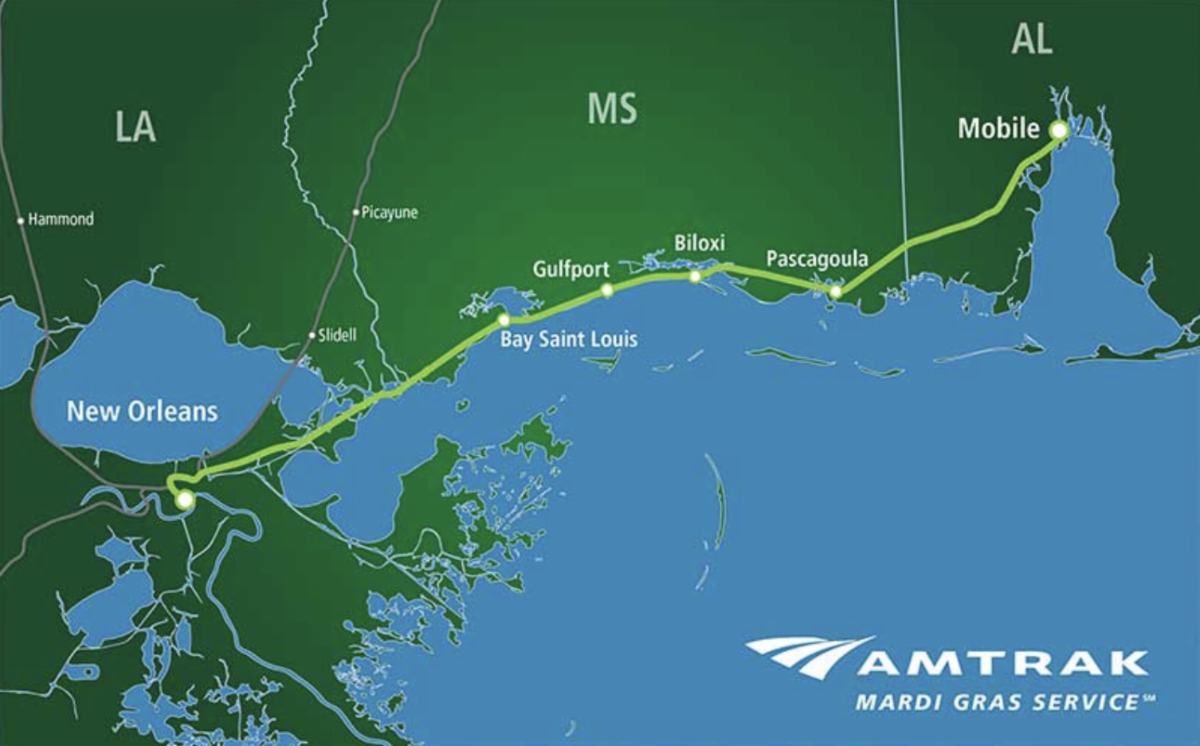
Amtrak's Mardi Gras service along the Gulf Coast has served over 46,000 riders since it launched Aug. 18, marking one of the most successful launches of new routes in the national intercity passenger railroad's history.
More than 18,000 people rode the Mardi Gras train in its first month of service, Amtrak officials said in a press release.
"We are well on-track to double the original estimate,” said Amtrak Chairman Anthony Coscia. “Demand is very high across our network.”
Operating between Mobile, Alabama, and New Orleans, the route reestablished Amtrak service along the Gulf Coast for the first time since Hurricane Katrina struck the region in 2005.
“The success of Amtrak Mardi Gras Service truly shows what we and the champions of this project have believed for years: Passenger rail is essential to the future of mobility along the Gulf Coast,” said Southern Rail Commission Chair Knox Ross.
| | Editor's Note: This 28 minute, often humorous yet deadly serious dissection of "Precision Scheduled Railroading" (PSR) and the rail carriers' drive for profits was produced last year and is well worth a look at. (An RWU member actually has a cameo appearance). While it is occasionally inaccurate (not bad considering the folks who made it do not work on the railroad), its message will surely resonate with every railroad worker, especially when Hunter Harrison - the godfather of PSR - speaks at a Congressional hearing in an extremely candid and rare moment regarding the "blood on his hands." (around 20 minutes into the clip) | | Editor's Note: This rather morbid and perhaps exaggerated "Anthem" apparently came out sometime last year. Interesting to see the various productions that are popping up out there, emblematic of the deep discontent out there among railroad workers, their families, trackside communities, and the general public. | | Editor's Note: In 1877, workers across the country shocked the rich and powerful when they shut down the railroads in the first national industrial strike, sparking rebellions and even take-overs of major cities. Public Rail Now Organizer Adam Barrington explains the significance and the importance of the Great Rail Strike that swept across the country nearly 150 years ago, and talks about its significance for rail workers - and all workers - today. | | | | In 1877, workers across the country shocked the rich and powerful when they shut down the railroads in the first national industrial strike, sparking rebellions and even take-overs of major cities. What can this explosion of working class power teach us today? | | Editor's Note: Switzerland is a small country, less than 10% the size of the U.S. Yet they are going all-in for single carload freight. Imagine what could be done here in North America if we had a publicly owned and operated rail system like Switzerland that could make these sorts of investments in getting trucks off the highway and carload freight onto the rails where it belongs. | |
Mark Simmons / December 9
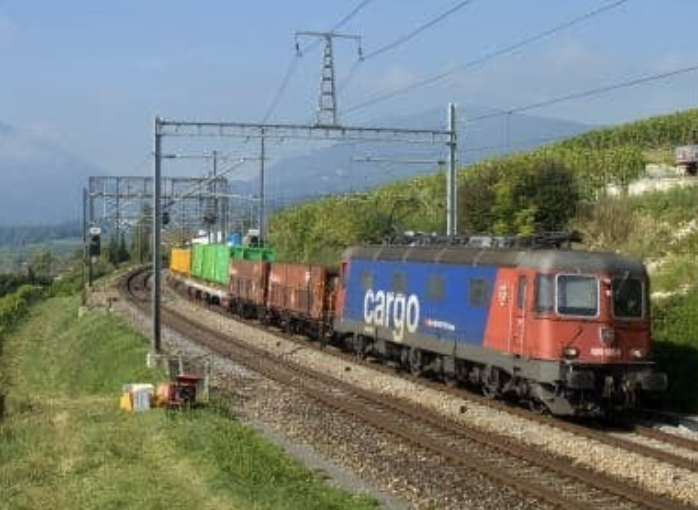
The Swiss government is to provide SFr 260m ($US 322m) of funding over the next four years to support single wagonload freight traffic. The money is tied to a service agreement that was tendered by the government earlier this year. Swiss Federal Railways (SBB) was the only bidder.
The service agreement is based on the revised Freight Transport Act (GüTG), with which parliament decided earlier this year to fund single wagonload traffic for a limited period of eight years, divided into two tranches. The funding for the first four years will be used to reduce the impact of price increases on customers. It will also support SBB's existing investment in the automation and digitalisation of single wagonload traffic to ensure its future viability.
The government aims for single wagonload traffic to become economically self-sufficient within eight years. To do this it will have to reverse current heavy losses. In 2024, SBB Cargo Switzerland, the wholly-owned subsidiary of SBB, recorded a loss of SFr 81m on single wagonload services.
| | Editor's Note: Hurray for public ownership and re-nationalization of the UK railroad industry after three decades of late trains, skyrocketing fares, and passenger dissatisfaction amidst mass confusion and chaos that has held sway (not to mention the cataclysmic train wrecks that took the lives of scores of passengers when the system was first privatized). | |
RailTech.com / December 9
Britain’s railways are set for a historic transformation, and the UK government just unveiled what the new Great British Railways (GBR) will look like. New branding will begin appearing on trains, stations and digital platforms from next spring. With fares frozen for the first time in 30 years and a new visual identity, the reforms aim to create a railway that is reliable and accountable, back in the government’s hands.
The Railways Bill, debated in the House of Commons this week, will merge 17 separate organisations into a single, publicly owned entity: Great British Railways. Seven major train operators — covering a third of all passenger journeys — are already under public control, and GBR will absorb the remaining functions of rail infrastructure manager Network Rail, the Rail Delivery Group, and passenger franchises as their contracts expire.
| | Editor's Note: The momentum is most likely there to carry this ill-fated project to conclusion. While it has been bungled endlessly, it is not surprising. The U.S. has never engaged in the creating of a high-speed project of this nature and is more than a half-century behind the rest of the world when it comes to creating high-speed rail lines. And yes, California could have settled for "higher speed rail" and more easily and cheaply developed existing rights-of-way and been operational by now. But for better or worse, the mission forges ahead and when it one day is complete, will no doubt be a success. | |
Mark Simmons / December 11
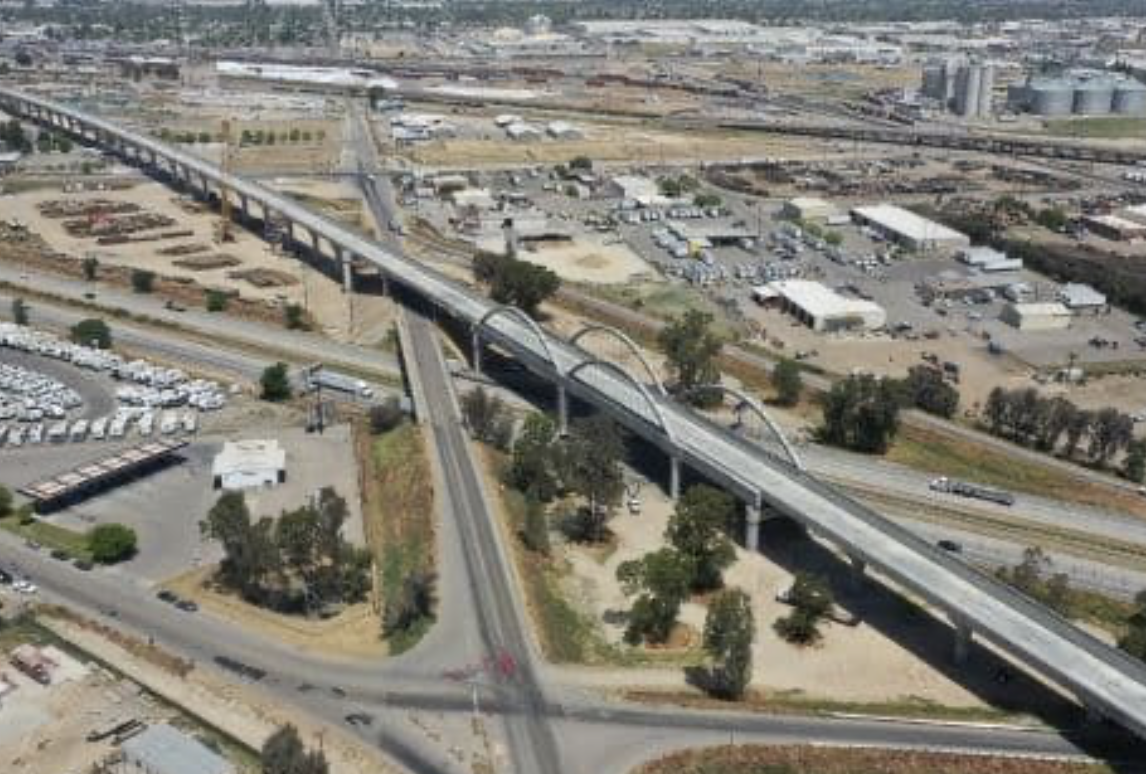
Ian Choudri left the supply industry a year ago to step into the hot seat as the CEO of the California High-Speed Rail Authority. In an exclusive interview with IRJ’s Mark Simmons, he describes his vision for the project to connect San Francisco with Los Angeles by high-speed rail.
California’s Central Valley stretches far to the horizon, a landscape marked by rich farmland and sprawling towns. Within 10 years, if the vision of California High-Speed Rail Authority (CHSRA) CEO Ian Choudri comes to fruition, it will also be home to the United States’ first true high-speed line, a transformative corridor that will connect the powerhouse economies of Los Angeles and San Francisco, while driving opportunity deep in the heart of California.
The project’s ambition is matched only by its complexity. Since its inception three decades ago in 1996, CHSRA has wrestled with political headwinds, intense regulatory scrutiny and the ever-present issue of funding. Now, with Choudri at the helm, a bold new effort is under way to overcome these daunting challenges by combining international best practice with resolute leadership.
| | Editor's Note: Perhaps it is time to reconsider the whole idea that the rail industry has its own police force. Not only are they meddling in civil affairs that they have no right to, but they barely do the job they were set up to do; i.e. deter theft, vandalism, trespassing and so forth. Under PSR, the rail industry has dramatically downsized its police force, and is demanding that public officials do pick up the slack in the face of mass pillaging and looting of long, stopped, unprotected container trains. | |
La Coalition Rail Safety Campaign / December 8
In a letter to the Canadian Transportation Agency president, Robert Bellefleur, spokesperson for the Coalition of Citizens and Organizations Committed to Rail Safety in Lac-Mégantic, continues his plea for a rail bypass circumventing the downtown area, “Despite repeated and sustained requests from the residents of Lac-Mégantic since 2013 and the promises of the Prime Ministers of Canada and Quebec and the last seven Ministers of Transport Canada, this bypass project has been stalled for far too long.” Bellefleur conducted research uncovering an historic total of 140 train-related deaths and injuries in his 6,000-resident municipality. He says, despite repeated tragedy, there are still no safety barriers installed within the limits of Lac-Mégantic and claims the four-to-six 225-tanker CPKC ‘bomb’ trains rolling through town are daily triggers of post-traumatic stress.
In return for his activism, Bellefleur was recently visited by two “armed” CPKC railroad police and fined nearly $700 by the Quebec Crown prosecutor's office. A spokesperson from the office says, “In general, a defendant who pays a fine in full is considered to have entered a guilty plea.” Bellefleur contends the fine was less burdensome than hiring an attorney to defend his innocence. Private railway police operate cross-border into the United States. Corporate headquarters for CN railroad police patrolling the EJ&E are located in Montreal, Quebec.
| | NEWS FROM AROUND THE LABOR MOVEMENT | | Each week, RWU includes a few articles about advances and developments in the larger labor movement that are of interest to railroad workers. Got an artcile to submit for possible inclusion next week? Email it along to raillabornews@gmail.com. Thank you! | | Editor's Note: In a rare display of bipartisanship, a few dozen Republicans voted with Democrats for this vital piece of labor legislation in the House last week. Now it is the Senate's turn. If it is passed there, will the President sign it into law? Claim credit? Make nice with the unions? Call your Senators today!! | |
AFL-CIO
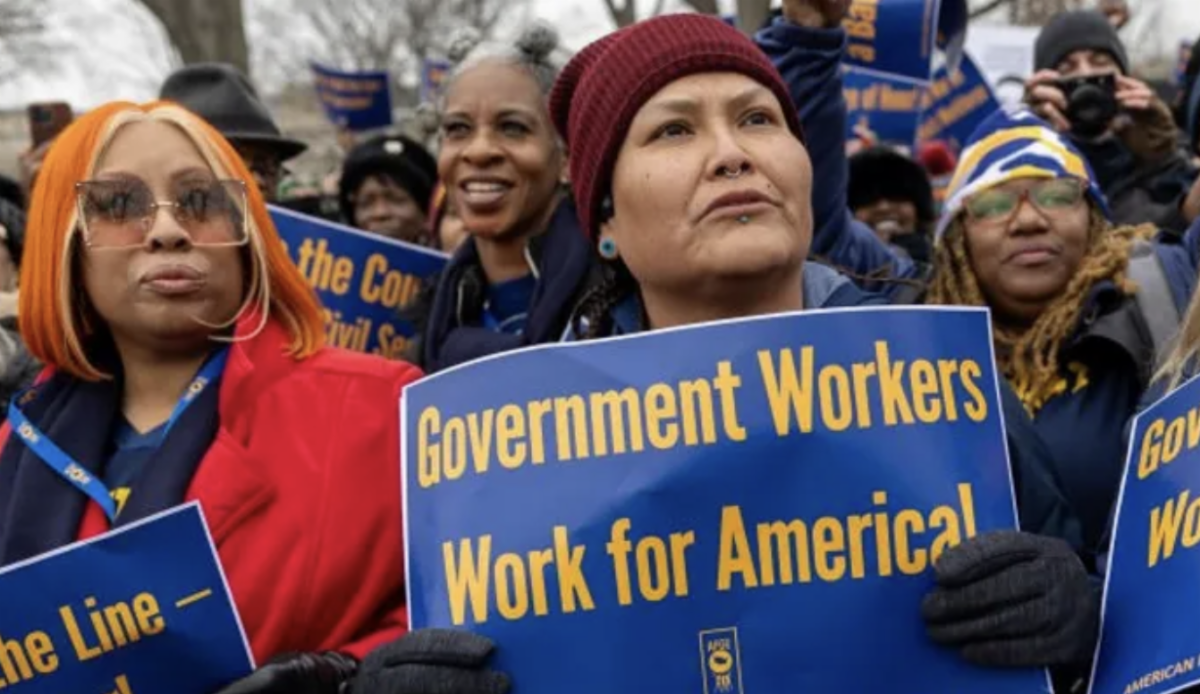
Since Trump’s first executive order in March ripped away collective bargaining rights from nearly 1 million workers, it’s only gotten worse. His administration expanded the attack to include more federal agencies. The administration also has begun implementing the executive orders by canceling the contracts of nearly 450,000 federal workers at the departments of Agriculture, Health and Human Services, Homeland Security and Veterans Affairs and the Environmental Protection Agency.
So now it’s the Senate’s turn. We need every senator—Republican, Democrat and independent—who says they support America’s unions to vote for the Protect America’s Workforce Act and restore federal workers’ union rights.
Dial 844-994-4554 to be connected with your senators or fill out the form on this page to receive a call.
| | Editor's Note: See the Editor's Note above. | |
Jessica Corbett / December 11
US labor leaders on Thursday celebrated the House of Representatives’ bipartisan vote in favor of a bill that would reverse President Donald Trump’s attack on the collective bargaining rights of 1 million federal workers.
Trump’s sweeping assault on federal workers has included March and August executive orders targeting their rights under the guise of protecting national security. In response, Congressmen Jared Golden (D-Maine) and Brian Fitzpatrick (R-Pa.) spearheaded the fight for the Protect America’s Workforce Act. They recently collected enough signatures to force the 231-195 vote, in which 20 Republicans joined all Democrats present to send the bill to the Senate.
American Federation of Labor and Congress of Industrial Organizations (AFL-CIO) president Liz Shuler joined union leaders in applauding the lower chamber on Thursday and calling on the Senate to follow suit. She said in a statement that “President Trump betrayed workers when he tried to rip away our collective bargaining rights. In these increasingly polarized times, working people delivered a rare bipartisan majority to stop the administration’s unprecedented attacks on our freedoms.”
| | Editor's Note: The decline in workers' living standards closely parallels the decline of the labor movement in the United States. This should come as no surprise. Unions are the best hope for working people to claim a larger slice of the economic pie. To turn this picture around and restore any semblance of the so-called American Dream, we must - at least for the masses of working people - reverse the decline and restore union density and power once again. | |
John Miller
If Americans’ hopes of getting ahead have dimmed, as the Wall Street Journal reports yet again, it could only be because the lid of the coffin in which the “American Dream” was long ago laid to rest has finally been sealed shut.
The promise that if you work hard and play by the rules, you will get ahead, or if you don’t, surely your children will, was broken long ago. And today’s economic hardships have left young adults distinctly worse off than their parents, and especially their grandparents.
This long decline has stripped away much of what there was of U.S. social mobility, which never did measure up to its mythic renderings. Let’s look closely at what the economic evidence, compiled in many meticulous studies, tells us about what passed for the American Dream, its demise, and what it would take to make its promised social mobility a reality.
| | WEEKLY DERAILMENT DEPARTMENT | | Each Tuesday in this news bulletin, RWU does our best to present a picture of what has been happening over the course of the previous week in terms of derailments in North America, and investigation determinations of previous accidents. NOTE: This list is by no means comprehensive. Smaller and less consequential mishaps are generally not reported here. If the wreck results in injury or fatality, or is especially damaging/extreme, a full article will appear as a feature in the dozen or so rail articles above. Know of a train wreck? Please feel free to forward a link to raillabornews@gmail.com for possible inclusion next week. Thanks! |
| | | |