Rail & Labor News from RWU
| |
Weekly Digest Number 8 - February 18, 2025 | |
Welcome to the RWU Rail & Labor News! This news bulletin is produced and emailed out each Tuesday morning. We hope you find each week's news and information useful. If so, please share with co-workers, friends, and colleagues. If you like, you can sign them up to get all the news from RWU HERE. Or forward them the link. Got a hot tip? Please forward the article and a link to raillabornews@gmail.com. Note: If you read over this news bulletin each week, you will be sure to never miss the important news of what is going on in the railroad world from a worker's perspective! | |
THIS WEEK'S RAIL AND LABOR NEWS | |
Editor's Note: CSX’s push for a single, systemwide contract isn’t about efficiency—it’s about control. Behind the polished corporate language of “better utilization” and “cost savings” is the same old story: a railroad looking to squeeze more from its workforce while giving back as little as possible. Consolidation almost always benefits the carrier first, workers last. If history has taught us anything, it’s that when railroads talk about “efficiency,” they really mean “cutting corners at labor’s expense.” Conductors should approach these negotiations with clear eyes—because once a contract is centralized, reversing course becomes nearly impossible. | |
Trains / February 10
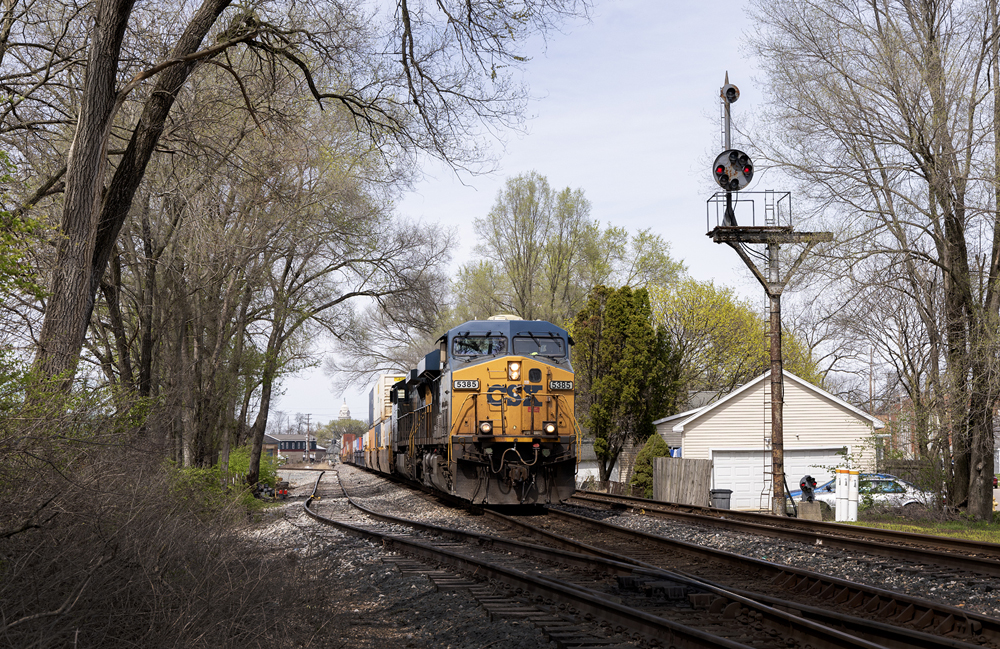
CSX wants to create a single, systemwide contract covering conductors represented by the SMART-TD union.
The railroad currently has three regional contract agreements with the union. In a notice to conductors, CSX says that consolidating those contracts into one “will allow CSXT to better utilize trainmen employees throughout CSXT’s system, improve train service, operate trains more efficiently, realize cost savings, and improve utilization of equipment.”
CSX expects negotiations, which will begin in March, to take several months. The railroad previously reached similar systemwide agreements covering locomotive engineers and train dispatchers.
| |
Editor's Note: The railroads already operate with laughable oversight, and now the FRA—one of the last flimsy barriers between corporate greed and total deregulation—is being gutted under the guise of “streamlining.” The carriers have spent decades lobbying for fewer rules, fewer inspectors, and fewer consequences, all while running longer trains with fewer workers at greater risk. Now, the FRA is being bled dry, and the workers left behind are expected to do more with less—just like the railroaders out on the tracks. This is what happens when corporations dictate policy: safety becomes a footnote, and profit reigns supreme. If rail labor doesn’t fight back now, the next “streamlining” might not just target regulators—it’ll come straight for our jobs. | |
Trains / February 10
Federal Railroad Administration employees were among the government workers offered buyouts as part of the sweeping changes the Trump administration is making to streamline the federal government.
But the FRA’s 350 rail safety inspectors were exempt from the “deferred resignation program” due to their role in protecting public safety, an agency spokesman says.
The FRA employs 1,200 people in total. Today is the deadline for federal workers to respond to the offer, which was made on Jan. 28.
Unions representing federal workers have challenged the resignation program in federal court. A federal judge in Massachusetts last week put a temporary stay on the program that will last at least until a preliminary hearing scheduled for this afternoon.
| |
Editor's Note: The railroads don’t care about infrastructure funding—they care about eliminating competition. After spending years gutting their own service, chasing Wall Street’s bottom line, and driving shippers to look elsewhere, they now want Congress to kneecap the trucking industry with higher taxes. Let’s be clear: this isn’t about fairness, and it certainly isn’t about fixing roads. It’s about shifting the burden onto someone else while the rail carriers continue their race to the bottom—cutting jobs, slashing service, and crying foul when customers choose a more reliable option. Instead of pushing for meaningful investment in both rail and highways, they’re hoping to rig the game in their favor. But if they want shippers to come back, here’s a thought—run a railroad worth using. | |
Roll Call / February 11
Railroads are pushing lawmakers to hike taxes on trucks to fix a crisis-level problem of federal road and bridge funding, putting pressure on their biggest competitor as each vies for freight market share.
Although the trucking industry says it’s open to equitable ideas, it holds that it already pays its fair share for highway infrastructure wear.
The issue stems from diminishing funds for the Highway Trust Fund, funded by gas taxes. As cars and trucks have become more fuel-efficient, federal revenue from gasoline and diesel sales declined. The rate set by Congress has been flat at 18.4 cents per gallon of gasoline and 24.4 cents per gallon of diesel fuel since 1993, figures that haven’t been indexed for inflation.
|
|
Editor's Note: At first glance, one might have sympathy for BNSF. But when reading on, you discover that simple action s the railroad could have taken over the years (e.g. properly cleaning up derailments of spilled tasty morsels like grain along the right-of-way) could have greatly mitigated the problem. And the fact that BN (the predecessor railroad to today's BNSF) had previously been cooperating with authorities to address the issue. | |
Flathead Beacon / February 14
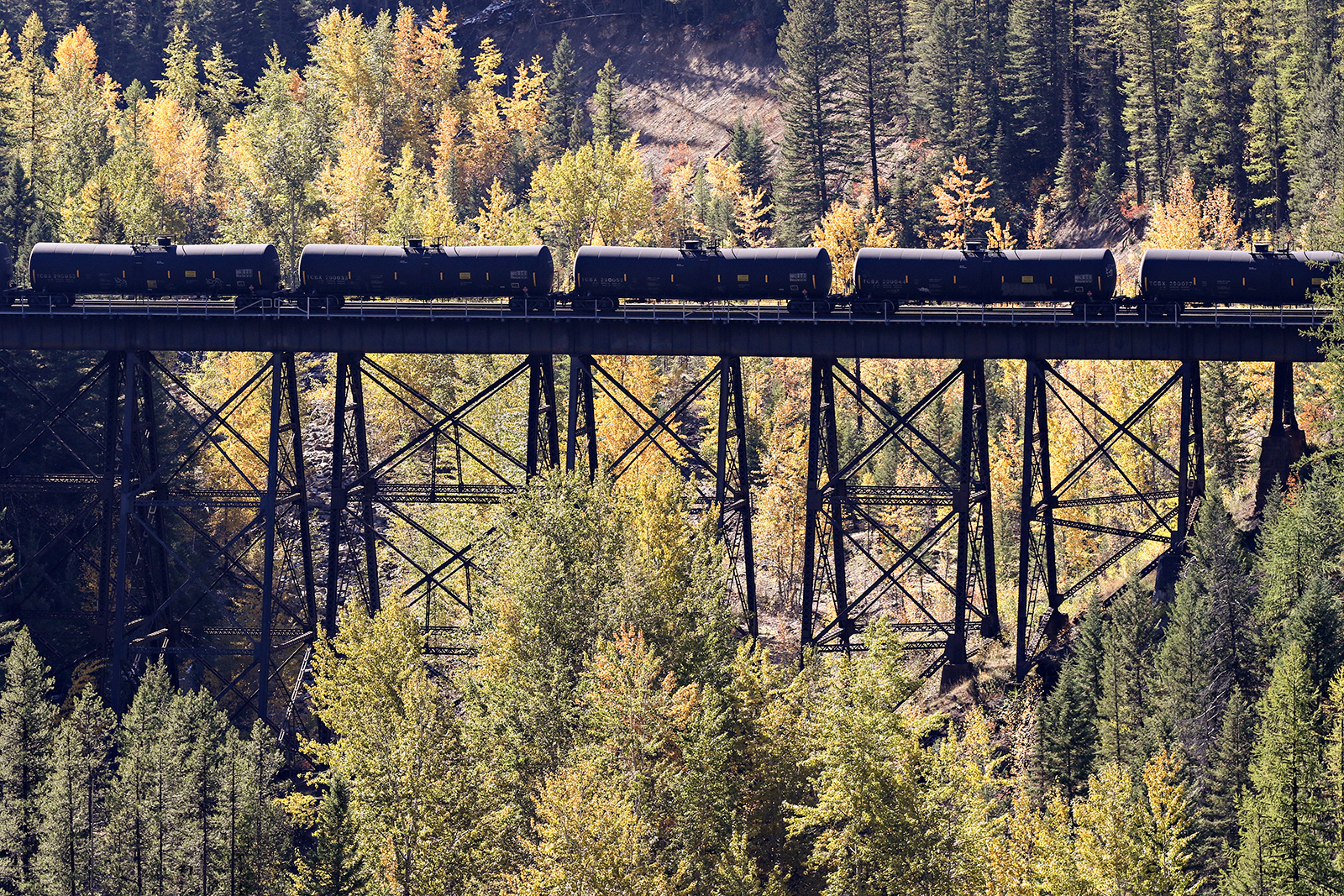
In an effort to minimize the deadly risks to grizzly bears living along a 206-mile stretch of railroad tracks spanning Montana’s northern tier — including the boundary of Glacier National Park — BNSF Railway Company has completed a habitat conservation plan (HCP) that includes nearly $3 million in mitigation funding to offset the recovery setbacks that train-killed bears pose in Montana’s Northern Continental Divide Ecosystem (NCDE). In exchange for the conservation plan, the railroad behemoth on Thursday received a permit from U.S. Fish and Wildlife Service (USFWS) authorizing the incidental “take” of 19 grizzlies, including nine females, within the permit area during its seven-year lifespan.
More than two decades in the making, the HCP has been a sticking point in BNSF’s long-awaited application to the U.S. Fish and Wildlife Service (USFWS) for a permit allowing the company’s annual “take” of grizzly bears, which are listed as threatened under the Endangered Species Act (ESA). However, a section of the ESA allows the federal wildlife management agency to issue permits for the “incidental take” of grizzly bears “if such taking is incidental to, and not the purpose of, the carrying out of an otherwise lawful activity.”
| |
KALW Public Media / February 10
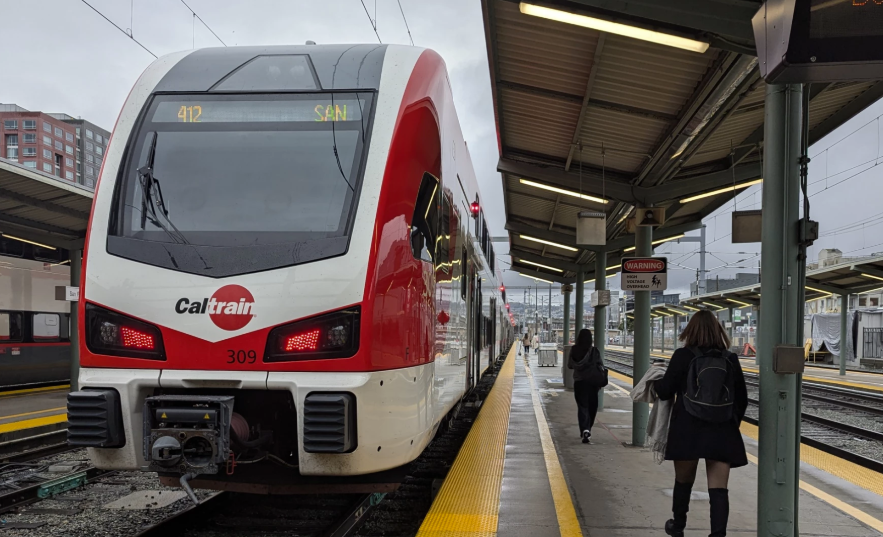
If you’ve ridden Caltrain recently, you might have noticed a big difference. Gone are the days of the loud, lurching, smelly diesel locomotives. Caltrain has gone electric. We take a tour of one of the new trains to see what life was like before electrification and what the ride feels like now.
Listen for the full story.
| |
Editor's Note: Another contract ratified, another press release full of vague assurances and missing details. CPKC boasts of “improved wages and benefits,” but without specifics, workers are left to wonder: improved by how much, and at what cost? Railroads love to tout “long-term stability” when it means locking in deals that favor the company. Until the full terms are made public, the only ones who know who really won at the bargaining table are those who were sitting there. | |
Trains / February 15
The union representing CPKC engineering service workers in Canada has ratified a new four-year contract, the railroad has announced.
The Teamsters Canada Rail Conference Maintenance of Way Employees Division (TRCR-MWED) represents about 2,300 workers.
CPKC CEO Keith Creel said the ratification, announced Friday, Feb. 14, provides improved wages and benefits, but details were not released. “This agreement, reached at the bargaining table and ratified with strong support among the membership,” Creel said in a press release, “brings long-term labor stability for our engineering employees allowing us to continue our work safely and efficiently serving our customers and delivering for the Canadian economy.”
| |
Editor's Note: Two years after Norfolk Southern poisoned East Palestine, politicians return—not to fix what’s broken, but for the cameras. Inside the fire hall, JD Vance gives speeches. Outside, sick residents aren’t even allowed near. The wreck may be old, but corporate negligence is alive and well. Railroads keep slashing safety, politicians keep posturing, and nothing changes. East Palestine doesn’t need more speeches—it needs accountability. It needs justice. | |
The Real News Network / February 5
Big news happened Monday in East Palestine, Ohio. And dammit, we at PUP missed it.
The day marked the two-year “anniversary” of that appalling and toxic Norfolk Southern train derailment, so Vice President JD Vance dropped in. He made his way to the village’s fire hall and gave a speech in front of several TV cameras. A clutch of local and national officials stood behind him.
A few blocks away, residents of communities still trying to recover from the train wreck stood on a street corner holding homemade signs reading, “We are still sick.” They could get no closer to the fire hall. During an earlier visit, Vance met with residents and poked a stick in one of the creeks running through town to see a sheen of chemicals rise to the surface. Apparently those days are over.
| |
Editor's Note: The richest country on Earth can bankroll wars and corporate bailouts but somehow can’t build a modern rail system. While China, Morocco, and even India race ahead with high-speed rail, the U.S. clings to a system that barely qualifies as functional, let alone fast. Acela’s 66 mph crawl is a national embarrassment, not a transportation solution. This isn’t about money—it’s about politicians and corporations choosing stagnation over progress. If we can subsidize airlines and highways, we can damn well fund high-speed rail. | |
Current Affairs / February 7
[U]nfortunately, the U.S., which is one of the richest countries in the world and home to the “world’s largest and busiest airspace,” has not invested much at all in high-speed rail. As Hayden Clarkin, aka The Transit Guy, noted in a blog post last year, when looking at availability of routes between major cities, the U.S. lags far behind in high-speed rail compared to other countries like France, the U.K., Japan, Spain, Italy, and Taiwan. China is the world leader in high-speed rail, which “connects all of the country’s major megacity clusters.” China is also home to the world’s fastest train, which can reach speeds of up to 286 mph. In Morocco, which has Africa’s first high-speed system, trains can reach close to 200 mph. Even India, which is still considered a developing nation by international economic standards, has an ambitious plan to build its own bullet trains in Bengaluru.
A few years ago, I took the Acela train from Boston to New York City and found myself surprised by how long it took. I can’t remember the exact length of the trip anymore, but my intuition that it should have—and indeed could have—been much faster was correct. It turns out that the U.S.’s fastest train, the Acela, which reaches a speed of up to 150 mph but averages about 66 mph between the two cities, “doesn’t even qualify as high-speed rail by international standards.”
| |
Streets Blog US / February 12
As for withdrawing Amtrak support, I was able to confirm personally this week in follow-ups talking with committee members and staff that Rep. Webster’s concept was not just a throwaway. They truly believe – or at least they say they do – that Amtrak could somehow make a profit where dozens of mighty private railroads could not in the 1960s and 1970s.
Amtrak can do better financially, and has already done well in rebounding from the pandemic crush. Amtrak already wrings out more income from its fares and amenities and extra services — too much, in my view, but that's a topic for another blog. Amtrak can find new efficiencies, like any organization can if it looks hard enough.
But Amtrak will never, ever, ever be profitable. Not ever. Particularly as it transitions into being a large, rail-oriented general construction contractor, along with being the nation’s nationalized rail operator.
| |
NEWS FROM AROUND THE LABOR MOVEMENT | |
Each week, RWU includes a few articles about advances and developments in the larger labor movement that are of interest to railroad workers. Got an artcile to submit for possible inclusion next week? Email it along to raillabornews@gmail.com. Thank you! | |
AFGE / February 10
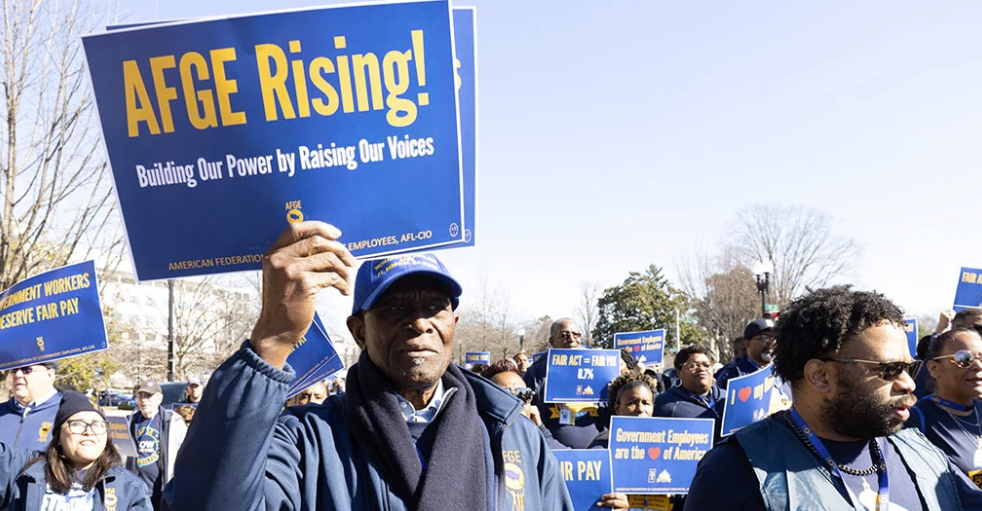
President Trump’s illegal directives keep coming, but federal workers who take the oath to uphold the Constitution are not taking it lying down. Their courage and commitment to public service have led to skyrocketing membership at AFGE. As of this writing, the number of dues-paying members went up rapidly to stand at 321,000, the highest in the union’s history.
Federal workers are joining to have a voice at work and fight efforts to undermine the federal government and democracy.
| |
In These Times / February 14
Chris Dols was one of hundreds who flooded to the streets of Washington, D.C. this week to protest the shutdown of the Consumer Financial Protection Bureau. The CFPB was one of the few remnants of the 2008 financial crisis that actually aimed to help ordinary people.
The workers locked out of the agency spoke about their jobs, the value of the work they did, reminding themselves and their audience that federal employees have vital jobs that working Americans rely on.
Naturally, that’s placed it in the crosshairs of Elon Musk’s so-called Department of Government Efficiency, which has so far functioned like a private hit squad, moving in and out of various government offices in what Reuters, based on the analysis of two Republican experts, called “an ideological assault on federal agencies long hated by conservatives.”
| |
Editor's Note: In the1930s, labor came together and organized millions of workers - skilled and unskilled, native and foreign born - into powerful mass industrial unions that managed to shift the balance of forces in favor of the working class, delivering better wages, benefits and working conditions to common everyday workers. We can do it again! | |
|
In These Times / February 11
President Donald Trump relishes deploying the “weave,” his vulgar stream-of-consciousness spiels in which his vengeful fantasies and antipathy towards a cast of enemies become punchlines in an insult-comic routine. His far-right former adviser Steve Bannon has termed the Trump administration’s psychological warfare approach “flooding the zone.”
“Every day we hit them with three things,” Bannon told PBS’s Frontline in 2019. “They’ll bite on one, and we’ll get all of our stuff done. Bang, bang, bang. These guys will never — will never be able to recover. But we’ve got to start with muzzle velocity.”
“We want to put them in trauma,” said Russell T. Vought, Project 2025’s man in the Trump White House, who has returned to lead the Office of Management and Budget, in a 2023 speech. “We want the bureaucrats to be traumatically affected. When they wake up in the morning, we want them to not want to go to work because they are increasingly viewed as the villains.”
| |
WEEKLY DERAILMENT DEPARTMENT | |
Each Tuesday in this news bulletin, RWU does our best to present a picture of what has been happening over the course of the previous week in terms of derailments in North America, and investigation determinations of previous accidents. NOTE: This list is by no means comprehensive. Smaller and less consequential mishaps are generally not reported here. If the wreck results in injury or fatality, or is especially damaging/extreme, a full article will appear as a feature in the dozen or so rail articles above. Know of a train wreck? Please feel free to forward a link to raillabornews@gmail.com for possible inclusion next week. Thanks! |
| | | |