Rail & Labor News from RWU
| | Weekly Digest Number 11 - March 17, 2026 | | Welcome to the RWU Rail & Labor News! This news bulletin is produced and emailed out each Tuesday morning. We hope you find each week's news and information useful. If so, please share with co-workers, friends, and colleagues. If you like, you can sign them up to get all the news from RWU HERE. Or forward them the link. Got a hot tip? Please forward the article and a link to raillabornews@gmail.com. Note: If you read over this news bulletin each week, you will be sure to never miss the important news of what is going on in the railroad world from a worker's perspective! | | THIS WEEK'S RAIL AND LABOR NEWS | | Editor's Note: The alarm now being raised by farmers should surprise no one who actually works on the railroad. For decades Wall Street consolidation has stripped communities of rail options, concentrated power in fewer hands, and treated the nation’s freight network like a balance sheet instead of a public necessity. Railroad workers, farmers, and shippers are all feeling the same pressure from a system designed to reward consolidation while ignoring service, safety, and resilience. When one railroad merger can dictate transportation costs across half the continent, the problem is not efficiency. The problem is power. | |
|
Progressive Farmer / March 13th
The country's largest general farm organization is now officially opposing the country's largest railroad merger, warning the deal would leave farmers with fewer rail options and higher transportation costs.
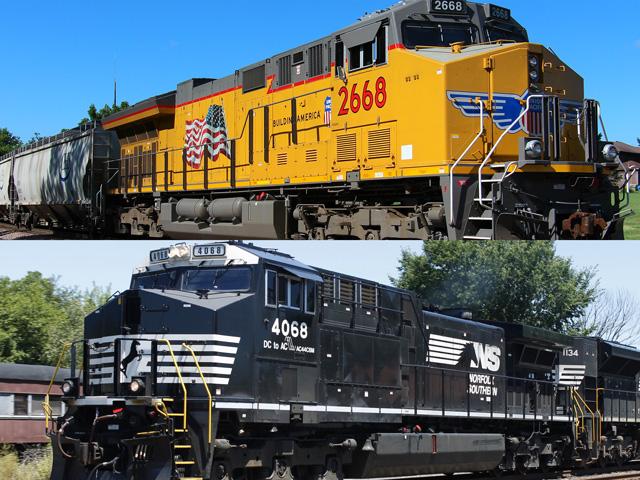
The American Farm Bureau Federation (AFBF) released an analysis concluding the proposed $85 billion merger between Union Pacific and Norfolk Southern "would further exacerbate agricultural shippers' already limited transportation options." Farmers would be left exposed to pricing and service decisions they cannot control, AFBF stated.
The long-term effect of a merger could be higher food prices for consumers as transportation costs ripple through the food supply chain, Farm Bureau warned.
| |
| Editor's Note: For forty years the largest railroads have hidden behind regulations written to make competition almost impossible, forcing countless shippers into captive markets where service and prices are dictated from a single boardroom. Now that the Surface Transportation Board is finally proposing to remove those barriers, the industry suddenly discovers a talent for “nuanced responses” designed to preserve the status quo. Railroad workers have seen this pattern before.. the language of efficiency used to justify consolidation, followed by quiet resistance to any policy that restores balance to the network. Real competition does not weaken railroading; it strengthens the system by forcing carriers to compete on service rather than leverage. If the industry truly believes in the power of the market, it should welcome competition instead of spending the next decade trying to explain why it must be prevented. | |
|
Trains Magazine / March 12th
Shippers this week cheered the Surface Transportation Board’s proposal to boost rail competition, while railroads offered a range of nuanced responses to limit how future rate cases should be addressed without explicitly rejecting reciprocal switching.
The STB in January said it aims to repeal regulations that since 1985 have effectively prevented sole-served carload and bulk shippers from seeking access to a second railroad [see “STB proposal…” Trains.com, Jan. 7, 2026].
The regulations cover reciprocal switching, through routes, and through rates. The STB’s Notice of Proposed Rulemaking would jettison Part 1144 of the federal code of regulations, which currently requires shippers to demonstrate “anticompetitive conduct” and meet other requirements to obtain relief from the board.
| |
| Editor's Note: An arbitrator has ordered Canadian National to reopen its Transcona Wheel Shop and return contracted work to the skilled railroad workers who performed it for generations. The ruling confirms what rail labor has long argued.. closing shops, contracting out work, and bypassing unions is not modernization. It is the slow dismantling of railroad craftsmanship in pursuit of short-term savings. | |
|
Progressive Railroading / March 10th
An arbitrator has ordered CN to reopen its Transcona Wheel Shop in Manitoba, compensate affected workers and return rail work to in-house production in Canada, Unifor announced today.
The union's grievance case stems from CN's decision to close the wheel shop, traction motor shop and air brake shop in Winnipeg in May 2020 during the pandemic, then contract out work normally performed by union members, Unifor officials said in a press release.
In an earlier decision, the arbitrator found CN had violated a collective labor agreement by failing to properly notify Unifor, failing to consult the union before moving ahead, and undermining the union's ability to protect its members' work, according to Unifor. The arbitrator also found those violations were serious, not just technical, and left the question of remedy open until a later ruling; that ruling came last week.
| |
| Editor's Note: Nearly three years after the East Palestine derailment, residents are still fighting simply to be heard in a courtroom. The decision allowing community members to intervene in the federal case against Norfolk Southern is a reminder that accountability in railroading rarely arrives voluntarily; it must be demanded by workers, neighbors, and the towns that live beside the tracks. When the truth about safety, contamination, and responsibility depends on whistleblowers and court orders, it tells us how far the industry still has to travel toward real accountability. | |
|
Government Accountability Project / March 9th
Today, a District Judge for the Northern District of Ohio granted a Motion to Intervene on behalf of East Palestine residents Robert Figley and Barbara Adams in a major federal lawsuit against Norfolk Southern after the 2023 train derailment. This development is a huge step towards bringing much needed remedies to this community.
This motion was filed with the generous support of Melinda Young, Mindy Bish and Jedidiah Bressman of the Keenan Law Group. The Motion to Intervene was submitted on behalf of residents Robert Figley and Barbara Adams to bring transparency, accountability, and improved health protections to a community still suffering nearly three years after the disaster. Government Accountability Project offered evidence to this motion that helped inform the concerns raised by the intervenors. The information featured Freedom of Information Act documents showing the town had been neglected by federal officials while chemical contamination only worsened, based on scientific data collection by independent scientist and whistleblower Scott Smith. Evidence also included a declaration from whistleblower and Certified Industrial Hygienist Stephen Petty stating Norfolk Southern ignored prevailing wind patterns and collected baseline dioxin samples from areas impacted by the toxic plume, potentially skewing results and undermining the reliability of the soil testing.
| |
|
Trains Magazine / March 10th
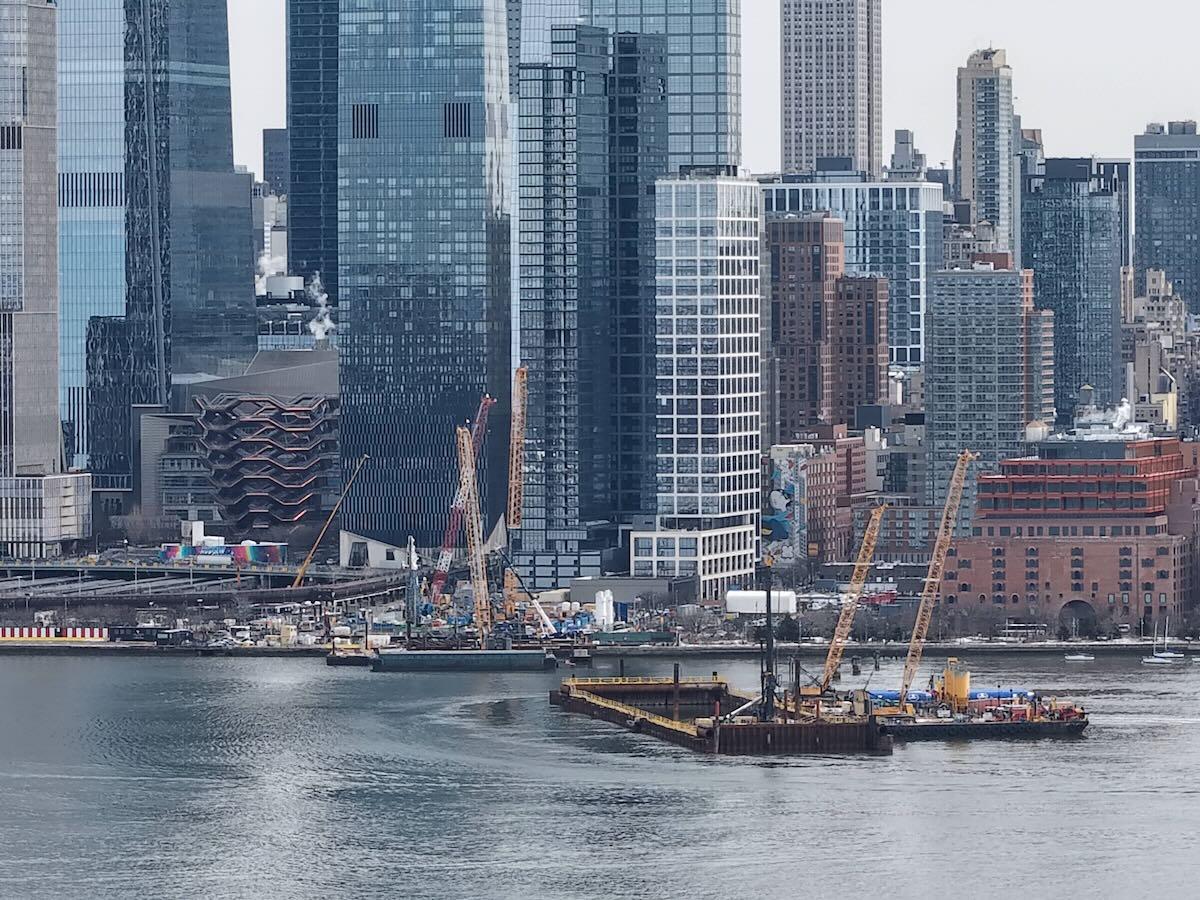
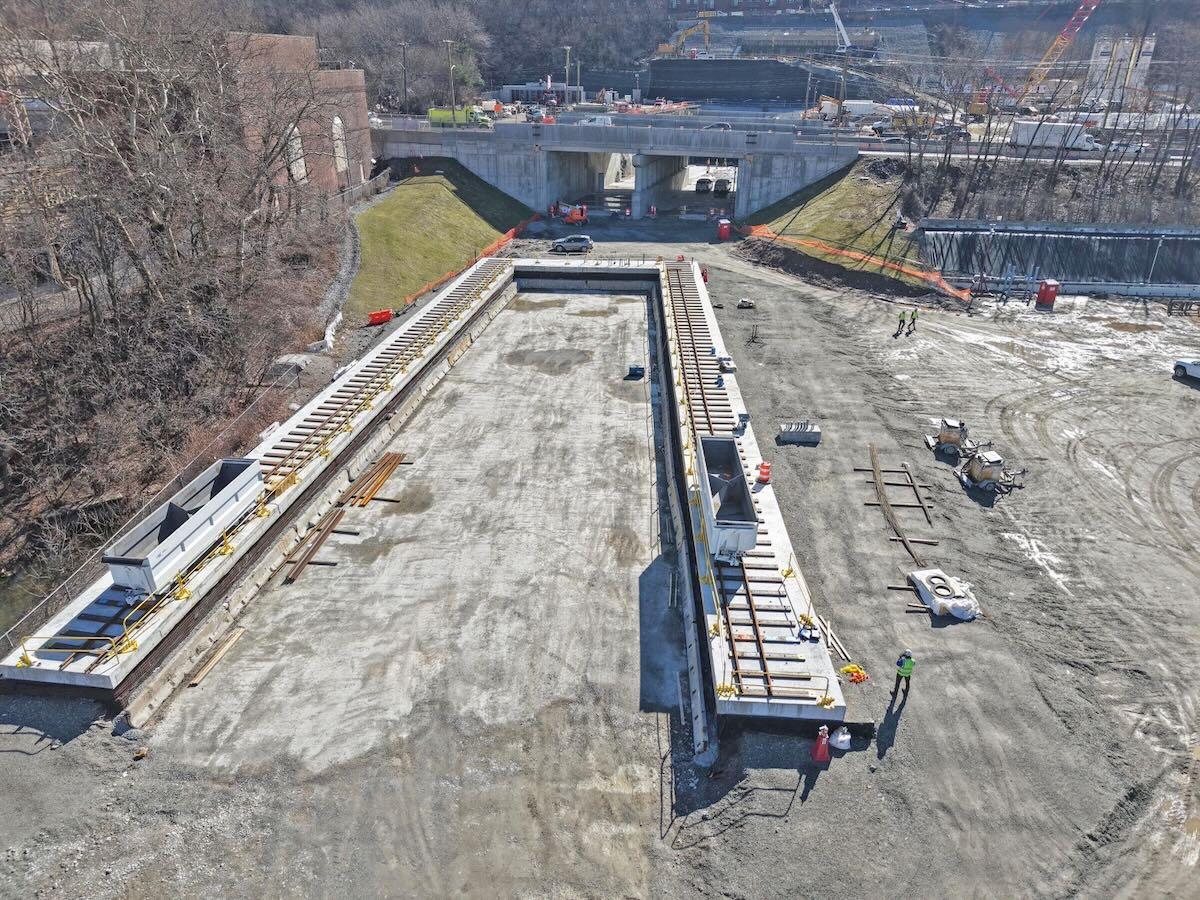
Work has resumed at all Hudson Tunnel Project sites, the Gateway Development Commission said today, but another halt could come in two to three months if the disbursement of federal funds does not continue.
Additionally, two major contracts that were supposed to be awarded late in 2025 or early this year remain on hold pending final resolution of the federal funding. Those contracts are for construction of the tunnel itself, as well as the surface alignment in New Jersey.
“Our workers are back, and we are moving full steam ahead across all our construction sites, but we will have no choice but to stop work again if the federal government does not continue to disburse the funds that are committed to the project,” said GDC CEO Tom Prendergast. “This project is too important to delay. That’s why we’re doing everything possible to regain consistent and predictable access to all our federal funding so we can keep our workers on the job and deliver the reliable, modern rail transit Americans deserve.”
| | Editor's Note: Seems like the rail carriers are finally catching on. If you want to secure your goods, you have to take measures to ensure the security of the trains. A few issues back we ran an article of what CSX is doing to stem the rising tide of container theft in Memphis. Here is another example. Simply calling on tax-payer assisted law enforcement - as UP has done in Southern California recently due to a spike in pilfering of trains - in terms of state police, national guard or otherwise is simply a reactionary response to a self-inflicted wound. The rail industry has a long history of instigating, lobbying for and accepting huge tax-payer subsidies. They need to use some of their supper profits to protect their own trains. | |
Railway Age / March 6th
Ocean transportation and logistics services firm Matson Inc. has partnered with BNSF and lock manufacturer War–Lok on what it describes as “an enhanced cargo security program that will add two layers of protection to the majority of its international intermodal cargo at no cost to customers.” The program is slated to begin in second-quarter 2026.
The move is in response “to the rise of theft from intermodal cargo industrywide,” Matson reported March 2.
According to the Honolulu-based firm, the first layer of protection is deploying War–Lok security devices on every international container moving from Los Angeles to all BNSF network destinations, including Chicago, Memphis, and Dallas. The second layer of protection: Under a new agreement with BNSF, Matson containers will be positioned in the lower well of international intermodal railcars from Los Angeles to Chicago. The same protection will apply to cargo moving through the Chicago gateway to select Eastern U.S. destinations up to the BNSF interchange point, according to Matson.
| |
High Speed Rail Alliance / Event on March 27th
Trains are making a comeback in the Deep South.
In August 2025, the Mardi Gras Service brought back Amtrak between Mobile, Alabama and New Orleans after a 20-year absence incited by Hurricane Katrina.
This project was spearheaded by the Southern Rail Commission, a federally-recognized compact between Louisiana, Alabama, and Mississippi, which has promoted passenger rail expansion throughout the region since 1982.
We invite you to join us and Chairman Knox Ross to learn more about this unique organization, how the Mardi Gras Service came to be, and what lies ahead for great trains along the Gulf Coast.
| |
Trains Magazine / March 11th
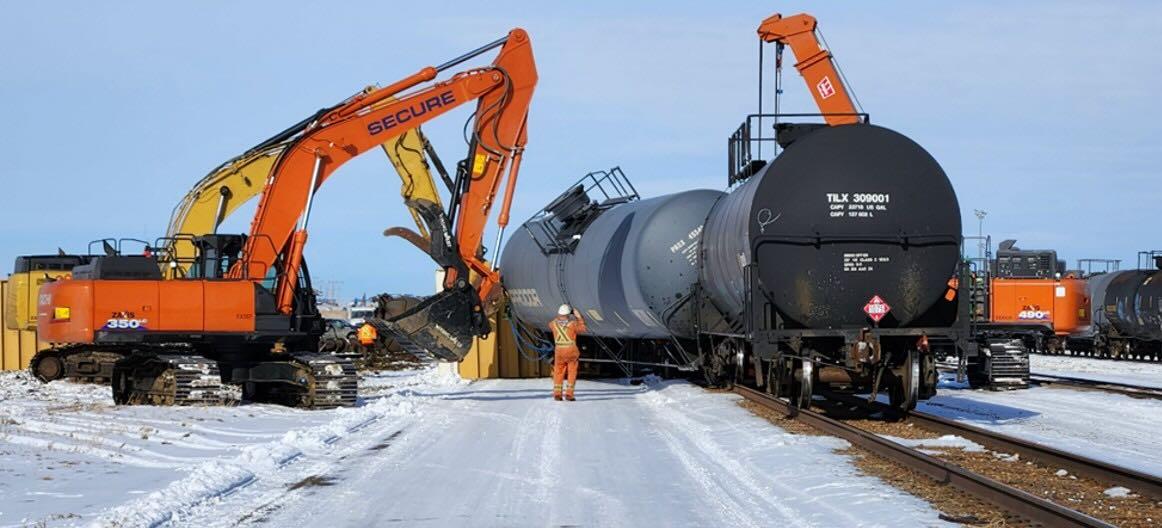
A switch crew’s “adaptations” of written rules contributed to a CPKC collision and derailment in a yard at Coalhurst, Alberta, on Feb. 11, 2024, the Transportation Safety Board of Canada said in an investigation report issued today (March 11, 2026).
Also contributing, the TSB said, was that a utility employee providing switching instructions was doing so while driving a vehicle at night, “reducing his ability to provide accurate distance estimations.” Crew inexperience was also a factor, the report indicates.
The incident involved a cut of 66 cars being reversed to be coupled to a cut of 79 stationary cars at Kipp Yard in Coalhurst, near Lethbridge, about 1:56 a.m. on Feb. 11. Because of an inaccurate estimate of the distances involved, the cars being moved struck the stationary cars at 13 mph, resulting in the derailment of 11 cars — seven on the cut of cars being moved and four on an adjacent track. Seven of these were carrying, or had previously carried, hazardous materials, but no leaks occurred. There were no injuries.
| |
|
Inside NoVA / March 9th
Virginia Railway Express is on track for a big expansion in service by 2030, with its new CEO hoping for a total transformation of the system by 2050.
CEO Katie Choe, who stepped into her role in January, provided an update on her first month in the job and her vision for the future to the VRE Operations Board in late February.
“My main priority as I’m walking in is to successfully transition VRE from the commuter service that it is today to a full regional rail system,” Choe said.
The service, which connects Northern and central Virginia with Washington, D.C., with lines extending to Manassas and Fredericksburg, recently laid out ambitious plans in its System Plan 2050. The 2050 plan outlines the system’s goals for adapting to changing travel patterns, maximizing ridership and adding off-peak and weekend service. VRE’s goals call for $1.4 billion in capital needs over the next quarter-century to improve and expand the system.
| | Editor's Note: Railroad executives now insist the public should stop looking backward when evaluating the largest rail merger in a generation. That is a convenient request from an industry whose past consolidations left fewer railroads, fewer workers, fewer shipping options, and communities increasingly captive to a single carrier. History is not a distraction from the debate over consolidation. It is the evidence. When every previous wave of mergers produced the same pattern of reduced competition and service pressures, asking regulators and the public to ignore that record is not vision. It is strategy. | |
|
Freight Waves / March 10th
In The Tempest, Shakespeare wrote, “what’s past is prologue,” meaning history sets the context for the present and dictates future events. Except, apparently, when it comes to transcontinental railroads.
In an exclusive interview with FreightWaves, Union Pacific Chief Executive Jim Vena fired back at critics of his blockbuster merger with Norfolk Southern, insisting it won’t have the lasting price and service issues that have accompanied past transportation consolidations even as it reshapes the U.S. supply chain.
“People have to quit looking backwards and look at what’s possible,” Vena said by phone from UP’s Omaha headquarters.
Union Pacific (NYSE: UNP) has faced withering criticism from industry observers who declared the math supporting the $85-billion transaction with NS (NYSE: NSC) didn’t add up.
| |
| Editor's Note: Coming on the heels of a few weeks of steep decline, rail traffic in 2026 appears to be rebounding. The question is why. The trucking industry is in a multiplicity of crises at the moment. Could the answer be that as thousands of truck drivers are deported, as certifications are rendered illegitimate, and as the price of diesel skyrockets, shippers are turning to rail. Quite likely. In other words, it is not anything the rail industry per se is doing, but in spite of what they are or are not) doing. Time will tell. | |
Progressive Railroading / March 12th
U.S. freight-rail traffic rose 3.5% to 514,996 carloads and intermodal units during the week ending March 7 compared with the same week in 2025, to Association of American Railroads data.
Carloads for the week totaled 231,889, up 5.7%, while weekly intermodal volume totaled 283,107 containers and trailers, up 1.8%.
Eight of the 10 carload commodity groups tracked weekly by the AAR logged traffic increases compared to a year ago. Gainers included coal, up 7.7% to 62,480 carloads; grain, up 16.9% to 25,313; and chemicals, up 4.2% to 34,464.
The two commodity groups that logged decreases were nonmetallic minerals, down 1% to 28,142 carloads; and forest products, down 1.4% to 8,068.
| |
Trains Magazine / March 12th
The Trump administration has lost another round in court over funding for the Hudson Tunnel rail project, with a federal appeals court rejecting the administration’s bid to halt payments.
Reuters reports a three-judge panel of the 2nd U.S. Circuit Court of Appeals ruled, in the suit brought by the states of New York and New Jersey, that if it agreed to lift a temporary restraining order, the federal Department of Transportation could suspend future payments, leading to a halt to construction “posing serious risk of injury and deterioration that the states, at considerable expense, will become responsible to safeguard against.”
New York Gov. Kathy Hochul noted the decision in a brief social media post, calling it “Another loss for Trump. Another win for New Yorkers.”
| | Editor's Note: Three years after the derailment in East Palestine, families are still living with the consequences of a disaster that never should have happened. The headlines faded, but the illnesses, debts, and unanswered questions did not. Railroad workers understand a hard truth.. when safety margins are cut thin enough, it is always working people and small communities who absorb the cost. Accountability delayed is not justice; it is a strategy for letting the public move on while the damage remains. East Palestine must not become another entry in the long ledger of industrial disasters that corporations survive and communities endure. | |
|
In These Times / March 12th
It’s been three years since a Norfolk Southern bomb train that was carrying toxic chemicals derailed in East Palestine on the cold night of February 3, 2023. Three days later, Norfolk Southern led local authorities to make the disastrous and completely unnecessary decision to empty five giant carloads of vinyl chloride into a ditch and set the contents on fire. The so-called controlled burn of vinyl chloride released a massive black chemical plume into the air and exposed residents in East Palestine and the surrounding area to deadly toxins in one of the worst industrial disasters in United States history.
Three years later, residents of East Palestine and the surrounding area are still suffering the toxic fallout. They’re still getting sick. Folks are even dying off. Many are still buried in debts from costs related to the derailment. They’ve been screwed over by Norfolk Southern, by their own government, by Biden, Trump, Democrats, Republicans — I mean, even their own damn class action attorneys. They have been exploited by everyone and helped by hardly anyone.
So I am begging you guys, please don’t forget about the people affected by this disaster. And do not let their corporate poisoners go unpunished. What happened to the people in and around East Palestine is a national tragedy and a humanitarian outrage.
| |
| Editor's Note: When the largest railroads begin asking federal regulators to referee their own traffic disputes, it reveals something about the system consolidation has created. A network once built on interchange and cooperation now sees giant carriers battling for leverage over gateways and corridors that move the nation’s freight. Workers and shippers watch these fights knowing the same companies arguing over competitive access have spent decades eliminating competition everywhere else. Consolidation concentrates power until even the largest railroads must appeal to regulators when that power collides. The lesson is clear.. a rail system designed around a handful of mega-carriers inevitably produces conflicts that only public oversight can resolve. | |
|
Trains Magazine / March 14th
Federal regulators on Friday denied requests from Norfolk Southern and Union Pacific to open an investigation into Canadian Pacific Kansas City’s handling of UP-NS interline intermodal trains on the Meridian Speedway.
The Surface Transportation Board said there was no need to intervene because any service problems have been resolved. The board also said that gateway conditions imposed as part of the 2023 Canadian Pacific-Kansas City Southern merger did not apply to intermodal traffic moving over the Meridian Speedway.
“NSR and UP have not demonstrated a need for Board intervention at this time,” the STB said in a six-page unanimous decision.
| |
| NEWS FROM AROUND THE LABOR MOVEMENT | | Each week, RWU includes a few articles about advances and developments in the larger labor movement that are of interest to railroad workers. Got an artcile to submit for possible inclusion next week? Email it along to raillabornews@gmail.com. Thank you! | |
Jacobin / March 9th
Organized labor’s political power has declined dramatically over the past half century. Union density has fallen from more than 30% of the workforce in the 1960s to less than 10% today — and labor’s footprint in campaign finance has shrunk in parallel. Meanwhile, the historic bond between unions and working-class voters has frayed. In 2024, more than 40% of unionized workers reported voting for Donald Trump, and Teamsters president Sean O’Brien’s appearance at the Republican National Convention made the depth of this realignment impossible to ignore.
Unions have responded with a wide range of revitalization strategies: ballot initiatives, new worker organizations, labor-aligned third parties. Yet one promising approach has received surprisingly little attention — the deliberate recruitment, preparation, and election of candidates who come from the labor movement itself.
This report argues that union candidates are an untapped political resource. Using original quantitative analysis of congressional candidate data from 2010 to 2022 — drawn from the Center for Working-Class Politics’ database of candidate websites — alongside 20 in-depth interviews with union-affiliated elected officials and labor leaders, it documents what union candidates do differently, how rarely they run, and what unions can do to change that.
| |
Jacobin / March 11th
Many commentators have repeatedly sounded the alarm about declining working-class support for the Democratic Party in 2024, particularly among non-white working-class voters. Those concerns remain real and are part of a decades-long dealignment of working-class voters from the party once seen as their natural home. But Donald Trump’s erratic, vindictive, and economically damaging first year in office has already given many of those same voters buyer’s remorse.
Trump’s 2024 victory was built on a narrative of attracting a multiracial working-class coalition of black and Latino voters united by frustration with the Biden administration’s perceived failures on inflation, the cost of living, and immigration. That narrative is already falling apart.
A recent survey we conducted of 1,940 2024 Trump voters (oversampling working-class black and Latino voters) shows the 2024 Republican coalition fracturing: 20.1 percent of Trump voters — more than one in five — are not currently planning to vote Republican in 2028. We define these “waverers” as Trump 2024 voters who (at least right now) do not plan to vote Republican in 2028. And they are disproportionately poor, non-white, and working-class. These are the very groups whose support was supposed to signal that Republicans had successfully consolidated a working-class majority.
| | |
AFL-CIO / March 2nd
For Women's History Month, we're taking a look at a group of leaders who are currently active making women's history across the labor movement. Check back daily for a new profile and meet some of the people working to improve not only their community, but also to improve conditions for working people across the country.
Here is who we've featured so far:
Check back throughout the month for more profiles.
| | |
The Guardian / March 10th
American politics feels hopelessly broken. Extreme political polarization, enormous amounts of Pac money sloshing around during elections, and the increasing power of the rich make it seem like nothing, and no one, can set the country on the right track. But a new report from the Center for Working-Class Politics looks at a surprisingly simple way that ordinary people might have more influence in our political system: run more union members for office.
The forthcoming CWCP report, co-authored by Jared Abbott, Benjamin Y Fong, Fred DeVeaux, Dustin Guastella and Sam Zacher, and sponsored by Arizona State University’s Center for Work and Democracy, looked at the broad political impact of political candidates with a labor union background. We found that candidates who come out of the union movement are exactly what many people in the country desperately crave: politicians who sound like them, who advocate for working people, and who provide solutions that actually work to fix our broken system.
Unions have been involved in politics for a long time, but their influence is diminishing. Not because they are spending less but just because of the explosion of individual donor and independent expenditure spending over the past 20 years.
| | WEEKLY DERAILMENT DEPARTMENT | | Each Tuesday in this news bulletin, RWU does our best to present a picture of what has been happening over the course of the previous week in terms of derailments in North America, and investigation determinations of previous accidents. NOTE: This list is by no means comprehensive. Smaller and less consequential mishaps are generally not reported here. If the wreck results in injury or fatality, or is especially damaging/extreme, a full article will appear as a feature in the dozen or so rail articles above. Know of a train wreck? Please feel free to forward a link to raillabornews@gmail.com for possible inclusion next week. Thanks! |
| | | |