Rail & Labor News from RWU
| | Weekly Digest Number 13 - March 31, 2026 | | Welcome to the RWU Rail & Labor News! This news bulletin is produced and emailed out each Tuesday morning. We hope you find each week's news and information useful. If so, please share it with co-workers, friends, and colleagues. If you like, you can sign them up to get all the news from RWU HERE. Or forward them the link. Got a hot tip? Please forward the article and a link to raillabornews@gmail.com. Note: If you read over this news bulletin each week, you will be sure to never miss the important news of what is going on in the railroad world from a worker's perspective! | | THIS WEEK'S RAIL AND LABOR NEWS | | Editor's Note: As so often is the case, railroad workers are often completely forgotten when it comes to this type of stuff. Make your voice heard! We rail workers deserve what any other workers enjoy the benfit of. | |
| |
Action Network Petition t Ways and Means Committee Chairman Jason Smith and Ranking Member Richard Neal
Union rail workers were not included in the "no tax on overtime" provisions of the One Big Beautiful Bill. To gain the same relief enjoyed by other American workers, we need to ensure our lawmakers in Washington, DC hear our collective voice. This petition drive is part of that effort, a way for the leaders of the House Ways and Means Committee to hear from rail Teamsters like you about why this is important, why this matters.
| |
| Editor's Note: Precision Scheduled railroading is rarely referenced anymore, partly because it was so discredited and partly because it is simply the way the railroad runs its business now, it is the status quo ... until some other cost-cutting profit-making gimmick comes along that can squeeze even more profit out of the cash-cow known as the Class One railroad system. | |
| |
Solutionary Rail / March 23
How did Wall Street come to dominate America's freight railroads — and what does that mean for the communities and businesses that depend on them? In the latest episode of Solutionary Rail's Reconnect America podcast, host Bill Moyer sits down with John Strong, professor of finance at the College of William & Mary, to trace the rise of Precision Scheduled Railroading and the activist investors who forced it on railroad managers across North America.
As the threat of another wave of anti-competitive consolidation looms, this conversation sheds valuable light on the evolving incentive structures that brought U.S. rail to where it is today.
| |
| Editor's Note: What happened in San Antonio is not a one-off, it is what happens when accountability is engineered out of the system. After 150 calls over 14 years, finger-pointing from Union Pacific Railroad and BNSF Railway is not an answer, it is the result of a model that diffuses responsibility while demanding more from fewer railroaders. The same structure that leaves crossings blocked leaves crews stretched and decisions detached from the ground. Rail labor has warned this for years.. when you remove the people who actually run the railroad from its center, reliability and accountability disappear with them. | |
| |
Kens 5 / March 23rd
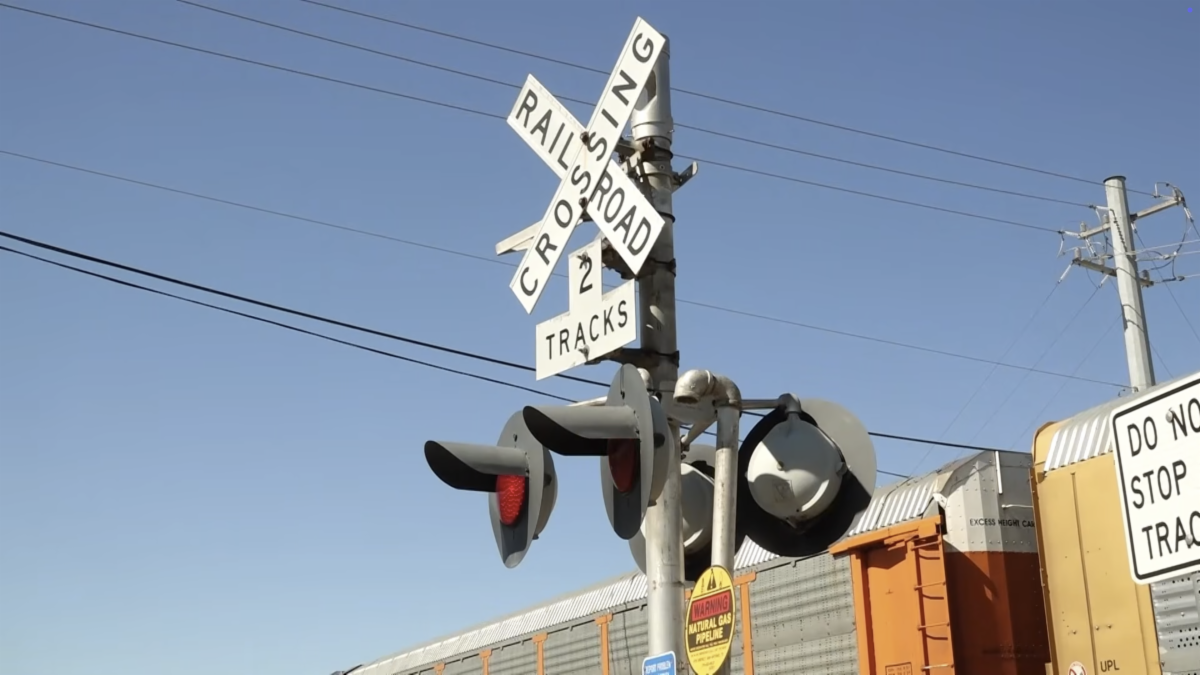
When stopped trains began blocking a San Antonio business park's entrance for hours at a time — sometimes leaving crossing arms down even when the train wasn't fully over the tracks — Wind Supply (San Antonio) president Weldon Jackson had called the railroad companies roughly 150 times over 14 years with no results.
San Antonio KENS 5 local news reporter Andrew Moore reached out to both Union Pacific and BNSF, only to find the two companies pointing fingers at each other over who was responsible. The story is a perfect on-the-ground illustration of how the broken accountability structures of today's freight rail industry fall hardest on the small businesses and communities along the tracks.
|
| Editor's Note: Unions and community organizations in Australia are calling for fare reduction or outright elimination on public transportation during the fuel crisis as a way to save energy, reduce highway congestion and bring down fuel prices for essential services. What a great idea that could work in the U.S. in large metro areas with lots of trains - think Chicago, New York, and southern California. | |
| |
Australian unions are pressuring the New South Wales government to either eliminate or significantly reduce fares on Sydney's public transport network.
The push is framed as a cost-of-living response to rising fuel prices driven by the war in Iran and broader Middle East, with the idea being that cheaper public transit would give commuters a viable, affordable, less oil dependent alternative to driving.
| |
| Editor's Note: What we are seeing in passenger rail is not charity from Washington, it is a quiet admission that the nation starved its own infrastructure while asking working people to carry the burden. Expansion through existing corridors is practical, but it cannot become an excuse to build a system on the cheap while expecting railroaders to deliver first-class service on second-rate investment. Amtrak will only succeed where public commitment matches the scale of the task, not where it trims ambition to fit austerity. RWU understands that viability is not decided in press releases, but in staffing, maintenance, and the daily reality of operations. If this moment is to mean anything, it must be more than another cycle of proposals dressed up as progress. | |
| |
Amtrak expansion is no longer just a long-term vision — it’s starting to take shape across multiple regions of the United States.
From the proposed I-20 corridor in the South to new Midwestern connections and even the potential return of long-lost routes, a new pattern is emerging: 1) expansion through existing infrastructure, lower-cost upgrades instead of entirely new rail lines, and a shift in federal policy that is finally supporting growth beyond the Northeast Corridor.
In this video, OnthTrains breaks down what’s actually happening behind the headlines — and whether these projects are truly viable or just another cycle of proposals.
| |
| Editor's Note: The Board’s demand for deeper disclosure is not overreach, it is the bare minimum when corporate consolidation asks the public to bear the risk. When Surface Transportation Board reaches for the same scrutiny used elsewhere, it signals that this merger will not be waved through on assurances and press releases. Union Pacific Railroad and Norfolk Southern Railway are seeking extraordinary power over a national network, and that power must be met with extraordinary transparency. Rail labor knows that behind every promised efficiency is a question of jobs, safety, and who bears the cost when projections meet reality. If the carriers want the future, they can begin by opening the books. | |
| |
Trains / March 23
WASHINGTON — The Surface Transportation Board’s order requiring Union Pacific and Norfolk Southern to provide additional internal documents as part of the review of their proposed merger is a significant move, according to two former board chairmen.
Last week the board said it would follow practices the Justice Department and Federal Trade Commission use when weighing mergers in other industries.
| | |
Join the Rail Users Network for their free Spring 2026 Virtual Conference on April 24th (1–5 PM EDT) — Rail News and Rumors: The Latest Buzz Regarding Passenger Rail and Rail Transit in the U.S.
Featuring speakers on exciting projects from across the country, including new Midwest corridors, the Charlotte-to-DC route, California High Speed Rail, and more. Free for RUN members, $30 for non-members (includes 2026 membership). Register by April 17th.
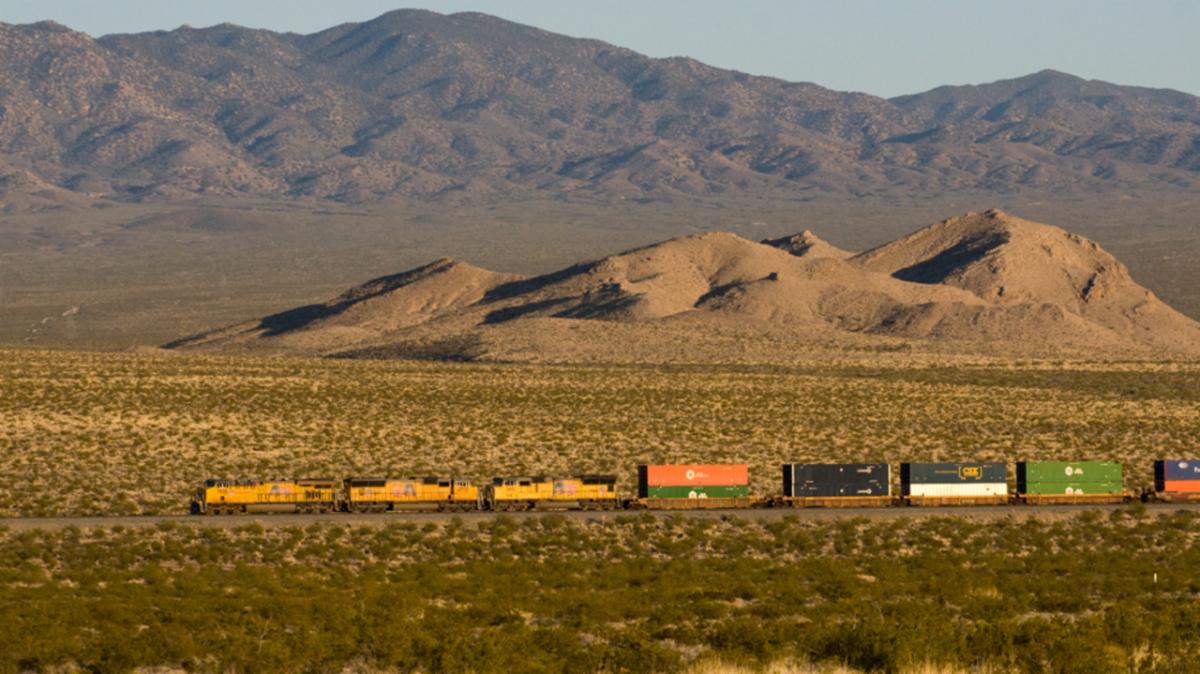
| | Editor's Note: In the last decade, trains have been discovered as lucrative targets for thieves, even out in remote areas like the Mojave Desert. This development was greatly assisted by the rail carriers themselves. When Precision Scheduled Railroading took off in recent years, the big Class One carriers began building much longer trains (which are easier targets for all sorts of reasons) and butchering their internal police forces. This one-two punch was compounded by a shortage of train crews a few years ago (once again due to PSR which emphasizes deep cuts to staffing) leaving trains stopped and vulnerable for hours awaiting a re-crew. Together, all of these self-inflicted wounds taught countless criminals that train robbing is a highly lucrative and relatively easy game. | | |
FreightWaves / March 23
Shoelace markers, brake-line sabotage and 40-man crews turn California’s remote rail corridor into a sophisticated theft playground
Walking the rail lines in California’s Mojave Desert reveals the staggering scale of organized cargo theft firsthand. The isolation that makes this corridor ideal for freight transit also makes it a prime hunting ground for sophisticated criminal networks that have turned rail cargo theft into a multimillion-dollar enterprise.
| | Editor's Note: When a project already promised must beg for its own funding in federal court, the issue is not paperwork, it is power. Chicago Transit Authority is being forced to fight for commitments that were already made, while U.S. Department of Transportation and Federal Transit Administration test whether obligation still means anything at all. If funding can be stalled at will, then infrastructure becomes a political lever instead of a public good. The cost is not abstract, it is measured in delayed service, aging systems, and communities left waiting for what was already theirs. | |
| |
Progressive Railroading / March 24
The Chicago Transit Authority on March 20 sued the Trump administration, seeking the release of $2.1 billion in federal funding obligated to the CTA for its Red Line extension (RLE) and Red and Purple modernization (RPM) projects.
In its federal court filing in the Northern District of Illinois, the CTA alleges that the U.S. Department of Transportation and Federal Transit Administration are not adhering to their own statutory and regulatory requirements about funding suspensions. Additionally, the CTA accuses the Trump administration of singling out Democrat-run programs, Politico reported.
| | |
WASHINGTON — The proposed Green Eagle Railroad, which would create a second U.S.-Mexico rail border crossing at Eagle Pass, Texas, has won support from Mexico’s federal government, project backers told the Surface Transportation Board in a filing on Monday, March 23.
Green Eagle, a unit of Puerto Verde Holdings, is seeking an STB ruling that would allow the construction of 1.33 miles of U.S. rail line as part of a 19-mile bridge, road, and rail project in both countries. The project, known as the Puerto Verde Global Trade Bridge, calls for a highway running parallel to the rail tracks as an alternative route to the existing, century-old bridge owned by Union Pacific and used by BNSF through trackage rights.
| |
| Editor's Note: A single transcontinental line may read like progress on paper, but scale without accountability is just consolidation by another name. Union Pacific Railroad and Norfolk Southern Railway promise seamless coast-to-coast movement, yet history suggests that when competition narrows, leverage follows. Grain shippers may gain a straighter route, but they may also inherit a system with fewer alternatives and less recourse when service falters. A network that large does not simply move freight, it sets terms. The question is not whether it can be built, but who it ultimately serves when it is. | |
| |
worldgrain.com / March 25
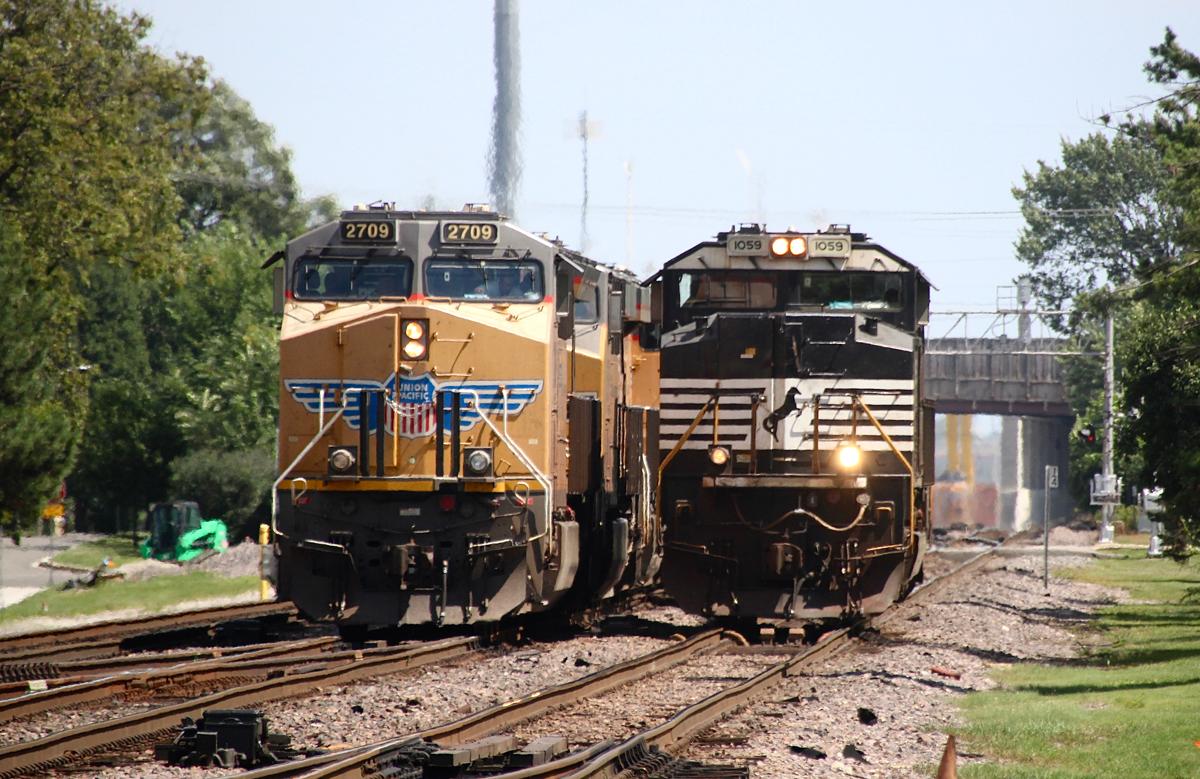
NASHVILLE, TENNESSEE, US — Two of the largest US Class I railroads, Union Pacific (UP) and Norfolk Southern Corp., are currently in the process of re-submitting an application to merge their two companies. If approved, the merger will create the nation’s first transcontinental freight rail line, which will cover more than 50,000 route miles across 43 states and connect about 100 North American ports without the need to transfer between rail companies when moving freight coast to coast.
The topic was referenced several times at the 130th annual National Grain and Feed Association (NGFA) conference, which took place March 22-24 in Nashville, Tennessee. UP and Norfolk Southern both are major shippers of grain and grain products throughout the United States.
| | Editor's Note: A worker was sent to clear a switch in winter conditions and never came home, and that is the only fact that should matter at the outset. The preliminary findings from the National Transportation Safety Board are not a conclusion, but they are a reminder of how thin the margin is between routine work and irreversible loss. Amtrak operates in an environment where production never fully yields to protection, and where time, weather, and movement converge on the same piece of track. When systems rely on perfect communication and flawless execution, they are already leaning on hope. The measure of this moment will not be in the report’s language, but in whether the conditions that allowed it are finally confronted. | |
| |
Progressive Railroading / March 26
The National Transportation Safety Board (NTSB) earlier this week issued a preliminary report on its ongoing investigation into a Feb. 23 accident in which an Amtrak roadway worker was struck and killed by an Amtrak snow-patrol train in Lancaster, Pennsylvania.
The accident occurred in the vicinity of the High Steel Industries facility, where a three-person Amtrak roadway maintenance work group was assigned to remove snow and ice from a switch following a winter storm, according to NTSB's report.
| | NEWS FROM AROUND THE LABOR MOVEMENT | | Each week, RWU includes a few articles about advances and developments in the larger labor movement that are of interest to railroad workers. Got an artcile to submit for possible inclusion next week? Email it along to raillabornews@gmail.com. Thank you! | | Editor's Note: Things are getting quite interesting in the International Brotherhood of Teamsters. Shifting political alliances, former dissidents who are now part of the incumbent officer core, and a new crop of activist oppositions who are unhappy with the O'Brian regime make for what will no doubt be an interesting election season this fall. Great to see democracy in action in one of the nation's largest unions! | | |
In These Times / March 24th
As general president of International Brotherhood of Teamsters, Sean O’Brien has operated with a “Teamsters vs. Everybody” mentality, especially when it comes to dealing with President Donald Trump and embracing the MAGA right. But now, 14 months into the second Trump administration, the labor movement and the entire working class — Teamsters members included — is under attack. In this episode of Working People, we speak with 26-year Teamster veteran Richard Hooker Jr. and 38-year Teamster veteran John Palmer, who are running together on the Fearless slate to oust O’Brien from leadership in the upcoming union election. Hooker Jr. is currently serving as the secretary-treasurer and principal officer of Teamsters Local 623 in Philadelphia, and hopes to unseat O’Brien as a candidate for Teamsters general president. Palmer is a Teamsters vice president at large, and is a candidate for the union’s general secretary-treasurer.
| | |
Common Dreams / March 28
Ezra Levin, co-founder of Indivisible, said on Saturday that a nationwide general strike is being planned for May 1 that will be modeled on the day of action residents of Minnesota organized in January against the brutality carried out by federal immigration enforcement officials.
Appearing at the flagship No Kings rally in Saint Paul, Levin praised the strength shown by the Minnesota protesters in the face of the US Immigration and Customs Enforcement (ICE) siege of their city this year, and said his organization wanted to replicate it across the country.
| | |
Labor Notes / March 22
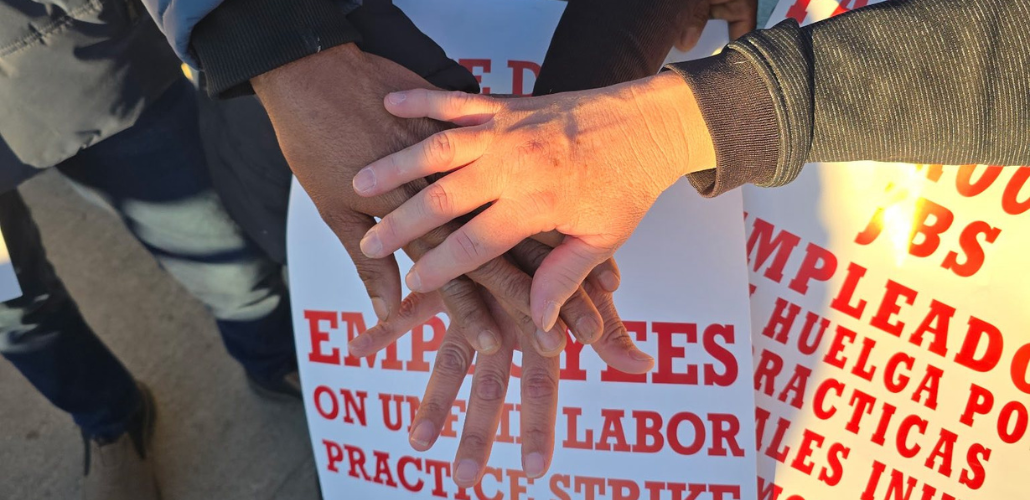
The 3,800 workers at the JBS beef processing plant in Greeley, Colorado, walked off the job on Monday, March 16, launching a two-week unfair labor practice strike.
This is the company’s flagship beef plant in the U.S. Its previous contract with Food and Commercial Workers (UFCW) Local 7 expired last July.
Strikers say JBS has been increasing the speed of the production line while cutting work hours from 40 a week to 35, squeezing out more work for less money. A thousand Haitian workers at the Greeley plant have filed a class action lawsuit against JBS for discriminatory practices that push them to work at dangerously fast line speeds.
| | WEEKLY DERAILMENT DEPARTMENT | | Each Tuesday in this news bulletin, RWU does our best to present a picture of what has been happening over the course of the previous week in terms of derailments in North America, and investigation determinations of previous accidents. NOTE: This list is by no means comprehensive. Smaller and less consequential mishaps are generally not reported here. If the wreck results in injury or fatality, or is especially damaging/extreme, a full article will appear as a feature in the dozen or so rail articles above. Know of a train wreck? Please feel free to forward a link to raillabornews@gmail.com for possible inclusion next week. Thanks! |
| | | |