Rail & Labor News from RWU
| | Weekly Digest Number 20 - May 19, 2026 | | Welcome to the RWU Rail & Labor News! This news bulletin is produced and emailed out each Tuesday morning. We hope you find each week's news and information useful. If so, please share with co-workers, friends, and colleagues. If you like, you can sign them up to get all the news from RWU HERE. Or forward them the link. Got a hot tip? Please forward the article and a link to raillabornews@gmail.com. Note: If you read over this news bulletin each week, you will be sure to never miss the important news of what is going on in the railroad world from a worker's perspective! | | THIS WEEK'S RAIL AND LABOR NEWS | | Editor’s Note: The workers of the Long Island Rail Road have done what workers have always done when left no other choice.. they stopped the wheels. Five unions standing together at midnight is solidarity in its purest form, and it is the only language that power has ever been compelled to understand. The MTA’s offer of 3% paired with demands for work rule givebacks is the oldest trick in the employer’s playbook.. a wage increase in one hand and a pocket pick in the other. The men and women who move hundreds of thousands of commuters every day deserve better than that, and they know it. | |
|
Trains Magazine / May 16th
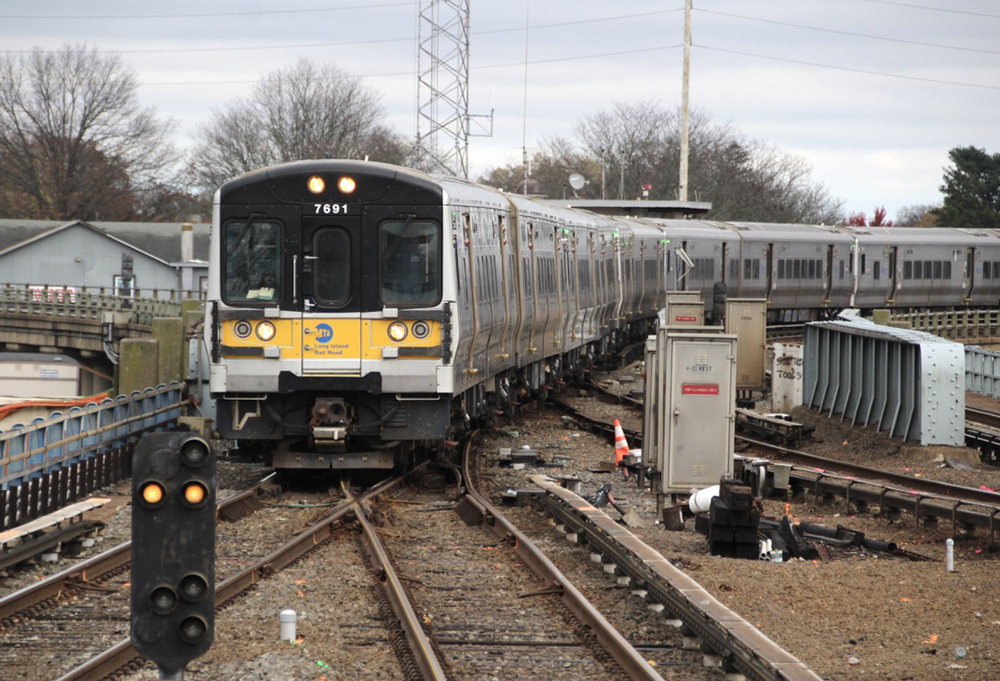
Five unions at the Long Island Rail Road have gone on strike, shutting down the nation’s busiest commuter railroad.
The five unions — the Brotherhood of Locomotive Engineers and Trainmen, Brotherhood of Railroad Signalmen, International Association of Machinists, International Brotherhood of Electrical Workers, and Transportation Communications Union — walked out at 12:01 a.m. today (Saturday, May 16) after failing to reach agreement with the Metropolitan Transportation Authority in lengthy negotiating sessions on Thursday and Friday.
Wage increases in the fourth year of a new contract have been the primary sticking point in the negotiations, with the unions seeking a 5% raise while the MTA offered 3%, but indicated it would increase that figure with union givebacks on work rules.
| |
| Editor's Note: When a railroad CFO stands before investors and describes workers as “unsupervised people out there” to be managed by centralized AI decision-making, he has told you everything you need to know about how this industry views its workforce. The language is revealing.. not skilled professionals, not the backbone of the operation, but a problem to be optimized away. Rail labor should take note.. the push toward AI on the property is not about safety or service, it is about control and cost reduction, and the workers will be asked to pay the price. Every automation initiative that strips decision-making from experienced hands in the field is a step toward a smaller, more compliant workforce, and that is precisely the point. | |
|
Trains Magazine / May 13th
CSX Chief Financial Officer Kevin Boone is bullish on technology in general and artificial intelligence in particular.
That was clear during his presentation to an investor conference today (May 13).
“We’re trying to prioritize the things that can have the most value near term from an AI perspective,” Boone said. “But when you think about a network where there’s a lot of unsupervised people out there working, the more tools you can [have] to manage a network, the better off we’re going to be. If we can centralize some of that decision-making and make the best decisions for the network, those are huge. The benefits are very, very good.”
AI is playing a role in a broad range of areas, including pricing, he says. “Early signs are very encouraging on giving us more visibility on pricing and how we go to market, and being more thoughtful around that,” Boone says.
| |
| Editor's Note: It is a remarkable moment when a retired Class I CEO stands before an industry conference and confirms what rail labor has said for years.. that Wall Street’s obsession with the operating ratio has hollowed out this industry at the expense of everything else. Rose is right that short-term financial thinking has driven this railroad into the ground, but the workers who were furloughed, the crews who were stripped to bare minimums, and the communities left without service already knew that long before he said it. The operating ratio did not just threaten volume growth.. it degraded safety, destroyed livelihoods, and gutted the workforce that actually runs these railroads. We welcome the candor, but labor has been raising this alarm from the ground level for over a decade. | |
|
Trains Magazine via Yahoo Finance / May 12th
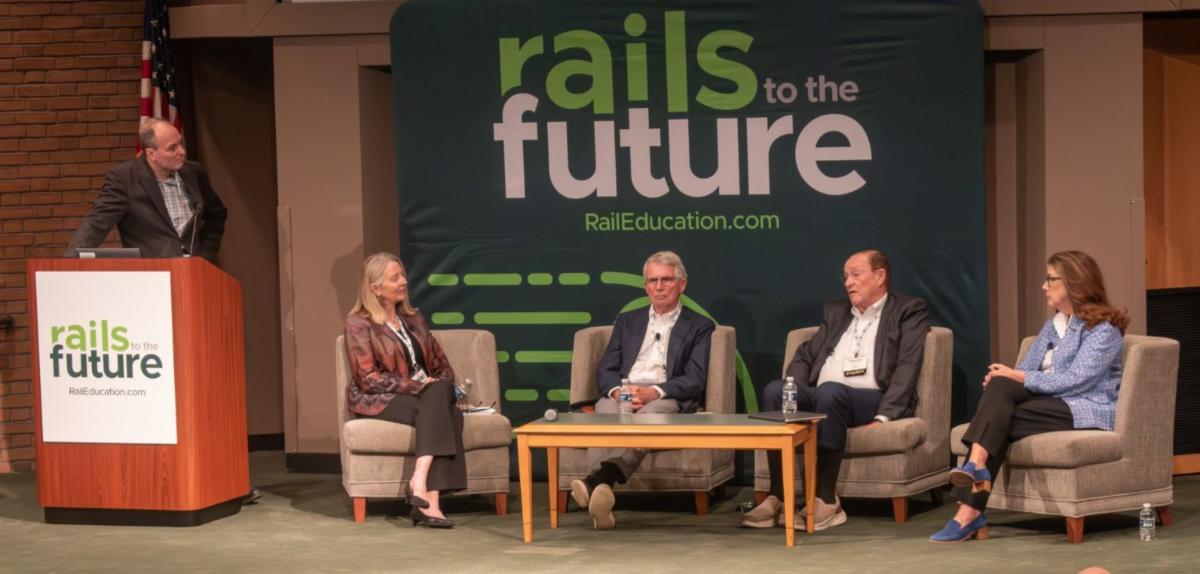
Wall Street's focus on ultra-low operating ratios has stifled Class I railroad volume growth and is a threat to the industry's future, retired BNSF Railway CEO Matthew K. Rose told a conference today.
"We have allowed short-term investment thinking to creep into this industry like I have never seen it," Rose said at Michigan State University's Rails to the Future conference.
"It allows this thinking to come in that … operating ratio is our guiding light. It's not," says Rose, who retired as BNSF's executive chairman in 2019. "Returns should be our guiding light."
| |
|
Progressive Railroading / May 12th
The unemployment rate for the U.S. transportation sector in April was 3.9% before seasonal adjustments, up 0.3 basis points from April 2025, according to a report from the Bureau of Labor Statistics.
The April transportation unemployment rate was slightly lower than the overall U.S. unemployment rate, which was 4% unadjusted in April, up 0.1 basis point from April 2025.
Seasonally adjusted, April transportation and warehousing employment totaled 6.6 million, up 0.5% from March, but down 1.1% from April 2025, U.S. Department of Transportation officials said in a press release.
| | Editor's Note: CPKC’s filing (though it is worth noting the irony of CPKC raising merger concerns from the other side of their own recently completed transnational consolidation) lays bare what rail labor has argued since this merger was first announced.. that Union Pacific and Norfolk Southern are asking regulators to take their word for impacts they have not bothered to fully document. When a competing railroad’s CEO publicly asks whether UP is hiding something from the STB, that is not a minor procedural dispute.. that is an indictment of the transparency this process demands. Consolidating two of the nation’s largest Class I railroads into a single behemoth does not serve shippers, communities, or workers; it serves shareholders. The STB must hold this application to the highest standard, and labor’s voice must be heard before a single stamp of approval is considered. | |
|
Railway Age / May 11th
Canadian Pacific Kansas City on May 8 filed 56 pages worth of comments (download redacted public version below) addressing the completeness of the revised Surface Transportation Board application on Union Pacific’s acquisition of Norfolk Southern.
“In those comments, we address why it does not appear that UP and NS have met the specific STB requirements to submit a detailed market impact analysis based on their projected future shares of rail traffic flows for key commodities and corridors,” CPKC President and CEO Keith Creel said. “This has left us asking, did UP overlook this specific instruction from the STB? If not, does UP have something to hide? One thing is certain: This is emblematic of UP continuing to have its own interpretation of rules and STB orders, and of how those apply to UP.”
“Having taken nearly four months to refile their application, longer than it took for them to prepare the initial filing, Union Pacific’s and Norfolk Southern’s new application doesn’t change the underlying reality that this mega-merger is unnecessary and falls well short of meeting the high benchmark set out in the Surface Transportation Board’s updated 2001 major merger rules,” Creel noted.
| |
|
Solutionary Rail / May 12th
“In the 10 years from 1970 to 1980, America’s relationship to its railroads underwent a profound reorientation of purpose, a paradigm shift that—if we examine it carefully—helps us understand and interpret the circumstances we find ourselves in today.”
So begins Episode 5.
As we saw in Episode 4, this paradigm shift was meant to address a profound crisis within the railroad industry: faced with competition from other modes of transport—which, unlike railroads, were heavily subsidized by the public—the nondiscriminatory service and pricing that we had required of railroad corporations for almost a century was now driving several of them into bankruptcy.
We also saw how policymakers went to extraordinary lengths in the 1960s and ‘70s to save the railroad corporations and keep the infrastructure they operated under private control. But the railroads’ financial woes persisted.
| | Editor's Note: Three retired Class I executives standing on a stage warning that nobody is actually growing this industry would carry more weight if the policies they presided over had not helped create the conditions they now lament. Precision Scheduled Railroading, Wall Street-driven workforce reductions, and a relentless focus on the operating ratio did not just stifle volume.. they drove away customers, demoralized workers, and left the network brittle. The biggest threat to railroad growth is not regulation or competition; it is an industry that spent a decade cutting the very people and capacity needed to serve demand when it arrives. Rail labor has not forgotten who made those decisions, and a conference room full of retired executives expressing concern does not erase that history. | |
|
Trains Magazine / May 14th
Michigan State University’s Rails to the Future conference lived up to its billing yesterday as a trio of retired railroad executives warned that stagnant freight volume, uneven service, short-term financial pressure from Wall Street, and regulatory hurdles threaten the long-term competitiveness of the industry.
Class I railroads are among the 12% or so of the 500 companies listed on the stock market in 1955 that are still around today, retired UP Senior Vice President D. Lynn Kelley noted.
“It’s thought that companies are not around because they don’t anticipate the next big thing,” she told a panel of three retired senior executives, including CSX President Clarence Gooden, NS CEO Wick Moorman, and UP President Beth Whited. What, Kelley asked, is the biggest threat facing railroads today?
“The biggest peril facing us today is growth … Everyone talks about growth, but nobody’s really growing,” replied Gooden, who retired in 2017.
| |
| Editor's Note: BNSF has done the math that UP and NS hoped regulators would not bother to check, and the numbers do not add up (though again, shippers and workers should note that BNSF’s concern for competition did not extend to their own absorption into the Berkshire Hathaway portfolio). Claiming $3.5 billion in shipper savings by assuming truck-to-rail conversions in lanes where rail is already slower and more expensive is not a merger benefit.. it is a projection built on a foundation that will never materialize. The STB exists precisely to scrutinize these claims before they become irreversible structural reality, and this application deserves that scrutiny in full. RWU stands with shippers on this one.. a merger that eliminates competition does not lower rates, it locks them in. | |
|
Trains Magazine / May 15th
The contention by Union Pacific and Norfolk Southern that their merger will lead to $3.5 billion in shipper savings is “manufactured,” BNSF Railway says in a letter to customers, and reflects current pricing, rather than a merger benefit.
The letter from Chief Marketing Officer Tom Williams, posted on Thursday, May 14, says the railroad’s review of the updated merger application “only reinforces our serious concerns: this merger would very substantially harm competition and the competitive balance that now exists in U.S. freight rail.”
The application’s $3.5 billion savings figure, Williams says, “takes 2.1 million truckloads, assumes they all switch to rail, and calls the total price difference a ‘benefit.’ Worse, most of these ‘switches’ are in lanes where rail is actually slower or more expensive than truck, so shippers won’t switch and no ‘savings’ would occur. The application is very careful not to say that rail rates will go down after the transaction.”
| |
|
High Speed Rail Alliance / Event on June 5th
North Carolina is the third-fastest-growing state in the U.S. by population. As economic activity and travel demand increase, more train service is needed.
Enter All Aboard NC, a new organization “connecting the connectors”, assembling a strategic A-team of state and local leaders, chambers of commerce, metropolitan planning organizations, and partner advocacy groups. Its mission? To advance a regional rail network that serves all North Carolinians.
Chair Beau Mills joins us to share more about All Aboard NC’s approach to train advocacy, the status of current projects, and what lies ahead in one of the most strategic battlegrounds for passenger rail expansion in the country.
| | NEWS FROM AROUND THE LABOR MOVEMENT | | Each week, RWU includes a few articles about advances and developments in the larger labor movement that are of interest to railroad workers. Got an artcile to submit for possible inclusion next week? Email it along to raillabornews@gmail.com. Thank you! | |
The Guardian / May 18th
Last month, 15 home health workers camped outside New York’s city hall for six days. They refused to eat, only ending their hunger strike after securing a promise that the city council would vote on a bill to end their mandatory 24-hour workday. It’s a practice workers argue is both a labor rights violation and a quiet public health crisis.
Now, a month later, a council vote for the No More 24 Act still has not materialized. Workers announced on Friday that they will go on another hunger strike.
“We are very confident that our movement is getting bigger and there will be more pressure to do the right thing,” said Zishun Ning, an organizer with the Chinese Staff and Workers Association.
Since 2015, the Ain’t I a Woman?! coalition of home care aides, youth groups and feminist organizations has been organizing against poor working conditions through hunger strikes, lawsuits and legislation. Under current New York labor law, agencies that assign workers to 24-hour live-in shifts are only required to pay them for 13 hours, with the remaining 11 hours classified as designated sleep and meal time, even though most home health aides care for their patients around the clock.
| |
In These Times / May 14th
When the Trump administration’s Department Of Government Efficiency (DOGE) was disbanded late last year, employees at the U.S. government’s vast labyrinth of agencies, boards, and commissions might have been forgiven for breathing a sigh of relief. In less than a year, the Elon Musk-helmed agency’s slash-and-burn decimation of the federal workforce had left some offices barely operational and eliminated others altogether before ceasing to exist in November 2025.
But it appears that seeing thousands of the unelected civilians whose labor makes the government run lose their jobs wasn’t enough to slake Trump administration officials’ thirst for punishment — they’re just being quieter about it now. The headlines may have moved on to other catastrophes, but smaller tragedies continue to unfold in the background.
As Confined Space’s Jordan Barab reported on Thursday, the administration has been slashing away at independent entities like the National Labor Relations Board, the Merit Systems Protection Board, and the Consumer Product Safety Commission that tend to punch above their weight without drawing much attention outside of their specialized spheres.
| | |
The Guardian / May 12th
US workers overwhelmingly support pro-worker policies on artificial intelligence (AI) and view labor unions as the most reliable protectors of workers from the effects of AI, according to a new poll released by the AFL-CIO, the largest federation of labor unions in the US.
More than nine out of 10 workers surveyed expressed support for policies on artificial intelligence that labor unions may fight for, including 95% supporting a requirement that a human be the final decision maker on any issues affecting individual workers and their employment.
Some 92% also support advanced guardrails against harmful uses of AI in workplaces and require transparency and accountability when employers use AI.
| | | | |