Rail & Labor News from RWU
| | Weekly Digest Number 40 - October 6, 2026 | | Welcome to the RWU Rail & Labor News! This news bulletin is produced and emailed out each Tuesday morning. We hope you find each week's news and information useful. If so, please share with co-workers, friends, and colleagues. If you like, you can sign them up to get all the news from RWU HERE. Or forward them the link. Got a hot tip? Please forward the article and a link to raillabornews@gmail.com. Note: If you read over this news bulletin each week, you will be sure to never miss the important news of what is going on in the railroad world from a worker's perspective! | | THIS WEEK'S RAIL AND LABOR NEWS | | Editor's Note: Union Pacific tells its workers to stop, ask questions and put safety first, but OSHA says that when a North Little Rock yardman actually did so, management pulled him from service within minutes and eventually fired him. That is the great fraud of corporate safety culture.. safety is sacred right up until a worker has the audacity to let it interfere with production. A rulebook that protects management while punishing the worker who obeys its spirit is not a safety program; it is a system of obedience dressed up in reflective clothing. If workers are expected to risk their jobs every time they refuse to risk their lives, then all the slogans about safety are worth exactly what Union Pacific paid to print them. | |
|
KATV / October 1st
The U.S. Department of Labor’s Occupational Safety and Health Administration (OSHA) has found that Union Pacific Railroad Co. violated federal railroad safety law when it removed a North Little Rock employee from service and later fired him after he raised concerns about lightning near the workplace.
OSHA’s whistleblower investigation found that the employee, a yardman, notified management about nearby lightning and cited federal safety standards and National Oceanic and Atmospheric Administration lightning safety guidelines.
According to OSHA, the employee initiated a safety stand-down and refused to work until the storm passed. Within minutes, Union Pacific removed him from service and later charged him with insubordination. The company terminated his employment May 30, 2024.
| |
| Editor's Note: For half a century, Americans have been told to accept the disappearance of passenger trains as though it were some law of nature rather than a choice about what this country chooses to build and maintain. Colorado is now asking a more useful question.. whether transportation should exist only where private capital finds an immediate profit, or whether a public good is worth building because ordinary people need it. Railroads once tied communities together before consolidation, abandonment and the automobile helped tear much of that network apart. A nation wealthy enough to move anything anywhere for commerce ought to be capable of moving its own people too. | |
|
Trains Magazine / October 2nd
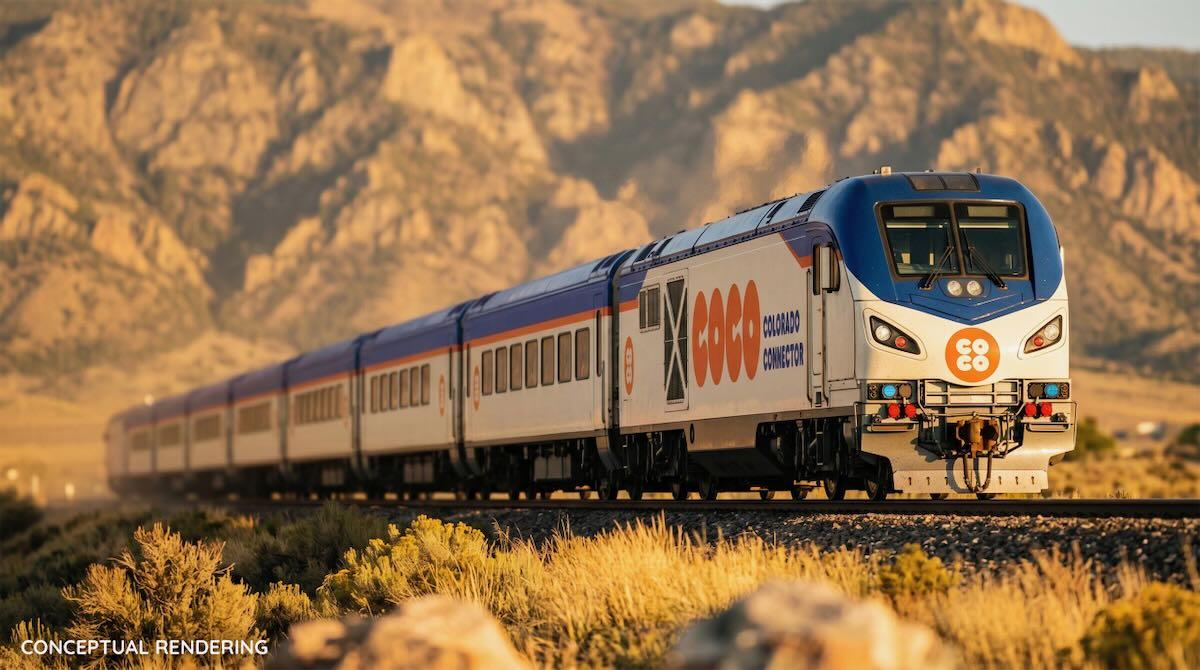
For anyone interested in the future of intercity passenger rail in North America, Colorado is the state to watch this fall.
On Election Day, Colorado voters will decide whether to provide a dedicated, permanent source of funding for the Colorado Connector, or CoCo. CoCo is an intercity passenger rail system connecting communities along the Front Range between Fort Collins, Denver, and Pueblo.
Passenger rail here is hardly a new idea. Service was lost in the 1960s and concepts to restore it date back to the 1980s. What has changed is the convergence of priorities, partnerships and resources needed to turn the concept into a corridor with a practical path forward.
| |
|
Trains Magazine / October 2nd
Independent analyst Rick Paterson, who closely follows Class I railroad publicly reported performance data, has compiled a 13-week history of manifest and local service.
The Surface Transportation Board began requiring the railroads to report the information weekly beginning July 8. The data, an outgrowth of the board’s temporary reporting requirements that were ordered during the widespread 2022 service problems related to crew shortages, became available for the first time on Sept. 29.
“In terms of some conclusions, remember the golden rule — be very careful comparing railroads with each other on any metric due to differences in business mix, geography, methodology, and the IT systems used to collect and calculate the information,” Paterson writes in his State of the Rails weekly report for Oct. 2. “Basically, assume a margin of error of at least a few percent if you’re determined to compare them.”
|
|
Freight Waves / October 2nd
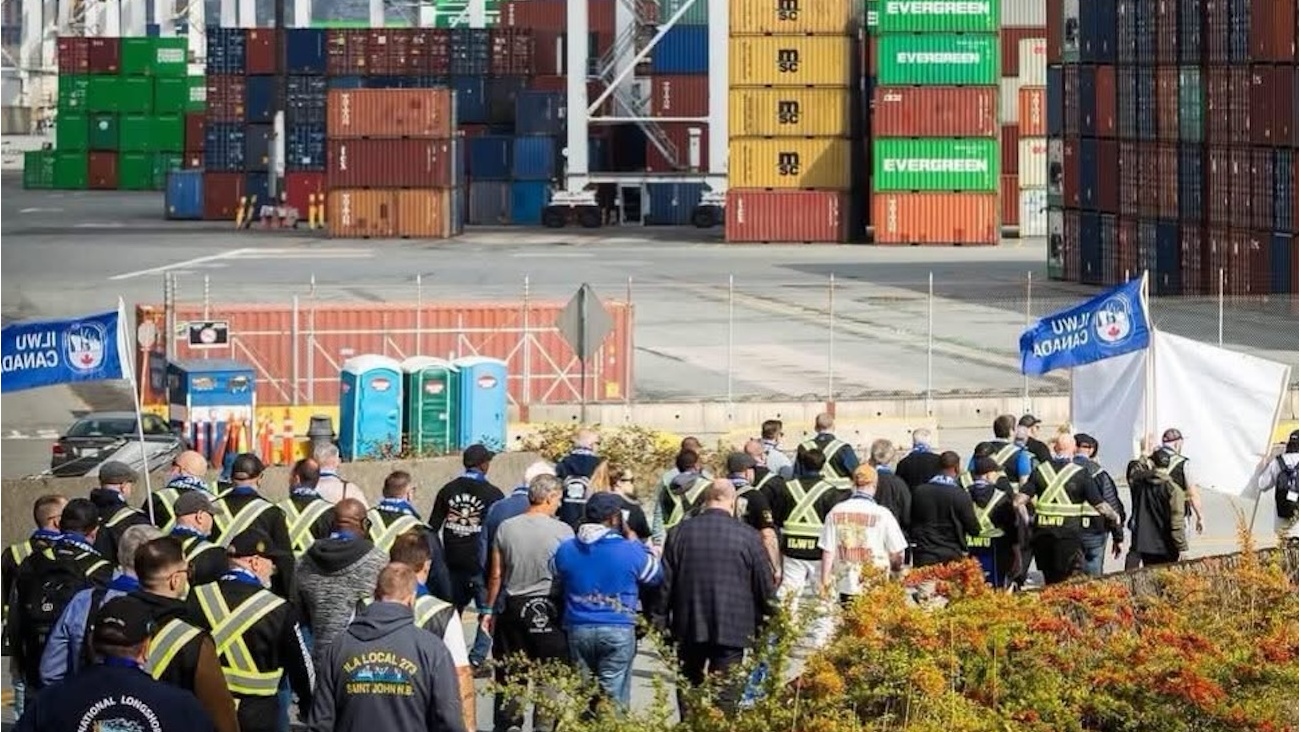
About 100 dockworker union delegates from Canada, the United States, Australia and New Zealand rallied outside DP World’s Centerm container terminal at the Port of Vancouver last week, launching an international campaign against what they describe as job-threatening automation and artificial intelligence at ports.
The protest followed the International Dockworkers Anti-Automation Summit, held at Vancouver’s Maritime Labour Centre in late September. Delegates marched to the DP World terminal Sept. 23 after adopting a shared position that accepts technology intended to improve safety and port communities but rejects its use to cut jobs, outsource work, expand surveillance, undermine unions or erode safety standards.
The current British Columbia longshore agreement is set to expire in March 2027, and the question of how automation affects jobs, work rules and bargaining rights is expected to be a prominent issue.
| | Editor's Note: Fourteen workers have already been killed riding equipment during shoving movements, and now another conductor has been airlifted from a railroad yard with serious injuries. At some point, an industry that can move 219 cars in a single shove must stop pretending it lacks the ingenuity to move them without putting a human being on the point of danger. The NTSB has supplied the body count, identified the hazard and pointed to safer alternatives; what remains is whether the railroads value a worker’s life enough to change the way the work is done. No job should require a person to become the expendable part of the equipment. | |
|
Trains Magazine / October 1st
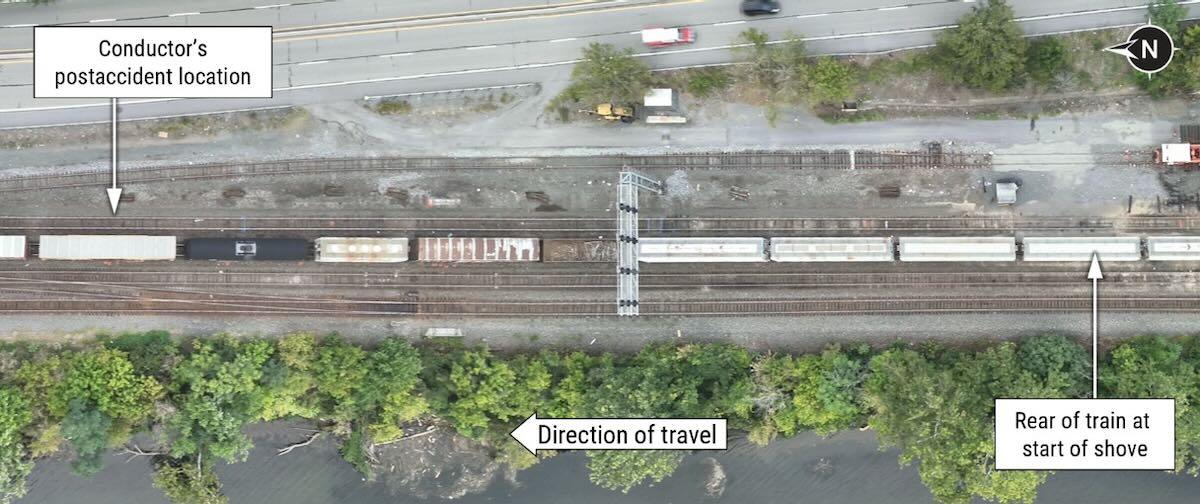
A Norfolk Southern conductor suffered serious injuries when he fell from the tank car he was riding during a shoving move, the National Transportation Safety Board says in its preliminary report on a Sept. 8, 2026, incident at Conway Yard in Conway, Pa.
The report issued today (Oct. 1, 2026) addresses the latest of a series of serious injuries and fatalities that have occurred during shoving moves. The NTSB last month called for an end to crew members riding cars during switching shove moves, citing 14 deaths in such situations since October 2020 [see “NTSB recommends end …,” Trains.com, Sept. 21, 2026].
The injury occurred while the train’s crew was making a westbound move shoving a 219-car train from the main line into the yard. The conductor, riding a tank car, called for the train to begin the shove move, but the engineer then stopped receiving instructions from the conductor and could not reach him on the radio. As the engineer began to stop the train, it experienced a train-line-initiated emergency brake application. The engineer notified the dispatcher, and an NS manager found the injured conductor about eight railcar lengths from where the shove began. The conductor was airlifted to a medical center in Pittsburgh for treatment.
| |
| Editor's Note: Railroad Retirement has always rested on a bargain... give the railroad your nights, your holidays and thirty years of your life, and there will be something worth having at the end of it. There is something profoundly dishonest about selling workers that promise while building an industry whose celebrated achievement is learning how to employ fewer and fewer of them. The carriers cannot hold Railroad Retirement out as the reward for staying while treating every railroad job eliminated through consolidation, automation and attrition as another victory for efficiency. If the promise depends upon railroaders, then preserving the people who fund it ought to matter at least as much as eliminating them. | |
|
Dan Bostek and Steve Blinn / September 21st
Every railroader has heard the pitch. Usually on the first day, sometimes before the drug test. Stay thirty years, make it to sixty, and you and your spouse walk away with a pension the rest of the country does not get. The hours, the nights away from home, the holidays spent on a locomotive, the phone that rings at two in the morning: Railroad Retirement is the industry's answer to all of it. It is the reward for staying.
We are both in the system, so this is not an outside look.
The question we think working railroaders should be asking is not the one the headlines ask. It is not whether Railroad Retirement will be there when you retire. The Board's own actuaries answer that one every June, and their answer this year was yes, for twenty-five years, under every scenario they ran. The better question is what those scenarios assume about railroad employment, and whether the industry being built right now, through Precision Scheduled Railroading, through the largest merger in rail history, and through the push toward one-person crews and automated terminals, looks anything like the industry the actuaries modeled.
| |
| Editor's Note: It is important to note that the rail industry at the time was very opposed to the implementation of this law that made the Janny coupler standard on us railroads and outlawed the antiquated link-and-pin system. In fact that same industry also opposed the law that mandated air brakes around the same time. In fact that same industry - which loves to tout its safety record - as opposed since that time practically every single safety appliance device mandated by law including switchpoint indicators in dark territory, PTC, the two-way end of train device, ECP braking, and any and all restrictions on train length or blocked crossings, along with any regulation mandating minimum crew size. | | |
The Safety Appliance Act became law on March 2, 1893. The sentence at its center is still on the books today. A rail vehicle in interstate service must have couplers "coupling automatically by impact, and capable of being uncoupled, without the necessity of individuals going between the ends of the vehicles." Congress did not describe a machine.
It described a place a man was no longer allowed to stand. Every knuckle coupler on every freight car in North America is the physical answer to that one sentence. The Federal Railroad Administration stated the reason plainly in its 2011 rulemaking: in the eight years before the Act passed, the number of railroad employees killed or injured equaled the total number of people the railroads employed in a single year.
The coupler it replaced was a tube. The link-and-pin coupler was a tube-like drawbar body that received an oblong iron link. To join two cars, a worker stood in the gap between them as they came together, guided the link into the opposite pocket with his hands, and dropped a pin through a hole a few inches from the end of the tube.
| |
CNN / October 4th
American railroads were once the envy of the world and the engine of its industrial age. But that hasn’t been the case for more than half a century.
Brightline, founded in 2012, wanted to change all that. The Florida private rail company ran yellow trains at near high speed between Miami and Orlando. It has big plans to launch another line with true high speed 200 mph trains making the 200-mile trip between Las Vegas and Rancho Cucamonga, California, just outside of Los Angeles.
Then it filed for bankruptcy last month after not making enough money to cover its debts. But the railroad is still operating its Florida service and moving ahead with plans for the true high speed trains between Las Vegas and Southern California.
| |
Progressive Railroading / October 1st
CPKC and the Brotherhood of Locomotive Engineers and Trainmen (BLET) have reached a new tentative five-year collective agreement covering employees on the southern portion of CPKC's Dakota, Minnesota and Eastern (DM&E) property.
The agreement provides increased wages and more flexible work rules for about 250 train and engine employees operating trains in Minnesota, Iowa, Illinois and Missouri.
"We are very pleased to have reached this latest tentative collective agreement benefiting more of our railroaders in the United States," said CPKC President and CEO Keith Creel in a press release.
| |
Trains Magazine / October 2nd
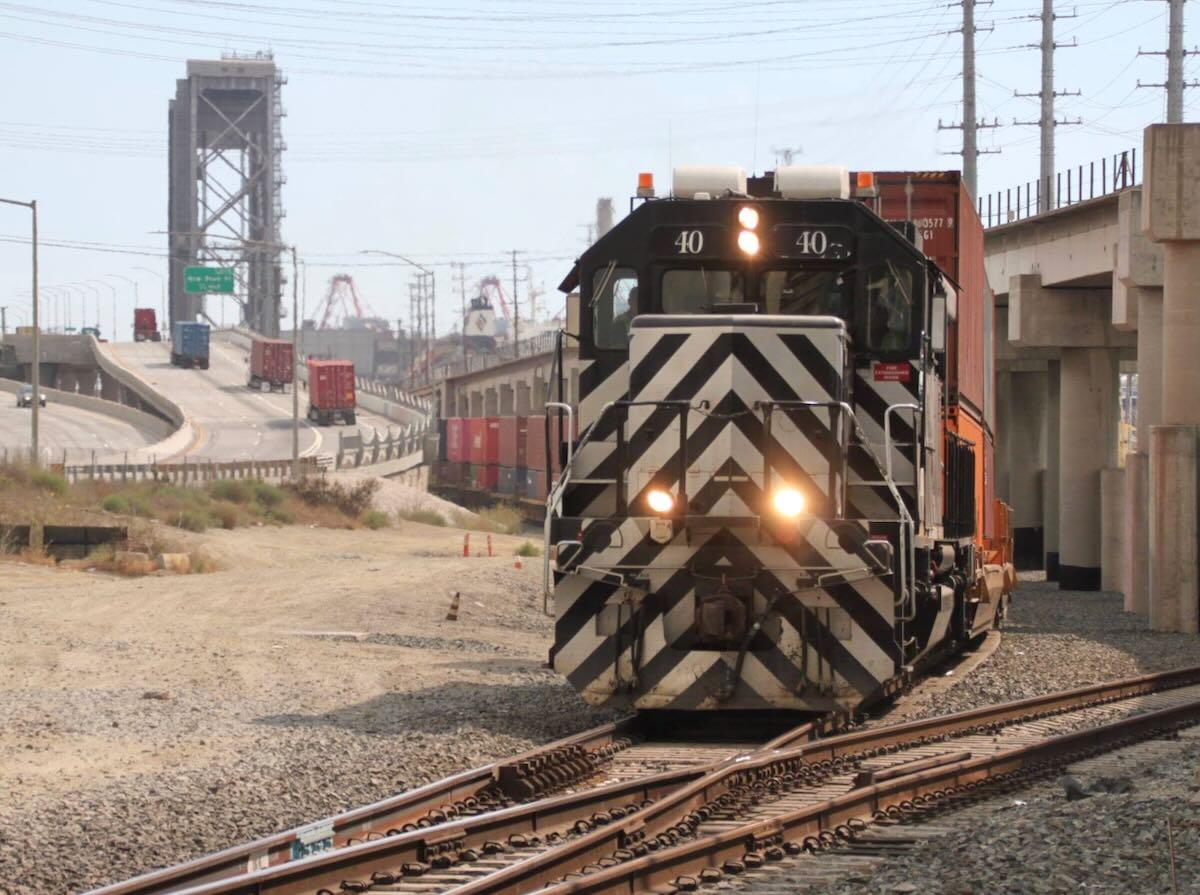
Alameda Belt Line has filed notice with the Surface Transportation Board that it intends to take over rail operations at the Ports of Los Angeles and Long Beach, a move that could come as soon as Oct. 16.
ABL, a partnership of Union Pacific and BNSF Railway, would replace Pacific Harbor Line, which has held the operating contract since 1998. In July, ABL filed a required 60-day notice informing workers of its intent to take over the operation after being selected by the ports; at that time, the parties said that negotiations were still ongoing [see “Alameda Belt Line still in negotiations …,” Trains.com, July 16, 2026].
A spokesman for the Port of Los Angeles said today that an agreement has been reached but must still be approved by the commissioners at both ports.
| |
Progressive Railroading / October 2nd
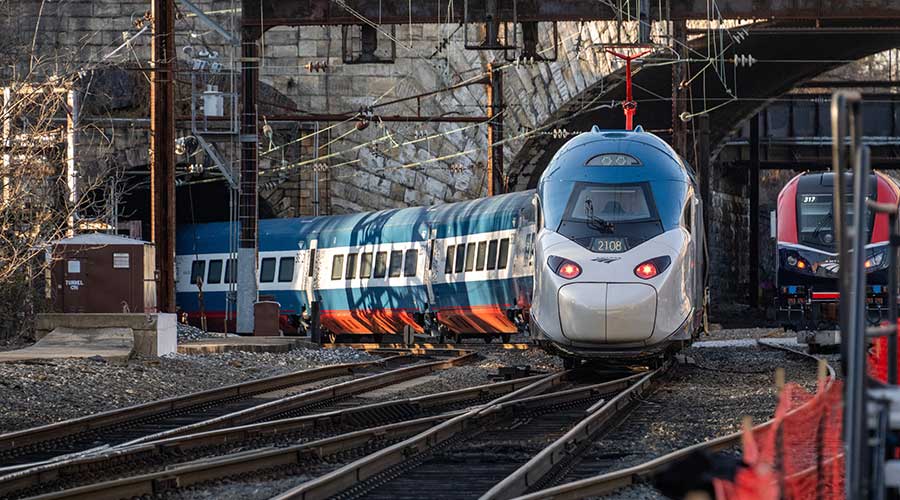
Amtrak has announced the recipients of the first round of grants awarded through its $50 million Community Investment Program (CIP) linked to the B&P Tunnel Replacement project.
Grants will go to 11 west and central Baltimore organizations to support workforce training, neighborhood improvements, youth programs, historic preservation and other initiatives.
The B&P Tunnel Replacement Program, Amtrak’s largest-ever infrastructure investment, entails construction of a new rail alignment and modern tunnel to replace the more than 150-year-old B&P structure. The project will construct two new tunnels for electrified Amtrak and Maryland Area Rail Commuter (MARC) passenger trains, a new fully accessible West Baltimore MARC Station, 10 miles of rail infrastructure upgrades, and local street and bridge improvements along the alignment, Amtrak officials said in a press release.
| | NEWS FROM AROUND THE LABOR MOVEMENT | | Each week, RWU includes a few articles about advances and developments in the larger labor movement that are of interest to railroad workers. Got an artcile to submit for possible inclusion next week? Email it along to raillabornews@gmail.com. Thank you! | |
Labor Notes / September 28th
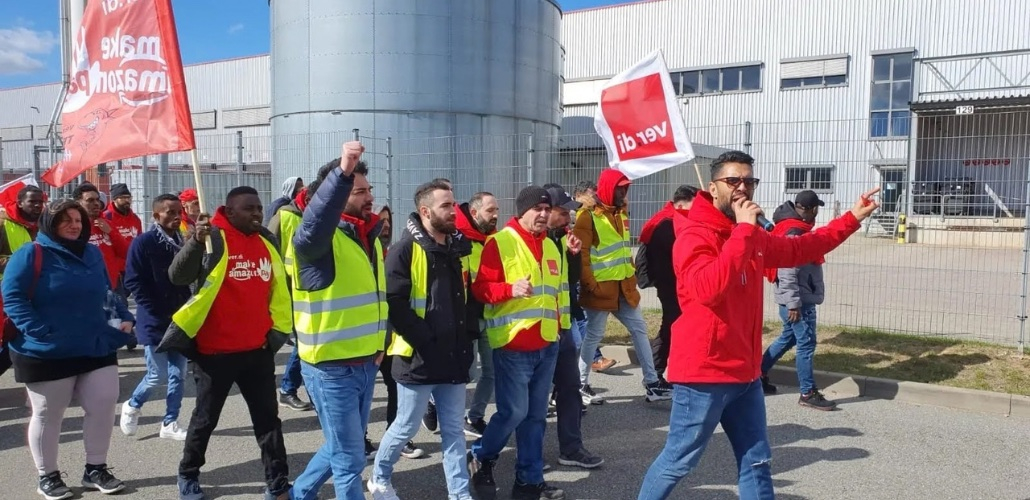
Amazon workers at four delivery and sorting warehouses in Germany are organizing to make every minute count. They’re demanding that Amazon pay them for every minute of work, saying in a petition that the company is stealing their time.
Working even 10 unpaid minutes a day, the workers say, adds up to 4.5 workdays per year of free labor, or about $712 U.S. (618 euros) in stolen wages. And at the most extreme, stolen time can reach up to 45 minutes per day.
The petition identifies three ways Amazon is stealing workers’ time:
1) Threshold time, where if a worker clocks in up to 15 minutes early for a shift or clocks out up to 15 minutes late, the company rounds back down to the scheduled time
2) Changing times to put on safety gear and boots
3) Walking time to pick up and return equipment
| |
The Guardian / October 3rd
California’s laws aimed at protecting workers from the impacts of artificial intelligence could pave the way for broader workplace safeguards across the US as calls for regulating the technology mount. As the federal government goes hands-off on AI, California is taking the reins to address workers’ biggest fears.
On Thursday, California governor Gavin Newsom signed a suite of new laws that ban bosses from relying entirely on AI to decide whether to fire workers, using it to predict employees’ emotional states or collecting neural data, meaning the information from electrical signals of someone’s brain or nerves. They also require companies to notify workers if layoffs were caused by AI and prohibit AI surveillance in workplace bathrooms.
The new laws come as workers increasingly worry whether AI will take their jobs, lead to discrimination and increase workplace surveillance. Unions, worker advocates and even some lawmakers pushed for the new rules, a regulatory shift for a technology that has largely developed unchecked. California, home to many of the leading companies developing AI, represents one of the first states to roll out a sweeping set of workplace regulations targeting the technology.
| | |
The Guardian / September 29th
The union representing more than 8,000 workers at the Environmental Protection Agency (EPA) filed a lawsuit against the agency and administrator Lee Zeldin on Tuesday alleging the agency illegally terminated the union’s collective bargaining agreement.
The lawsuit, filed by two local unions of the American Federation of Government Employees (AFGE), claims the agency failed to justify the contract’s termination and was motivated by a desire to repress political dissent, a violation of the employees’ first amendment rights.
“While the dedicated civil servants … are working hard every day to advance the Agency’s mission to protect human health and the environment, the Agency has turned its back on them, unlawfully eliminating their workplace protections and stifling their free speech rights,” the lawsuit said.
| | WEEKLY DERAILMENT DEPARTMENT | | Each Tuesday in this news bulletin, RWU does our best to present a picture of what has been happening over the course of the previous week in terms of derailments in North America, and investigation determinations of previous accidents. NOTE: This list is by no means comprehensive. Smaller and less consequential mishaps are generally not reported here. If the wreck results in injury or fatality, or is especially damaging/extreme, a full article will appear as a feature in the dozen or so rail articles above. Know of a train wreck? Please feel free to forward a link to raillabornews@gmail.com for possible inclusion next week. Thanks! |
| | | |