|
Rail & Labor News from RWU
| | Weekly Digest Number 44 - November 3, 2026 | | Welcome to the RWU Rail & Labor News! This news bulletin is produced and emailed out each Tuesday morning. We hope you find each week's news and information useful. If so, please share with co-workers, friends, and colleagues. If you like, you can sign them up to get all the news from RWU HERE. Or forward them the link. Got a hot tip? Please forward the article and a link to raillabornews@gmail.com. Note: If you read over this news bulletin each week, you will be sure to never miss the important news of what is going on in the railroad world from a worker's perspective! | | THIS WEEK'S RAIL AND LABOR NEWS | | | | |
|
Trains / October 30th
CPKC has asked the Surface Transportation Board to end its review of the proposed Union Pacific–Norfolk Southern merger. It argues that remarks UP CEO Jim Vena made at a shipper conference discouraged customers from taking part. The filing came two days after CPKC CEO Keith Creel attacked the deal on the railway's earnings call. UP says Vena's comments were taken out of context and that it has threatened no one. CPKC says it will soon file evidence that the merger would harm the public interest.
| |
| | | |
|
Stop the Rail Merger Coalition
The Freight Rail Customer Alliance, which represents captive rail shippers in manufacturing, agriculture, chemicals and energy, has joined the Stop the Rail Merger Coalition in opposing the proposed Union Pacific–Norfolk Southern merger. The alliance's members include coal-burning utilities and trade associations representing more than 3,500 companies that rely on rail to move coal and other commodities. The coalition argues further consolidation would give the two railroads more power to raise shipping rates and cut service, with the costs passed on to consumers.
| |
| | | |
Editor's Note: Editor's Note: RWU urges all rail workers and concerned citizens to comment on these developments. On the question of the UP - NS Merger - which we have vigorously opposed since it was first announced - please see the link HERE and comment through the website of our friends at Public Rail Now. | |
| |
Daily Kos / October 29th
A Daily Kos community post urges rail supporters to file public comments on pending decisions affecting U.S. freight and passenger rail, including Amtrak's proposed restructuring and the Union Pacific–Norfolk Southern merger. The author says effective comments name a specific concern, explain why it matters and suggest a fix. The post also covers changes to Amtrak service and equipment, and warns that a merger could cost regional short lines access to important connections and trackage rights.
| |
| | | |
Editor's Note: There is general skepticism over this proposed "reorganization" of Amtrak. The passenger carrier's problems stem from endless government attacks upon its very survival, hostile "host" freight railroads, not enough rolling stock, worn out equipment, poor on-time performance, limited routes and frequencies and more. None of this will be solved by some vague corporate "restructuring." Are those who advocate this nonsense out of touch with reality? Or is this whole thing a thinly veiled scheme by Amtrak's detractors to slice up and privatize Amtrak? | |
| |
Rail Passengers Association / October 2026
The Rail Passengers Association has filed comments with Amtrak's board on its plan to split the company into three subsidiaries under one parent: an infrastructure manager, a rolling stock manager and a passenger services unit. The association's president, Jim Mathews, set out tests any reorganization should meet, covering passenger impact, the national network, finances, governance and long-term growth. The group says it doesn't oppose reform outright. Its worry is that a restructured Amtrak could simply divide existing resource shortages among separate entities.
| |
| | | |
|
Trains / October 24
Amtrak's board will hold a one-hour online meeting on Nov. 10, from 2 to 3 p.m. Eastern, to take public comment on its plan to reorganize the company into passenger services, infrastructure and rolling stock divisions under a parent company. Speakers will be called first-come, first-served and get up to two minutes each. The board won't give a presentation, answer questions or respond to comments during the meeting. Details of the restructuring are still limited.
| |
| | | |
Editor's Note: The orgy of profit making continues as each Class One railroad reports its quarterly earnings. Note that - just as with the other carriers who have previously reported - CP did nothing to gain the new traffic and revenue, it is all due to factors beyond the carrier's control. | |
| |
FreightWaves / October 28th
Canadian Pacific Kansas City reported a 16% rise in third-quarter core adjusted earnings per share on Oct. 28. Higher volumes and growth in grain and intermodal revenue outweighed rising fuel costs. Grain revenue grew to $644 million and intermodal revenue to $581 million. Higher fuel costs pushed the operating ratio up to 64.8% from 63.5%. The quarter also included a $67 million tax charge tied to Canadian reassessments of the 2023 Kansas City Southern acquisition.
| |
| | | |
Editor's Note: Not to be cynical, but we have every reason to believe that the rail industry will not hang onto this new traffic once conditions return to "normal." None of the factors that have caused the spike in rail freight traffic this past year has anything to do with what the industry has done or not done. These factors are beyond the rail industry's control. Therefore, it is rational to believe that once those factors no longer exist, the traffic will be lost. Unless - as the rail chiefs so astutely point out - service can be maintained. But this is a contradiction, since no sooner than traffic begins to slide, and revenue and OR along with it, the PSR model calls for cuts to personnel, maintenance, inspection and all the rest, and service goes right out of the window. | |
| |
Trains / October 27th
Class I railroads gained freight this year as high fuel prices and a trucking capacity crunch, tied to stricter federal enforcement of driver rules, pushed shippers toward rail. On third-quarter calls, executives said keeping that business depends on service. Union Pacific CEO Jim Vena admitted UP won't keep all of it. Norfolk Southern CEO Mark George said that without structural changes, the truck-to-rail shifts may last only a year or two. CSX volume rose 5% in the quarter.
| |
| | | |
Editor's Note: The railroads continue to suffer from escalated thievery of their trains. In this case, thousands of passengers were also affected by the pilfering of a container train along a busy commuter/Amtrak line. So why this spike in attacks on our nation's trains? Again, this is a self-inflicted wound, part of the numerous "hidden costs" of "Precision Scheduled Railroading." Implemented wholesale across North America in the last decade, PSR is a profit-making gimmick that emphasizes deep cuts to maintenance, inspection, staffing, policing and anything else that costs money. Combined with the PSR practice of building super long trains - now with no one left to protect them, poking their noses out of protected terminals, stopped on the mainline for hours - this all makes container trains easy marks for criminals. So in short, PSR taught countless thieves the lucrative trade of modern day train robbing. | |
| |
Daily Herald / October 27th
A cargo theft from a freight train near the Western Avenue station in Chicago stopped Metra's BNSF Line from 8:48 to 10:35 a.m. on Oct. 27. It affected at least 10 commuter trains and caused more delays afterward. BNSF and Chicago police responded, and no one was hurt. BNSF wouldn't discuss the case but said organized cargo theft is a growing threat to public safety and the supply chain. The BNSF Line, which runs from Aurora to Union Station, is Metra's busiest.
| |
| | | |
Editor's Note: As outlined in the editor's note about the previous article, it is apparent that much of this cargo theft was a self-inflicted wound on the part of the rail industry itself. The carriers made super profits by cutting train crews, running super long trains, making huge cuts to their police force and all the rest. But there were costs associated with this irresponsible money making. But as always, corporate America comes hat in hand, demanding that the taxpayers foot the bill, while the stockholders reap the profits. | |
| |
Trains / October 29th
At an Oct. 28 webinar hosted by the rail advocacy group GoRail, rail, trucking and retail representatives pushed for passage of the Combating Organized Retail Crime Act. Speakers said theft rings increasingly use identity fraud and tampered load and routing data. Such schemes grew from about 2.5% of incidents in 2018 to roughly 25% by 2023. They said cases that cross jurisdictions and are hard to prosecute need a federal response, and that smaller railroads lack the anti-theft resources Class I carriers have.
| |
| | | |
|
Trains / October 28th
A technology outage that began Oct. 27 took down many of CSX's operating systems, including crew calling, yard inventory, train bulletins and work orders. It also left the railroad unable to exchange data or interchange cars with other Class I railroads. Dispatching and positive train control kept working, and CSX said the outage wasn't a cyberattack. Employees reported crews being taken off trains and stranded at away-from-home hotels without the paperwork needed to run. Amtrak trains on CSX ran normally.
| |
| | | |
|
International Railway Journal / October 28th
On Oct. 28, a Renfe AVE train rear-ended a stopped Iryo train on the Madrid–Seville high-speed line near Urda, in Toledo province. Local government sources put the death toll at 68 or more. Spanish media reported that both trains had been halted after a brief failure of the line's 30-year-old LZB signaling system, and that the Renfe train was then cleared past a red signal. Madrid–Seville service was suspended. It was the line's second deadly collision this year, after a January crash near Adamuz killed 46.
| |
| | | |
|
Railway Age / October 29th
The Association of American Railroads has sued in federal court in Richmond to overturn Virginia's two-person crew law. The law took effect July 1, 2026, and requires at least two qualified crew members on freight trains and light locomotives. The AAR sued the State Corporation Commission and the attorney general, arguing the law conflicts with federal law and the Constitution. The suit comes as the FRA's own 2024 crew-size rule stands: a divided Eleventh Circuit panel upheld it this year, and an AAR rehearing petition is still pending.
| |
| | | |
|
AFA-CWA / October 29th
The National Mediation Board has found that Union Pacific train dispatchers collected enough cards to trigger a union representation election under the Railway Labor Act. A yes vote would bring them into the American Train Dispatchers Association. In an Oct. 29 statement, Association of Flight Attendants-CWA President Sara Nelson pledged support and tied the dispatchers' campaign to flight attendants' own push toward a union election at Delta Air Lines.
| |
| | | |
|
Trains / October 29
About 250 watchmen at the ports of Los Angeles and Long Beach, represented by ILWU Local 26, have authorized a strike that could start as early as Nov. 1, according to the employers' Pacific Maritime Association. The watchmen make up about 2% of the ILWU workforce at the two ports, but they work at terminals handling roughly 85% of Long Beach's cargo and a third of Los Angeles's. Other members are expected to honor picket lines. The ports, served by UP and BNSF, already had more than 35,000 containers waiting for rail.
| |
| | | |
|
Portside / October 28th
Dockworkers across the Mediterranean and beyond planned to stop work and rally on Oct. 30 for the second International Day of Action of Dockworkers, held in solidarity with Palestine and against militarism. The action aims to disrupt military supply chains, especially through Mediterranean ports. Historian Peter Cole places it in a long tradition of dockworker direct action, including refusals to handle cargo for apartheid South Africa and weapons bound for Chile. Organizers suggest it may be the largest worker action against war yet.
| |
| | | |
|
Las Vegas Review-Journal / October 26
Work on Brightline West's planned $20.1 billion high-speed line between Las Vegas and Southern California has largely stalled while the company waits on a $6 billion federal loan. Brightline West applied in September 2025 through the FRA's Railroad Rehabilitation and Improvement Financing program, and the agency is still gathering information to judge creditworthiness. The rest of the project's funding is expected to come mostly from private equity and debt.
| |
| | | |
|
Railway Age / October 27
The California High-Speed Rail Authority board was scheduled to vote at its Oct. 28–29 meeting on awarding its high-speed trainset contract to Siemens Mobility, which staff ranked as the best-value bidder. Staff recommended authorizing CEO Ian Choudri to sign the deal. The contract includes options for up to 19 more trainsets and service extensions in five-year steps, up to 30 years total. Those options would need separate board approval later.
| |
| | | |
|
Solutionary Rail / October 25 (interview conducted March 2024)
Solutionary Rail's Reconnect America podcast features Mike Beard, who worked in the railroad industry before serving 24 years as an elected official in Minnesota, 12 of them in the state legislature. Recorded in March 2024, the conversation looks at how Minnesota lawmakers from both parties have supported short line railroads through programs like the Minnesota Rail Service Improvement Fund, which Beard helped expand, and what that support means for rural economies.
| |
| | | |
Editor's Note: Our running of this Op-Ed is in no way an endorsement of this sitting Senator, who trails in the polls to his opponent in today's election. Senator Marshall has an abysmal voting record on labor issues, and votes with the Republican Party 100% of the time with a 0% cross-party rate. He has compared a woman's right to choose as analogous to human sacrifice and the Holocaust. We run this piece to show the widespread opposition to Trump's support for the proposed UP-NS merger, even among staunch Trump allies. | |
| |
High Plains Journal / October 30th
In a guest column, U.S. Sen. Roger Marshall, a Kansas Republican on the Senate Agriculture Committee, argues against the proposed $85 billion Union Pacific–Norfolk Southern merger, saying less rail competition would raise shipping costs and narrow options for farmers. He says about 240 rail-served Kansas facilities would become captive to the combined carrier and cites opposition from major farm groups. Marshall also says UP employs more than 1,000 rail workers in Kansas and that most union-represented UP and NS workers oppose the deal.
| |
| | | |
|
Railroad Economics YouTube Channel | October 2026
In a new episode of Railroad Economics, host Mark Magaña counts down the five states that lost the most railroad route miles between 1920 and 2023. The U.S. rail network peaked at more than 250,000 miles in 1920, and nearly half of it has since been abandoned as industries declined, railroads merged and trucks took over freight. The episode looks at how many miles and what share of each state's network disappeared, and asks whether the country has lost too much rail infrastructure.
| |
| | | |
|
THV11 | October 26
A North Little Rock railroad worker who refused to work during a lightning storm was fired. Now, the U.S. Department of Labor says Union Pacific must pay him.
| |
| | | |
NEWS FROM AROUND THE LABOR MOVEMENT | | Each week, RWU includes a few articles about advances and developments in the larger labor movement that are of interest to railroad workers. Got an artcile to submit for possible inclusion next week? Email it along to raillabornews@gmail.com. Thank you! | | | | |
Labor Leader and Civil Rights Activist Dolores Huerta Dies at 96 | | |
Dolores Huerta Foundation / October 28th
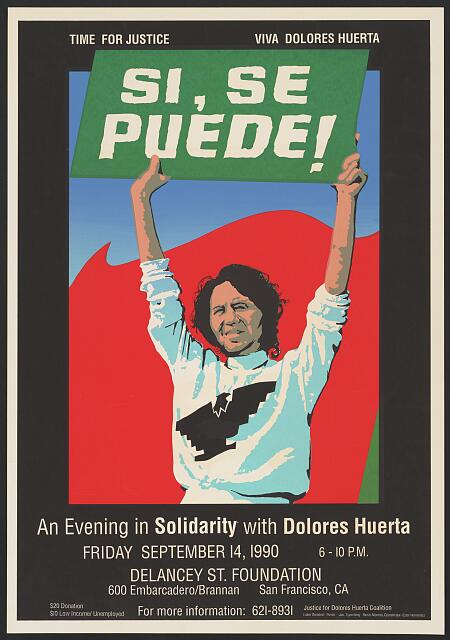
Labor leader and civil rights activist Dolores Huerta, who co-founded the United Farm Workers union, died Oct. 28 at age 96, her family announced through the Dolores Huerta Foundation. She started the foundation with her three daughters to train new generations of organizers. The tribute credits her as a principal architect of the union's power and a lifelong advocate for feminism and democracy. At least 11 schools bear her name, and the foundation plans to open a peace and justice cultural center in California's Central Valley in 2027.
| |
| | | |
|
Block Club Chicago / October 28th
Chicago broke ground Oct. 28 on the Mother Jones "We Shall Rise" Monument on Wacker Drive near Wabash Avenue. The site is close to the riverfront warehouses where Mary Harris "Mother" Jones organized workers more than a century ago. The city says the monument, by artists Kathleen Farrell and Kathleen Scarboro, will be downtown's first honoring a historic woman. The Irish-born organizer helped found the Industrial Workers of the World in Chicago. Mayor Brandon Johnson spoke at the groundbreaking.
| |
| | | |
|
Jacobin / October 21st
In Jacobin, Conor Lynch writes that working people's share of U.S. national income has hit a record low while corporate profits climb. Drawing on economists including the Economic Policy Institute's Josh Bivens, the piece blames both the shrinking labor share and widening wage inequality on decades of declining worker power, employer dominance in labor markets and wage suppression. It argues income has flowed more directly from labor to capital since 2000, and that reversing the trend will take a revitalized labor movement.
| |
| | | |
WEEKLY DERAILMENT DEPARTMENT | | Each Tuesday in this news bulletin, RWU does our best to present a picture of what has been happening over the course of the previous week in terms of derailments in North America, and investigation determinations of previous accidents. NOTE: This list is by no means comprehensive. Smaller and less consequential mishaps are generally not reported here. If the wreck results in injury or fatality, or is especially damaging/extreme, a full article will appear as a feature in the dozen or so rail articles above. Know of a train wreck? Please feel free to forward a link to raillabornews@gmail.com for possible inclusion next week. Thanks! | | | | |
|
Trains / October 27
U.S. Rep. John Joyce, R-Pa., has sent letters to the Federal Railroad Administration and Norfolk Southern asking about four derailments in Blair County, Pa., since February. The latest, Oct. 23 in Altoona, derailed at least 11 cars, some carrying hazardous materials. Joyce asked whether the causes will be investigated, how quickly NS reported each incident and what will be done to prevent more. He noted that only five derailments in the county were publicly reported from 2019 through 2025.
| |
| | | |
|
ABC News / October 27th
The EPA's inspector general announced Oct. 27 that it will review the agency's response to the February 2023 Norfolk Southern derailment in East Palestine, Ohio. The review follows years of pressure from residents and a request from Vice President JD Vance. Investigators will look at whether the EPA met its responsibilities and had enough data to back its public assurances that residents could safely return home. Residents continue to raise health and environmental concerns.
| |
| | | |
|
Trains / October 29th
The NTSB says a curve defect that Canadian National didn't properly fix caused the July 5, 2025, derailment and hazardous-materials release in Glendora, Miss. Three days earlier, a CN inspection vehicle flagged two superelevation defects at the site. Repair work followed, but no one checked that it had restored the track geometry. Video from later trains showed the problem growing with each pass. The curve had a history of unstable soil, and CN hadn't fully carried out its own 2024 geotechnical recommendations.
| |
| | | |
| |