Rail & Labor News from RWU
| | Weekly Digest Number 9 - March 3, 2026 | | Welcome to the RWU Rail & Labor News! This news bulletin is produced and emailed out each Tuesday morning. We hope you find each week's news and information useful. If so, please share with co-workers, friends, and colleagues. If you like, you can sign them up to get all the news from RWU HERE. Or forward them the link. Got a hot tip? Please forward the article and a link to raillabornews@gmail.com. Note: If you read over this news bulletin each week, you will be sure to never miss the important news of what is going on in the railroad world from a worker's perspective! | | THIS WEEK'S RAIL AND LABOR NEWS | | Editor's Note: They reintroduce it as though the smoke in East Palestine has cleared, but the working men and women who move this nation’s freight still breathe the same air. When a safety bill passes committee yet dies on the floor, it tells you exactly where labor ranks in the order of national priorities. The Railway Safety Act is not an abstraction; it is brake tests done right, inspections not rushed, and crews staffed for safety rather than for quarterly optics. Rail carriers and their lobbyists call it burdensome, but the true burden is borne by the engineer in the cab and the community along the right-of-way. If Congress is serious this time, it will measure success not by press releases, but by whether rail labor finally has the margin to do the job safely. | |
|
Progressive Railroading / February 25th
A bipartisan group of U.S. senators yesterday reintroduced the Railway Safety Act of 2026 to address safety issues raised in the wake of the 2023 freight-train derailment in East Palestine, Ohio.
The senators who reintroduced the legislation are Maria Cantwell (D-Wash.), ranking member of the Senate Committee on Commerce, Science and Transportation; Jon Husted (R-Ohio), Amy Klobuchar (D-Minn.), Eric Schmitt (R-Mo.), Tammy Baldwin (D-Wis.), Roger Marshall (R-Kan.), John Fetterman (D-Pa.) and Bernie Moreno (R-Ohio).
Cantwell previously led passage of an earlier bill through the Commerce Committee, but the legislation stalled on the Senate floor due to opposition by Republicans and railroad executives, according to a press release issued by her office.
| |
| Editor's Note: This is a brief introduction with Rail Watch Founder Jess Conard about her experience as an East Palestine resident and her efforts to make the railroad a safer environment for communities and rail workers. | |
Solutionary Rail / February 21st
Earlier this month, I reached out to Jess Conard in the hopes of interviewing her for the Reconnect America podcast. I hardly expected that just a few days later we would be meeting face-to-face—along with my friend Beka Economopoulos, co-founder and Director of The Natural History Museum—in my cabin-studio in the woods of Vashon Island, Washington.
Jess is a resident of East Palestine, Ohio, where the 2023 derailment of a Norfolk Southern train and the subsequent decision to vent and burn over 115,000 gallons of toxic vinyl chloride caused an environmental and public health disaster whose consequences will be unfolding for decades to come.
In the aftermath of the derailment, Jess dove headlong into studying the countless layers of profit-driven corner-cutting and neglect that led to and exacerbated the disaster. Earlier this year, she launched Rail Watch, an organization aimed at protecting the safety of trackside communities across North America.
| | Editor's Note: They will call it “incomplete training,” as if that phrase were a minor clerical oversight instead of a management decision with steel consequences. A 97-car intermodal moving at 53 miles per hour does not forgive guesswork, especially when traction motors are cut out and locomotives are sent forward on faith. That no one was injured near Brooks is grace, not proof of adequacy. When supervisors are undertrained and crews are left to navigate mechanical compromises, it is labor that carries the immediate risk and the public that carries the potential cost. Safety is not a memo or a consultation call; it is investment in training, time, and authority before the wheels ever turn. | |
|
Trains Magazine / February 24th
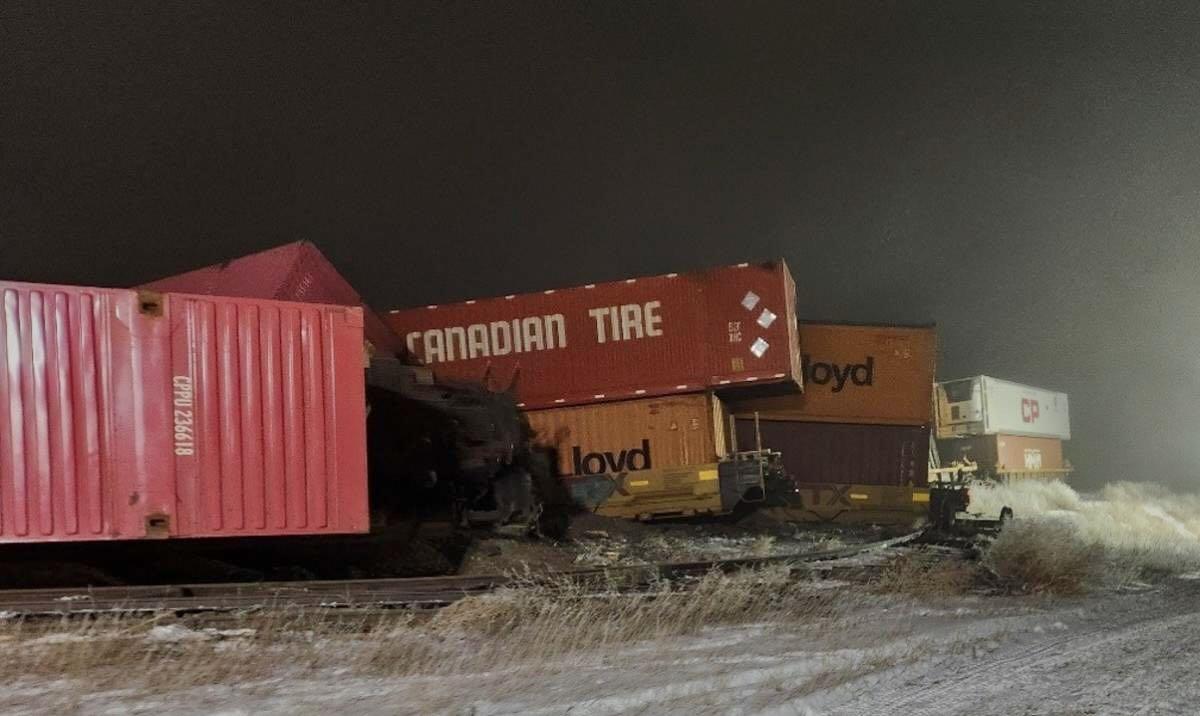
Incomplete training of a maintenance supervisor played a part in the derailment of a CPKC intermodal train near Brooks, Alberta, the Transportation Safety Board of Canada said today in releasing its report on the Feb. 5, 2024, incident.
The derailment involved the trailing unit of two locomotives at the front of the train, as well as the first 17 intermodal cars (a total of 41 platforms) of the 97-car train. The train, traveling from Montreal to Edmonton, was traveling about 53 mph when the derailment occurred at 4:24 p.m. No one was injured; while some of the containers were carrying dangerous goods, none were breached or released their contents.
The TSB said its investigation determined that the train had stopped the day before in Ontario because of smoke coming from one of the traction motors of the locomotive that eventually derailed. After consulting with a mechanical supervisor, the engineer cut out the affected traction motors and their associated speed sensors.
| |
| Editor's Note: Two days, two collisions, and one maintenance worker who did not go home. We will hear about routes suspended, trains moving at “a slow rate of speed,” and investigations launched, but none of that restores a life lost on the right-of-way. A railroad is only as safe as the protection afforded to the men and women who build and maintain it, and too often that protection is treated as procedural rather than sacred. When labor is struck, it is not an operational inconvenience; it is a moral failure of the system that governs the tracks. The NTSB will determine cause, but the larger verdict rests on whether rail labor is given the authority, staffing, and safeguards to ensure this is not tomorrow’s headline again. | |
|
Progressive Railroading / February 24th
The National Transportation Safety Board (NTSB) has launched investigations into two separate train collisions that occurred Feb. 22 and Feb. 23, the later of which caused the death of a railroad maintenance worker.
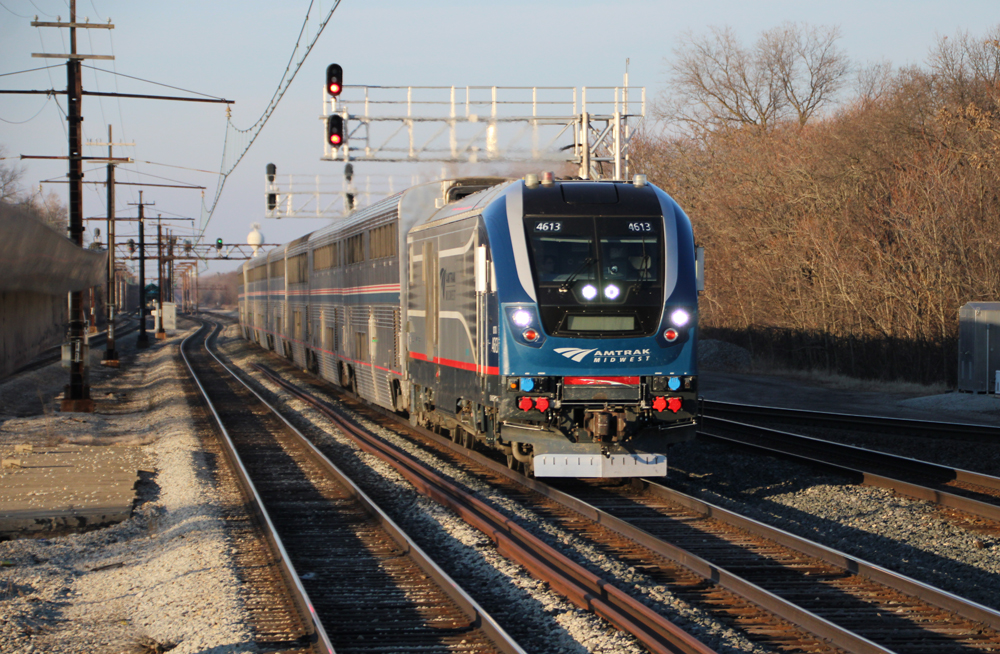
On Feb. 23, an Amtrak train struck and killed an Amtrak maintenance worker in Lancaster, Pennsylvania, NTSB officials said in an X.com post. The worker was pronounced dead at the scene. The coroner said the worker was walking on the tracks when he was struck at around 11:30 a.m. local time, according to a local news report. All service on Amtrak's Keystone Service route was suspended for the rest of the day.
Meanwhile, on Feb. 22, a CN freight train struck an Amtrak train carrying 128 passengers in Memphis, Tennessee, according to the NTSB. Three injuries were reported, and two people were taken to the hospital with noncritical injuries, according to a local news report. The incident occurred after a CN train came into contact with the Amtrak train, which was on route from Chicago to New Orleans and stopped in Memphis, according to the report. The freight train was traveling "at a slow rate of speed," Amtrak officials said, according to the news report.
| |
| Editor's Note: Brother Jeremy Charles was 39 years old and working on the very line that binds Pennsylvania together when the railroad he served took his life. Service can be suspended for a day, statements can be brief, and investigations can proceed, but none of that fills the silence left behind in a worker’s home. When a maintenance employee is struck at 11:30 in the morning on an active main line, we are forced to ask whether protection, staffing, and coordination were treated as absolute obligations or managed as routine logistics. Rail labor has buried too many of its own to accept condolences without change. If we honor Brother Jeremy at all, it must be by demanding a system where the right to return home safely is not aspirational, but guaranteed. | |
|
Railroad Workers United / February 23rd
An Amtrak employee was struck and killed by a train while working with a crew on tracks in Lancaster County on Monday morning. Jeremy Charles, 39, died at the scene of the collision in East Lampeter Township, the Lancaster County Coroner's Office said. The crash happened around 11:30 a.m. and the train was traveling on the Harrisburg Line, which connects the state capital with 30th Street Station in Philadelphia.
Amtrak suspended service for the entire Keystone route for the remainder of Monday Amtrak declined to provide more details about the fatal collision. No other injuries were reported. The Lancaster County Coroner's Office is investigating to determine Charles' cause of death.
While we are saddened at the news of Brother Jeremy's' death, we must double our resolve to build a safer workplace where such tragedies are not so commonplace.
| |
| Editor's Note: This is an incredibly ambitious plan, but we need to think big. Most industrialized countries in the world with a population density and geographical size as Illinois would already have these sorts of numbers on dozens of routes, connecting the population with fast, frequent and safer rail transportation. We know the Class One freight carriers will lobby heavily against it. But let's hope the bill wins support in the Illinois state legislature. | |
Trains Magazine / February 27th
A bill introduced in the Illinois legislature would establish “aspirational service frequencies” of every four hours or less on 18 regional or long-distance passenger routes radiating from Chicago.
HB4279, the Passenger Rail Planning Act, was introduced in January by state Reps. Rita Mayfield (D-Waukegan) and Kam Buckner (D-Chicago). It does not include funding for expanded service or infrastructure, but seeks to define the plan for more frequent operations.
Among other aspects, the bill also require the state’s Department of Transportation to detail progress toward those goals when it updates state rail and transportation improvement plans, and gives the DOT the ability to nominate corridors for the Federal Railroad Administration’s Corridor Identification and Development Program.
| | Editor's Note: When federal officials speak of “recasting” Amtrak into a holding company of fragmented parts, labor hears a familiar prelude. Separate the operations, isolate the assets, compartmentalize the workforce, and you make privatization easier to sell in pieces. The timing, with surface transportation authorizations set to expire, is not incidental; uncertainty is fertile ground for structural experiments. RWU has seen this play before, where efficiency is the banner and dilution of public accountability is the quiet result. If passenger rail is a public good, it must remain publicly answerable, with workers at the table before any blueprint becomes destiny. | |
|
Trains Magazine / February 22nd
Federal Railroad Administration officials have briefed the Rail Passengers Association on a plan that would recast Amtrak as a holding company that would oversee separate entities responsible for operations, equipment management and leasing, and infrastructure and construction.
According to a statement on the RPA website, there are only cursory details of how the reorganized company would be structured, and no indication of how federal or state funding would be addressed. The proposal comes in a year when all current federal surface transportation authorizations expire.
A paywalled Bloomberg report quotes a Brotherhood of Locomotive Engineers and Trainmen official who warns restructuring will be a first step toward privatization. Officials at other unions have also speculated to their membership about that possibility.
| |
| Editor's Note: This video outlines a bizarre privatization scheme hatched - not to make Amtrak more efficient, increase ridership, or increase customer satisfaction. It is about making money. Just as so-called "Medicare Advantage" plans are not about better serving old people, streamlining service, or increasing options/benefits, but all about ripping off the taxpayers for private profit, this plan smells of that. No privitization of Amtrak! Keep passenger rail public! Get your buttons/stickers HERE. | | Classy Whale / February 27th | | Editor's Note: Study after study concludes that this route would be a great addition to the Amtrak national network, and greatly boost tourism and economic activity in the region. Maybe this time something will be done. | |
High Speed Rail Alliance / February 27th
North Carolina has long been aware of the value of supporting passenger rail in the state. Now there are hard numbers to quantify that value on a “new” route.
Even though the route examined is neither high speed nor high frequency, it still projects to recover in economic development well more than it would cost to construct and operate. From this, we extrapolate that with passenger rail in general, the better the quality of service – faster, more frequent – the greater yet would be the economic benefit.
The numbers come from a study by the North Carolina Department of Transportation of the potential economic impact of building a passenger rail line from Asheville to Salisbury, where it would connect with the Amtrak long-distance Crescent route and the state-supported Carolinian and Piedmont trains. Previous passenger service on this route, instituted in the 1890s, was discontinued by the Southern Railway, predecessor of the Norfolk Southern, in 1975.
| | Editor's Note: After fighting to return this route to service following Hurricane Katrina, Amtrak finally was able - with the help of the STB - to beat back opposition from CSX and NS and re-establish this train. And of course - like the others that are added in this day and age - it has wildly exceeded expectations. | |
Progressive Railroading / February 24th
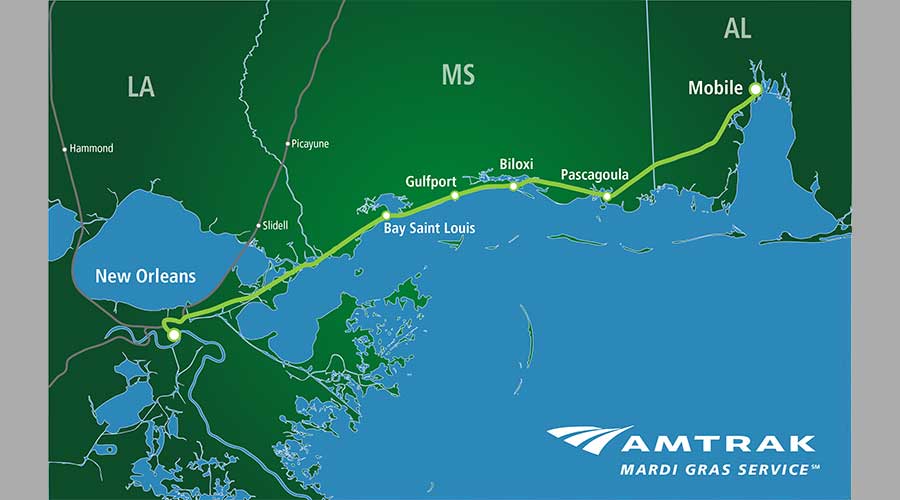
Amtrak's Mardi Gras service along the Gulf Coast exceeded ridership expectations in the first several months of its inaugural run, according to the Southern Rail Commission (SCR).
As of Jan. 31, 2026, nearly 70,500 passengers traveled on the Gulf Coast line since its inaugural run in mid-August 2025 according to the SRC. Amtrak’s original projected ridership on the Mardi Gras Service was 60,000 passengers in the first complete year, officials with Visit Mobile said in a press release. The train travels between New Orleans and Mobile, Alabama, with several stops in between.
Additionally, Amtrak’s Customer Satisfaction Index survey shows 94.1% of passengers were extremely satisfied with their overall experience on the train, Visit Mobile officials said.
| | Editor's Note: Pillaging of freight trains spiked a few years back for a number of reasons, and in many ways, the rail industry brought it upon itself. The advent of PSR and super long trains, combined with a slashing of the ranks of railroad police officers, meant that trains went largely unprotected, poking/hanging out of terminals which became easy undefendable targets for criminals. Perhaps what CSX has done in Memphis can be held up as an example for other terminals at other carriers to follow; e.g. Union Pacific which has suffered huge theft in Southern California. Instead of crying to the Governor that he should supply tax-payer-provided state patrol officers to protect their shipments, perhaps they could do what CSX has done in Memphis and stop the whining. | |
Progressive Railroading / February 26th
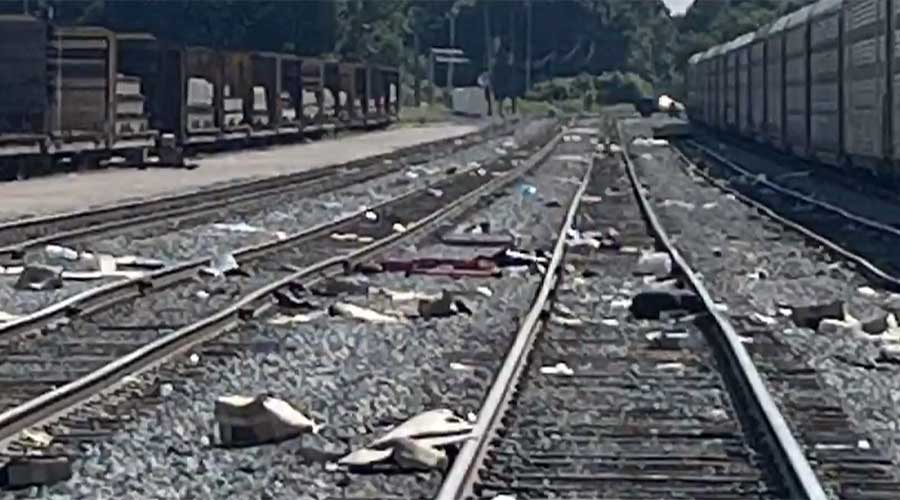
CSX has reduced cargo theft incidents by more than 80% year over year through a targeted task force and operational changes focused on the Memphis, Tennessee, rail corridor, the railroad announced today.
CSX formed the task force in 2024 after identifying a sharp increase in cargo theft in the Memphis area during the COVID-era surge in criminal activity. The rise in theft posed a growing concern for customer shipments, employee safety and surrounding communities, prompting the company to take a more focused, local approach, CSX officials said in a press release.
To reduce risk in high traffic areas, CSX upgraded security around its Memphis facilities with enhanced fencing, lighting and access controls, including roughly 14,000 feet of high-security fencing and an additional 5,000 feet of fencing east of Leewood Yard. The company also added 30 surveillance cameras to support real-time monitoring and investigations without disrupting operations.
| | Editor's Note: This article makes the case for a better rail system in the USA. Yes it is possible -- but not without a huge change in the way the railroad is run. | |
Daily Kos / February 24th
There are some important developments taking place in America’s railroads which could have effects lasting for decades — so it’s important that attention is paid to them because we can’t afford to simply trust that things will work out for the best.
Let’s start with a bit of disclosure first. I’m a long time member of the Empire State Passengers Association, the Rail Passengers Association, and have been working with Solutionary Rail the Climate Rail Alliance, and Railroad Workers United. I have been working as co-chair with a local group trying to save Catskill Mountain Railroad from the Ulster County Government which is obsessed with building rail trails and driving out the railroad. (That’s a long story in itself.)
Railroads do not get a lot of media attention unless there’s a spectacular wreck (Like East Palestine, OH) or recurring stories about people earning Darwin awards at railway crossings, why we can’t have/afford high speed rail (HSR), etc. while not asking why we can’t do better with what we already have
| | NEWS FROM AROUND THE LABOR MOVEMENT | | Each week, RWU includes a few articles about advances and developments in the larger labor movement that are of interest to railroad workers. Got an artcile to submit for possible inclusion next week? Email it along to raillabornews@gmail.com. Thank you! | | Editor's Note: It is very exciting to see this victory after decades of trying. Overwhelmingly approved, the contract can now be showcased to other Southern workers as an example of what can be gained through unionization. Look for a series of union victories in the months/years ahead at auto plants - and in other workplaces - across the couth. | |
NPR / February 19th
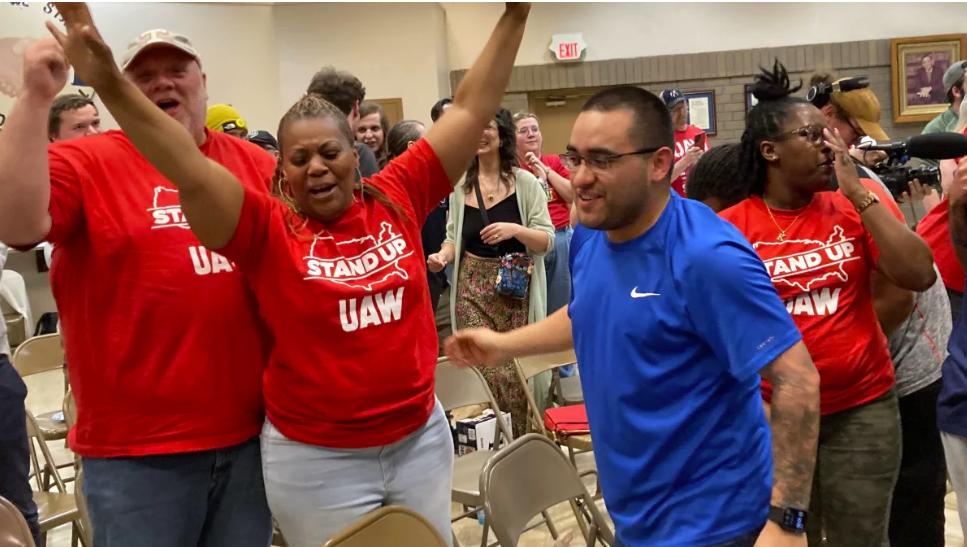
Volkswagen workers in Chattanooga, Tennessee voted to ratify their first union contract Thursday, securing pay bumps, job protections and a rare win for the United Auto Workers union in the South.
It's been a long road to this contract. Workers initially voted twice against joining the union before casting ballots in favor in 2024, making this VW plant one of the few to unionize in the South, and the rare one that's not a member of the "Big 3" auto companies: Ford, General Motors and Stellantis. That was nearly two years ago and negotiations have dragged on since, with workers at one point granting the union the ability to call a strike if necessary.
But contract talks were resolved in early February when the UAW and Volkswagen struck a tentative agreement, which the workers have now voted to approve, with 96% of them voting yes.
| | Editor's Note: Imagine the similar momentum that might have been achieved if the federal government had not preempted the national rail strike which was about to take place just 6 months prior to the UAW's momentum building "stand up" strike.... What we could have won materially - to say nothing of rail worker pride and dignity - would have had a knock on effect to potentially bring thousands of non-union railroad workers into the union, and motivate already existing members to get off the couch and get involved. Next time! | |
New Labor Forum / January 15th
The United Auto Workers’ 2023 Stand Up Strike against Ford, General Motors, and Stellantis delivered historic gains for our members. But just as significant is what came next. Before the strike even ended, thousands of non-union auto workers—primarily in the South—began signing union cards on their own, using website links from defunct campaigns. No staff. No plan. No infrastructure. The strike was the spark. Workers used it to light their own fires.
For decades, launching a union drive at a Southern auto plant required months—or even years—of deep groundwork. Now, workers were self-organizing at a scale we hadn’t seen in decades. We believed we had entered a movement moment, a rare opening when momentum spreads faster than fear and collective action becomes contagious.
To seize the moment, we launched Stand Up 2.0, a national campaign to organize multiple non-union auto plants across the country. Our strategy was to experiment with new organizing approaches (namely, momentum and worker-to-worker organizing as compared to traditional structure-based organizing) that treat mass scale union organizing more like a social movement than building a guerrilla army.
| | Editor's Note: For the last decade RWU has taken a position that labor needs an alternative from both the Democrat and Republican parties, both of which are hopelessly compromised by big money and corporate influence. See the Resolution on U.S. Elections from 2020. | | |
Common Dreams / February 23rd
It’s not a secret: About 45% of labor union members voted for President Donald Trump in 2024. In unions with fewer minority workers the percentage was substantially higher. More importantly, most union members no longer identify with the Democratic Party. In fact, they are downright hostile to it. In our YouGov poll of 3,000 voters in Michigan, Ohio, Pennsylvania, and Wisconsin, 70% held negative views of the Democrats.
Why so much hostility? Very few respondents said anything about wokeness or immigration. Much of the bitterness was related to the Democrats failing to live up to their promises and losing touch with everyday people. My research also shows that mass layoffs, especially those caused by trade with China and Mexico after North American Free Trade Agreement, have soured voters on the Democrats.
That leaves progressive union leaders with the difficult task of lining up their members for the candidates they think will represent the political interests of their members—which, because of the Republicans’ overwhelming antipathy to organized labor, almost always better align with the Democrats. Despite, it should be said, their failings. For the fall midterms this year, union leaders will be 100% in support of the Democrats, as they hope to check the power of Trumpism. How can they do that effectively given all this negativity?
| | Editor's Note: U.S. labor law is proscribed by "recognition," "bargaining units," "representation," and so forth. A worker may want to join a union, pay dues and be active ... but in most cases, unless and until a majority of their fellow workers votes favorably in a "union certification election", and then wins a "first contract," that worker may have no ability to join and become active. We need to bring workers into the labor movement more easily, and get them plugged in. Remember, a hundred years ago there was basically no labor law, no certification, no "bargaining units" per se, it was our power vs. theirs. | | |
Labor Notes / February 24th
It shouldn’t be so hard for workers to join a union. Nearly half of non-unionized workers in the U.S. say they would join a union if they could. Yet only 1 in 10 belongs to one, and that number continues to fall.
The main path to unionization, through a National Labor Relations Board election or the public sector equivalent, has long been broken and favors employers. While unionizing through the NLRB must remain a central strategy, alone it isn’t enough.
Imagine you’re a worker at Target who wants to organize, but none of the unions in your area is willing to support you. Unionizing Target isn’t part of their strategic plan, and organizing major retail outlets seems too difficult right now.
So you give up. You stop talking to your co-workers about organizing, because no one could offer you a way forward. This happens to thousands of motivated workers every year. The labor movement is losing potential leaders and organizers because it has no pathway for them to join and stay active.
| | WEEKLY DERAILMENT DEPARTMENT | | Each Tuesday in this news bulletin, RWU does our best to present a picture of what has been happening over the course of the previous week in terms of derailments in North America, and investigation determinations of previous accidents. NOTE: This list is by no means comprehensive. Smaller and less consequential mishaps are generally not reported here. If the wreck results in injury or fatality, or is especially damaging/extreme, a full article will appear as a feature in the dozen or so rail articles above. Know of a train wreck? Please feel free to forward a link to raillabornews@gmail.com for possible inclusion next week. Thanks! |
| | | |