Rail & Labor News from RWU
| | Weekly Digest Number 16 - April 21, 2026 | | Welcome to the RWU Rail & Labor News! This news bulletin is produced and emailed out each Tuesday morning. We hope you find each week's news and information useful. If so, please share with co-workers, friends, and colleagues. If you like, you can sign them up to get all the news from RWU HERE. Or forward them the link. Got a hot tip? Please forward the article and a link to raillabornews@gmail.com. Note: If you read over this news bulletin each week, you will be sure to never miss the important news of what is going on in the railroad world from a worker's perspective! | | THIS WEEK'S RAIL AND LABOR NEWS | | Editor's Note: Rail CEOs and Wall Street hedge funds love to pontificate about how to "fix" the rail industry's problem of losing market share, as if it is all some mystery to be solved. There is always some gimmick or another that is supposed to back door the way to service reliability, customer satisfaction, velocity increase, dwell time decrease, and in the end, an increase in market share of the freight market. The decline in freight moved in the last two decades is a self-inflicted wound. Failure to double-track, failure to lengthen sidings, and failure to invest generally in the physical plant - meanwhile lengthening trains, ripping out classification yards, demanding excessively low Operating Ratios and alienating shippers is what is behind the crisis. The Class Ones could get to work right now and fix all of this ... except it costs money, and Wall Street investors are not interested. So a "coast-to-coast" network is touted as the latest "fix" for the rail industry's decline in freight traffic. | |
Freight Waves / April 16th
Though he never worked in supply chain or dealt with hedge funds, German philosopher Friedrich Nietzsche still managed to originate the time-honored neologism,“What doesn’t kill me makes me stronger”.
Norfolk Southern Corp. survived the deleterious effects of the Covid pandemic, declining shipper demand, a catastrophic hazmat derailment, labor issues, a leadership scandal, and activist investors, says Chief Executive Mark George. It’s emerged as one-half of a proposed transcontinental railroad that, if approved, will be a mega-strong behemoth reshaping the U.S. rail industry.
The Atlanta-based carrier (NYSE: NSC) has seen “crisis after crisis after crisis” since George arrived from HVAC giant Carrier in 2019, “but we are for the past two years running really well,” George said in a keynote address Tuesday at the annual conference of the American Short Line and Regional Railroad Association. “I’m really proud of that; the whole industry is operating well in terms of delivering good, consistent service, and I think that’s really important.”
| | Editor's Note: Jessica Conard, who lived through the fallout and was transformed by the experience, breaks down what the public still doesn’t get: derailments are not freak accidents. They’re frequent, often preventable, the result of aging infrastructure, weak oversight, and a lack of transparency. | |
Facts Over Fear / April 16th
What happened in East Palestine, Ohio wasn’t just a derailment.
It exposed a system most Americans never see. One where hazardous materials move through communities every day, often without warning.
And right now, most communities have no real visibility into what’s moving through their towns on train tracks. Hazardous materials pass through daily, and the people in their path are often the last to know.
Rail Watch is trying to change that by making rail data visible so communities can understand risks before something goes wrong.
But visibility alone isn’t enough.
In this episode, Jessica Conard, who lived through the fallout and was transformed by the experience, breaks down what the public still doesn’t get: derailments are not freak accidents. They’re frequent, often preventable, the result of aging infrastructure, weak oversight, and a lack of transparency.
| | Editor's Note: In recent decades, the railroad industry has consolidated from more than 40 Class One Rail carriers to only six with disastrous results for the rail workers and the public. Despite a 1990’s moratorium on mergers, Union Pacific and Norfolk Southern are applying for a new merger, the first one to be transcontinental. Workers, passengers, farmers, and other industries are joining forces to stop this merger. Clearing the FOG speaks with Ron Kaminkow, a co-founder of Railroad Workers United, about the state of our rail system, the impact of the potential merger and the campaign against it. Kaminkow says the UP-NS merger would definitely lead to further consolidation and would disrupt the supply chain at a time when it is already fragile. | |
Popular Resistance / April 13th
In recent decades, the railroad industry has consolidated from more than 40 Class One Rail carriers to only six with disastrous results for the rail workers and the public. Despite a 1990’s moratorium on mergers, Union Pacific and Norfolk Southern are applying for a new merger, the first one to be transcontinental. Workers, passengers, farmers, and other industries are joining forces to stop this merger. Clearing the FOG speaks with Ron Kamikow, a co-founder of Railroad Workers United, about the state of our rail system, the impact of the potential merger and the campaign against it. Kamikow says the UP-NS merger would definitely lead to further consolidation and would disrupt the supply chain at a time when it is already fragile.
|
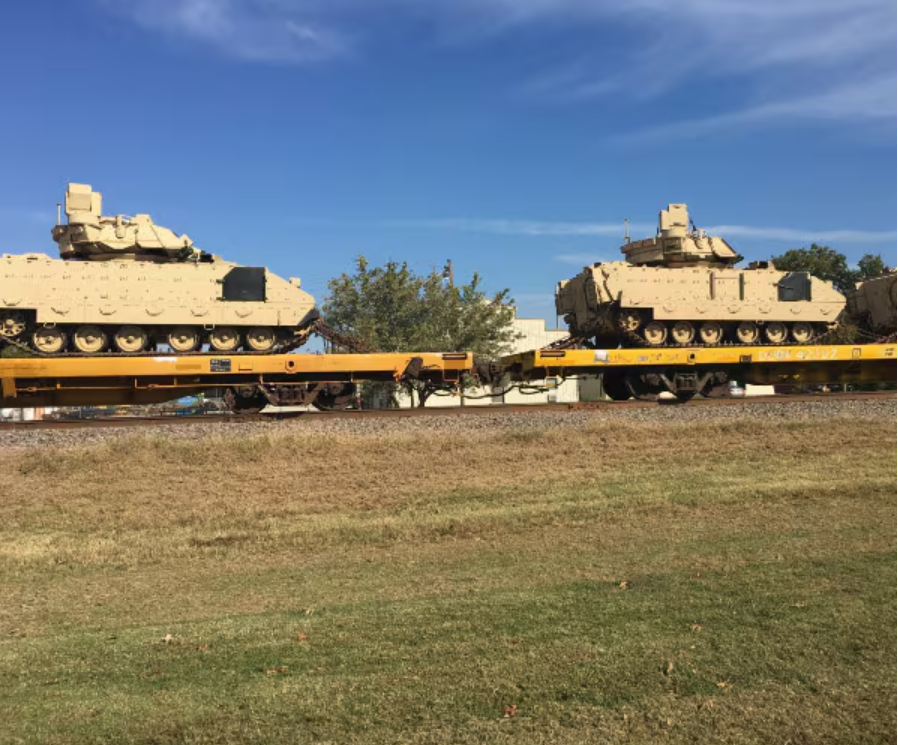
| Editor's Note: As anyone can plainly see, the opposition to this merger runs deep from all political perspectives. Shippers, rail carriers, workers, passenger, the military, Democrats, Republicans, and just about everyone else - except for Wall Street hedge funds, bankers and current stock holders of UP and NS - are opposed. | |
Newsmax / April 15th
As global tensions increase, Americans are understandably focused on the security of our nation. But America's strength abroad rests on resilient infrastructure at home — and when that system is concentrated or compromised, our national security is made more vulnerable.
Large scale freight rail consolidation is creating exactly that risk.
A Union Pacific–Norfolk Southern merger, forming a coast-to-coast rail behemoth, would put critical supply lines in fewer hands while sapping resilience and flexibility across the network. That instability is a threat the country can’t afford and shouldn’t allow.
Regulators are correct to be deeply concerned about further rail consolidation. Over the past four decades, the number of players in the freight rail industry has decline dramatically.
| |
Passenger Transport / April 13th
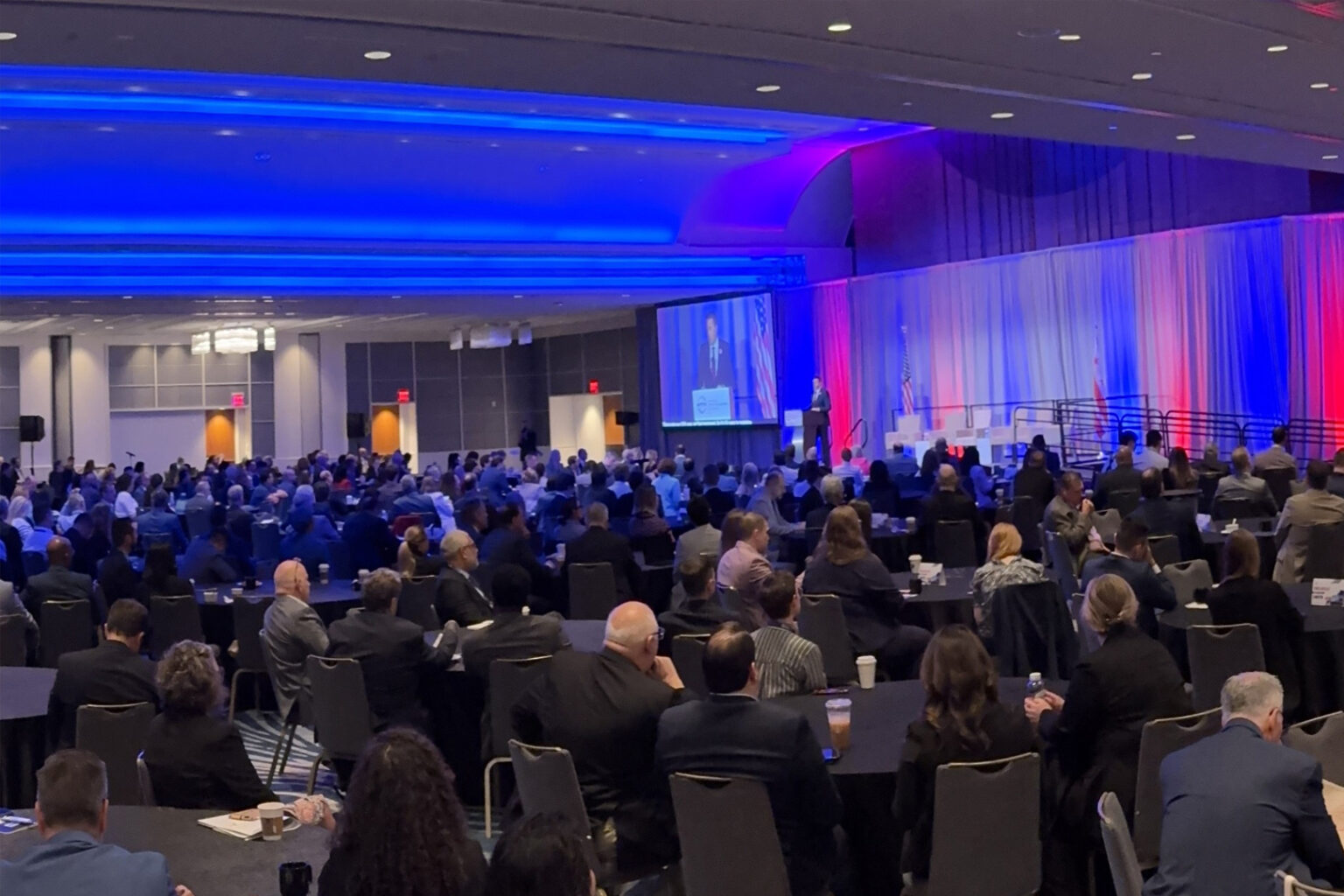
APTA opened its 2026 Legislative Conference April 13, bringing together more than 600 public transportation professionals to engage with policymakers and advocate for robust federal investment in public transportation infrastructure.
The conference features remarks from USDOT Chief of Staff Pete Meachum; Sen. Lisa Blunt Rochester (D-DE); Rep. Rick Larsen (D-WA), Ranking Member of the House Committee on Transportation and Infrastructure (T&I Committee); Rep. Robert Bresnahan (R-PA), Vice Chair of the T&I Committee’s Highways and Transit Subcommittee; and Rep. James R. Walkinshaw (D-VA).
Additional speakers include Katherine Scarlett, White House Council on Environmental Quality chairman; FRA Deputy Administrator Drew Feely; FTA Chief Counsel Matthew Cahill, Associate Administrator Connor Torossian, and Acting Executive Director Jamie Pfister; and TSA Assistant Administrator Sonya Proctor.
| |
Trains Magazine / April 15th
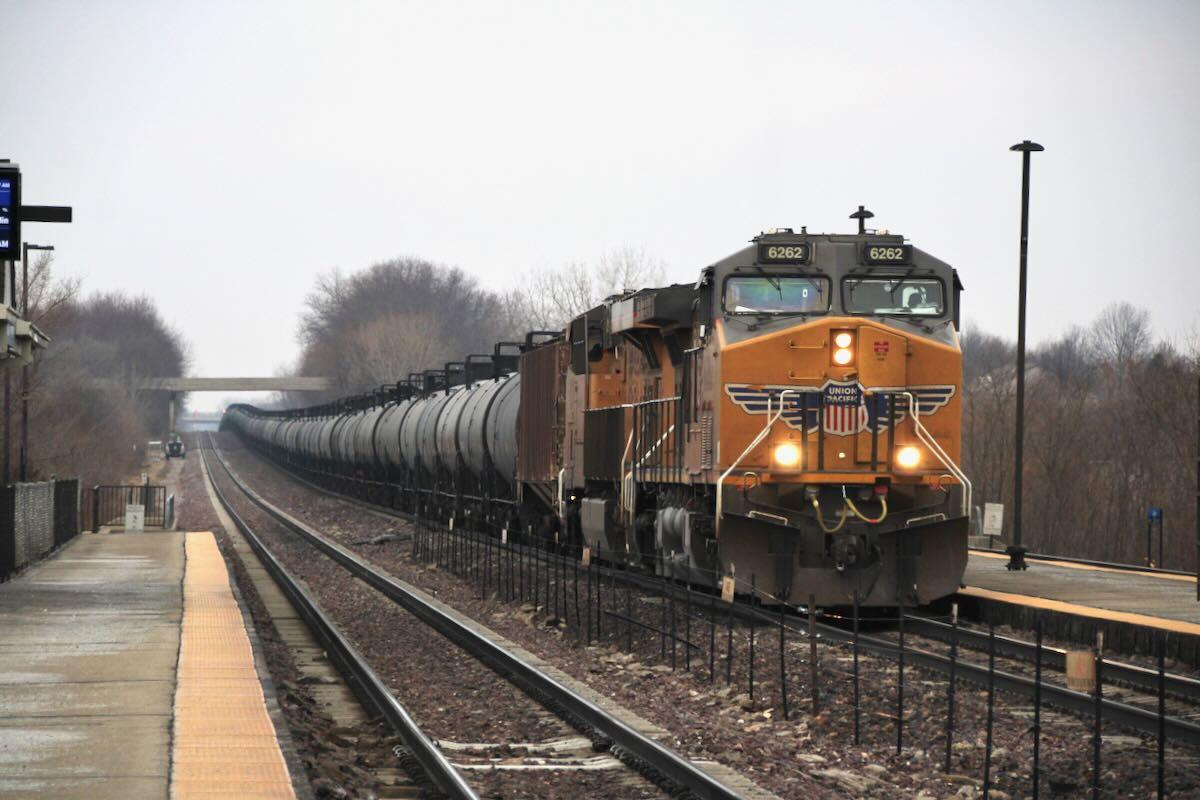
Four shipper groups have asked federal regulators to make public a key section of the Union Pacific-Norfolk Southern merger agreement, arguing that the railroads improperly shielded material that outlines when UP could walk away from the deal.
The section — known as Schedule 5.8 — was omitted from the railroads’ Dec. 19 merger application. The Surface Transportation Board later ordered it to be filed. The document outlines the regulatory conditions that could trigger Union Pacific’s right to abandon the transaction.
When UP and NS submitted Schedule 5.8, they labeled it “highly confidential,” restricting access to outside attorneys and consultants under the board’s protective order. Regulatory filings that contain sensitive commercial information are typically shielded from public view or redacted under board-approved protective orders.
| | Editor's Note: After years of failing to purchase new equipment to replace the aging long distance train fleet, it looks like it might finally happen. None too soon as the current fleet is approaching a half a century old in some cases! | |
Amtrak
It’s official! We’ve started the procurement process for Amtrak’s largest-ever Long Distance train order.
Our customers deserve the best, and this new fleet will move us full speed ahead into a new era of American train travel.
We’ve issued a formal request for suppliers to bid on the new Long Distance fleet replacement contract. Interested carbuilders are now preparing their proposals for submission. Following an extensive evaluation, we plan to announce our selected supplier by the end of 2027.
This once-in-a-generation fleet replacement program was developed in close coordination with the Federal Railroad Administration, with the goal of modernizing overnight and cross-country travel for a fleet that includes many cars today approaching nearly 50 years of operations.
The program calls for more than 800 new railcars across 14 routes.
| |
Railway Age / April 14th
The latest attack on the Railway Safety Act asks the public to believe that stronger rail safety standards are just a backdoor jobs program for unions. In an April 6 article published in Railway Age, Thomas Aiello of the National Taxpayers Union argues that the Railway Safety Act imposes unnecessary costs while doing little to improve safety. It is a familiar argument. When rail carriers and their allies do not want to meet a higher safety standard, they repackage the cost of prevention as an economic threat and portray the workers raising the alarm as self-interested. That is exactly what is happening here. Rail lobbyists position the bill as a burden on freight railroads, dismisses two-person crews as unnecessary, and treats hot bearing detector (HBD) spacing requirements as an expensive giveaway to labor.
That framing collapses the moment you compare it to the rail industry’s own history. On HBDs, the industry cannot credibly claim that tighter spacing is some radical invention of organized labor. A December 2017 Transportation Technology Center, Inc. (TTCI) spacing study, conducted with the University of Illinois, concluded that 15 miles was the ideal spacing for defect detector deployment, and that detection performance declined beyond 15 miles (1). TTCI was not some outside advocacy group. TTCI was a wholly owned subsidiary of the Association of American Railroads (AAR).
| |
Government Accountability Project / April 17th
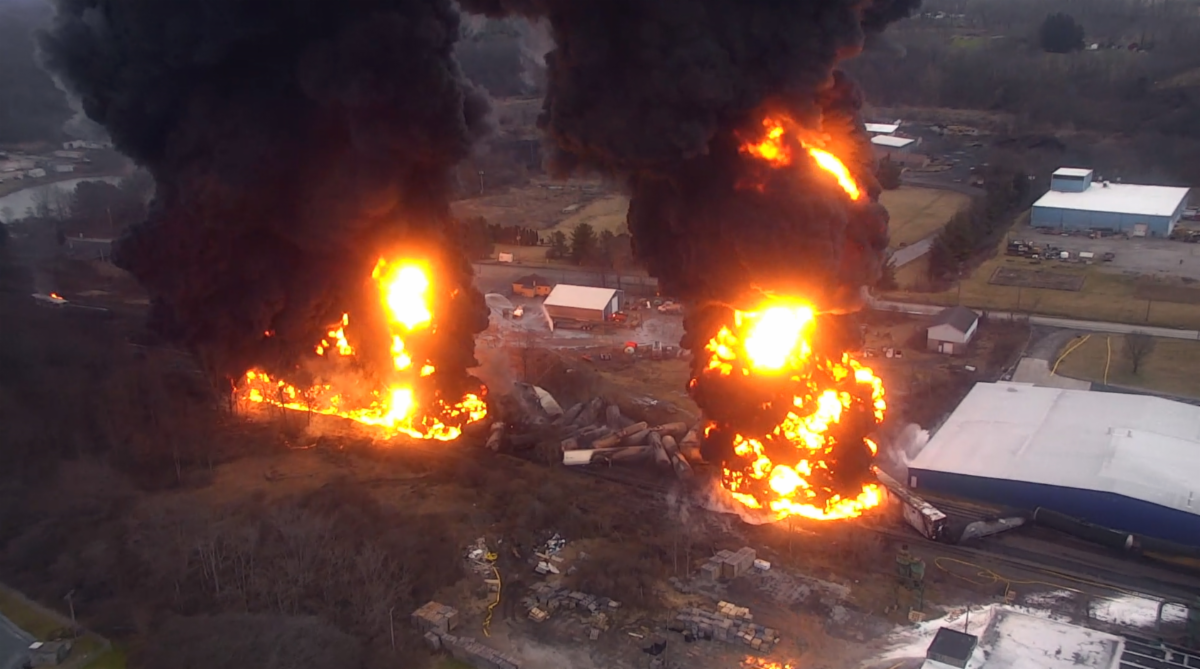
Newly released US Department of Agriculture (USDA) records reveal that federal officials were aware that toxic chemicals from the East Palestine train derailment and open burn could enter the human food supply at the time of the open burn, yet key information about those risks was heavily redacted or withheld from the public.
Government Accountability Project, represented by Loevy & Loevy, has filed a federal lawsuit against USDA, alleging the agency improperly withheld these critical records related to dioxin contamination risks to crops, livestock, and the food chain. This lawsuit seeks to compel USDA to release the full, unredacted record and ensure transparency around what federal agencies knew about food safety risks following the disaster.
The released records from USDA's Natural Resources Conservation Service (NRCS) and Farm Service Agency (FSA) show that federal officials identified well-known exposure pathways, including contamination of soil, uptake in crops, and bioaccumulation in livestock. Despite this, the Environmental Protection Agency (EPA) did not conduct targeted testing for dioxins in garden produce, meat, eggs, or wild game.
| | Editor's Note: How ironic that on the same day that the NTSB issued a statement that railroads need to be more vigilent about safety during periods of inclement weather, flooding in Wisconsin apparently went ignored as a UP grain train's three locomotives derailed into the flooded roadbed, injuring one of the crew members (see Derailment Department below). | |
Trains Magazine / April 17th
The rail industry needs to increase its efforts to provide more supervision and other safety measures during extreme weather conditions, the National Transportation Safety Board said in its final report on a June 26, 2025, incident in Guthrie, Ky., that led to a serious injury to an R.J. Corman Railroad Group conductor.
Additional measures in an incident such as this one could include increased rest and hydration, according to the report. It adds that workers must also understand the importance of following safety rules, while supervisors verify those rules are being followed.
The conductor’s left foot was crushed when he used it in an attempt to push the knuckle of a coupler into alignment while switching out a damaged railcar from a 13-car cut at the railroad’s Guthrie Yard. While his foot was on the knuckle of a standing car, it was struck by a cut of cars making a reverse move. The incident occurred about 5 p.m. in 91-degree heat, near the end of the conductor’s day. He told an NTSB investigator, “I was just trying to get out of the heat, and I think … that’s why I did it.”
| | NEWS FROM AROUND THE LABOR MOVEMENT | | Each week, RWU includes a few articles about advances and developments in the larger labor movement that are of interest to railroad workers. Got an artcile to submit for possible inclusion next week? Email it along to raillabornews@gmail.com. Thank you! | | Editor's Note: We are living in a time of great similarity to the 1930s. Then as now, there was mass discontent among the working class. But like then, the working class was lacking in confidence. But a series of general strikes in 1934 (known as "the turning point"), together with mass strikes in auto, steel, rubber, textile and other industries in 1937 and 1938, brought the modern labor movement into being. Perhaps we are poised to see a similar upheaval in the coming years! | |
The Guardian / April 15th
Leaders of some of the largest unions in the US have unveiled a drive to jumpstart the country’s ailing labor movement and combat growing wealth inequality under Donald Trump.
To make it easier for workers to join a union, and strengthen the hand of new unions negotiating with powerful businesses, a string of prominent organizers joined together to launch Union Now, a non-profit designed to increase labor union density.
“This is really about trying to put power in the hands of people,” said Sara Nelson, president of the Association of Flight Attendants-CWA, the largest flight attendants union in the US, and one of the leaders of the push.
| |
The American Prospect / April 17th
Arindrajit Dube has written a lucid, empirically rigorous, and—in the current political climate—audacious book. The Wage Standard marshals decades of labor economics research to make a case that should be obvious but somehow still needs making: Most American workers have been systematically underpaid for the past half-century, not because markets dictated it, but because power did. This argument deserves to be read widely, taken seriously, and debated vigorously. Among other things, it raises questions that progressive advocates for higher minimum wages need to address.
Dube’s central exhibit is by now familiar to labor economists but remains startling to anyone encountering it for the first time. From the postwar period through roughly 1980, productivity and wages grew together. After 1980, they diverged sharply. Between 1980 and 2019, nonmanagerial wages grew at around half a percent per year while productivity grew at roughly three times that rate. Had the postwar link held, the inflation-adjusted median hourly wage in the United States in 2019 would have been closer to $33 than the $24 workers actually took home. That gap is not a rounding error. It represents an enormous and ongoing transfer of economic value away from workers.
| | WEEKLY DERAILMENT DEPARTMENT | | Each Tuesday in this news bulletin, RWU does our best to present a picture of what has been happening over the course of the previous week in terms of derailments in North America, and investigation determinations of previous accidents. NOTE: This list is by no means comprehensive. Smaller and less consequential mishaps are generally not reported here. If the wreck results in injury or fatality, or is especially damaging/extreme, a full article will appear as a feature in the dozen or so rail articles above. Know of a train wreck? Please feel free to forward a link to raillabornews@gmail.com for possible inclusion next week. Thanks! |
| | | |