Rail & Labor News from RWU
| | Weekly Digest Number 17 - April 28, 2026 | | Welcome to the RWU Rail & Labor News! This news bulletin is produced and emailed out each Tuesday morning. We hope you find each week's news and information useful. If so, please share with co-workers, friends, and colleagues. If you like, you can sign them up to get all the news from RWU HERE. Or forward them the link. Got a hot tip? Please forward the article and a link to raillabornews@gmail.com. Note: If you read over this news bulletin each week, you will be sure to never miss the important news of what is going on in the railroad world from a worker's perspective! | | THIS WEEK'S RAIL AND LABOR NEWS | | Editor's Note: Rail labor has long understood that a pension should not come with a leash attached, yanking a retiree back into submission for the crime of continuing to work. The LPE penalty was never about fairness; it was about control, a quiet tax on independence that treated railroaders as property even after they gave their years to the industry. This legislation is a rare moment where both parties have stumbled onto a simple truth: dignity in retirement cannot be conditional. But bills are promises, and rail labor has been handed enough promises to fill a yard and still come up short at the other end. Until it is signed, sealed, and enforced, we would do well to remember that justice delayed has always been management’s favorite timetable. | |
|
Progressive Railroading / April 22
A bipartisan group of legislators yesterday introduced the Railroad Retirement Fairness Act (H.R. 8405), which would eliminate a federal provision that reduces retirement payments for certain retirees and spouses who continue working in non-railroad jobs after retirement.
Under the current Pre-Retirement Non-Railroad Employment (LPE) law, railroad retirees and their spouses may face a reduction in retirement benefits if they continue working for their last prior non-railroad employer before retirement, according to a press release from U.S. Rep. Troy Nehls' (R-Texas) office. Retirees who take a different job after retiring do not face the same penalty.
Nehls co-introduced the legislation with U.S. Rep. Chris Deluzio (D-Pa.) and U.S. Sens. Josh Hawley (R-Mo.) and Chris Coons (D-Del.). It was referred to the House Committee on Transportation and Infrastructure.
The legislation is endorsed by the Transportation Trades Department of the AFL-CIO, Transportation Communications Union, International Association of Machinists and Aerospace Workers (IAM) and Brotherhood of Maintenance of Way Employes Division.
| |
| Editor's Note: RWU Trustee and Founding Member Ron Kaminkow speaks with Margaret Flowers on her podcast, "Clearing the Fog" and explains why RWU is adamantly opposed to the merger and how - if approved - it would benefit practically no one at all - except wealthy Wall Street investors. | |
Margaret Flowers / April 13, 2026
In recent decades, the railroad industry has consolidated from more than 40 Class One Rail carriers to only six with disastrous results for the rail workers and the public. Despite a 1990’s moratorium on mergers, Union Pacific and Norfolk Southern are applying for a new merger, the first one to be transcontinental. Workers, passengers, farmers, and other industries are joining forces to stop this merger. Clearing the FOG speaks with Ron Kamikow, a co-founder of Railroad Workers United, about the state of our rail system, the impact of the potential merger and the campaign against it. Kamikow says the UP-NS merger would definitely lead to further consolidation and would disrupt the supply chain at a time when it is already fragile.
| | Editor's Note: They will call it transformative, as they always do, dressing consolidation up as progress while the same hands tighten their grip on the throttle of competition and labor alike. The Surface Transportation Board may say its rejection was procedural, but the missing pieces were not clerical errors, they were the unanswered questions that follow every merger like a shadow.. who gains power, and who pays for it. Rail labor has lived through enough of these “generational” deals to know the pattern, promises made in filings rarely survive contact with operating reality. Market share charts and terminal plans are neat on paper, but they do not show the jobs thinned out, the agreements stretched, or the safety margins quietly negotiated downward. If this application returns polished and complete, it will still fall to those who work the rails to ask the only question that ever matters: what, exactly, are we being asked to give up this time? | |
| |
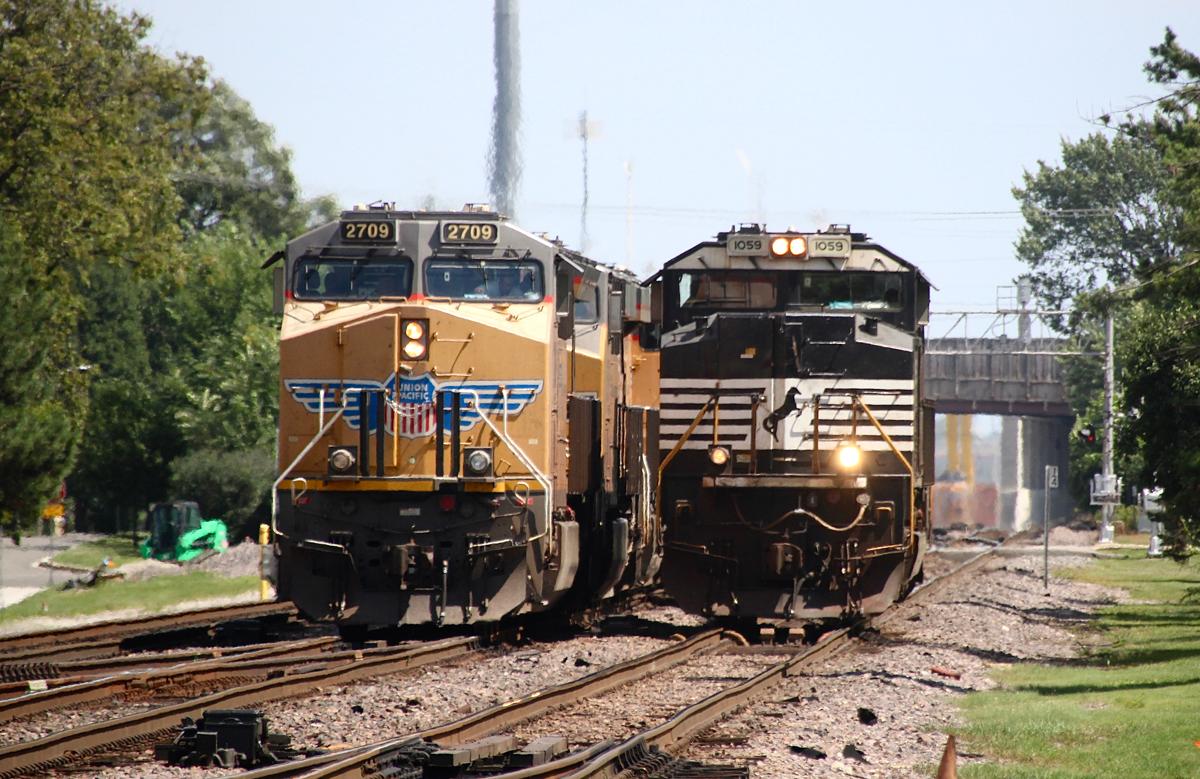
Union Pacific has announced it is targeting April 30, 2026 as the date to formally resubmit its revised merger application for the acquisition of Norfolk Southern, a critical step in advancing what would be the most transformative rail consolidation in a generation.
The planned resubmission follows the Surface Transportation Board’s decision in January to reject the railroads’ original filing as incomplete, citing missing data and insufficient detail on key competitive and operational impacts.
The revised filing is expected to address several deficiencies identified by the STB, including:
-
Detailed projections of post-merger market share
-
A complete merger agreement
-
Expanded analysis of competitive impacts
-
Clarification of Union Pacific’s plans regarding shared terminal operations, including its stake in the Terminal Railroad Association of St. Louis
The STB previously emphasized that its rejection was procedural rather than a judgment on the merits of the deal, leaving the door open for a resubmission.
| |
| Editor's Note: A yard does not empty itself by accident; it is drained by design. They call it efficiency, but rail labor knows the difference between improvement and erasure. The cars keep moving, the jobs do not. This is the old equation of consolidation, dressed up in new language. And it always balances on the backs of those who do the work. | |
|
Trains.com Staff / April 22
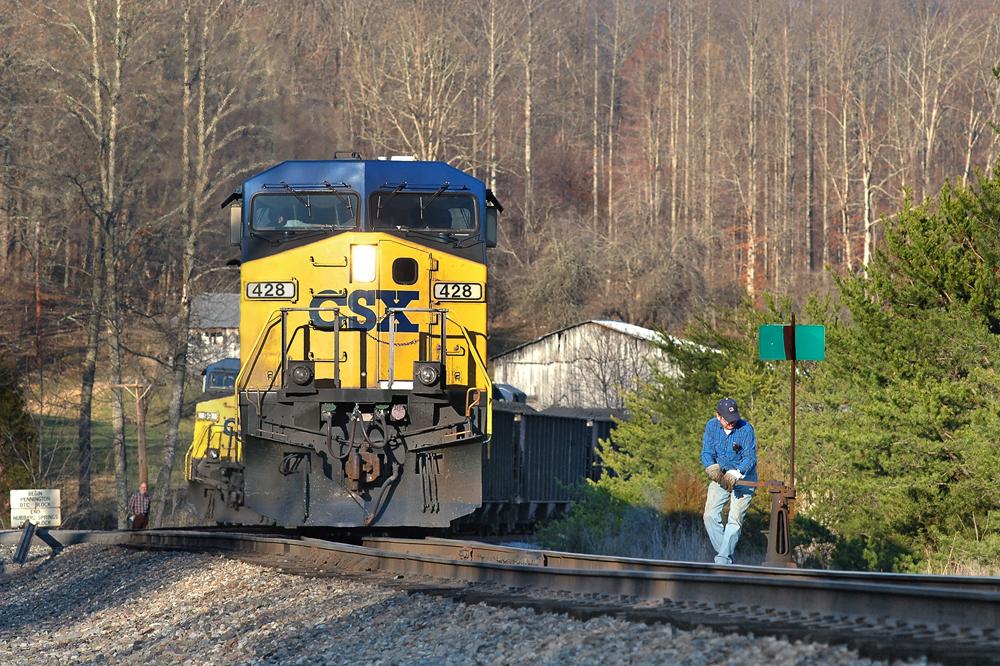
CSX has significantly reduced operations at Barr Yard in Riverdale, Ill., its major Chicago-area terminal, and has shifted most of its switching work to the Belt Railway of Chicago and Indiana Harbor Belt.
“CSX is reducing operations at Barr Yard as part of the company’s ongoing effort to improve how we operate across the network,” railroad spokesman Austin Staton tells Trains. “We’re shifting certain traffic flows to reduce redundant processing in Chicago and leveraging established partner switching capacity, like the BRC and IHB, to create a more direct network flow. The goal is to improve efficiency, reduce transit times, and provide more reliable service.”
Barr Yard, which has been one of CSX’s top 10 terminals by volume, typically had a daily inventory of between 1,400 and 1,800 cars this year, according to data reported by the Chicago Transportation Coordination Office.
As of last week an average of 1,113 cars were in the yard. Today only 228 cars were in the yard’s inventory, a figure that included 118 empty petcoke cars in storage, according to a CSX source.
Barr’s switching work is now being handled by BRC’s Clearing Yard and IHB’s Blue Island Yard. CSX also eliminated a daily transfer job between Barr Yard and Canadian National’s Kirk Yard in Gary, Ind. Road freights are now taking those cars to and from Kirk Yard and bypassing switching at Barr in the process.
In addition, CSX has dropped merchandise train pair M326/M327 that ran between Barr Yard and Grand Rapids, Mich. Traffic those trains handled is now being routed around the horn via Garrett, Ind.; Toledo, Ohio; and Detroit, according to union officials.
| |
| Editor's Note: A border has always been more than a line on a map; it is where standards are either enforced or quietly surrendered. This bill restores a basic principle rail labor has fought to keep.. the work performed on American rails should be governed by American rules and accountability. It is not about slogans, it is about who carries the responsibility when something goes wrong. Safety is not improved by ambiguity at the handoff point. If enacted and enforced, it draws a clear line where too many have preferred a convenient blur. | |
|
Railway Supply / April 24
Mexican rail crews would be barred from operating trains inside the United States. The limit would apply after trains cross the U.S.-Mexico border. It is part of a bipartisan House bill.
The Protecting American Railroad Workers’ Jobs Act was introduced on April 23. Its sponsors are U.S. Reps. Chris Pappas and Lance Gooden. Pappas is a New Hampshire Democrat, while Gooden is a Texas Republican. The measure would require trains entering from Mexico to stop at the border. They would undergo crew interchange and safety testing. In the United States, only U.S. citizens or permanent residents could operate those trains. Their reporting location would have to be in the U.S.
“Reestablishing these commonsense guidelines for rail crew changes and inspections will improve rail safety, protect American rail workers’ livelihoods, and help law enforcement safely interdict dangerous drugs,” Pappas said in a press release. “Our bipartisan legislation will ensure existing standards are and will continue to support efforts that combat drug trafficking and save lives.”
Gooden also presented the proposal as a jobs and safety measure, saying: “This America-First bill puts an end to Mexican exploitation of U.S. rail standards that threatens American railroad jobs and undermines rail safety. Freight moving through the United States should be operated by workers legally authorized to work here and held to American safety standards.”
| |
| Editor's Note: A nation that starves its passenger rail is not saving money, it is shrinking its own horizon. An 81% cut is not reform, it is abandonment.. Rail labor knows what follows, fewer trains, fewer jobs, and a system that cannot meet the moment when it is needed most. They will say the funds are temporary, that priorities shift, but mobility is not a luxury to be trimmed at convenience. If the rails are left to wither, the cost will not disappear, it will simply be paid later, with interest. | |
|
High Speed Rail Alliance / April 24
Federal funding for passenger rail is under threat.
This is true every year, and passenger rail advocates have repeatedly fought successfully to retain funding. The day is saved each time because citizens concerned about this issue tell their Member of Congress how important passenger rail is to them. Politics in Washington is unusual these days, but it’s still true that it’s urgent that you tell your Member of Congress to invest more, not less, in passenger rail.
The federal budget proposal the White House sent to Congress calls for cuts to the Federal Railroad Administration totaling 81%, including cuts to Amtrak, programs that help states develop passenger rail, and capital funding for local transit systems. When you account for the expiration of funds from the 2022 Infrastructure Investment and Jobs Act, the reduction in funding will be even greater.
The proposal is for Fiscal Year 2027, the 12-month period that begins on Oct. 1, 2026. The current (2026) fiscal year budget ends on Sept. 30, 2026. Of course, we oppose the reductions, which are dumb at a time when gas is $4.059 a gallon nationally. This is not a time to force travelers to drive more. This is a time to give travelers more options, not fewer.
| | Editor's Note: A blocked crossing is not just an inconvenience, it is a signal that the system is stretched past the point of grace. When trains sit for hours, it is rarely a single failure, it is the result of longer trains, tighter crews, and less margin to recover when something goes wrong. Rail labor sees the chain behind the delay, where decisions made far from Helena show up at a crossing full of waiting families. The public bears the delay, the workers carry the strain, and the railroad calls it an exception. It is not an exception when it keeps happening. | |
|
Brady Talbert / April 17
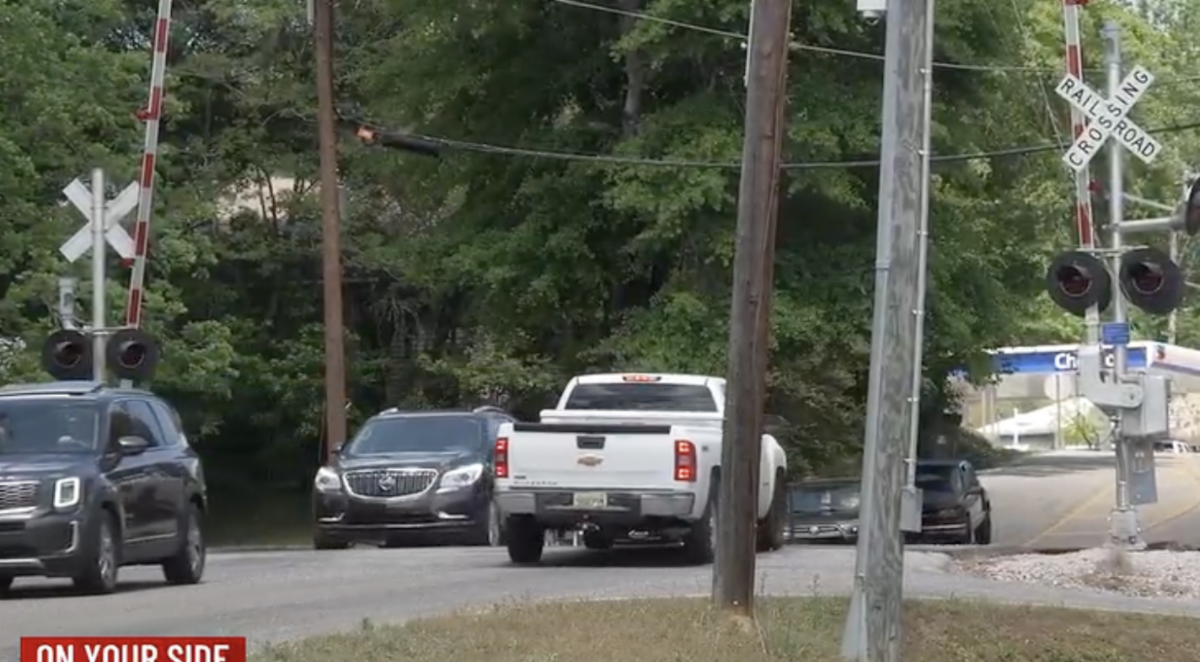
Trains have blocked railroad tracks near the Helena Sports Complex twice in one week — canceling some Little League games and frustrating families trying to get their kids to the ballpark.
Helena Police say the tracks were blocked for an hour and a half on Wednesday and for about two and a half hours on Thursday before drivers could get through.
Both crossings are on Highway 261 — one of the main roads in and out of Helena.
Patrick Martin has two daughters who play softball and a son who plays baseball. After waiting in his car for an hour, his daughter’s game was canceled.
“They were pretty upset,” Martin said. “My youngest daughter was really looking forward to playing.”
Martin says the repeated blockages are more than an inconvenience.
“It’s a pain in the rear end,” Martin shared. “You’re interrupting lives, like people are trying to go do things. I don’t know, to me it just happens too often.”
Josh Price, whose 9-year-old son plays baseball, says his son’s game wasn’t cancelled, but it was delayed about an hour.
Train company CSX told Helena Police the most recent blockage was the result of “mechanical problems.” In a statement to WBRC, a CSX spokesperson said:
“CSX strives to be a good neighbor to communities where we operate, and we work hard to minimize the impact of railroad operations. We understand that it can be frustrating when trains block road crossings and we make every effort to prevent that from happening, whenever possible. Every crossing is different, and there are times when mechanical and operational issues could result in blocked crossings, as well as when trains stop for mandatory safety inspections, federally-regulated crew changes or to allow another train to safely pass.
| |
|
Solutionary Rail / April 22
This conversation rounds out a trio of interviews that explore the 46-year aftermath of the deregulatory Staggers Act. Our guest is Arnav Rao, who serves as a transportation policy analyst at the Open Markets Institute, where he works with previous Reconnect America guest Phil Longman.
An astute student of the history of the U.S. railroad industry and a keen observer of the present moment, Arnav does an excellent job of weaving together the many threads we have been tracing in recent months.
Beginning with the Staggers Act of 1980, Arnav reveals how an ideological program pushed regulators far beyond what Congress had originally intended. Not only were critical protections for shippers, workers, and the public were cast aside, but unchecked consolidation also left the U.S. with a largely monopolized and unaccountable railroad industry.
| | Editor's Note: They will give you ten reasons, but rail labor has always needed only one: trains move people and goods better than anything we have ever built. The efficiency is real, but it does not run on physics alone, it runs on the people who operate, maintain, and dispatch it every day. A system this capable should not be treated as an afterthought or a line item to cut when budgets tighten. Investment in rail is not theory, it is a decision about what kind of country we intend to be. If we believe in it, we have to build it, staff it, and run it like it matters. | |
|
High Speed Rail Alliance
Here are just 10 reasons why trains will save us:
-
Trains are the most energy-efficient way to travel by land. High-speed rail consumes almost ten times less energy per passenger-kilometer than cars—and six times less energy than airliners. Even diesel trains use over three times less energy than cars.
-
Steel wheels on steel rails is unbeatable physics. The reason that trains take so long to come to a stop is also the reason they are so efficient. Steel wheels on steel rails reduces friction by up to 99% compared to rubber tires on asphalt roads.
-
Trains make the draft—literally. Because trains are linked in a caravan formation, the locomotive or leading unit creates draft, reducing drag and increasing energy efficiency for the rest of the trainset.
-
Trains are the true EV powerhouses. The most efficient modes of transportation do not carry their own power source, and electric trains have been around since 1879. The relatively light weight of electric trains reduces wear and tear on the tracks, allows for faster acceleration, and slashes energy use.
-
Manufacturing electric trains does not depend on rare minerals. Mining for lithium and cobalt for electric car batteries is so carbon intensive that producing one EV emits nearly twice as much carbon as building a conventional gas car. In contrast, the resources needed to make an electric train are relatively simple and widely available.
-
A train can outlive even the most resilient Toyota. The average service life of a train is around 30-35 years, or about double the average lifespan of the American car (just shy of 17 years).
-
“Humanity’s default mass mover” Borrowing a phrase from engineer, author, and podcast host Gareth Dennis, trains simply carry more people and use less space than cars. One railroad track can move as many people as 10 highway lanes.
-
Trains un-pave parking lots and put up a paradise . Now we're paraphrasing Joni Mitchell. Switching to EVs does not solve the problem of the amount of space that car infrastructure consumes, nor does it solve the issue of traffic congestion. Tightly knit cities and towns encourages human development to stay out of nature’s way.
-
Trains multiply the use of other sustainable transportation modes. When more people take the train, more people take local public transit, walk, or bike—and vice versa. Improving one system creates ripple effects and a virtuous cycle of increased ridership for all sustainable transportation modes.
- Trains strengthen communities—and our sense of community. Passenger rail generates denser, more efficient land use than cars. Trains make it easier to access jobs, spend time with friends and family, and experience this incredible world of ours. Americans want to live in walkable communities. With loneliness now a public health epidemic, we need human connection—now more than ever.
| |
|
Michael Sol Warren / Apr 22
The derailment of a freight train carrying hazardous materials in the heart of urban New Jersey last week thrust railroad safety back into the spotlight.
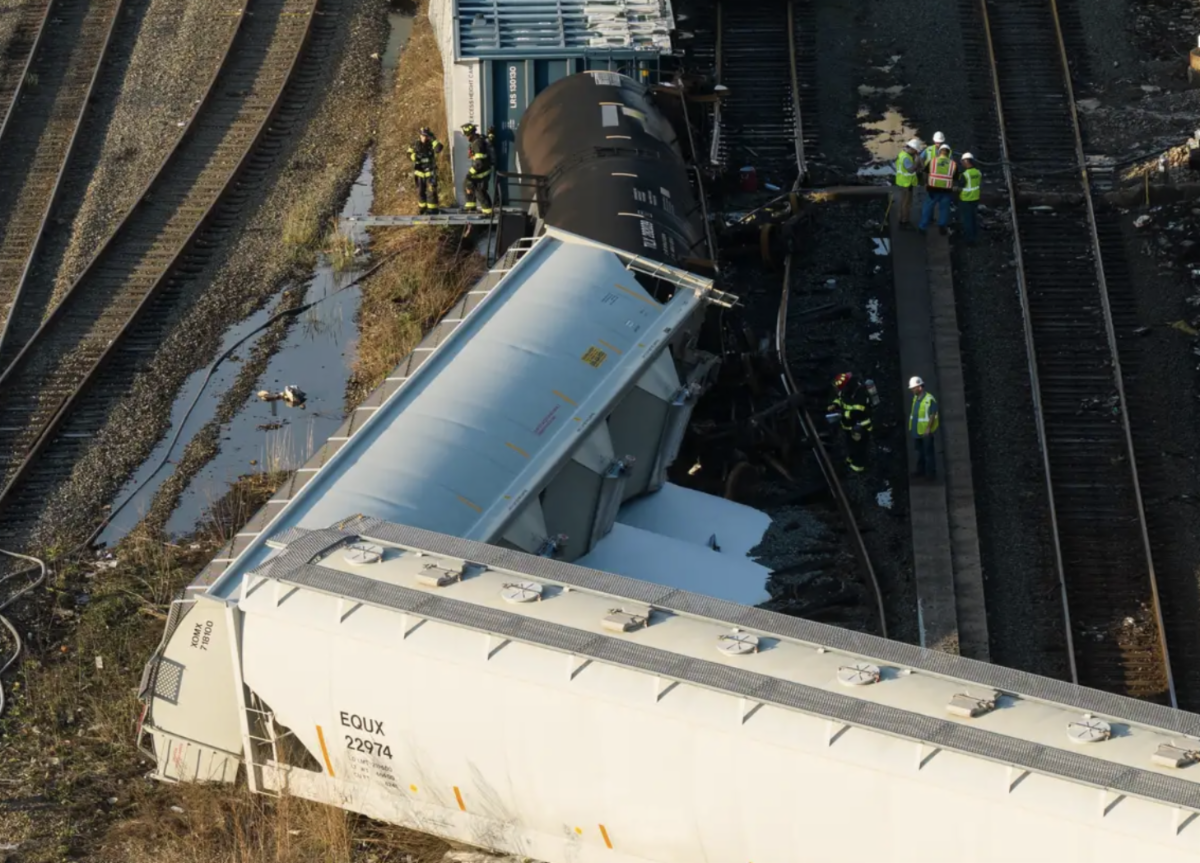
A CSX train with 163 cars and 2 locomotives partially derailed just after 3 p.m. last Tuesday, April 14.
Incident reports obtained by Gothamist through a records request show 13 cars of the train derailed at Tonnelle Avenue and Route 3 in North Bergen, one of the most densely populated areas of the state.
It was carrying plastic pellets, lumber and malt liquor, according to the reports. It was also carrying petroleum products and a hazardous material called ethyl acetate – a colorless liquid with a fruity odor that is used as a solvent.
The response to the accident demonstrated some of the major concerns of lawmakers and groups who have long objected to these trains rolling through the main streets and downtowns of New Jersey’s biggest towns and cities.
| | NEWS FROM AROUND THE LABOR MOVEMENT | | Each week, RWU includes a few articles about advances and developments in the larger labor movement that are of interest to railroad workers. Got an artcile to submit for possible inclusion next week? Email it along to raillabornews@gmail.com. Thank you! | | |
WHITNEY CURRY WIMBISH / APRIL 20
The American labor movement will soon have something it’s never had before: a centralized strike fund.
Union Now, the new nonprofit and brainchild of Association of Flight Attendants-CWA International President Sara Nelson, began officially fundraising at a kickoff rally on Sunday, April 12th, in Manhattan. National leaders of the Democratic left were there in support; both Bernie Sanders and Zohran Mamdani made rousing speeches, which suggests that the supporters Union Now hopes to enlist will go beyond those who are already union activists.
The Union Now fund will be a centralized, national clearinghouse to get money directly into the hands of workers, Nelson told the Prospect. Too often, workers want to organize but can’t because of money. Some are working two jobs so don’t have the time; some get fired illegally for attempting to organize. Funds from Union Now will supplement the incomes of those still employed so they can spend time organizing rather than on that second job, Nelson said, and financially support those who have been illegally fired while they contest the dismissal or get a new job. Grant applications will be available following the inaugural fundraising; Union Now is deciding how it will approve grants and is considering using a workers’ council to do so.
| | |
Nick Niedźwiadek / April 20
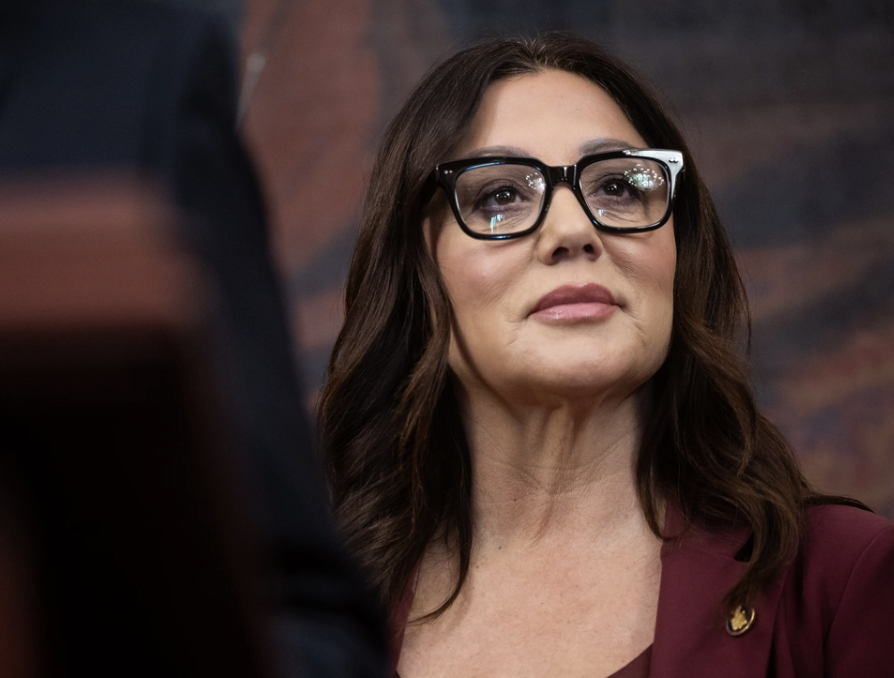
Labor Secretary Lori Chavez-DeRemer is stepping down from her Cabinet post amid a series of misconduct allegations against her and her top staffers.
White House communications director Steven Cheung said Monday that Chavez-DeRemer is leaving “to take a position in the private sector.”
“She has done a phenomenal job in her role by protecting American workers, enacting fair labor practices, and helping Americans gain additional skills to improve their lives,” he said in a statement posted to social media.
Chavez-DeRemer has been under scrutiny since January, when DOL Inspector General Anthony D’Esposito opened an investigation into allegations that she was involved in an extramarital affair with a member of her security detail, that she drank on the job and that top aides concocted official events to facilitate her personal travel plans.
| | |
International Brotherhood of Teamsters / April 21
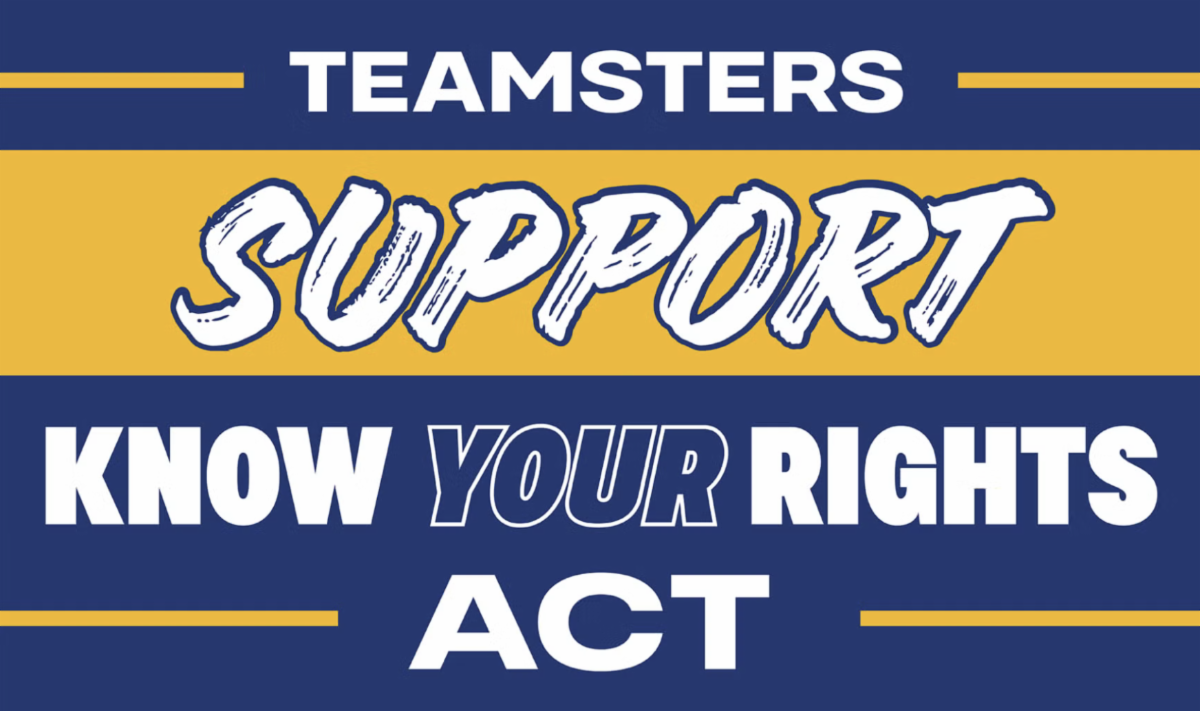
The International Brotherhood of Teamsters supports the introduction of the Know Your Labor Rights Act by Senators Josh Hawley (R-MO) and Maggie Hassan (D-N.H.), and Representatives Riley Moore (R-WV) and Marie Gluesenkamp Perez (D-WA), legislation that would strengthen workplace transparency by requiring employers to clearly inform workers of their federally protected labor rights.
“Greedy corporations and corrupt managers in nearly every sector of the economy put in overtime trying to stop working people from organizing,” said Teamsters General President Sean M. O’Brien. “But the right to organize is sacred, and American workers should be informed of their legal right to do so. The Know Your Labor Rights Act would help put power back in the hands of working people. It would mandate that employers post information about labor rights in an easily accessible place so that workers remain informed and empowered.”
Under Section 7 of the National Labor Relations Act (NLRA), passed by Congress in 1935, workers are guaranteed the right to organize, join a union, and collectively bargain. Despite these longstanding protections, employers are not required to inform workers of these rights. The Know Your Labor Rights Act would change that by requiring employers to display information about labor rights in visible areas and notify new employees, or face penalties for non-compliance.
Recent polling shows broad bipartisan support, with 71 percent of Americans favoring a requirement that employers post notices of NLRA rights, underscoring the public’s strong backing for workplace transparency and fairness.
| | WEEKLY DERAILMENT DEPARTMENT | | Each Tuesday in this news bulletin, RWU does our best to present a picture of what has been happening over the course of the previous week in terms of derailments in North America, and investigation determinations of previous accidents. NOTE: This list is by no means comprehensive. Smaller and less consequential mishaps are generally not reported here. If the wreck results in injury or fatality, or is especially damaging/extreme, a full article will appear as a feature in the dozen or so rail articles above. Know of a train wreck? Please feel free to forward a link to raillabornews@gmail.com for possible inclusion next week. Thanks! |
| | | |