Rail & Labor News from RWU
| | Weekly Digest Number 3 - January 20, 2026 | | Welcome to the RWU Rail & Labor News! This news bulletin is produced and emailed out each Tuesday morning. We hope you find each week's news and information useful. If so, please share with co-workers, friends, and colleagues. If you like, you can sign them up to get all the news from RWU HERE. Or forward them the link. Got a hot tip? Please forward the article and a link to raillabornews@gmail.com. Note: If you read over this news bulletin each week, you will be sure to never miss the important news of what is going on in the railroad world from a worker's perspective! | | THIS WEEK'S RAIL AND LABOR NEWS | | Editor's Note: There are two important take-aways from STB's rejection of the merger application. First, that on perhaps the most important term paper of their lives, executives of both railroads received a failing grade. And second, while the railroads love using this as a catch all to fire those of us in the crafts, they themselves are, in this matter, guilty of a significant violation of GCOR Rule 1.13, "Reporting and Complying with Instructions." | |
Freight Waves / January 16th
Union Pacific and Norfolk Southern have more homework to do after federal regulators late Friday gave their 7,000-page merger application an incomplete instead of a passing grade.
The Surface Transportation Board in a 15-page decision (PDF) rejected the merger application, and two related applications, as incomplete. UP (NYSE: UNP) and NS (NYSE: NSC) can file a revised application, subject to the same 30-day completeness review, but must notify the board of their refiling plans by Feb. 17.
“Union Pacific will provide the additional information requested by the Surface Transportation Board,” the Omaha-based company said in a statement to FreightWaves.
The STB said that UP and NS omitted post-merger market share projections, as well as other documents required by law.
| | |
ABC News / January 12th
Human errors and track defects caused more than 3,000 rail accidents over the last decade, killing 23 people and injuring nearly 1,200. Yet federal railroad regulators failed to implement most of the safety recommendations that emerged from accident investigations.
That’s according to an original analysis by the Howard Center for Investigative Journalism at the University of Maryland.
Behind those numbers, the Howard Center found, is a powerful industry that uses its money and influence to stymie federal safety reforms. It’s actively lobbying President Donald Trump’s administration to further reduce track inspection and repair requirements and loosen rules aimed at preventing crew fatigue.
The center’s analysis of data from the National Transportation Safety Board, which investigates major accidents and recommends safety improvements, found it gave federal railroad regulators 81 recommendations from 2015 through 2024.
| | Editor's Note: For those of us who were working rails in the 1990s, and experienced first-hand the Conrail carve up and the UP-SP-CNW merger, believe us when we tell you what a mess it was. The "melt-down" that many railroad workers experienced in 2022-2023 - with hundreds of trains held for crews on congested mainlines - was a picnic in the park in comparison. The author does not reference this, but hits on another very important point - the carriers will always paint a glowing picture of the future, stating their goals and intentions for better/faster/more reliable service with ZERO guarantee this will actually happen, and in many cases in fact does not. | |
Trains Magazine / January 16th
Railroads proposing mergers inevitably make ambitious promises and projections, particularly about faster service and more competition. Not all of them become reality, despite the best intentions of railroaders who work at a feverish pace to develop the operating plans submitted to federal regulators.
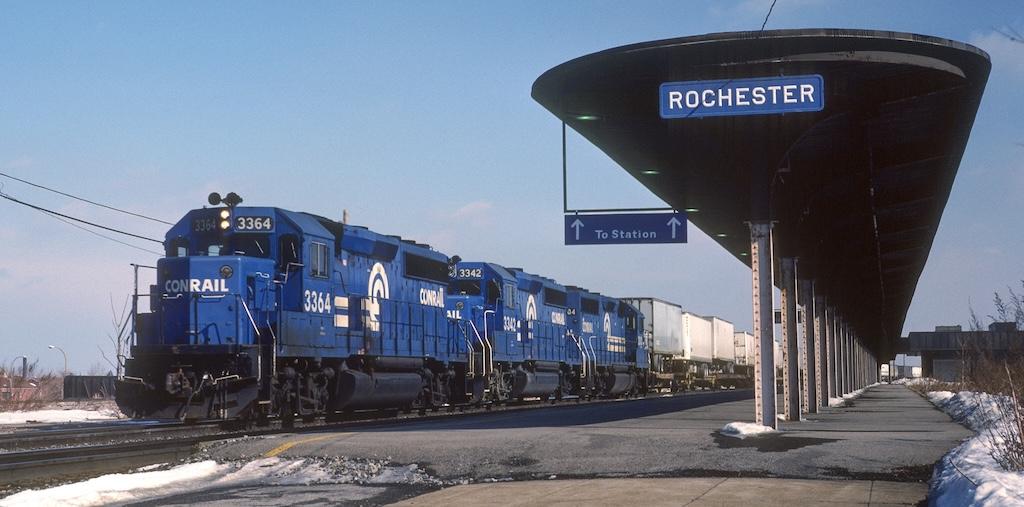
A case in point: CSX, as part of its 1999 acquisition of 42% of Conrail, said it would trim the schedules of its Chicago-New Jersey premium intermodal trains in order to become more competitive with trucks.
The railroad wanted to turn back the clock and nearly match the 24-hour schedules that the New York Central and Pennsylvania railroads offered three decades earlier. Conrail’s TrailVan trains averaged 30 to 32 hours between Chicago and the New York area due to the operation of longer trains, strict adherence to speed limits, and the concentration of traffic on fewer main lines.
|
|
Trains Magazine / January 14th
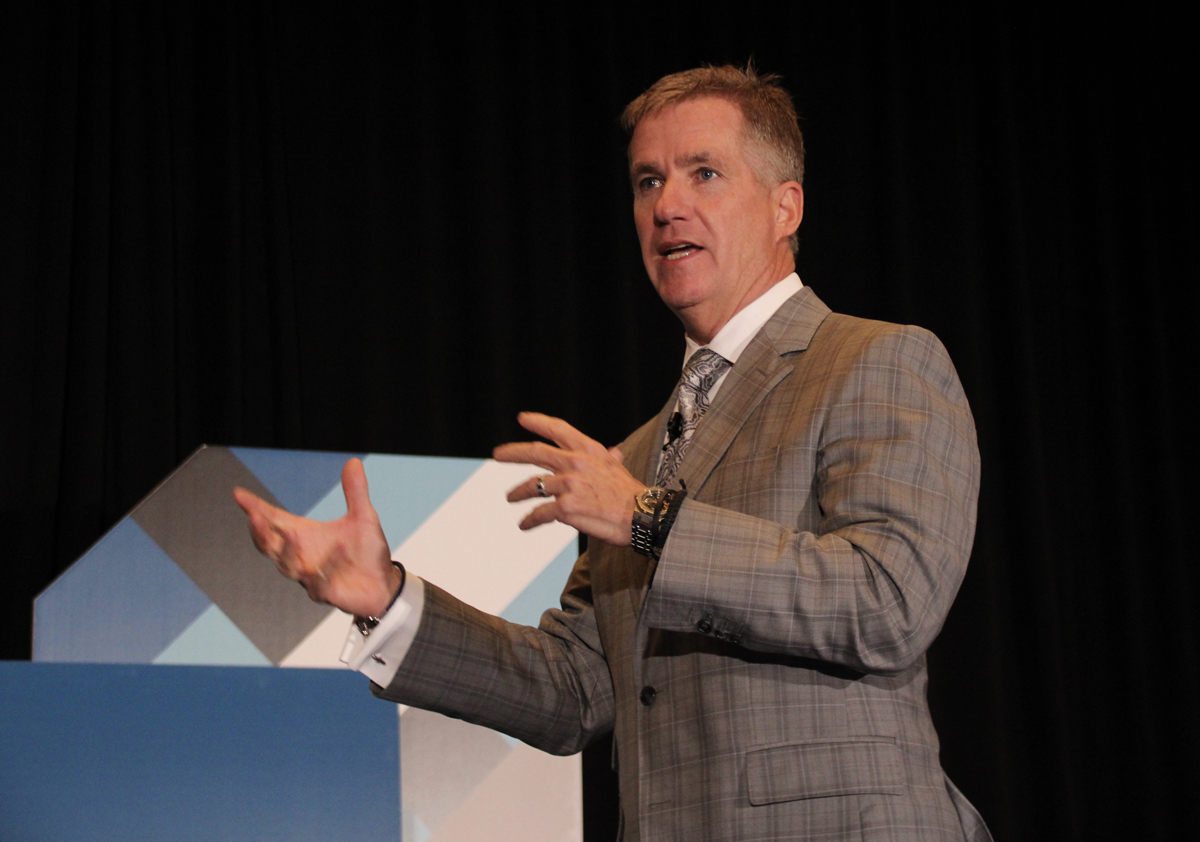
The CEOs of Canadian Pacific Kansas City and BNSF Railway took aim at the proposed Union Pacific-Norfolk Southern merger during the first day of the Midwest Association of Rail Shippers winter meeting — and urged the rail customers in attendance to voice any concerns they may have to federal regulators.
CPKC CEO Keith Creel — the day’s first speaker with a scheduled 45-minute address that stretched to 70 minutes — and BNSF’s Katie Farmer, in a more wide-ranging “fireside chat,” raised similar issues regarding the accuracy of some projections in the UP-NS merger application, and the potential impacts on customers.
“If I were a customer and a senior level transportation person,” Farmer said, “what I’d be asking is, does this consolidation give me more optionality? Does it give me more competitive rates? And I’d just start there.”
| |
Progressive Railroading / December 2025
Thanks to the proposed merger between Union Pacific Railroad and Norfolk Southern Railway, 2026 will be a monumental year for the entire rail industry. The Surface Transportation Board will evaluate the Class Is’ application calling for the creation of the nation’s first coast-to-coast transcontinental railroad.
If the merger ultimately wins the STB’s stamp of approval, it will have a profound impact on Amtrak, the only nationwide rail network that carries passengers from coast to coast and into parts of Canada. About 97% of the 21,000 route miles traveled by Amtrak trains are on track owned by the Class Is and some smaller, private regional or commuter railroads.
Among those other railroads, the UP and NS networks combined host 25 of Amtrak’s 44 state-sponsored and long-distance routes, according to the Rail Passengers Association (RPA). In 2024, those Class Is hosted Amtrak trains carrying 11.3 million passengers, or 63% of Amtrak’s state- and long-distance ridership that year.
| | Editor's Note: How ironic that as Amtrak struggles to equip its long distance trains, forced to use worn-out rail cars and locomotives, "luxury" rail equipment is attached to the rear end of some of these trains for the wealthy to travel in splendor at $15,000 or so a pop. Some advice for those folks - If you want your fancy-dancy trains cars to run behind Amtrak's scenic long distance routes, you better support their existence because due to lack of equipment they are threatened! | |
AFAR / January 9th
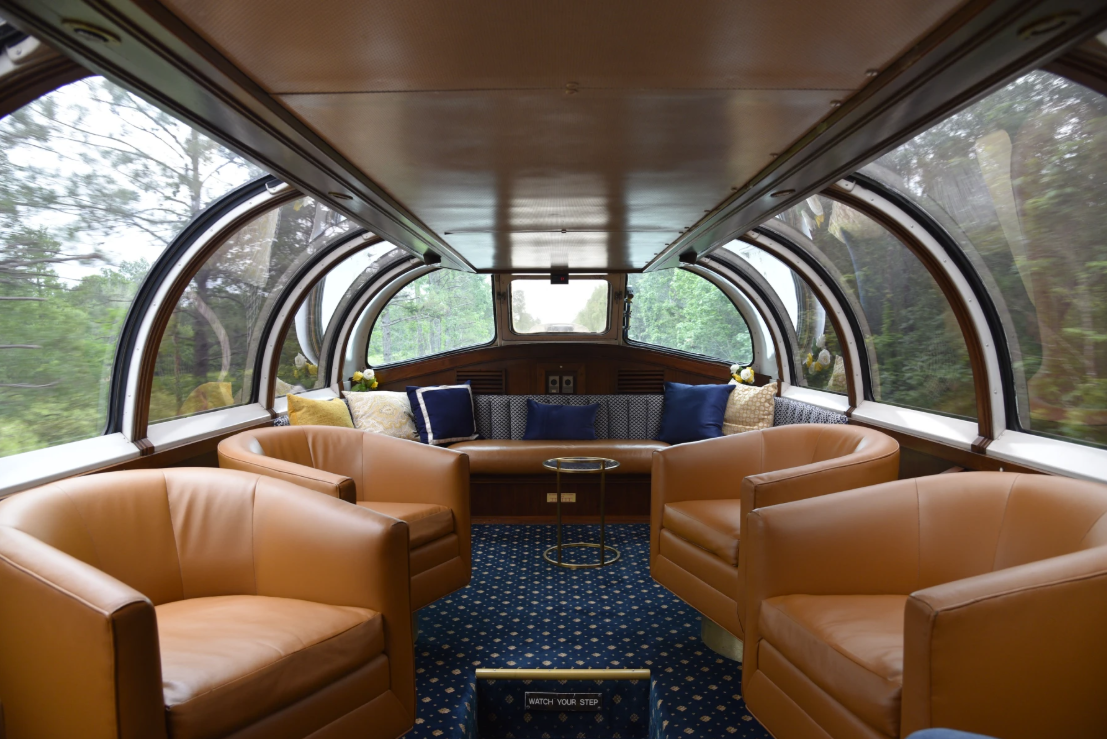
For travelers who love the idea of traveling the country by train but crave a little more space, privacy, and polish than a standard Amtrak seat or sleeper car allows, a new option is rolling onto the tracks this winter. Starting in mid-January 2026, a new company called Halloway is offering a more luxurious rail experience. It is launching exclusive-use private railcar journeys on two of the most scenic routes in the American West.
Rather than operating its own luxury train, Halloway will attach a pair of restored historic railcars to regularly scheduled Amtrak trains, creating what the company describes as a fully private onboard experience: sleeping, dining, and lounging reserved entirely for one group. The initial itineraries will operate on Amtrak’s Coast Starlight route, connecting Los Angeles and Oakland (across the bay from San Francisco), and on the California Zephyr line, which links Oakland with Denver in Colorado.
| | Editor's Note: Woopdie-do is all we can say. Big deal. Freight traffic continues to lag dramatically behind previous years carloadings. In fact, 2025 carloadings of 25.6 million is dwarfed by what the rail industry moved in 2006, a generation earlier, 32.1 million loadings. But the bigger story that may just become more apparent in the coming weeks is the steep downturn in rail freight loadings which began a few months ago. Will carloadings recover, or is this downward trend the wave of the future? Stay tuned. | |
Progressive Railroading / January 13th
Total U.S. freight-rail traffic in 2025 was up 1.5% over 2024, despite concerns about economic downturn. Going into 2026, Association of American Railroads' economists are "cautiously optimistic" about rail traffic growth.
Intermodal rail traffic for all of 2025 totaled 14.06 million containers and trailers, up 1.5% over 2024 and the second most ever, behind 2018's 14.36 million, according to the AAR's latest "Rail Industry Overview" report, issued Jan. 10.
Since rail intermodal shipments are tied closely to consumer spending, growth in 2026 will depend on the American population's inflation-adjusted income growth, disposable income, labor market stability and interest rates, AAR officials said. Intermodal volumes in 2025 surged early and hit a lull late in the year, as retailers preordered supplies in anticipation of President Trump imposing tariffs on goods from other countries, they added.
| | Editor's Note: Please pardon our cynicism, but we are not as ecstatic as the Transportation Trades Dept (TTD) about the Panel's reestablishment. The exact same Department of Transportation (DOT) that abolished this Panel less than five months ago is now restoring it. We must ask, why the hell was it dismantled last year in the first place? Because it gave workers and their unions a smidgen of a voice. So don't look for the findings and advice of this "revived" panel to be favorable and/or taken seriously when it comes to rail worker safety. | |
Progressive Railroading / January 13th
The Federal Railroad Administration has announced the reestablishment of the Railroad Safety Advisory Committee's (RSAC) charter, according to a notice in today's Federal Register.
The committee, established by the U.S. transportation secretary in accordance with the Federal Advisory Act, provides information, advice and recommendations on rail safety matters to the FRA administrator. The charter will be renewed for two years, according to the notice.
The renewal follows a U.S. Department of Transportation decision in August 2025 to disband the rail safety panel and 24 other advisory panels. The Transportation Trades Division (TTD) of the AFL-CIO, an umbrella group representing railroad labor unions, said at the time that it was alarmed by that decision due to the potential impact on rail safety.
| |
Trains Magazine / January 12th
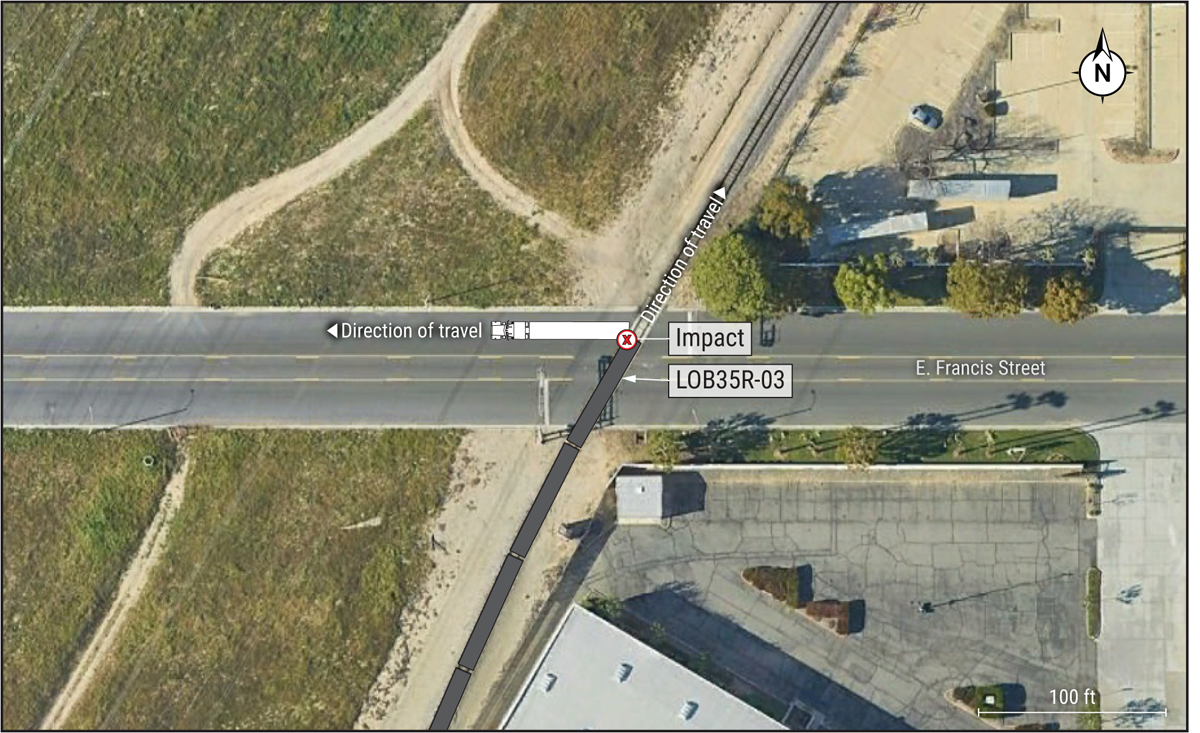
The Union Pacific brakeman killed in a grade-crossing incident in Ontario, Calif., last month was riding the lead car on a shove move when his train struck a truck that had entered the crossing while warning lights were flashing, according to the National Transportation Safety Board’s preliminary report released today (Jan. 12, 2026).
The incident occurred Dec. 3, 2025, at the East Francis Street crossing in Ontario, which is not protected by crossing gates. The train of two locomotives and seven railcars, operated by its conductor using a remote-control unit, was approaching the crossing at 9.9 mph when the tractor-trailer rig entered the crossing. The conductor initiated emergency braking, but the train and truck collided. The train was moving 7.5 mph and the truck was going 19 mph at the time of the collision. The SMART-TD union subsequently identified the person killed as Steven Crowe II, a second-generation railroader who had hired on with UP in 2014 [see “NTSB probing death …,” Trains.com, Dec. 4, 2025]. The conductor also was injured; he was hospitalized, treated, and subsequently released.
| |
High Speed Rail Alliance / Event: January 23rd
Amtrak’s long-distance routes are in jeopardy.
The national passenger rail provider’s fleet of rolling stock is too small and too old to meet demand, which continues to rise. Trains are often sold out, and frequencies remain dismally low.
This year, it is essential that Amtrak places a large order of new equipment. In order to grow the network and develop the rolling stock supply chain, they need to run more trains. And they shouldn’t be pushing 50.
You can help make this happen.
In this webinar, Executive Director Rick Harnish and the High Speed Rail Alliance team will show how advocates throughout the country can get mayors, local governments, universities, nonprofit groups, and other entities to join us in telling Secretary of Transportation Sean Duffy: buy more trains!
| | Editor's Note: We are not especially impressed by BNSF's account of their own safety record. (for example, NS used to win the Harriman Award every year, big deal, right?) But we do reprint this article here because, in the second bullet point of the outline of the BNSF safety policy, the railroad states that it "equips a workplace with resources and tools so that all known hazards will be eliminated or safeguarded." This is step in the right direction. Most corporate safety programs have emphasized worker behavior and ignored hazards, in many cases refusing to even acknowledge their existence! RWU has maintained from our Founding Convention that all accidents and injuries are the result of HAZARDS, which therefore must be pinpointed and eliminated/mitigated. See the Campaign Page on our website. | |
Progressive Railroading / January 14th
BNSF Railway in 2025 operated its 32,500-mile network with its lowest ever employee injury frequency rate, 10% lower than its previous record year in 2023, the Class I announced yesterday.
BNSF also had a 13% decrease in rail equipment incidents, surpassing the railroad’s target for 2025, company officials said in a press release. BNSF employs 35,000 people.
The safety milestone reflects "strong collaboration between labor and management, and a shared belief that safety is a value and guides every decision we make," said BNSF Vice President of Safety Chad Sundem.
| |
Trains Magazine / January 16th
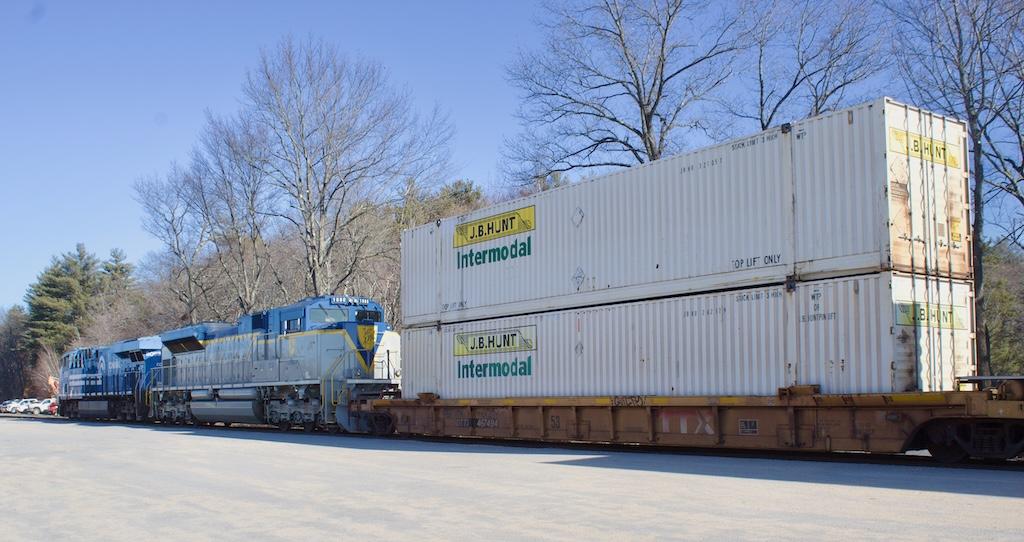
J.B. Hunt executives are disappointed that the Union Pacific-Norfolk Southern merger application did not include more details about the railroads’ intermodal plans.
“We continue to digest the application and had expected more intermodal-specific questions to be addressed in the merger application than there were,” Darren Field, president of J.B. Hunt Intermodal, said on the company’s earnings call on Thursday. “So we continue to plan for a wide variety of scenarios.”
J.B. Hunt — the largest domestic intermodal operator — is BNSF Railway’s partner in the West and has relied on Norfolk Southern as its main partner in the East, with CSX picking up a larger share of J.B. Hunt’s eastern business last year as a result of the BNSF-CSX intermodal alliance that launched in August.
J.B. Hunt executives have previously said that they would continue to work with all of the Class I railroads in a post-merger world.
| | Editor's Note: This is an example of how difficult - if not impossible - it is to run a passenger train operation at a profit. In fact, without government subsidies, no transport mode - rail, air, waterway or highway - would run at a profit. Despite high demand, added frequencies, lengthening trains and sold out departures, Brightline is showing signs of a looming financial crisis. The coming years will tell the story. | |
Trains Magazine / January 12th
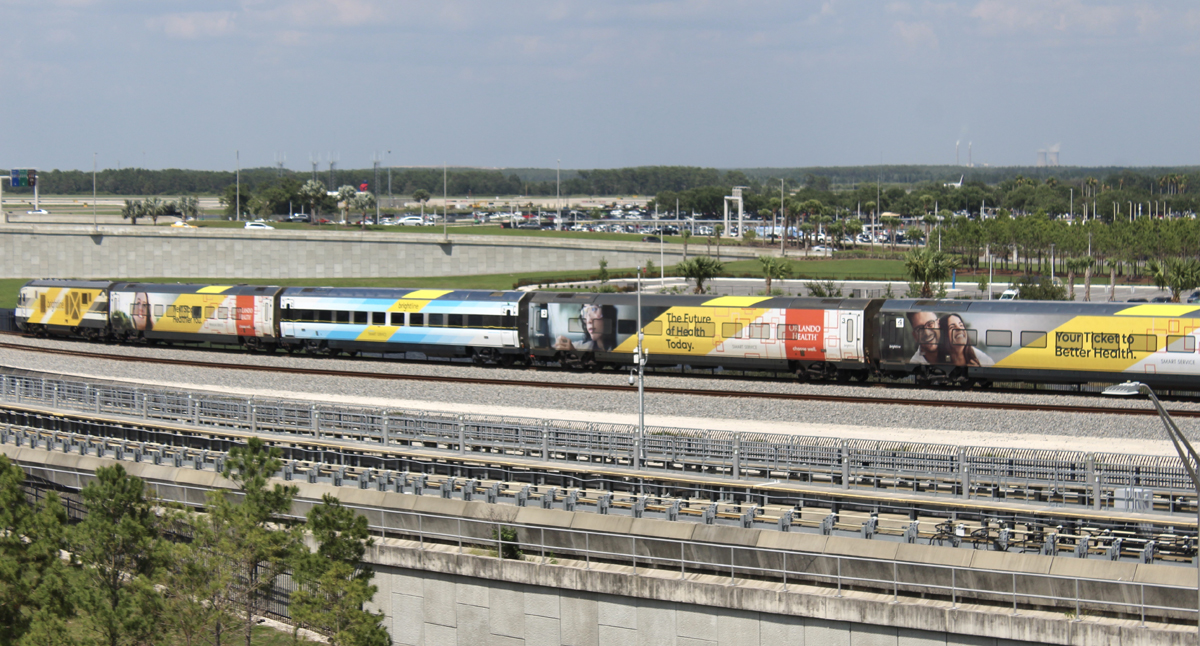
In the first full month following a strategy revamp in early October, Brightline showed promising revenue growth, driven by increased premium-class seating on its Orlando trains and additional customers riding more frequent West Palm Beach-Miami service.
However, its mounting, increasingly expensive debt load is causing concern among investors as a hefty interest payment is scheduled for this Thursday, Jan. 15.
At the beginning of October, the company moved away from hourly service between South Florida and Orlando. It now generally offers one departure every other hour while boosting Miami-West Palm Beach frequencies [see "Brightline revamps schedules …," Trains.com, Sept. 30, 2025]. With the arrival as of December of another 10 Premium-class coaches, featuring 2-1 seating and upgraded amenities, the table below shows additional higher-priced tickets have led to more revenue even though full-route trips were cut almost in half.
| | NEWS FROM AROUND THE LABOR MOVEMENT | | Each week, RWU includes a few articles about advances and developments in the larger labor movement that are of interest to railroad workers. Got an artcile to submit for possible inclusion next week? Email it along to raillabornews@gmail.com. Thank you! | |
Labor Notes / January 16
Minnesota appears to be in gear for a mass uprising. Unions, community organizations, faith leaders, and small businesses there are calling for a statewide day of “no work (except for emergency services), no school, and no shopping” on January 23.
Festering grievances swelled into a national outcry on January 7, after ICE agent Jonathan Ross shot and killed poet and mother of three Renee Nicole Good in Minneapolis while she and her wife were observing federal agents swarming her neighborhood.
A week later, another federal agent shot a Latino immigrant from Venezuela in the leg. ICE agents have sprayed chemical agents in protesters’ eyes. On Wednesday night, they detonated a tear gas canister underneath the car of a family just trying to get home from basketball practice; the baby, strapped in his car seat, was knocked unconscious.
| | Editor's Note: Labor unions and labor federations around the world - including the U.S. based AFL-CIO of which most rail unions are a part - are condemning the attack upon Venezuelan sovereignty. | |
Labor Notes / January 7th
Labor federations around the world are condemning the Trump administration’s acts of war in Venezuela.
In a raw display of imperialist aggression, the United States bombed the country, kidnapped its president and his wife, and imprisoned them in New York City on January 4. Special forces and military aircraft killed 80 civilians and military personnel.
“We join the international labor community in condemning President Trump’s unconstitutional actions in Venezuela,” said the main U.S. labor federation, the AFL-CIO, in a social media post.
It linked to a joint statement from the International Trade Union Confederation (ITUC) and the Trade Union Confederation of the Americas (TUCA). The World Federation of Trade Unions has also condemned the attacks, as have unions from Greece to South Africa to Nepal to the Czech Republic.
| | |
The Guardian / January 14th
Union leaders have accused the Trump administration of a “rhetorical shift towards white supremacy” after social media posts by the US Department of Labor drew comparison with a Nazi slogan.
Recent posts from the agency include a video captioned “remember who you are, American”, with the phrase: “One Homeland. One People. One Heritage.”
Users of X, formerly Twitter, and Grok, the platform’s AI tool, highlighted a similarity with the Nazi slogan: “Ein Volk, ein Reich, ein Führer” (“one people, one realm, one leader”).
“The similarity to that Nazi slogan is bad,” Christopher Hayes, a labor historian and professor at Rutgers University, told the Guardian, expressing alarm over “the motivation behind it, the message, the sentiment and desired outcome”.
| | WEEKLY DERAILMENT DEPARTMENT | | Each Tuesday in this news bulletin, RWU does our best to present a picture of what has been happening over the course of the previous week in terms of derailments in North America, and investigation determinations of previous accidents. NOTE: This list is by no means comprehensive. Smaller and less consequential mishaps are generally not reported here. If the wreck results in injury or fatality, or is especially damaging/extreme, a full article will appear as a feature in the dozen or so rail articles above. Know of a train wreck? Please feel free to forward a link to raillabornews@gmail.com for possible inclusion next week. Thanks! |
| | | |