Rail & Labor News from RWU
| | Weekly Digest Number 39 - September 29, 2026 | | Welcome to the RWU Rail & Labor News! This news bulletin is produced and emailed out each Tuesday morning. We hope you find each week's news and information useful. If so, please share with co-workers, friends, and colleagues. If you like, you can sign them up to get all the news from RWU HERE. Or forward them the link. Got a hot tip? Please forward the article and a link to raillabornews@gmail.com. Note: If you read over this news bulletin each week, you will be sure to never miss the important news of what is going on in the railroad world from a worker's perspective! | | THIS WEEK'S RAIL AND LABOR NEWS | | Editor's Note: Management may call this efficiency, but the miles still have to be inspected, the defects still have to be repaired, and the railroad still has to be maintained long after the positions have been abolished. Sending workers home does not eliminate the work; it simply spreads that work across fewer people and asks them to carry the added burden and risk. The savings will appear neatly on a balance sheet, while the consequences are left on the ground with the men and women expected to keep the railroad safe. That is not efficiency so much as a transfer of responsibility from the company to the worker. | |
|
Trains Magazine / September 21st
CSX is planning to abolish 165 maintenance-of-way positions and furlough more than 1,000 workers, the Brotherhood of Maintenance of Way Employes Division has announced.
In a post on its website earlier this month, the union, part of the International Brotherhood of Teamsters, said the furloughs will include approximately 900 BMWED members on track gangs that are not expected to restart until February. It also cited one location where plans call for four employees to be responsible for a 142-mile section of mainline track and multiple yards — territory currently handled by a dozen workers.
“Our members know what happens when CSX eliminates positions and spreads the remaining workforce across larger territories,” BMWED General Chairman Brian Thompson said. “The work does not disappear. The miles still have to be inspected, the defects still have to be repaired, and the railroad still has to be maintained. CSX is choosing to do that work with fewer people, and our members should not be forced to carry the burden of that decision.”
| |
| Editor's Note: The question is not whether two giant railroads can produce enough paper to justify becoming larger. It is whether the public should surrender still more control over an essential transportation system to corporations already powerful enough to dictate terms to workers, shippers and communities. UP and NS will promise efficiency, but workers have learned that “efficiency” often means fewer jobs, less competition and more power concentrated at the top. The burden should remain exactly where it belongs: on the companies asking the country to trust them with even more. | |
|
Railway Age / September 21st
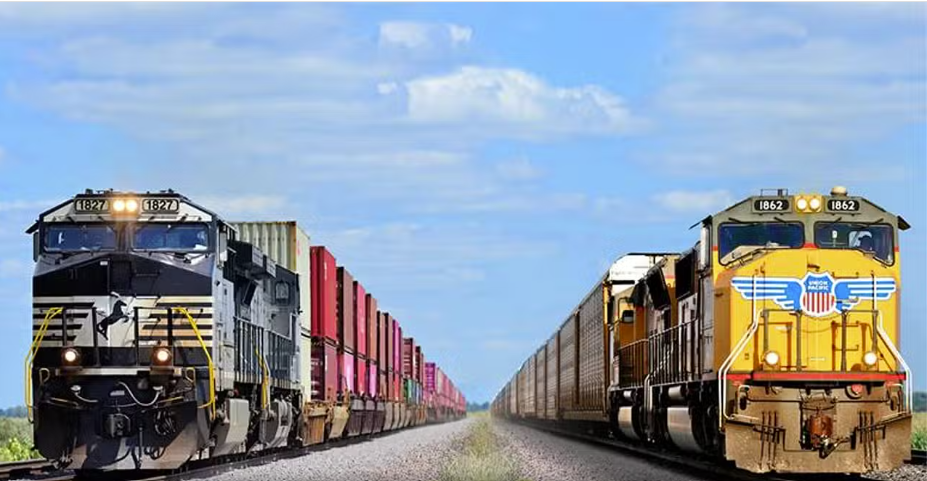
The Surface Transportation Board on Sept. 18 reported its unanimous decision rejecting several motions that sought summary denial of the revised major merger application filed by Union Pacific (UP) and Norfolk Southern (NS). Richard J. Kloster, who was sworn in earlier this year as a new STB member, concurred in a separate expression, noting “I believe [the] Applicants still have a long way to go to show that the Transaction is in the public interest once all stakeholder arguments on the record are fully considered.”
Under 49 U.S.C. § 11324(c), the STB must determine whether the proposed transaction is “consistent with the public interest,” it said in its decision (download below). In proceedings involving at least two Class I’s, the Board noted that it “must consider at least five enumerated factors, including ‘whether the proposed transaction would have an adverse effect on competition among rail carriers in the affected region or in the national rail system.’ … The assessment of the Revised Application is also governed by the Major Merger Rules, which the Board adopted in 2001 to govern major transactions like this one. Those rules provide that Applicants must present a prima facie case.
| |
| Editor's Note: While much of Latin America ignores investment in rail, Mexico's progressive government led by Claudi Sheinbaum is forging ahead with massive investments. More than 30 years ago when the national rail system was privatized, Mexico lost most of its passenger rail operations. | |
Mexico Business News / September 22nd
Construction of the Mexico City-Queretaro passenger train remains on track for completion in the 2H27, President Claudia Sheinbaum confirmed during a recent visit to Queretaro, aligning with the federal government's previously reported technical target of Sept. 30, 2027. The project forms part of a broader federal effort to revive passenger rail service and knit the center of the country together with outlying regions, and it is advancing alongside a parallel push to widen highway capacity in the same corridor.
Sheinbaum framed the project in historical terms during her visit, noting that Queretaro was once a genuine railway hub before privatization led to the network's decline, and that the current administration is now working to bring passenger rail back. She said residents could expect to travel between Queretaro and Mexico City by train, avoiding the region's notoriously congested highway, sometime in 2027 and possibly with a partial or full segment finished within the year.
The ambition fits into a pattern the government has repeated across several corridors. Mexico City's rail link to Felipe Ángeles International Airport (AIFA) began operating before Easter this year, giving officials an early operational win to point to while the more complex Mexico City-Queretaro line continues under construction, alongside the Queretaro-Irapuato, Saltillo-Nuevo Laredo and AIFA-Pachuca lines.
|
| Editor's Note: After well over a hundred years of operations around this famous curve, nothing like this has ever happened. It appears that in each case, the train "stringlined." Too much tonnage? Too long of a train? Too little horsepower? These are why trains do this on steep curves with steep grades. What role does PSR play? Trip optimizer and all the rest? | | The Rail Story /September 23rd | |
Trains Magazine / September 25th
A Chicago labor organization has gone to bat for Amtrak’s plan to build a new maintenance facility on the city’s South Side.
The Chicago Federation of Labor joined Amtrak representatives on Thursday, Sept. 24, at a news conference supporting the proposed $900 million Midwest Maintenance Facility, WTTW-TV reports.
“Our support comes from a simple place,” said Bob Reiter, federation president. “Chicago is the center of the nation’s passenger rail system and the workers responsible for keeping that system running deserve modern, safe, and efficient facilities to do their jobs.”
Reiter said the project will lead to approximately 3,000 jobs in construction, which is expected to take about 18 months, and about 400 permanent positions.
| | Editor's Note: Brightline has been for years the darling of the champions of private industry. The idea that Amtrak "fails" because it is publicly administered, and the notion that private investment is the way to revive our pathetic passenger rail system, is religion to these folks. Well, the poster child of this ideology - Brightline - is about to go bankrupt. | |
Quartz via Yahoo! Finance / September 25th
Brightline entered into a restructuring support agreement with key financial stakeholders on Friday, with certain parent entities filing for Chapter 11 bankruptcy protection in the United States Bankruptcy Court for the District of New Jersey. The company said Brightline Trains Florida LLC, which operates the Miami-to-Orlando rail service, is not part of the filing and will continue running trains.
As part of the agreement, supporting stakeholders have committed to provide $490 million in new long-term capital to Brightline Trains Florida LLC, consisting of $140 million in additional senior debt and $350 million in new junior debt, the company said. According to Bloomberg, Fortress Investment Group-backed Brightline Holdings LLC and certain other parent entities disclosed total assets and liabilities each falling in the $1 billion to $10 billion range in the petition.
The company plans to keep its $2.2 billion Series 2024 bonds in place throughout the restructuring. A further $2.2 billion in bonds issued by associated entities — including the $985 million Series 2025B bonds, the $925 million AAF Operations Holdings LLC Series 2024 bonds, and the $285.7 million AAF Operations Holdings LLC Series 2024A bonds — will also remain outstanding with no reduction in principal amounts, the company said.
| | Editor's Note: Fourteen workers dead in six years should end any argument that this is simply the cost of doing business. When a railroad’s operating practice repeatedly places workers where one mistake, one vehicle, or one bad move can kill them, the answer cannot be to keep counting bodies and calling the risk manageable. The industry has spent decades finding ways to move more freight with fewer people; it can find a way to perform these movements without making workers ride the point of danger. Safety that depends on a worker surviving the hazard is not much of a safety system. | |
|
Progressive Railroading / September 22nd
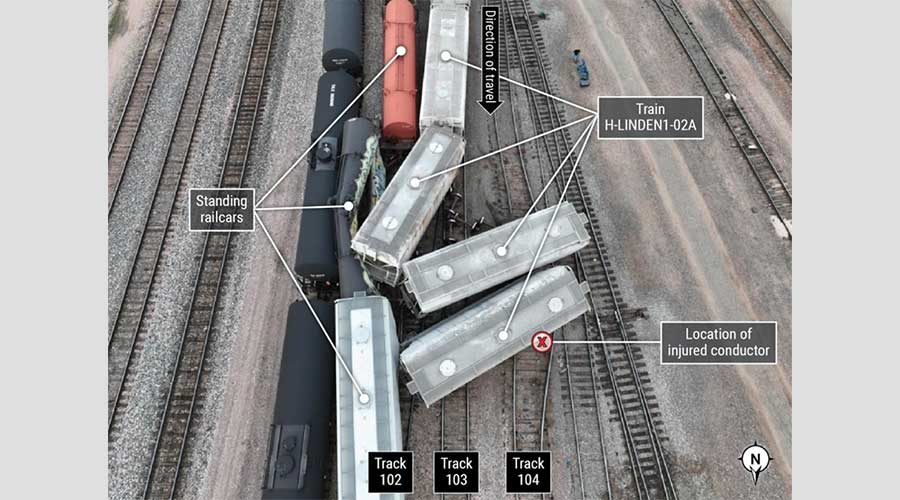
The National Transportation Safety Board (NTSB) yesterday issued a report with new safety recommendations to better protect rail workers during shoving movements.
During a shoving movement, a locomotive pushes rail cars while a worker ensures the track ahead is clear. Some railroads allow workers to perform this task while riding on the lead railcar, exposing them to numerous hazards, including falls from moving equipment, being struck by vehicles at grade crossings and being pinned or crushed during collisions or derailments, NTSB officials said in a press release.
Since October 2020, the NTSB has investigated 16 accidents involving workers riding rail equipment during shoving movements; 14 workers were killed and 2 were seriously injured. Since August 2026, NTSB has opened 2 additional investigations.
| |
| Editor's Note: On September 9th the Rail Passengers Association (RPA) filed a brief with the STB explaining why the UP-NS merger was a threat to existing - let alone new - passenger rail service in the U.S. RPA has come out unequivocally against the merger. As a dues-paying member organization of both RPA and the Rail Users Network (RUN), RWU salutes both organizations' courage and commitment to publicly and forcefully oppose this mega-merger with the understanding that it will hinder the development of passenger rail operations in North America. | |
Rail Passengers Association / September 9th
The Rail Passengers Association today filed comments with the Surface Transportation Board arguing that Union Pacific and Norfolk Southern have failed to make the passenger-rail showing necessary to establish a prima facie case for their proposed merger.
The Association also joined the Joint Shipper Associations in supporting their pending Motion for Summary Denial.
RPA’s filing argues that the proposed transaction would give the combined railroad an unusually large role in both existing and planned passenger service. RPA found that 43 of 69 federally selected Corridor ID projects—62.3 percent—potentially use UP or NS infrastructure, and 22 of those projects overlap at least one segment where the Applicants project additional freight traffic.
| | Editor's Note: If these allegations are true, then the scandal of East Palestine did not end when the flames went out. It continued wherever men and women were told to turn contamination into “zeros,” to bury what they saw, and to make the record cleaner than the ground beneath their feet. There is something rotten in any system that asks workers to falsify reality so corporations and officials can escape its consequences. A poisoned town does not need public relations. It needs the truth, and everyone who hid it held to account. | |
|
The Wall Street Journal via Public Rail Now / September 23rd
A former environmental scientist who responded to Norfolk Southern’s 2023 Ohio derailment said the contractor she worked for took numerous steps to conceal contamination, from pressuring her to dismiss test results and report “zeros” to concealing animal deaths.
“They emphasized that we wanted zeros in our reports,” Peggy Dixon wrote in a 97-page affidavit about her work. “But zeros didn’t match what we were experiencing on the ground.”
The fiery derailment in East Palestine led to one of the worst U.S. chemical disasters in recent years. The intentional burning of vinyl chloride in derailed tanker cars sent a cloud over the town of 4,500 people. Three years later, questions are mounting about the response and ongoing risks.
Last month, following separate allegations, Vice President JD Vance and Lee Zeldin, head of the Environmental Protection Agency, asked the agency’s Office of the Inspector General to investigate how the Biden administration and private entities handled the disaster. Dixon’s affidavit was filed Wednesday by a whistleblower group as part of an investigation request to the EPA’s Office of Inspector General.
| |
| Editor's Note: The farmer and the railroad worker have learned the same lesson from forty years of consolidation: when competition disappears, power does not vanish with it, it simply moves farther from the people who must live with its decisions. Farmers are left with fewer routes to market, workers with fewer employers, and communities with fewer voices capable of saying no. UP and Norfolk Southern will call greater concentration progress because concentration has always been profitable for those doing the concentrating. The public has already paid dearly for the last generation of railroad mergers; it should not be required to finance the next one. | |
|
Stop The Rail Merger Coalition / September 25th
The National Farmers Union (NFU) announced its opposition to the proposed Union Pacific–Norfolk Southern merger, calling on the Surface Transportation Board to reject the application.
“History has shown us that when railroads consolidate, family farmers pay the price,” said NFU President Rob Larew. “Decades of mergers have left farmers with fewer options, higher rates, and less reliable service.”
Larew continued:
“The STB’s review of this application is an opportunity to instead put rail competition first and protect American farmers, shippers, and consumers from the harm further consolidation would bring to our transportation network and food supply chain.”
| |
| Editor's Note: CSX is going all out to compete (on Wall Street) with a (potentially) combined UP-NS, whose stock is outperforming theirs. Look for the other Class Ones to do likewise. Harsh attendance policies, mass firings, job cuts, furloughs, maintenance and inspection corner-cutting, and the like are all part of the private for-profit railroad portfolio. It is intrinsic to their nature. And there is a word for this: It is called capitalism. | |
WKRC / September 23rd
A railroad giant plans to cut more than 1,000 jobs amid record profits, a union said.
According to WCHS, CSX plans to furlough about 1,100 workers nationwide by mid-November, a move that could affect hundreds of railroad employees in West Virginia, Ohio and Kentucky.
The employees are primarily engineers responsible for track safety inspections, maintenance and construction, WCHS reported. General Chairman Brian Thompson of the Brotherhood of Maintenance of Way Employees Division said the positions include jobs paying about $80,000 as well as management roles.
| |
International Railway Journal / September 22nd
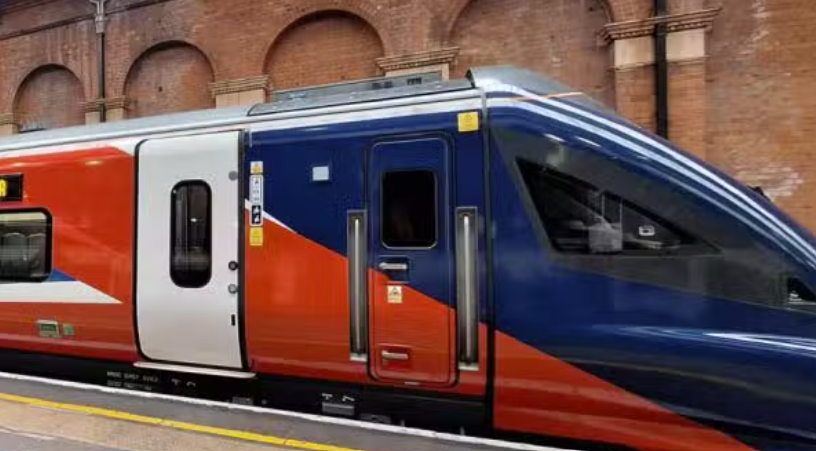
Chiltern Railways became the next passenger operator in Britain to return to public ownership on September 20, as the government pursues its policy of not renewing operating contracts with the private sector as they come to an end.
Formerly operated by Arriva, Chiltern Railways had 1110 full-time employees as of March 31 and managed a total of 35 stations. The company operates commuter and long-distance services on a 349km non-electrified network running from London Marylebone to Buckinghamshire, Oxfordshire, Warwickshire and the West Midlands.
According to official statistics compiled by the Office of Rail and Road (ORR), in 2025-26 Chiltern Railways operated 9.9 million train-km, recording 24.1 million passenger journeys and 1.28bn passenger-km.
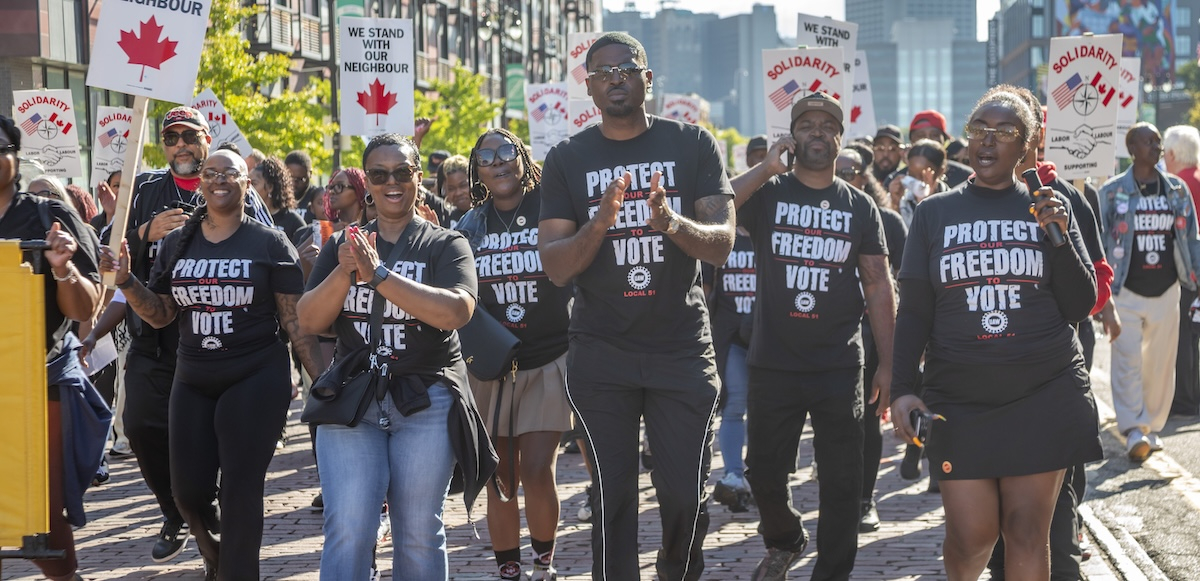
| | CBS Chicago / September 21st | | NEWS FROM AROUND THE LABOR MOVEMENT | | Each week, RWU includes a few articles about advances and developments in the larger labor movement that are of interest to railroad workers. Got an artcile to submit for possible inclusion next week? Email it along to raillabornews@gmail.com. Thank you! | | Editor's Note: As the article notes, a number of unions are taking up the call for an organized General Strike based upon simultaneous contract expiration dates. As railroad workers under the Railway Labor Act, our contracts do not expire but are simply renegotiated, the process outlined by the RLA, preventing us from taking "legal" strike actiion until the labyrinth of the RLA is exhausted. Nevertheless, rail workers can play a crucial role in a generalized strike of millions of other workers on May First of 2028 by honoring picket lines and otherwise lending support and solidarity to those workers who do walk out. | |
Labor Notes / September 9th
Three years ago the United Auto Workers, glowing with confidence after a successful strike at the Big 3 and pledging ambitious new organizing drives, put out a call for a national strike on May 1, 2028.
UAW President Shawn Fain called for unions to align their contracts with the Big 3 to build leverage and create a crisis for the billionaire class. It was a new day in the UAW, and a wider labor renewal felt possible.
May 2028 is now only a year and a half away. Are unions getting in gear for a season of strikes and labor action around then, as contracts expire in manufacturing, education, logistics, grocery, and the building trades?
Some are. Labor Notes has found 830,000 workers with contracts planned or expected to expire from March to July 2028.
| | Editor's Note: Railroad workers were among some of the first to "win" the 8-hour day and the 40-hour week. But as we well know, that is no impediment to the rail carriers - along with most employers - from working us 12 hour (or more), and a hell of a lot more than 40 hours a week. Unfortunately, the demand for a shorter workweek and more quality time with friends, family, and our lives outside of work has fallen by the wayside. Good to see some folks reviving the call. Less work! More rest! More time for what we will! | | |
Mark Takano for Congress
Nearly 90 years ago, President Franklin D. Roosevelt signed the Fair Labor Standards Act and by 1940, the concept of a forty-hour work week was the law of the land.
These days, people are working longer hours for wages that just don’t go as far. With out-of-control cost of living expenses, stagnant wages, and AI looming as a massive disruption to everything that we think we know about work, it’s time for a restructuring of the American workforce
That’s why Congressman Mark Takano and Senator Bernie Sanders have introduced the Thirty-Two Hour Workweek Act, to:
- Reduce the standard workweek from 40 hours to 32 hours over a three-year phase-in period
- Require overtime pay after 32 hours for non-exempt employees
- Guarantee no loss of pay for workers transitioning to a shorter week
- Encourage employers to either shorten workweeks or pay overtime, putting power back in workers' hands
| | Editor's Note: The major parties have snubbed workers and organized labor for too long now. The Democratic Party - once considered the friend of labor - has drifted further and further away from labor. For example, a Democrat President - Joe Biden - circumvented a national rail strike in 2022 by calling on Congress to prevent a strike from even happening, let alone immediately ordering striking rail workers back to work, which had been the norm for decades prior. It could be argued that union workers should not even waste their time attempting to work within either of the existing parties. But we think it is great that rank & file workers are entering the fray and raising working class issues whether the establishment likes it or not. | | |
The Guardian / September 19th
The US labor movement is having a banner election year.
More than three dozen nominees for open House and Senate races across the US have backgrounds as labor union representatives or members.
Several nominees are running in heavily blue districts, making it almost certain they will win the seat in November’s midterms, while others are in highly contested races that are likely to determine control of the House and possibly the Senate. Most are Democrats, though some are running as independents.
The early success of so many candidates with ties to labor comes as Democrats work to rebuild their support among working-class voters, centering their campaign messaging around affordability issues.
| | WEEKLY DERAILMENT DEPARTMENT | | Each Tuesday in this news bulletin, RWU does our best to present a picture of what has been happening over the course of the previous week in terms of derailments in North America, and investigation determinations of previous accidents. NOTE: This list is by no means comprehensive. Smaller and less consequential mishaps are generally not reported here. If the wreck results in injury or fatality, or is especially damaging/extreme, a full article will appear as a feature in the dozen or so rail articles above. Know of a train wreck? Please feel free to forward a link to raillabornews@gmail.com for possible inclusion next week. Thanks! |
| | | |