|
July is a time for summer vacations, backyard cookouts, community celebrations, and enjoying the outdoors with family and friends. As temps rise, reliable access to clean, safe drinking water becomes even more important. Whether you're staying hydrated during a day at the ballpark, filling a pool, or preparing for a Fourth of July gathering, water plays a role in nearly every summer tradition.
In this month's newsletter, we're taking a closer look at the important role water treatment plays in protecting public health, sharing information about precautionary boil water advisories, and learning about some great community events happening this July.
Speaking of summer, our latest video has water tips so you can enjoy every last drop of summer safely and responsibly:
| | | |
|
Independence Day
Did you know the average person can lose up to a gallon of water per day through sweat during hot summer weather? Between backyard barbecues, parades, sporting events, and fireworks displays, it's easy to spend hours outdoors without realizing how much water your body is losing.
As you celebrate Independence Day with family and friends, remember to keep plenty of water on hand and stay hydrated throughout the festivities. A little extra water can go a long way toward helping you enjoy a safe and fun-filled holiday.
| | | |
Understanding Precautionary Boil Advisories
Protecting public health is always our top priority. Occasionally, customers may receive a Precautionary Boil Water Advisory. While these notices can be concerning, they are issued as a preventive measure whenever conditions occur that could potentially allow contaminants to enter the water system.
Common reasons for an advisory include water main breaks, loss of water pressure, routine repairs, or equipment issues.
| | | | |
A boil advisory does not necessarily mean the water is contaminated—it simply means additional precautions are being taken while the system is evaluated and tested.
If a boil advisory is issued, customers should boil water before using it for drinking, cooking, brushing teeth, or washing fruits and vegetables. Ramsey Water recommends bringing water to a rolling boil for three minutes before use.
Most advisories are temporary and remain in effect until water samples confirm the system is safe. During that time, our crews work quickly to repair the issue, flush and disinfect the system, and perform rigorous water quality testing.
To stay informed, be sure your account information is up to date and visit https://ramseywater.com/water-boil-advisories/.
| | | | |
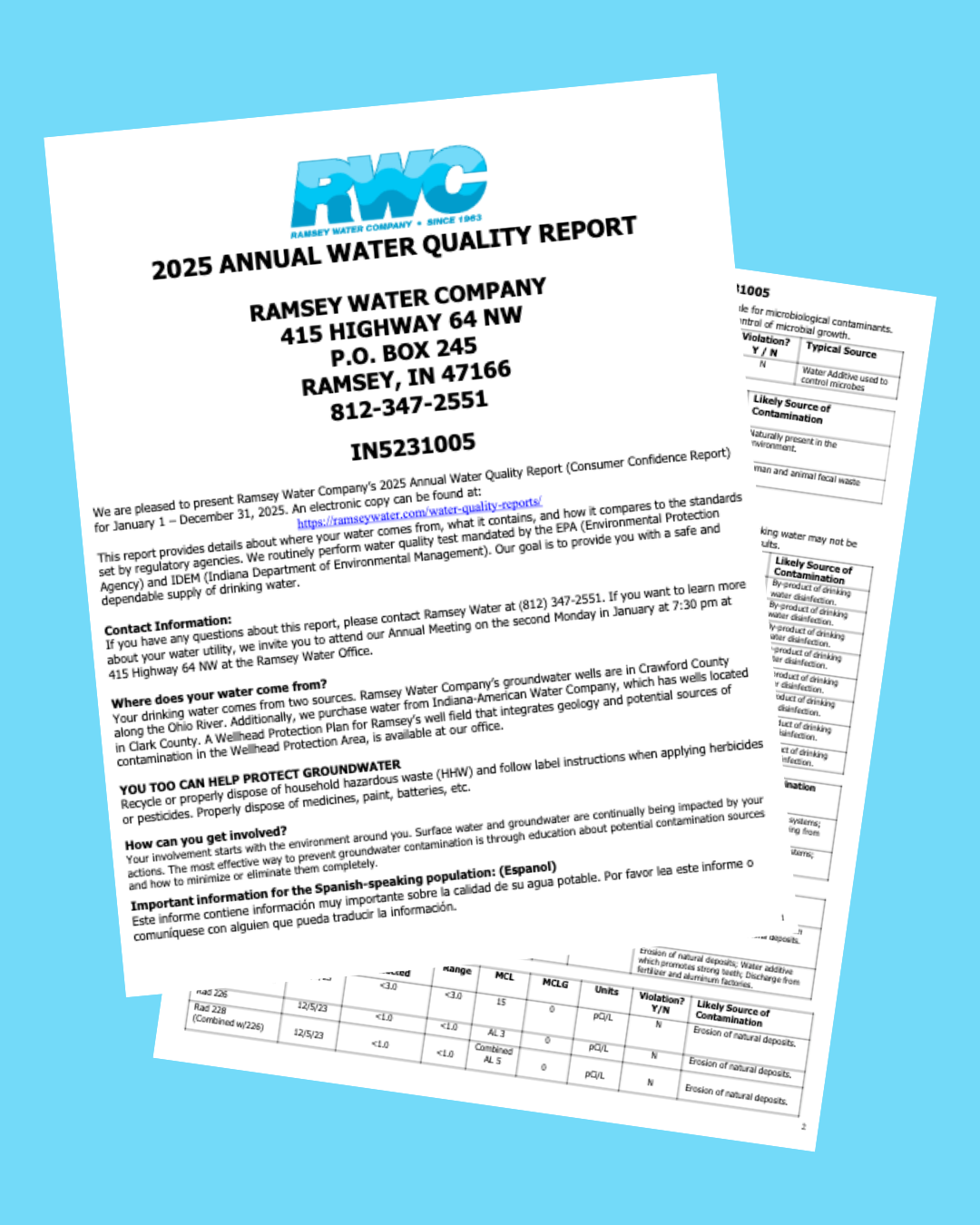
ICYMI: 2025 Water Quality Report Now Available Online
Ramsey Water’s 2025 Water Quality Report is now available on our website. This annual report provides important information about the quality of your drinking water, including testing results, water sources, and details about how we work to deliver safe, reliable water to our community every day.
We encourage customers to review the report and learn more about the water system that serves their homes and businesses.
| | The Importance of Water Disinfection | | |
One of the most important advancements in public health is something many people never think about when they turn on the tap: water disinfection.
For more than a century, water utilities have used chlorine to eliminate harmful bacteria and other microorganisms that can cause disease. In fact, the Centers for Disease Control and Prevention (CDC) recognizes drinking water treatment and disinfection as one of the greatest public health achievements of the 20th century.
Today, Ramsey Water carefully monitors and maintains disinfectant levels throughout our system to help ensure the water delivered to your home is safe to drink. While the treatment process happens behind the scenes, it plays a critical role in protecting public health and providing the reliable water service our community depends on every day.
| | Recipe: No Churn Strawberry Ice Cream | | |
Ingredients:
- 1 vanilla bean pod
- 2 tablespoons granulated sugar
- 2 teaspoons lemon zest, plus 1/2 teaspoon fresh juice
- 1/2 teaspoon kosher salt
- 1 pound fresh strawberries, quartered
- 1 (14-ounce) can sweetened condensed milk
- 1 teaspoon vanilla extract
- 2 cups heavy whipping cream, chilled
Directions:
-
Preheat oven to 350°F. Cut vanilla bean in half lengthwise; scrape out seeds, and discard pod. Whisk together vanilla seeds, sugar, lemon zest, and 1/4 teaspoon of the salt in a medium bowl until combined. Add strawberries and lemon juice, and toss to coat. Pour strawberries onto a baking sheet lined with parchment paper.
-
Roast in preheated oven until strawberries are tender and jammy, ~25 minutes, stirring halfway through baking time. Remove from oven, and let cool slightly on baking sheet, ~15 minutes. Process strawberries, condensed milk, vanilla extract, and remaining 1/4 teaspoon salt in a food processor or blender until smooth, 30 seconds to 1 minute. Transfer to a large bowl and refrigerate, uncovered, until cooled completely, ~20 minutes.
-
In a stand mixer fitted with a whisk attachment, beat cream on medium-high speed until stiff peaks form, 2 to 3 minutes.
-
Add 1/4 cup whipped cream to strawberry mixture in a large bowl, and stir to loosen. Fold 1 cup whipped cream into strawberry mixture; repeat process with remaining whipped cream until no streaks remain.
- Transfer the mixture to a 9"x5" loaf pan, and press a sheet of plastic wrap over the ice cream surface. Place in the freezer and freeze until firm for at least 3 hours or up to 12 hours. Remove from freezer 5 minutes before serving. Store ice cream in an airtight container in the freezer for up to 1 month.
| | |
|
It takes approximately 12 gallons of water to produce one gallon of ice cream! | | Upcoming Events & Holidays | | | | |