|
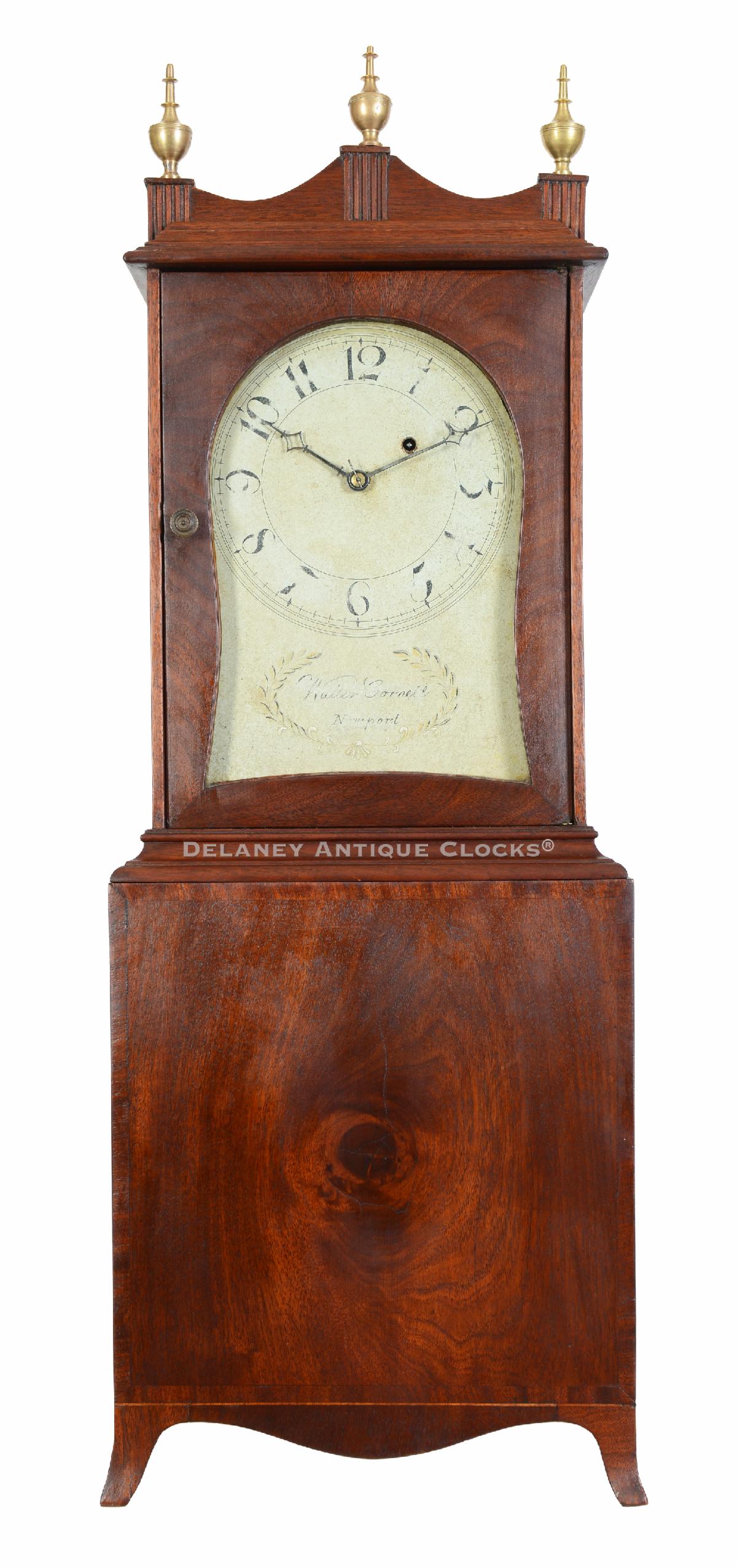
Among the surviving works of early American clockmaking, few are as uncommon as this shelf clock by Walter Cornell of Newport, R.I. Fewer than a handful of signed examples of Cornell's kidney-dial shelf clocks are known, placing this piece among the rarest expressions of his work.
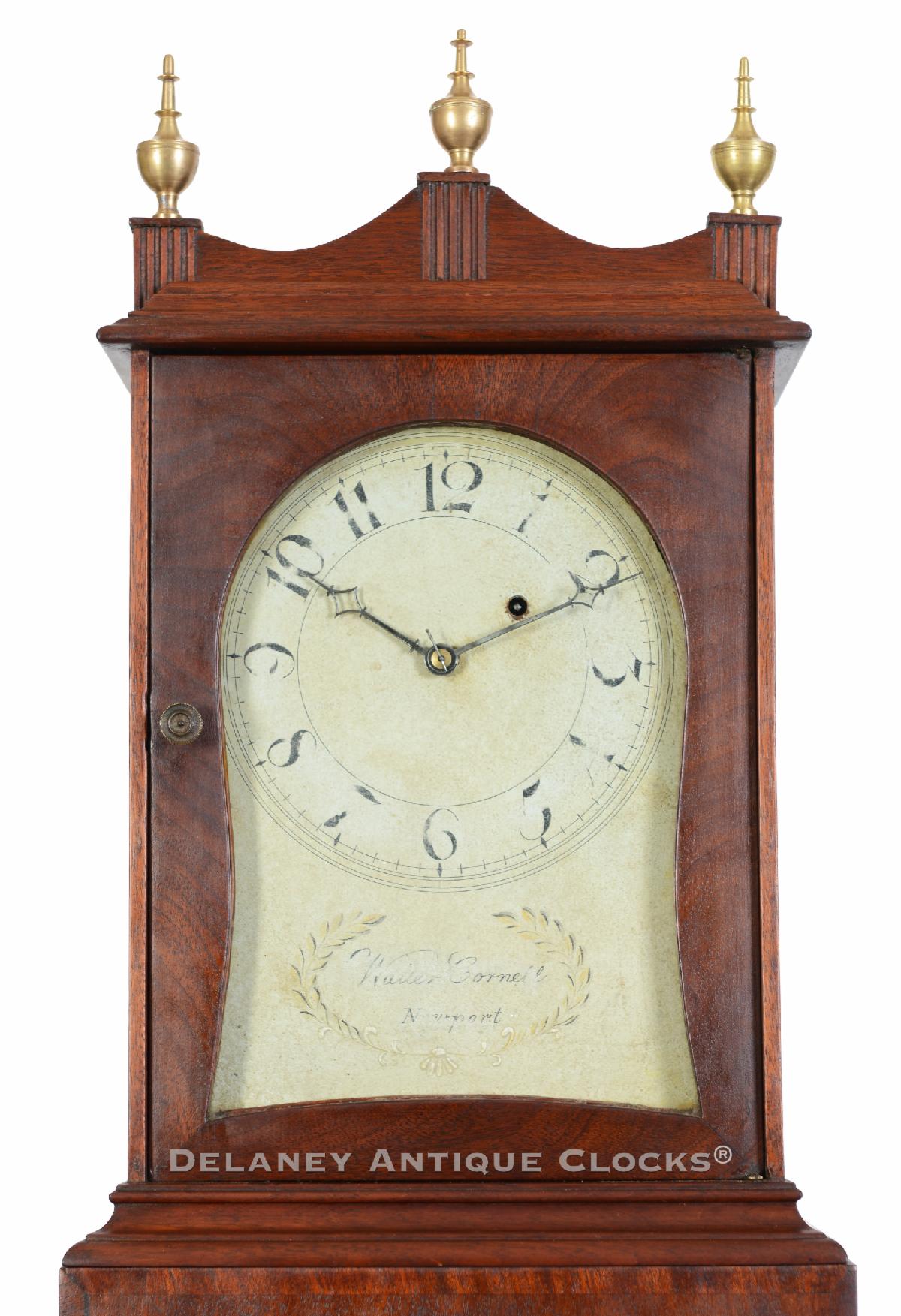
Made about 1810, the clock reflects an era when cabinetmaking and horology often converged in objects that were as much statements of craftsmanship as instruments for keeping time. Its mahogany case is carefully proportioned, with flared French feet supporting a shaped apron above a cross-banded base. A naturally occurring knot at the center of the lower panel becomes a focal point, its surrounding grain spreading outward in patterns that lend the surface an almost sculptural depth. A restrained cove molding separates the base from the hood, while a pierced fret supports three capped plinths crowned by an urn-form brass finial.
The bonnet door demonstrates the cabinetmaker's careful attention to visual balance. Fashioned from two pieces of mahogany, it is laid out so the grain radiates evenly around the glazed opening, drawing the eye toward the dial within.
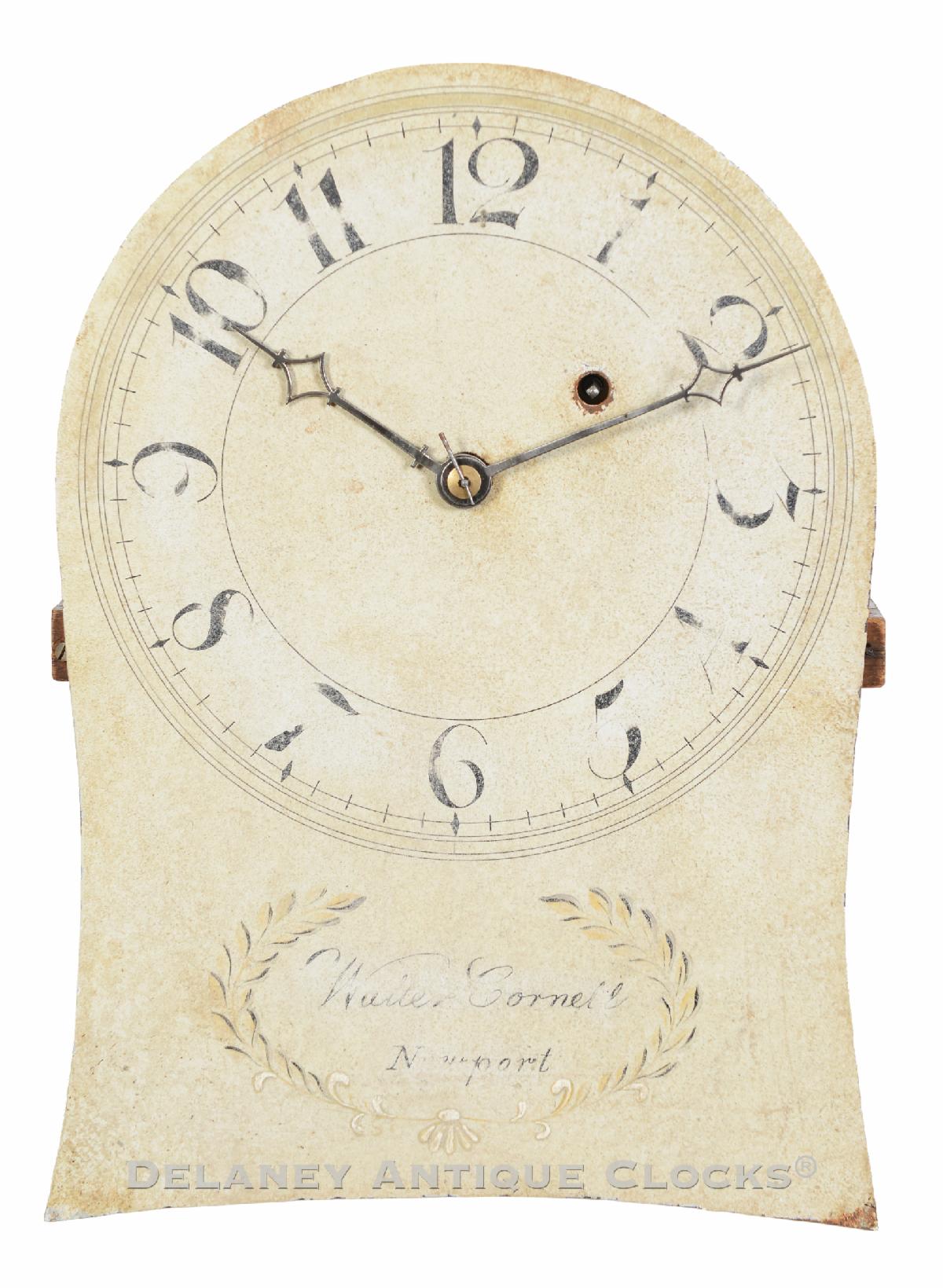
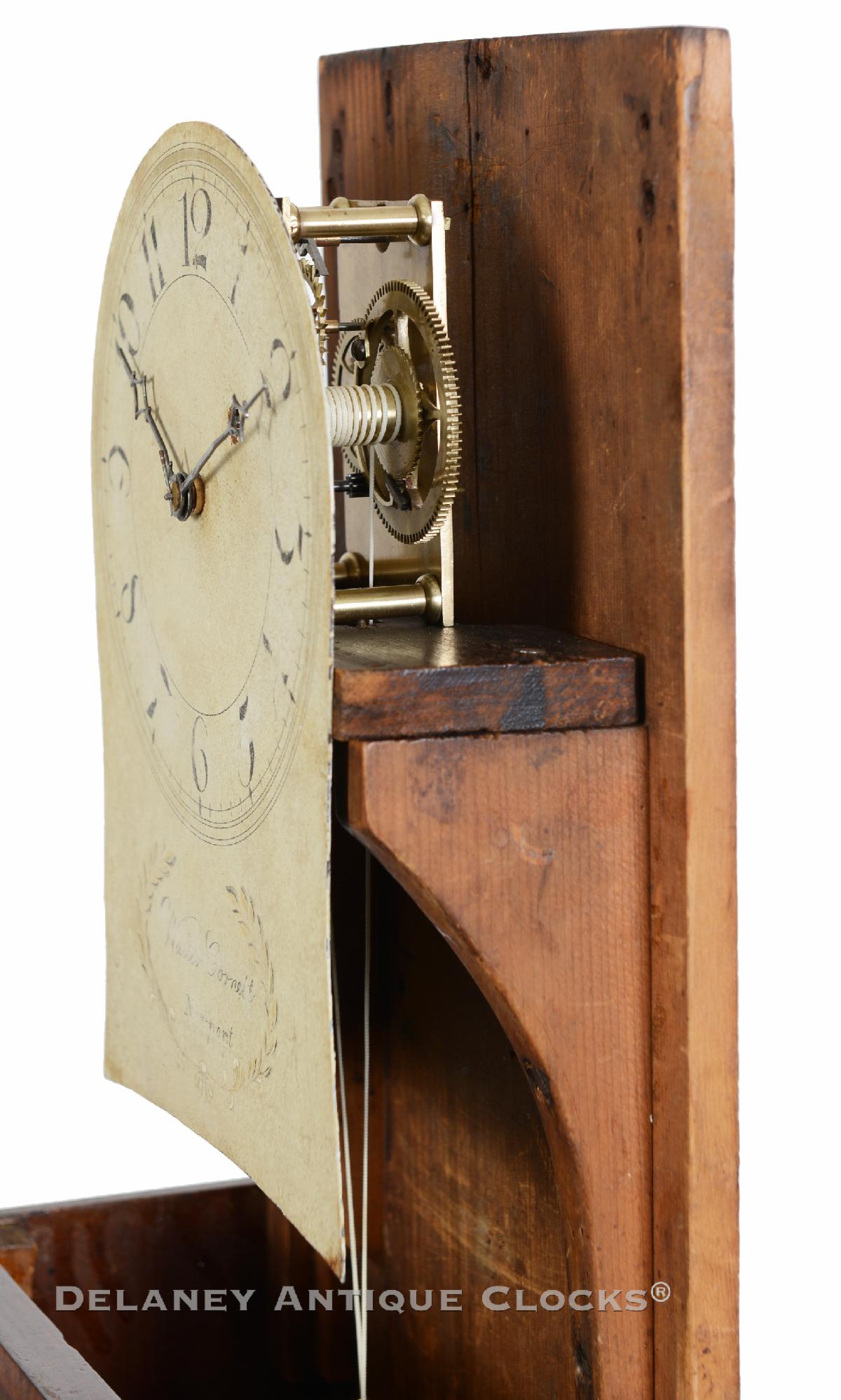
The painted iron dial, in the distinctive kidney form, gives the clock its defining character. The upper register contains a traditional time display with Arabic hour numerals enclosed by a minute ring, while finely pierced diamond-pattern steel hands indicate the time. Below, within an oval framed by wheat-ear decoration, appears the signature.
Behind the dial is an eight-day, weight-driven brass movement of notable quality. Built with two brass plates joined by four posts, the movement carries brass gearing on steel arbors and employs a recoil escapement.
This clock is modest in scale but distinguished by its refinement. Its rarity, thoughtful design, and strong regional attribution make it an important example of Federal-period craftsmanship from Newport and a significant work within the history of American horology.
Walter Cornell was born in Portsmouth, Rhode Island, on September 15, 1777, to Walter Cornell (1742–1805) and Elizabeth Mott Cornell (1753–1810). As a young man, he apprenticed as a clockmaker in Providence before establishing his own business in Newport.
By February 1803, Cornell advertised that he manufactured "Warranted Watches & Eight-Day Clocks." Three years later, he was working from 106 Thames Street as both a clockmaker and watchmaker. In 1814, he returned to Portsmouth, and his Newport shop was later occupied by George Tompkins.
Like many early American craftsmen, Cornell practiced several trades throughout his career, including silversmithing, jewelry making, and wool carding. Although no definitive death record has been found, Federal Census records indicate he remained active in the jewelry trade into the early 1850s.
Cornell produced tall-case clocks, shelf clocks, dwarf clocks, and patented banjo-form timepieces. His surviving work reflects the evolution of American clockmaking during the first half of the nineteenth century, blending traditional English influences with the ingenuity and craftsmanship that distinguished New England's finest makers.
Height 34 1/2," Width 12 1/2", Depth 6 1/2"
|