Real Estate Industry Update


Welcome to The Lending Corporation's Get The Knowledge series. Keep your colleagues informed - forward for signup.


U.S Housing Market


The U.S. housing market in 2024 will be remembered as the slowest in over 30 years. The challenges began in 2022, when real estate transactions plummeted due to soaring mortgage rates and a persistent shortage of affordable housing inventory. These issues persisted into 2023, further stalling the market. By 2024, outside of the luxury housing segment, the market has reached a standstill: most Americans can’t afford to sell, and many potential buyers can’t afford to purchase. This deadlock has stifled any momentum anticipated at the start of the year.

Via mortgagenewsdaily.com

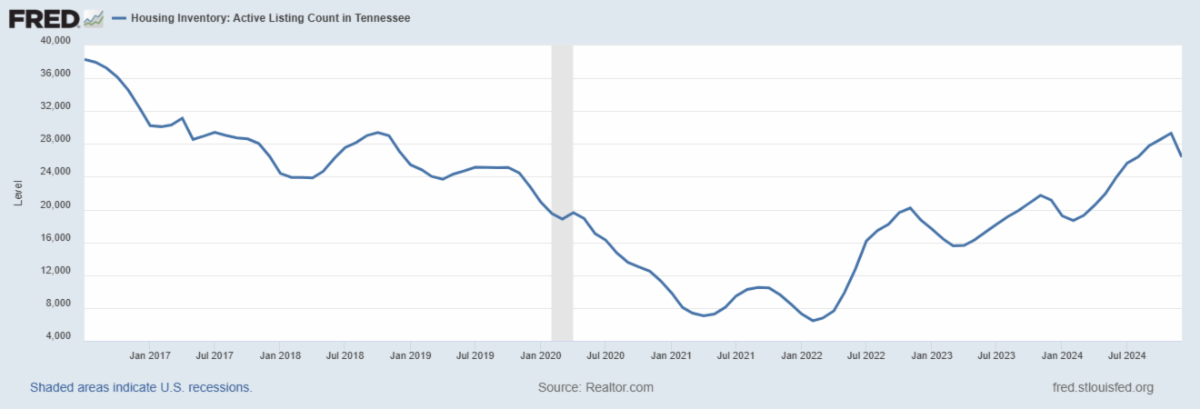
The low inventory in the U.S. housing market stems from a variety of factors. Chronic underbuilding since the Great Recession has left a lasting impact, compounded by the rise of private equity in the housing sector. An aging population living longer than ever, coupled with the mass relocation during 2020- 2021 driven by low interest rates and remote work, further tightened supply. The "golden-handcuff" effect—where homeowners hesitate to sell due to the appeal of their low mortgage rates—has exacerbated the issue, as have rapid price increases across the country over the past five years.


This inventory shortage is a long-term challenge without any quick fixes. Real estate agents were already grappling with limited listings long before the pandemic caused an even sharper decline. Although restricted demand has slightly alleviated inventory pressures recently, the U.S. remains short by an estimated 7.2 million homes, perpetuating rising home prices nationwide.

Via FRED

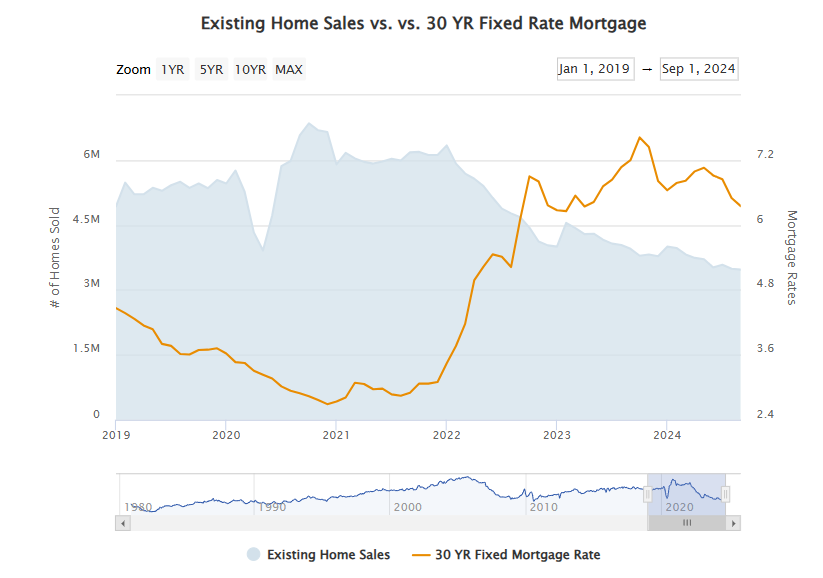
For most of the past two decades, mortgage rates remained below 5%, even dipping below 3% in 2021. This environment fueled a surge in homebuying demand, leading to a stark imbalance between supply and demand during the pandemic. The result was a nearly 50% increase in home prices over the past five years.


As mortgage rates climbed to 7-8%, demand cooled, creating a more balanced dynamic between supply and demand—but at significantly restricted levels. This has left millions of Americans unable to participate in the market. Mortgage rates briefly declined in August but spiked again in October, reaching 7.13% post-election [Mortgage News Daily]. Moving forward, rates are expected to remain volatile due to shifting policies, global instability, and new inflationary pressures. This volatility has ushered in a buyers’ market after years of dominance by sellers. Over the past two years, bidding wars have become less common, homes are spending more time on the market, and sellers are increasingly open to buyer-friendly contract terms.


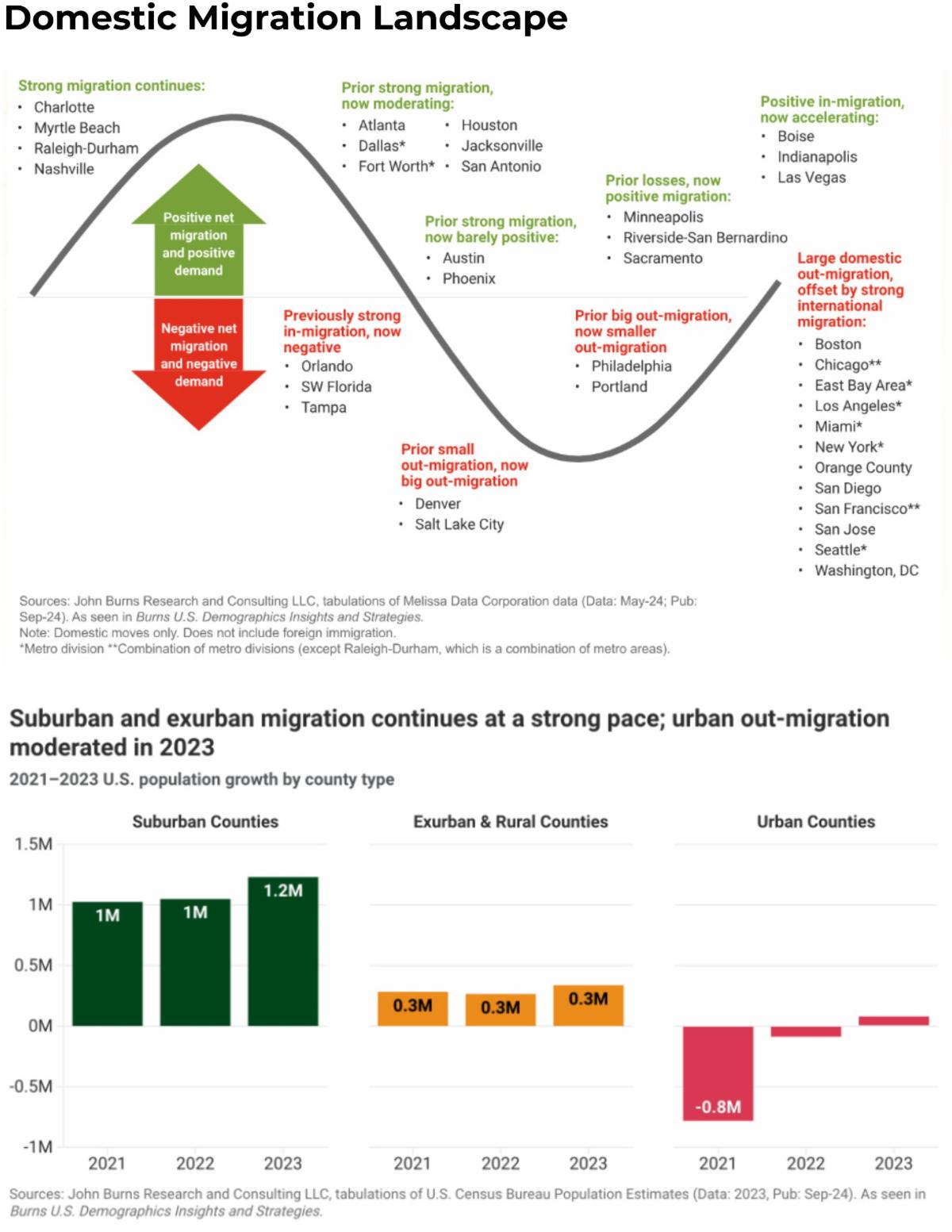
During the Covid-era market frenzy, home prices soared nationwide, an unusual phenomenon. Now, regional differences in market conditions have resurfaced, with areas that saw dramatic price increases during the pandemic facing challenges, while those with steadier growth continue to see stability.

This shift marks a return to a more traditional housing market, where factors like geography, weather, demographics, employment, and zoning play distinct roles in shaping regional trends. This normalization reflects the diverse dynamics that historically defined the U.S. housing market.

Via PWC

As 2025 begins, the real estate market faces several uncertainties. One significant factor is the increasing influence of climate considerations on Americans’ housing decisions. Approximately 1 in 7 households are now exploring relocation due to concerns such as aging infrastructure, power grid reliability, natural disaster risks, and rising costs for insurance and utilities. Reflecting this trend, Zillow plans to introduce climate risk scores for every property in its database by the end of 2024.


In addition, key drivers of the housing market— building starts, mortgage rates, jobs, and wages—are highly sensitive to policy shifts and economic performance. With a new presidential administration in place, the market’s direction is likely to evolve.


If current trends continue, the market seems poised for greater equilibrium. We could see more balance between buyers and sellers, a gradual reduction in mortgage rates, slower but steadier home price growth, and improved affordability, provided wages keep rising. The National Association of Realtors’ (NAR) housing affordability index already shows signs of improvement. This slower, more stable trajectory might lack the dramatic changes of the pandemic-era market but offers a sustainable path for both aspiring homebuyers and homeowners looking to move.


This measured shift, while less thrilling, signals positive developments for the real estate sector: increased inventory, enhanced affordability, and moderated competition levels. While 2025 might not bring dramatic shifts at the national level— except perhaps for us at THE LENDING CORPORATION—it will likely set the stage for exciting opportunities in the years to come.


Building Your Life and Business Full-Out, Your Way


The podcast is my mental journey in business and life that brings you behind the scenes of building a multi-million-dollar business and living life to the full.


The content is transparent and personal, backed by years of wisdom and history that has brought me here today. Sharing the content of building a financial business from the foundations UP.

WATCH PODCAST
 

Sincerely,

Danijella Dragas

and All the team at The Lending Corporation


949-400-5779

ddragas@thelendingcorporation.com

www.thelendingcorporation.com

Facebook  Instagram  LinkedIn  TikTok  YouTube

The Lending Corporation LLC x TLC Media and Technology Group LLC