Francis "Chip" Evans
I ALWAYS ANSWER MY PHONE


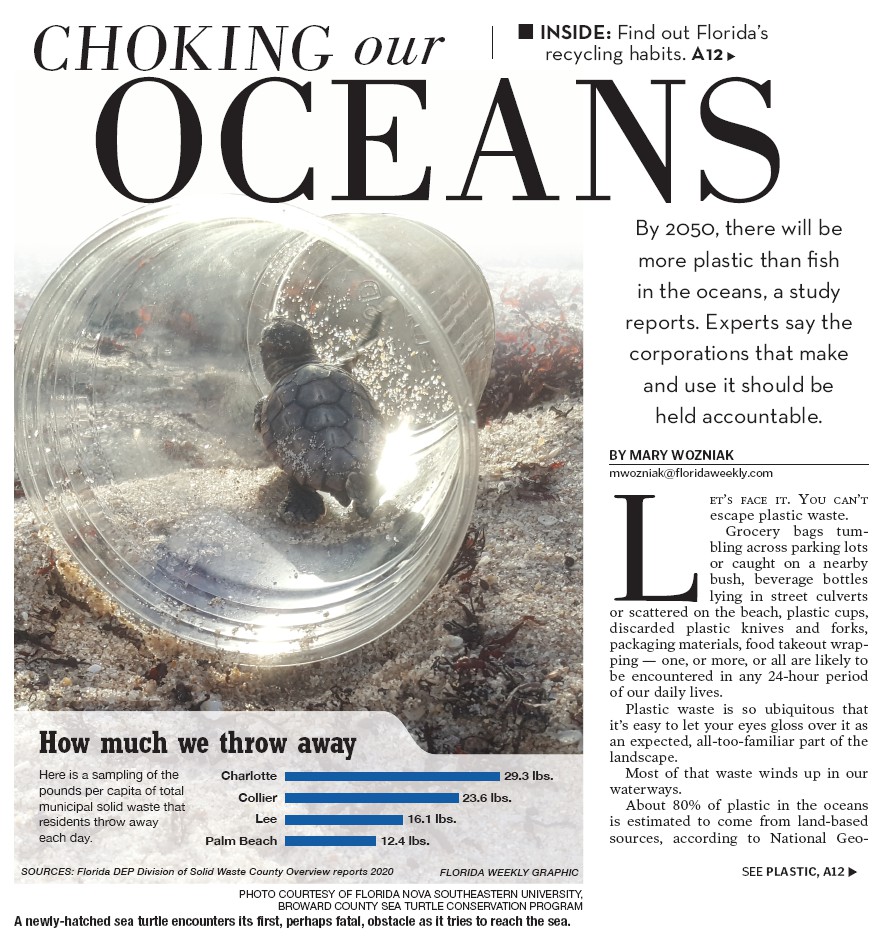
CHOKING our OCEANS
By 2050, there will be more plastic than fish in the oceans, a study reports. Experts say the corporations that make and use it should be held accountable.
March 23, 2022
BY MARY WOZNIAK
mwozniak@floridaweekly.com


CLICK ON IMAGE ABOVE TO READ FULL STORY


LET’S FACE IT. YOU CAN’T escape plastic waste. Grocery bags tumbling across parking lots or caught on a nearby bush, beverage bottles lying in street culverts or scattered on the beach, plastic cups, discarded plastic knives and forks, packaging materials, food takeout wrapping — one, or more, or all are likely to be encountered in any 24-hour period of our daily lives.
Plastic waste is so ubiquitous that it’s easy to let your eyes gloss over it as an expected, all-too-familiar part of the landscape.
Most of that waste winds up in our waterways.
About 80% of plastic in the oceans is estimated to come from land-based sources, according to National Geo- graphic





Thinking of Buying or Selling Call Chip (239-849-2705)
Recent Market Activity

A study by the World Economic Forum estimates that by 2050, there will be more plastic than fish in the oceans.
A plastic bag is used for an average of 12 minutes, but it can last in the environment for several hundred years. Plastic waste has been found in Antarctic ice and the deepest part of the ocean. Researchers found a plastic bag in the Marianna Trench in the Pacific, 36,000 feet deep.


‌
Francis "Chip" Evans, Realtor
CornerStone Coastal Properties
(239) 849-2705
The problem is global, but the actions needed to fight it filter down to the national, state and local level. Mainly, the actions need to come from new government policy that holds the corporations that make the plastic and the manufacturers that use it accountable for the pollution it causes, scientists and environmentalists say.
“Plastics are extremely cheap to produce and incredibly durable,” said Jennifer Jones, associate professor of environmental studies and director of the Center for Environment and Society at Florida Gulf Coast University. “That means we’re creating a ton of something that never really goes away. Every piece of plastic we’ve ever made still exists and the plastics industry has convinced us this is OK because we recycle. The truth is, recycling isn’t going to save us. With plastic production set to triple by 2050, only stopping plastic production will.”


Let me know what in the world I can do to help you...

Working on New Listings Properties Are Selling Quickly...
Thank you For Your Time Today
I look forward to working with you in the future...