The Realtec Report

Q2 2026

Multifamily Market in Transition: Supply Peaks, Stability Emerges

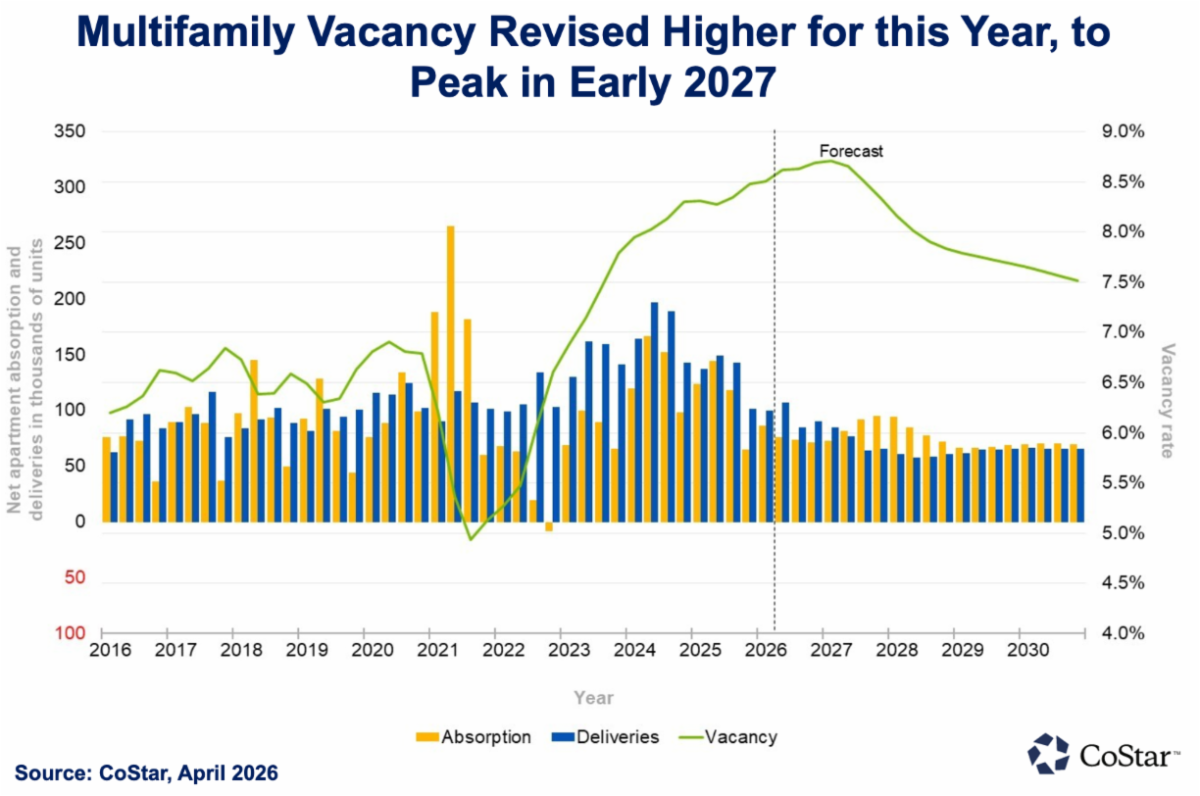
Q2 2026_Vacancy to Peak in 2027

The multifamily market continues to navigate the after effects of an unprecedented development cycle. Across much of the country, elevated supply levels and moderating demand have kept fundamentals soft through the first half of 2026. However, there are growing signs that the market is beginning to rebalance as new construction slows and absorption gradually improves.


The U.S. apartment market remains in a transition period as supply and demand work toward equilibrium. While demand has moderated from the outsized pace experienced over the last several years, absorption remains positive and continues to be supported by long-term housing needs and renter demand.


Nationally, net absorption totaled approximately 99,000 units during the first quarter of 2026, down roughly 20% year-over-year. At the same time, deliveries have also begun to slow, declining 23% from a year ago. Developers continue pulling back on new starts as higher borrowing costs, softer rent growth, longer lease-up timelines, and tighter lending conditions make new projects increasingly difficult to pencil.


Vacancy nationally now sits at approximately 8.4%, with the highest pressure concentrated in recently delivered Class A product. In contrast, mid-tier and workforce housing properties continue to maintain comparatively tighter occupancy levels.


Source: CoStar News, CoStar

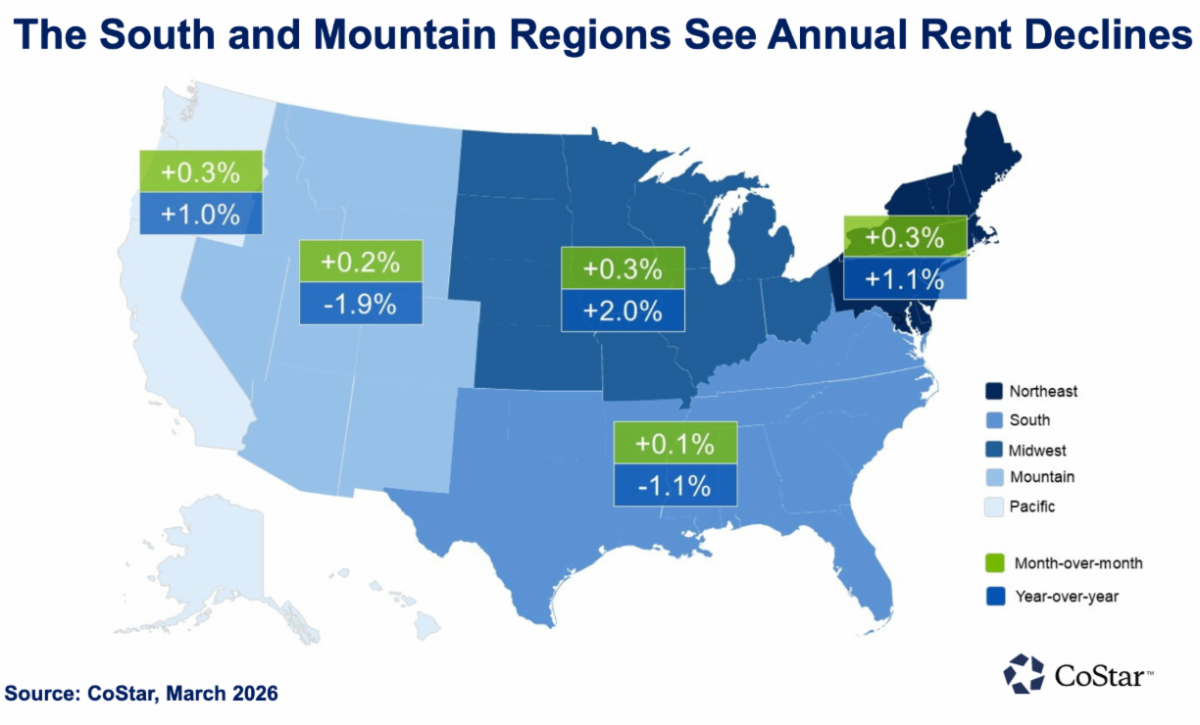
Q2 2026_Regions with Annual Rent Decline

Rent Growth Remains Uneven


National apartment rent growth appears to have bottomed after several quarters of deceleration.


Overall rent growth improved modestly during the second quarter of 2026, increasing from 0.3% to 0.6% year-over-year.


The strongest performance continues to come from more affordable housing segments, where renter demand remains durable and supply additions have been limited. Meanwhile, luxury multifamily properties continue to experience the greatest competitive pressure, particularly in Sun Belt markets where development activity was most aggressive between 2022 and 2025.


Regional performance remains highly fragmented. Markets with limited new development have generally outperformed, while oversupplied markets continue to see elevated concessions and rent declines. Denver remains among the softer-performing major markets nationally, with rents down approximately 3.1% year-over-year.


Source: CoStar News, CoStar

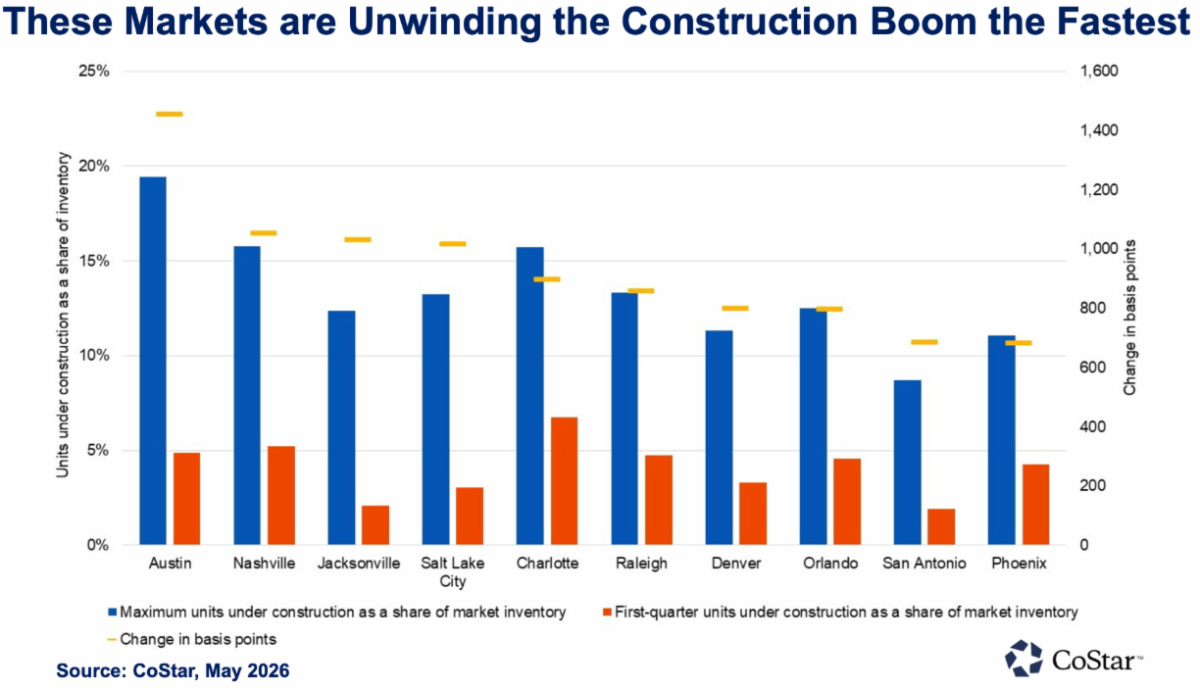
Q2 2026_Construction Boom Eases

Construction Activity Slowing Significantly

One of the most notable shifts in the market is the sharp decline in new construction activity. Following a 40-year high in apartment deliveries during 2024, the national development pipeline has contracted substantially.


Annual deliveries are projected to decline another 27% in 2026, while the total number of units currently under construction nationwide has fallen by more than 50% from its 2023 peak.


This slowdown is particularly important for the long-term outlook. As fewer projects move forward, markets that have been struggling with excess supply should gradually regain balance over the next 12 to 24 months.


Source: CoStar, CoStar News

Investment Sales Market Showing Improvement


Multifamily investment activity continued gaining momentum through the first half of 2026. Transaction volume is up roughly 20% year-over-year as investors become increasingly comfortable with pricing and financing conditions.


Private capital remains especially active, pursuing both stabilized and value-add opportunities while institutional investors continue focusing on high-quality assets in supply-constrained markets.


Although interest rates remain elevated, pricing has largely stabilized following the correction that occurred between 2022 and 2024. Cap rates for higher-quality multifamily assets generally remain in the 5.0% to 5.5% range, with investor appetite strongest for well-located properties demonstrating stable occupancy and long-term rent growth potential.


Source: CoStar, CoStar News

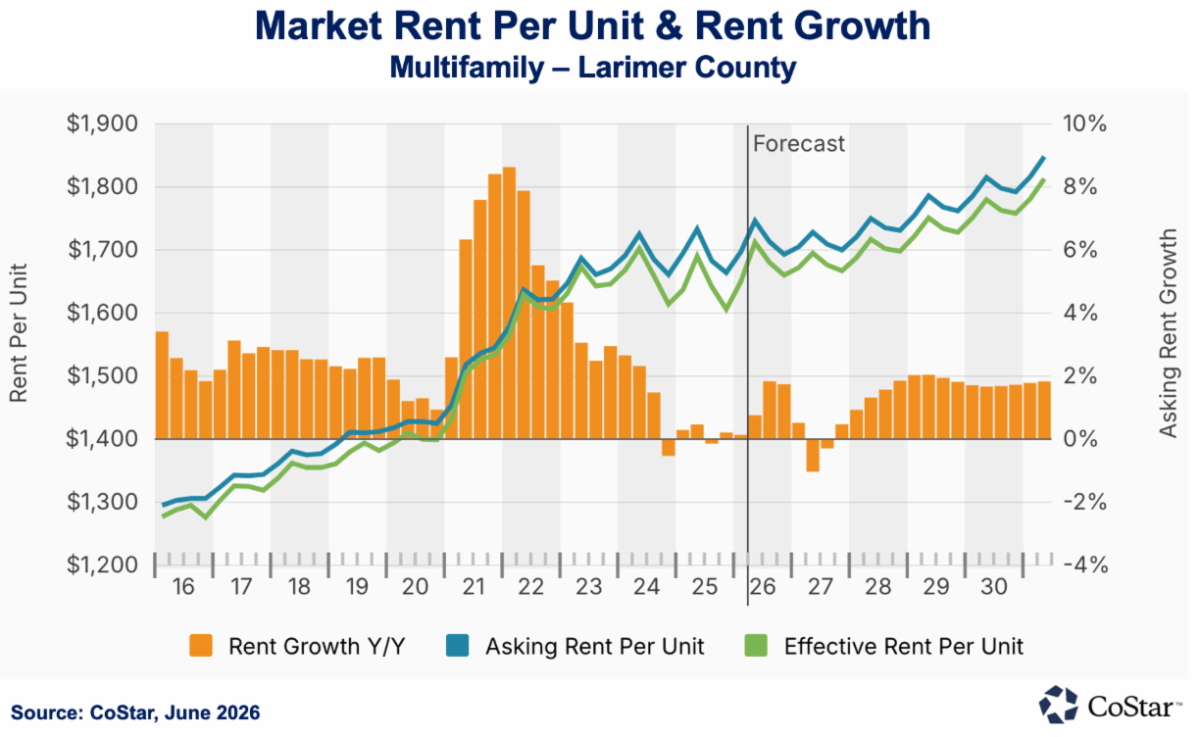
Q2 2026_Multifamily Larimer County

Multifamily: Fort Collins, Loveland & Larimer County

KPI's

Q2 2026

Q2 2025

Inventory:

38,579 units

37,853 units

Under Construction:

889 units

1,503 units

12-mo. Net Absorption:

689 units

1,896 units

Vacancy Rate:

7.0%

7.2%

Market Rent/Unit:

$1,732

$1,723

Sales Volume:

$471,000,000

$353,000,000

Market Sale Price/Unit:

$244,000

$242,000

Market Cap Rate:

5.4%

5.3%

Source: CoStar

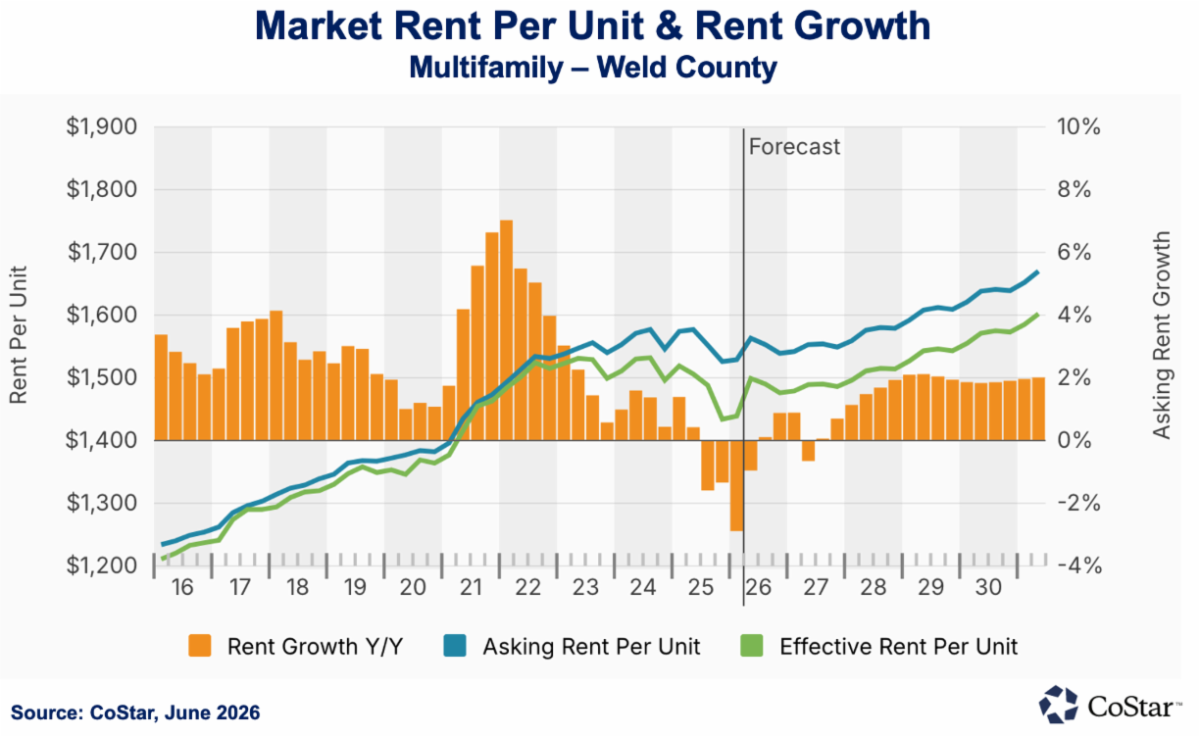
Q2 2026_Multifamily Weld County

Multifamily: Greeley & Weld County

KPI's

Q2 2026

Q2 2025

Inventory:

28,042 units

27,916 units

Under Construction:

330 units

173 units

12-mo. Net Absorption:

857 units

1,196 units

Vacancy Rate:

6.6%

9.7%

Market Rent/Unit:

$1,553

$1,577

Sales Volume:

$95,200,000

$254,000,000

Market Sale Price/Unit:

$186,000

$189,000

Market Cap Rate:

6.2%

6.1%

Source: CoStar

Northern Colorado Multifamily Snapshot


Fort Collins:

Fort Collins continues to work through the tail end of its recent supply wave, with vacancy currently around 10.1%. Approximately 690 units were delivered over the past 12 months, outpacing absorption during that same period.


Despite softer fundamentals, Fort Collins continues to benefit from strong long-term demand drivers including Colorado State University, quality of life, in-migration trends, and relative affordability compared to other Front Range markets. Construction activity is also beginning to moderate meaningfully, which should support future stabilization.


Loveland:

Loveland appears to be entering an early stabilization phase after several years of elevated construction activity. Vacancy has improved to approximately 6.5% as supply additions have slowed significantly.


While rents remain under pressure and concessions are still common in newer projects, the submarket continues to benefit from affordability advantages and steady renter demand. With fewer projects currently underway, competitive pressure should gradually ease moving forward.


Greeley:

Greeley has shown some of the strongest improvement across Northern Colorado over the past year. Vacancy has compressed significantly from prior highs and now sits near 6.8%, supported by improving absorption and the near-complete lease-up of recent deliveries.


Importantly, there are currently no major multifamily projects under construction in the market, positioning Greeley for continued tightening through the remainder of 2026.


Source: CoStar News, CoStar

From Oversupply to Equilibrium


While multifamily fundamentals remain softer than historical averages, the market appears to be moving closer toward stabilization. The rapid slowdown in construction activity should help ease supply pressures over the coming quarters, particularly in markets that experienced the largest development surges.


In the near term, rent growth will likely remain modest and concessions may persist in more competitive submarkets. However, improving balance between supply and demand, combined with continued renter demand and limited future pipeline growth, creates a more constructive outlook heading into 2027.


For investors, owners, and developers, the current environment continues to reward patience, disciplined underwriting, and a focus on long-term fundamentals rather than short-term volatility.


Source: CoStar News, CoStar

CoStar Market Reports - Larimer and Weld County

Q2 2026

GREELEY

(970) 346-9900


1711 61st Street, Ste. 104

Greeley, CO 80634


Gage Osthoff

Nick Berryman

Mark Bradley, SIOR, CCIM

Lanny Duggar

Reed Sedinger

Doris Bolton

FORT COLLINS

(970) 229-9900


712 Whalers Way, Bldg. B, Suite 300

Fort Collins, CO 80525


Steve Stansfield, SIOR, CCIM

Erik Broman

Kylan Fetzer

(970) 593-9900

200 E. 7th Street, Ste. 418
Loveland, CO 80537


Realtec Logo
This quarterly publication is authored by Jamie Globelnik of Realtec Loveland