|
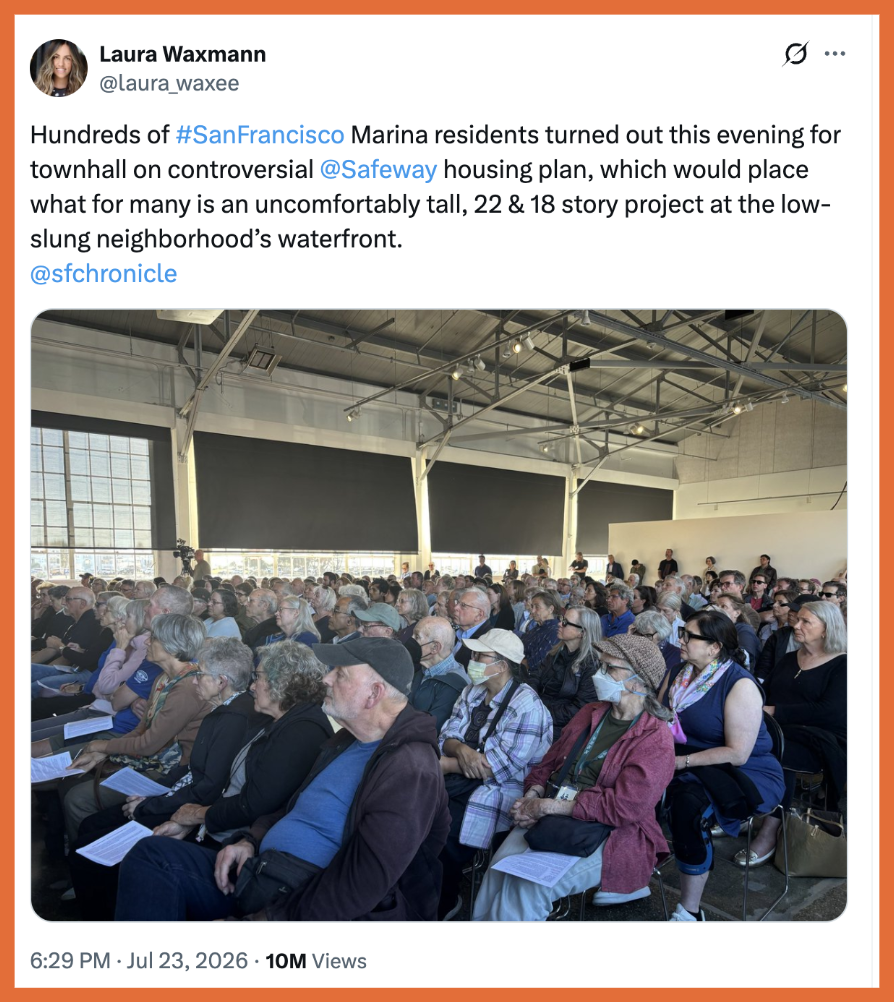
Throughout the evening, we focused on three questions:
1. Can this project still be stopped?
Yes, but the window is closing. The project has not yet received final approval. Our coalition has retained legal counsel and technical experts and continues to challenge the project's eligibility for ministerial approval under AB 2011. We believe significant environmental, engineering, and public safety issues remain unresolved. With the Planning Department potentially approving the project as early as August 13, we are urging Mayor Lurie to exercise the City's existing authority to require independent geotechnical, environmental, and life-safety reviews before any approval is issued.
2. How is a project this large allowed to bypass local review?
The short answer is that one law didn't create this project, a combination of state housing laws did.
Over the past decade, California state lawmakers led by Senator Wiener and the YIMBY lobbyists have enacted hundreds of housing laws that have shifted land-use decisions away from local governments. Together, laws such as AB 2011, SB 330, and the State Density Bonus can allow qualifying projects to bypass traditional public hearings, environmental review, and local discretion while allowing the scale of the project to be significantly taller and denser than the surrounding area.
3. Why is this the wrong project for this location?
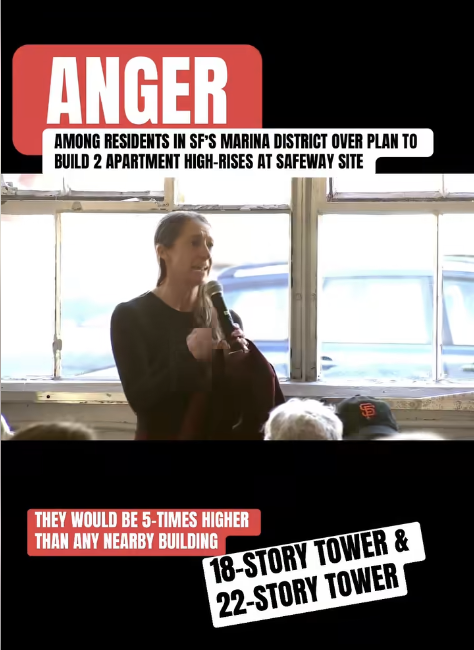
Our coalition supports building more affordable housing. This project is not that. It provides only the bare minimum of affordable housing, with fewer than 30 of its 848 units designated as affordable family units. Those units will require thousands of families to compete in a lottery for a rental apartment. The remaining market-rate units will be built on some of the most expensive land in the country, making them likely to command premium rents that remain out of reach for most working families.
Nor is it designed to meet the needs of families. The project is dominated by studio and one-bedroom apartments, offering limited opportunities for families to put down roots, build long-term stability, or achieve homeownership. Its unit mix also raises concerns that it could function more like a flexible-living, hotel-style development than a traditional residential community.
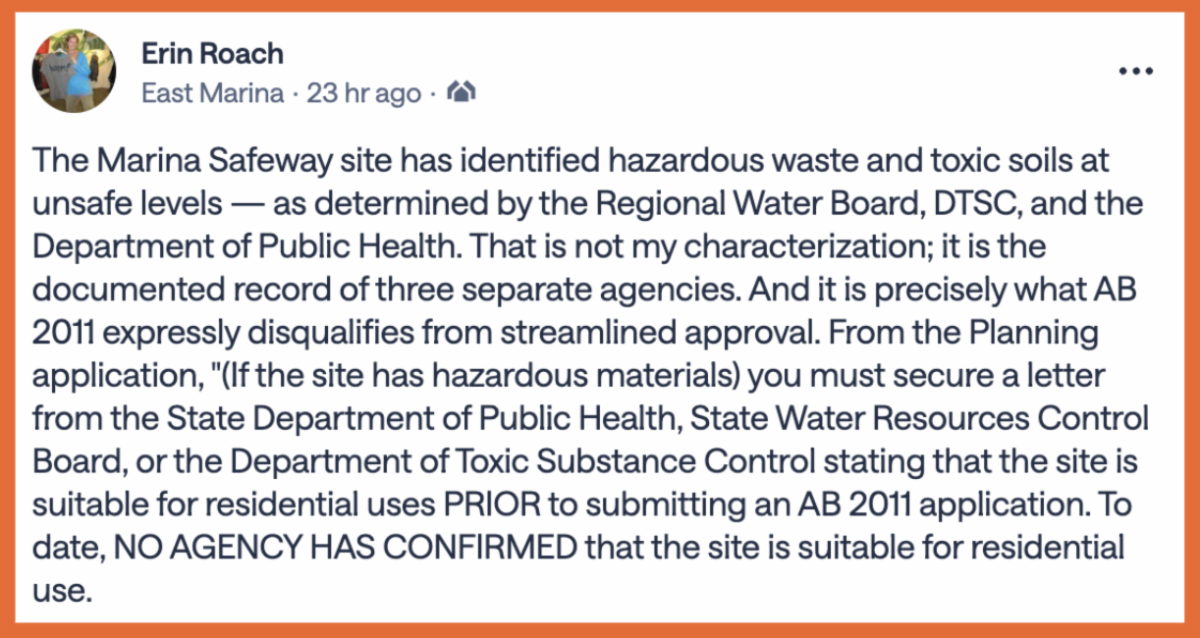
Finally, the location itself presents serious challenges. The site includes toxic contamination identified by the Regional Water Quality Control Board, the Department of Toxic Substances Control, and the Department of Public Health, as well as liquefaction risks, aging infrastructure, traffic and emergency access concerns, and the temporary loss of a major neighborhood grocery store. For these reasons, we believe the project does not qualify for AB 2011 streamlining.
FAQ Sheet about the Marina Safeway Project
|