|
|
Can this be recycled?
What about this?
|
Read on to see why these common household items cannot be recycled and what should be done with them. |
|
|
|
 |
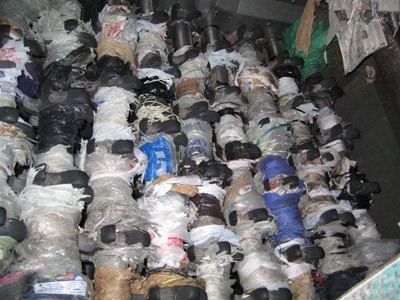
Most municipalities DO NOT accept plastic bags or film through curbside recycling programs. Plastic bags wrap around the Materials Recovery Facility (MRF) equipment and end up in final product bales as "residue", lowering market value and demand for the materials. When wrapped around equipment, materials can't fall through at the appropriate locations for sorting on various lines. The recycling system must shut down while team members harness up to cut the bags out.
There are many convenient locations to drop off bags and film for special recycling. Enter your zip code in this Plastic Film Recycling directory to find a drop off near you!
These materials are made into new packaging or durable home building products such as composite decking.
|
|
|
|
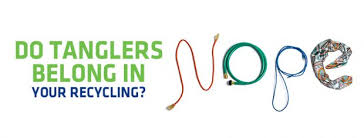
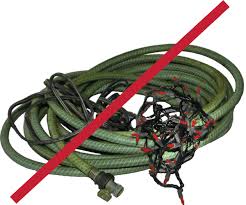
Tanglers include hoses, light strings, rope, chains, bicycle innertubes, hangers, etc.
Tanglers wrap around the equipment and create an unnecessary safety hazard for workers and forces the recycling facility to shut down, wasting time that could be used to successfully recover material for recycling.
These materials should be placed in the trash.
|
|
|
|
|
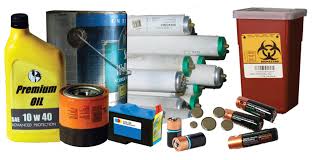
No flammables, compressed cylinders, batteries, electronics, or Sharps.
Hazardous Waste Collection for flammables, compressed cylinders and batteries.
E-Cycle collection for electronics.
The DNR maintains a list of registered sharps collection stations. In addition, many healthcare providers accept sharps but are not required to register with the DNR.
|
|
|
|
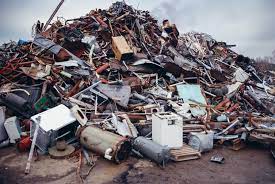
Scrap metal, which includes copper, steel, brass and iron, is one of the most common and valuable materials to recycle, but it cannot be placed in your curbside recycling bin.
Aside from aluminum and tin cans, metal cannot be recycled curbside because of the danger it poses to the recycling workers and automated sorting machinery.
Ultimately, despite scrap metal not being recyclable curbside, it is a great – and profitable – choice to find a local scrapyard to dispose of your metals, where they can be recycled time and time again.
|
|
|
|
|
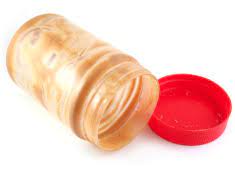
Food and beverages are considered contaminants in your recycling cart. Containers with food residue are sorted as trash, and decomposing food can contaminate other clean materials. This will lead to more products being redirected to the landfill or lowering the value of those marketable materials.
So remember to empty and give a quick rinse. If there's too much food that you can't remove, it's best to place it in your garbage cart.
|
|
|
|
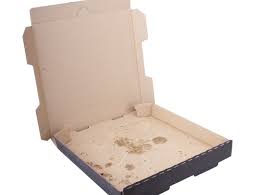
Pizza boxes can be recycled if they are free from grease stains. Grease contaminates the other recyclables and will lower the value of the marketable materials.
In the picture above, the top can be recycled, but the bottom should be removed and put in the trash.
|
|
|
|
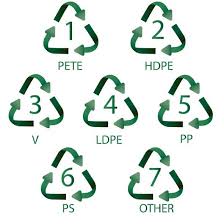
This is one of the more confusing issues. Even though the container has the recycling triangle with a number in it, that doesn't mean that it can be recycled in your area. Different municipalities have different rules.
The City of Milwaukee recycles plastics #1, #2, and #5. If you do not reside in the City of Milwaukee, check with your municipality for what can and cannot be recycled.
As with all containers, empty the contents and rinse them out. Also, replace the cap.
|
|
|
Why Can't I Recycle #3, #4, #6 or #7? |
|
At this time there are not markets for these items in the City of Milwaukee curbside recycling program. They are not recyclable in your curbside cart and should be placed in your garbage cart.
#3 – PVC (Polyvinyl Chloride)
PVC is a soft, flexible plastic used to make clear plastic food wrapping, cooking oil bottles, teething rings, children’s and pets’ toys, and blister packaging for many consumer products.
PVC is dubbed the “poison plastic” because it contains numerous toxins which it can leach throughout its entire life cycle. Products made using PVC plastic are not recyclable.
#4 – LDPE (Low-Density Polyethylene)
LDPE is often found in shrink wraps, dry cleaner garment bags, squeezable bottles, plastic bread bags, and plastic grocery bags. Products made using LDPE plastic are reusable, but not always recyclable.
#6 – PS (Polystyrene)
Polystyrene is an inexpensive and lightweight plastic with a wide variety of uses. It is most often used to make disposable foam cups, take-out food containers, egg cartons, plastic cutlery, foam packaging and foam packing "peanuts". Recycling is not widely available for polystyrene products. Most curbside collection services will not accept polystyrene, therefore you should try and opt for the reusable version of these products instead.
#7 – Other (BPA, Polycarbonate and LEXAN)
The #7 category was designed as a catch-all for polycarbonate (PC) and “other” plastics, so reuse and recycling protocols are not standardized within this category. Of primary concern with #7 plastics, however, is the potential for chemical leaching into food or drink products packaged in polycarbonate containers made using BPA (Bisphenol A). #7 plastics are not for reuse, unless they have the PLA compostable coding.
|
|
|
|
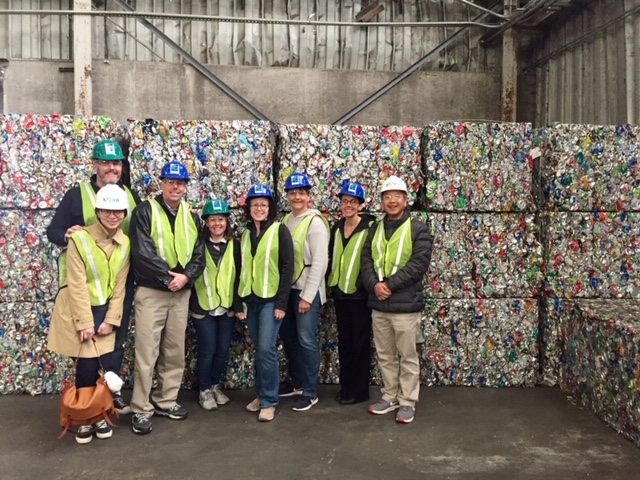
Do you want to see recycling in action? KGMB offers tours of the Milwaukee Materials Recovery Facility for small groups. The tour includes an in-depth look at how both machines and people work to sort and bale our recyclables.
|
|
|
|
Still have a question? Send us an email or
give us a call (414-272-5462).
Thanks for reading!
|
|
|
|
|
|
|