Thanksgiving was truly wonderful! |
|
I hope that you all had a wonderful Thanksgiving, got to spend time with family and friends and also survived Black Friday and Cyber Monday!
Now that Thanksgiving’s behind us a lot of us will be getting ready for the rest of the Holiday Season - both in our facilities and with our families.
I want to assure you that during the Holiday Season, Red Rock Pharmacy will be “Business as usual”. We will continue to be available 24/7 and our partners can continue to contact us 24/7 in the usual way.
This end-of-year Red Rock Report is the largest that we have ever published. There is something for everyone:
• How antibiotic use can trigger sepsis
• Cardio-protective effects of Wegovy have been observed before weight loss
• Are Certified Medication Aides in the future of your facility?
• Why it’s better to get Flu and COVID shots simultaneously
• Where are the Geriatricians (Physicians who specialize in Geriatrics)?
I hope that you all have a wonderful Holiday Season and get some well-deserved time off to spend with your family and friends.
See you in the New Year!
Shixian Wang
Director of Operations
|
|
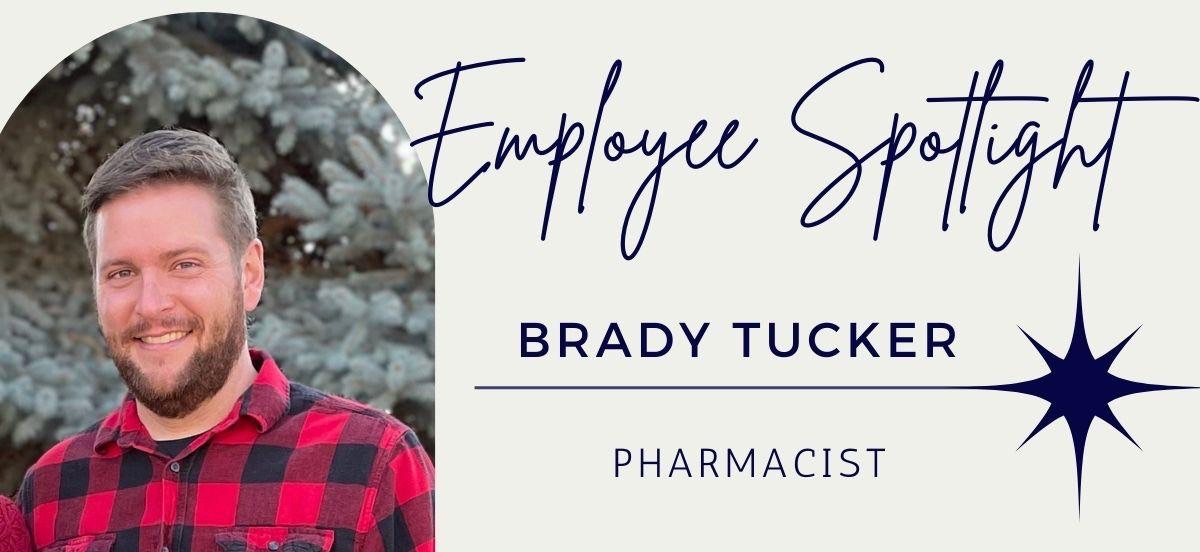
Brady Tucker, a Pharmacist at Red Rock Pharmacy in Meridian, Idaho, embodies a blend of professional commitment and a passion for outdoor exploration.
Joining Red Rock in April 2023, Brady sought a workplace aligned with his values and a culture focused on excellence. He thrives in an environment where continuous learning and innovative service to patients take center stage.
At the heart of his admiration for Red Rock lies its culture of excellence, surrounded by motivated colleagues who inspire him daily.
Beyond his work, Brady finds solace and joy in McCall, Idaho, a versatile destination offering year-round outdoor activities that he cherishes with his family.
His favorite meal, Pho noodles, encapsulates his simple yet profound culinary pleasure, while Karaoke nights echo with his spirited rendition of Queen's "Bohemian Rhapsody."
Brady's life is a mix of camping, biking, skiing, hiking, and live concerts—a harmonious blend of career dedication and thrilling adventures.
|
|
|
New study shows a single course of antibiotics raises the risk of developing sepsis by 70 per cent for a year after taking them. |
|
British researchers discovered that the risk of sepsis, which proves fatal in approximately a fifth of cases, escalated with the frequency of antibiotic usage.
A team from the University of Manchester, England, conducted an analysis involving 250,000 British patients who encountered sepsis between January 2019 and June 2022. They compared this group with 1.3 million individuals who did not experience sepsis. Their study unveiled that individuals who had undergone a single one or two-week course of antibiotics within the preceding 12 months faced a 70% higher likelihood of developing sepsis compared to those who hadn’t used antibiotics at all.
The risk heightened corresponding to the frequency of antibiotic use. Those who underwent two or three antibiotic courses within a year faced a 130% greater risk, while individuals taking antibiotics four or more times encountered over triple the risk of developing sepsis.
Moreover, the risk notably escalated for those who had recently taken antibiotics. A single usage resulted in an almost fourfold increase in sepsis risk within the last six weeks, whereas four or more courses amplified the risk to over six times compared to those who hadn’t taken any antibiotics.
Editor’s Note: this is interesting but needs to be studied further to determine the applicability to US LTC.
|
|
In a study of overweight and obese patients based on body mass index who had preexisting heart disease but not diabetes, Wegovy reduced the risk of non-fatal heart attack by 28%, non-fatal stroke by 7% and heart-related death by 15% compared to a placebo. Given that patients had not started losing weight when the cardiovascular benefits first appeared, it suggests the heart protection was not purely the result of weight loss a spokesman for Novo, the manufacturer of Wegovy, recently claimed.
-KFF Health News Wingrove, 11/12/2023
|
|
What Is a Certified Medication Aide and How to Become One.
|
|
A Certified Medication Aide (CMA) possesses the qualifications of a Certified Nursing Assistant (CNA) along with specialized certification to administer medications to patients. Presently acknowledged in 32 states, their recognition is anticipated to expand swiftly due to their potential to address some of the new Federal NH staffing mandates.
Under the supervision of a Registered Nurse (RN), CMAs support healthcare teams by ensuring adherence to patient medication schedules and dosages. Their responsibilities involve meticulously tracking both prescribed and over-the-counter medications given to patients. Accurate documentation of dosage timings and quantities, as well as ensuring patients ingest their medications, constitutes the core duties of a CMA. When not engaged in medication assistance, they typically resume their CNA duties, continuing to provide patient care.
Becoming a Certified Medication Aide requires prospective candidates to first acquire CNA certification. CNA programs span from 6 to 12 weeks and are available at community colleges and medical institutions. To attain CMA certification, individuals must undergo approximately four months of training and complete 140 hours of clinical practice post their CNA education. Proficiency in patient care, effective communication, and adeptness in health aide responsibilities are pivotal in pursuing a CMA career. For more detailed information, visit: Click Here.
|
|
Getting Covid and flu vaccines together is better, study suggests |
|
Getting a Covid booster and a flu shot together is better than getting them separately, a new study has found.
The study involved two groups of Massachusetts healthcare workers:
The first group of 12 received the bivalent Covid booster and seasonal influenza shot together. The second group of 30 healthcare workers received the Covid booster and flu shot on different days within the same month.
The antibodies of both groups were then measured. The research concluded that the group that had their shots administered together had higher levels of immunoglobulin G1, or IgG1 – the antibodies that counter Covid-19 and the strain of influenza.
The study has not been peer-reviewed yet, but validates the Centers for Disease Control and Prevention recommendation concerning “getting a flu vaccine and Covid-19 vaccine at the same visit”.
|
|
CMS finalizes transparency rule targeting REITs, private equity owners
|
|
Nursing homes will be required to report more details about their ownership structure and type under a final rule issued before Thanksgiving by the Centers for Medicare & Medicaid Service.
The rule imposes many of the ownership transparency measures outlined in a recent proposal and defines both private equity and real estate investment trust owners. Nursing homes will have to disclose the involvement of such owners upon initial enrollment and revalidation and during any change of ownership.
Other ownership involvement that will now be tracked by CMS includes any party that exercises financial control over the SNF; leases or subleases property to the SNF; has 5% or more stake in the value of SNF property; or provides a SNF administrative services, clinical consulting services, accounting or financial services, policies or procedures for any of the SNF’s operations, or cash management services.
|
|
United Health sued over Medicare Advantage denials |
|
United Health Group is confronted with the possibility of a class-action lawsuit concerning its utilization of an AI tool accused of denying post-acute care coverage to Medicare Advantage members. The lawsuit, filed in the U.S. District Court for the District of Minnesota by the family members of two deceased UnitedHealthcare Medicare Advantage policyholders, seeks to represent a nationwide group of affected enrollees. Alleging that the health insurance company violated its contracts with members, the lawsuit claims unjust enrichment under federal law as a consequence.
-KFF Health News 11/15/2023
|
|
Tiny, Rural Hospitals Feel the Pinch as Medicare Advantage Plans Grow.
Medicare Advantage insurers are private companies that contract with the federal government to provide Medicare benefits to seniors in place of traditional Medicare. The plans have become dubious payers for many hospitals, which report the insurers are often slow to pay or don’t pay.
Private plans now cover more than half of all those eligible for Medicare. And while enrollment is highest in metropolitan areas, it has increased 400% in rural areas over the last few years.
Medicare Advantage growth has had an outsize impact on the finances of small, rural hospitals that Medicare has designated as “critical access.” Under the designation, government-administered Medicare pays extra to those hospitals to compensate for low patient volumes. Medicare Advantage plans, on the other hand, offer negotiated rates that hospital operators say often don’t match those of traditional Medicare.
For example Mesa View Hospital, NV, which is a little more than an hour’s drive east of Las Vegas, has a high percentage of patients enrolled in Medicare Advantage plans and they are either “slow pay or no pay,” according to the hospital administrator.
At Mesa View, patients must drive to Utah to find nursing homes and rehabilitation facilities covered by their Medicare Advantage plans.
“Our local nursing homes are not taking Medicare Advantage patients because they don’t get paid. But if you’re straight Medicare, they’d be happy to take that patient,” the Administrator said.
The reach of private Medicare Advantage plans varies widely in rural areas, said Keith Mueller, director of the Rural Policy Research Institute at the University of Iowa College of Public Health. If recent trends continue, enrollment could tip to 50% of all rural Medicare beneficiaries in about three years by 2027 — with some regions like the Upper Midwest already higher than 50% and others lower, such as Nevada and the Mountain States, but trending upward.
-KFF Health News 10/23/2023
|
|
AstraZeneca Prioritizes US For RSV Drug Amid Surge In Cases
AstraZeneca recently said it was prioritizing the U.S. market for additional doses of its respiratory syncytial virus (RSV) drug Beyfortus, which was additionally approved in July 2023 to prevent the disease in infants and toddlers, as a surge of cases is outpacing supply. AstraZeneca CEO Pascal Soriot in an interview at the Reuters office in New York said the U.S. Centers for Disease Control and Prevention (CDC) had been asking for more of the antibody therapy that was co-developed with French drugmaker Sanofi. (Wingrove and Fick, 11/10/2023)
|
|
Study: Doxycycline can reduce recurrent Clostridium difficile infections in people with pneumonia
Patients with pneumonia who have experienced Clostridium difficile infections may be able to reduce recurrences if they take doxycycline instead of the standard treatment according to a study recently published in the American Journal of Infection Control. Those who were hospitalized with community-acquired pneumonia who had experienced C. difficile infections in the prior year had a 45% reduction in the development of new C. difficile infections when they took doxycycline instead of azithromycin.
Estimates say there are more than 450,000 C. Difficile infections in the United States annually, and the infections lead to about 30,000 deaths each year. A C. difficile infection comes with a high chance of recurrence; in fact, more than one-third of patients who develop a C. difficile infection will have another in the future. Hospitalized people who have pneumonia have an increased risk for having a C. difficile infection.
Researchers examined how 156,107 people fared when they were treated for pneumonia at Veterans Affairs hospitals between 2009 and 2022. People with Legionella pneumonia or viral pneumonia were excluded from the study, because the recommended treatment for these conditions is different compared to typical community-acquired pneumonia.
“These results suggest that in cases where Legionella pneumonia can be ruled out prior to treatment, patients at increased risk of C. difficile may benefit from the use of doxycycline as a first-line agent,” Kari A. Mergenhagen, PharmD, residency director for infectious diseases at the Veterans Affairs of Western New York Healthcare System and senior author of the study, said in a statement.
|
|
Despite the increasing number of elderly individuals, the count of geriatricians has decreased from just over 7,400 in 2000 to 10,270 according to a recent JAMA article. Over the last two decades, the 65 and older population has expanded by over 60%. Studies recommend each geriatrician handle no more than 700 patients, yet the current ratio stands at 1 to 10,000.
Moreover, medical schools lack compulsory geriatrics education, with fewer than half requiring specific skills or clinical training in this field. The path for doctors specializing in geriatrics via a one-year fellowship is narrow; in 2022-23, 30% of 411 available fellowship positions remained vacant.
The consequences are striking: Geriatricians won’t meet the surging demand as the aging U.S. population grows for years to come. Why this stall? Low Medicare reimbursement, lower earnings versus other medical fields, lack of prestige, and the misconception that older patients are unappealing or too challenging.
But this gloomy outlook doesn’t tell the full tale. Geriatrics has succeeded in spreading principles to enhance elder care. Among these principles: aligning care plans with seniors’ priorities, considering treatment impact on their functionality, recognizing frailty’s influence on responses to illness, and advocating for interdisciplinary teams addressing complex needs.
Reevaluating medications, promoting mobility after illness, and acknowledging non-medical interventions' importance are also crucial. Geriatricians have led various innovations, such as hospital-at-home programs, age-friendly health systems, geriatric emergency departments, and pioneering dementia care models.
Artificial intelligence is the new frontier, engaging geriatricians in developing products for independent living among older adults. Lisa Walke, chief of geriatric medicine at Penn Medicine, views this as an exciting opportunity.
|
|
If you have any questions, ask your Red Rock Consultant Pharmacist |
|
|
|
|
|
|