|
It ain’t ‘arf hot mum!
I expect you’ll have the windows open to encourage a whisper of a draft through the place. Unlike really hot countries who close the windows, draw the blinds and keep the hot air out.
We are yet to get the hang of climate change.
In case you’re wondering about my somewhat random reference to ‘windows’…
… it is my circuitous way of introducing you to another window… the ‘Overton Window’.
No ordinary window. Not a casement window, nor a bay window. Nothing like a French window. It’s not really a window at all. It’s a metaphoric window.
A window named after the American policy analyst, in the ’90’s, at the Mackinac Center for Public Policy… Joseph Overton.
He proposed; the political viability of an idea depends mainly on whether it falls within an acceptability range and not on the individual preferences of politicians.
He scales ideas from;
- unthinkable,
- radical,
- acceptable,
- sensible,
- popular and
- policy.
The most common misconception is that lawmakers are in the business of shifting the Overton window. Wrong...
... politicians are actually in the business of detecting where the window is and then moving policy to be in-frame with it.
Public opinion… very important. Hence focus groups and people paid shed-loads to monitor social media… finding ‘the window’.
For example…
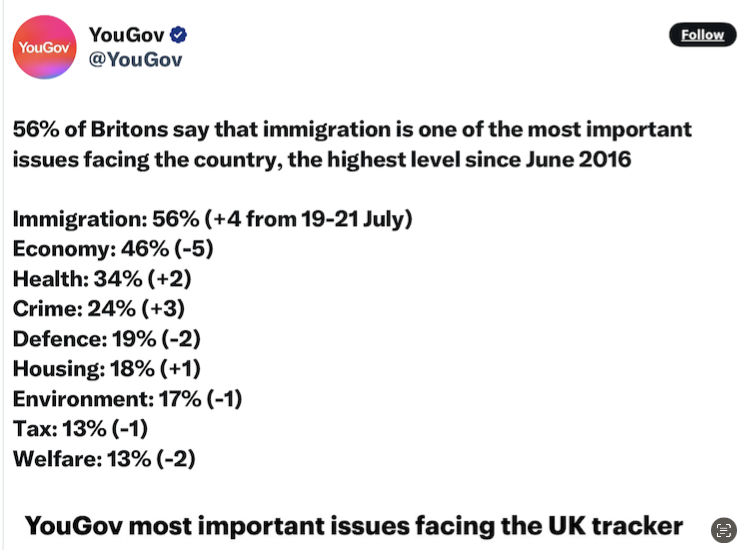
… the Overton Window, the range of ideas the public will accept, is shifting on illegal migration. Opinion polls and political rhetoric respond to heightened media coverage, economic pressures and concerns over border control.
Once marginal-proposals such as, tougher enforcement or offshore processing, have moved toward the centre of debate.
Arguments for more leniency now face greater resistance.
This change reflects politicians’ and commentators’ detection of a public mood that has grown less tolerant of irregular migration and more willing to consider measures previously seen as extreme…
… such as the Rwanda policy.
Similarly but at the other end of the scale, Palestine Action. Huge numbers of otherwise law abiding people, prepared to acquire a criminal conviction in support of a wider cause.
Both cases are examples of the Overton Window. Public opinion moves the window. How will ‘politics’ respond?
The fact is, politicians are limited in what policy ideas they can support. They generally only pursue policies that are widely accepted as legitimate policy options. Policies that lie inside the Overton Window.
Other policy ideas exist but politicians risk losing popular support if they champion these ideas… policies that lie outside the Overton Window.
The tricky bit is to track how public opinion shifts.
What’s this got to do with health and the NHS... quite a lot.
Right now the chaos and uncertainty in the NHS is going largely unnoticed. Sacking pen pushers is popular. No big deal… yet, the contradiction. The highly praised Darzi report makes clear, the NHS is under-managed and that’s part of the problem.
Overton tells us the prospect is high that public sentiment could swing sharply, against NHS reorganisation and redundancies… once the consequences become tangible.
At first, job cuts and structural changes may be sold as ‘efficiency’ and ‘streamlining' within the acceptable policy window…
... but as staff are distracted by fears of job losses and reorganisation diverts them from their principle tasks, patients will experience disruption and longer waits.
Reduced access to care, as Trusts shed staff to balance budgets, will become visible and the public’s tolerance will narrow.
Proposals to reverse cuts, invest in staffing, or pause reorganisation could move from ‘unthinkable' or ‘radical’, back into the ‘sensible’ or ‘popular' zone of debate.
Milburn, who after all is running the NHS, will be wise to recalibrate.
The window will inevitably shift in favour of stability and reinvestment, which will reassure the public… as opposed to upheaval, which will not.
Most NHS people are there already.
Everyone realises they are working in chaos.
Interestingly, the £walled Sunday Times (you may be able to find it on Twitter, here) ran an article casting doubt on the viability of the redundancy programme and its consequences...
... the window is shifting.
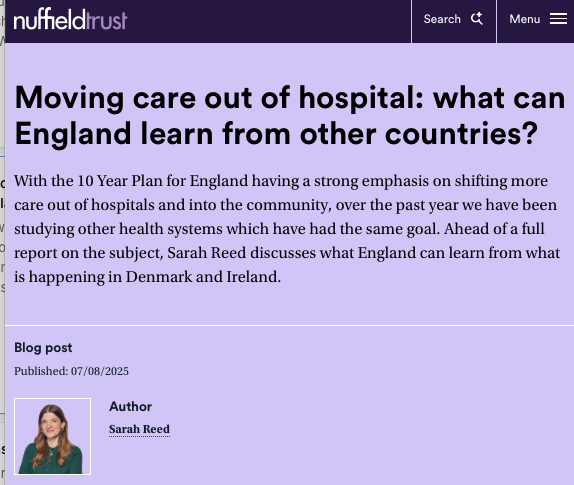
A hopeless ten year plan, unlikely to see the light of day. The demoralising effect of redundancies with no prospect of HMT funding them… and confused leadership at the top.
The public aren’t stupid.
They voted for shorter waiting lists, not long stories about reorganisation and ten year plans. Labour’s backbenchers won’t support policies that they believe are 'not in the window', will hurt their electoral chances and…
… not fixing the NHS will very likely, see them redundant.
|