|
Approaching the winter season in the northern hemisphere, this is a time to honor and reflect on the important work from the past 12 months, while embracing quiet moments to regenerate and plan for 2026 and beyond.
Osprey Orielle Lake, WECAN Executive Director, shares some words on this moment as we prepare to enter a new year.
| | |
"As I sit and reflect on the moments of challenge and brightness from this year, I think it's really important to center that we, the people, have power.
This year, we have faced intensifying climate chaos and the rise of authoritarianism the world over. At this time, it is essential to remember that authoritarian governments stand on weak legs. When we stand up together, grounded in collective strength, we hold great power.
Our numbers are large, our imaginations are wide, our capacity for love is deep, and our determination is strong. That doesn’t mean the path forward is easy. It doesn’t mean there isn't suffering, horrific losses, and ongoing threats to our rights. However, it does mean we can stand up for our democracies, for our communities, for our rights, and for Mother Earth, who sustains our very lives.
We come from long histories shaped by colonization, patriarchy, capitalism, and entrenched systems of oppression—systems that are now crumbling. Mother Earth is calling us into a conversation about the transformative change we urgently need. Her message comes through tornadoes, through fire, through flood. She is speaking the language of imbalance, telling us that what we are doing collectively as a species is not in alignment with the natural laws.
This long era of oppression, greed, and domination must end, and the real question before us is how we will move through this transformation. How do we ensure that justice is our guide? How do we protect the people who are most vulnerable? How do we safeguard the greatest possible biodiversity? How do we defend dignity for all? How do we implement a Just Transition?
This is a time for courage.
A time to be bold. A time to be strong. We are resisting. We are building a world we know is healthy and just.
While we may not see the full transformation today or tomorrow, we are acting on behalf of generations to come, and for reparation and reciprocity with one another and with the Earth. Every centimeter, every inch of progress we generate today becomes the foundation for the future we want. We will never stop fighting for our beautiful planet.
When we examine the word courage, its root is the Latin word cor— heart. Paired with rage, it reminds us that courage is the heart’s fierce call to act, to move with every part of our being for all that we love and hold sacred. So I invite us to be courageous together in this moment, when we are quite literally fighting for our lives. Our solidarity is how we will make it through.
As the season turns and we begin to prepare for a new year, we look forward to walking with you, our community, in this great task of rising out of a world on fire."
| | |
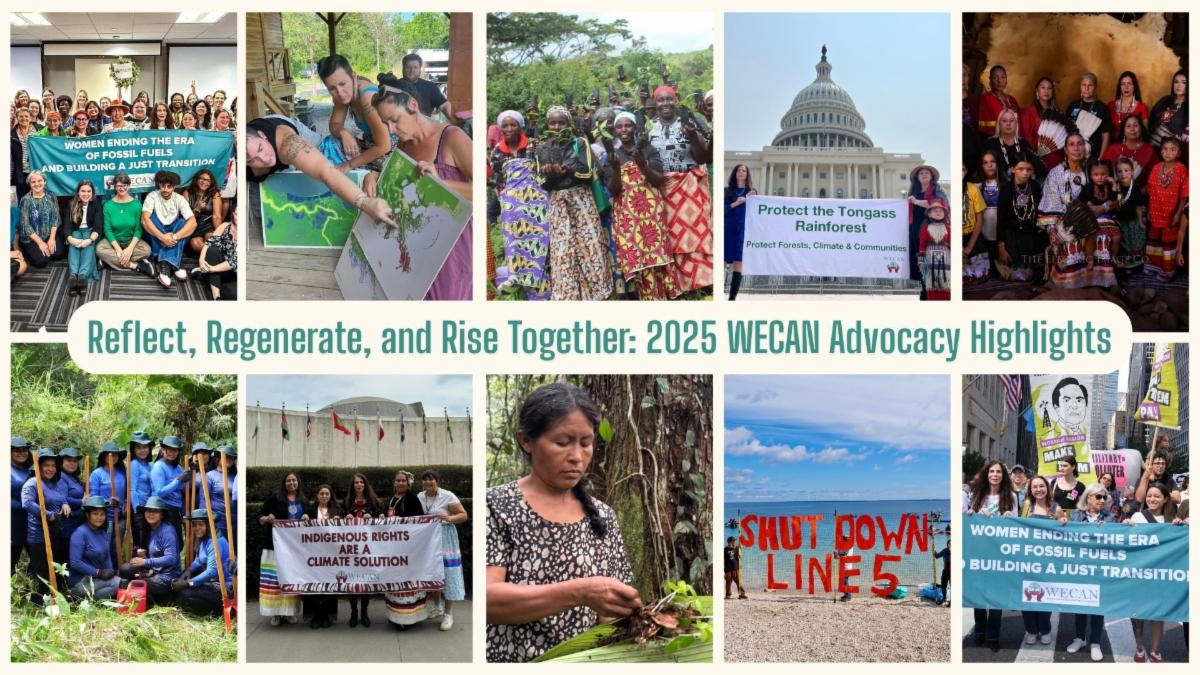
Thank you so much for your continued support of WECAN's ongoing campaigns, projects, trainings, and programs. As we close this year and look forward to 2026, please join us in remembering some selected highlights from WECAN's 2025 activities, featured below.
For more updates from the year, please see the following links for details on WECAN programs, projects, and campaigns:
If you are able, please also consider donating and supporting WECAN's work for the years to come. Any support is most welcome!
| | 2025 WECAN Advocacy & Action Highlights | | |
Global Women’s Assembly for Climate Justice:
Path to COP30 and Beyond
| | |
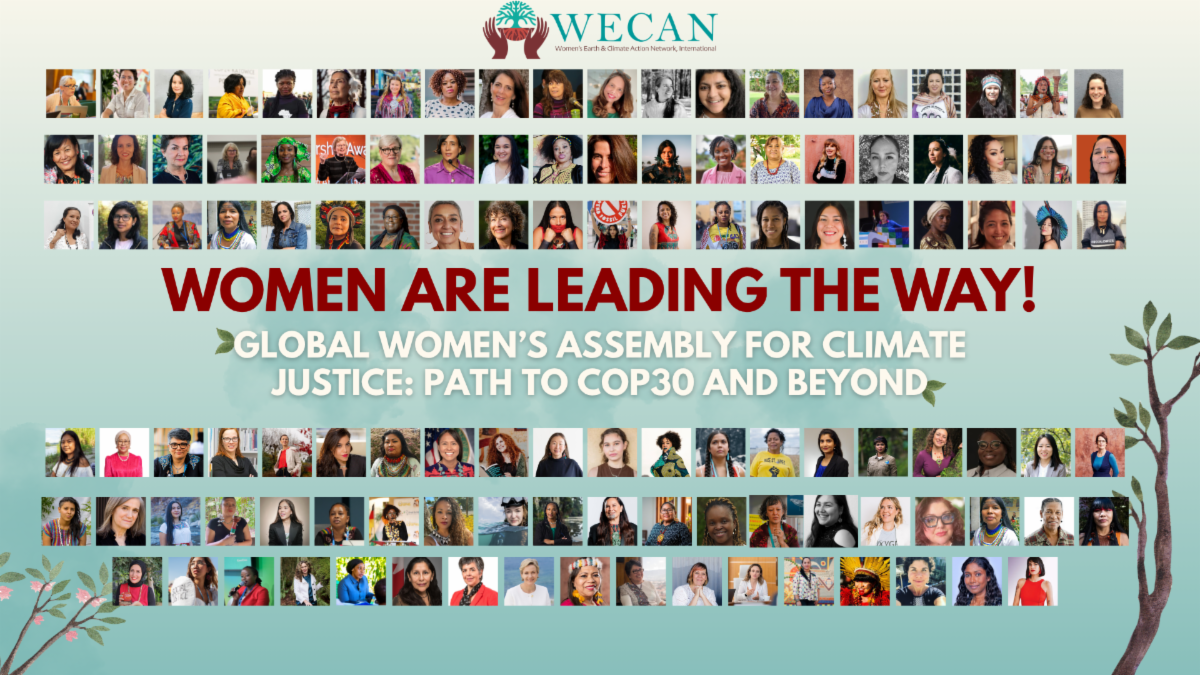
In June, WECAN organized and hosted the Global Women’s Assembly for Climate Justice: Path to COP30 and Beyond. The public forum brought together over 125 grassroots and frontline women leaders in all of their diversity, global advocates, thought leaders, and policymakers to showcase a diverse array of visions, projects, policy frameworks, campaigns, and movement strategies for a bold, healthy, and just world. Speakers represented 50 countries over the course of six days.
We had well over 100,000 viewers on average a day participating in the Global Women’s Assembly for Climate Justice across various digital platforms, with viewers reaching over 200,000 and 450,000 on several days! Please find a full report back and recordings from the Assembly at the button below.
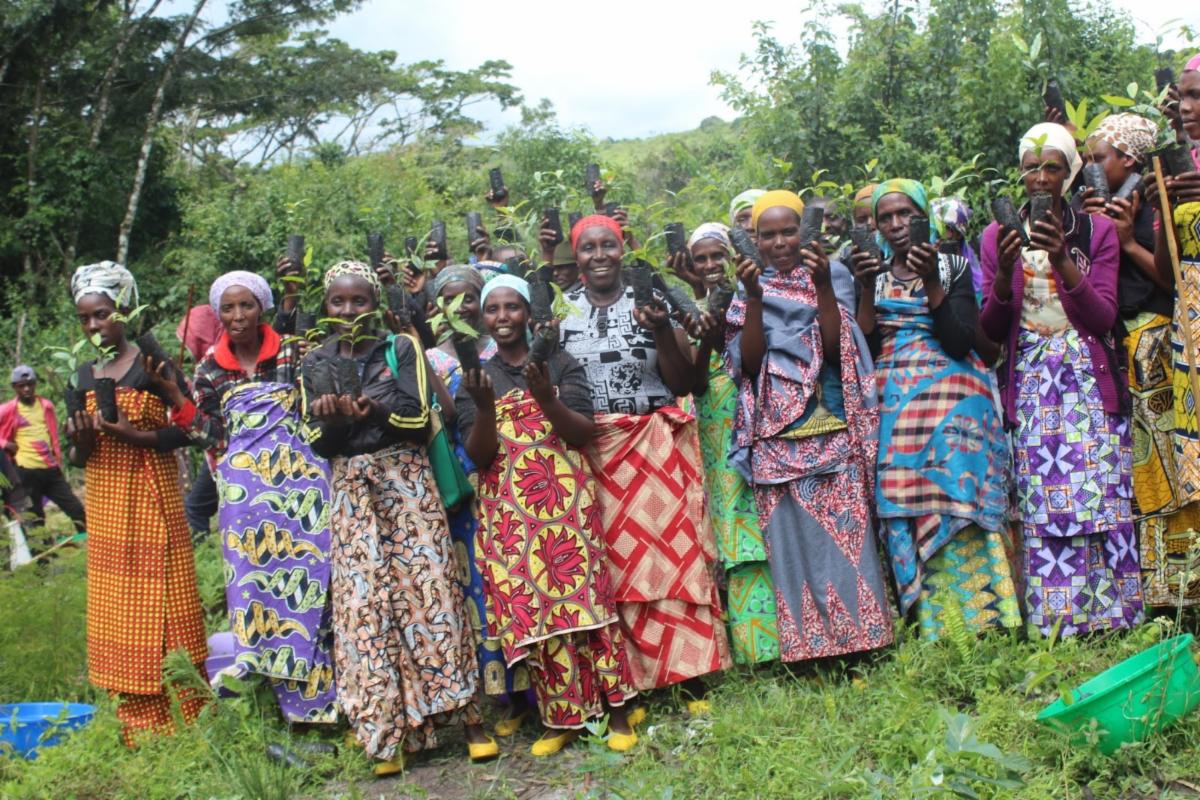
| | Democratic Republic of Congo Women for Forests Program | | Participants from the WECAN Women for Forests program in the Democratic Republic of Congo prepare for the growing season. Photo Credit: WECAN | |
Since 2014, WECAN has been working with women in South Kivu Province in the Democratic Republic of Congo to protect 1.6 million acres of old-growth forest in the Itombwe Rainforest, which constitutes a part of the Congo Rainforest, the second largest tropical rainforest in the world. We work with over 1,000 women to protect old-growth forests while restoring damaged lands through tree planting.
At its current rate of deforestation, scientists estimate that the entire Congo Rainforest will be gone by 2100. Sixty percent of the Congo Rainforest is located in the DR Congo, making this region a vital area of concern. In addition to industrialized logging, illegal timber harvesting operations, mining and farming, local communities have depended entirely on the Itombwe’s old-growth forest for fuelwood and other wood products such as timber, charcoal and medicine. Through trainings and on-the-ground projects, WECAN’s Women for Forests program in the DR Congo addresses these issues through the elevation of women’s leadership, environmental education, widespread reforestation activities and renewal of Traditional Ecological Knowledge.
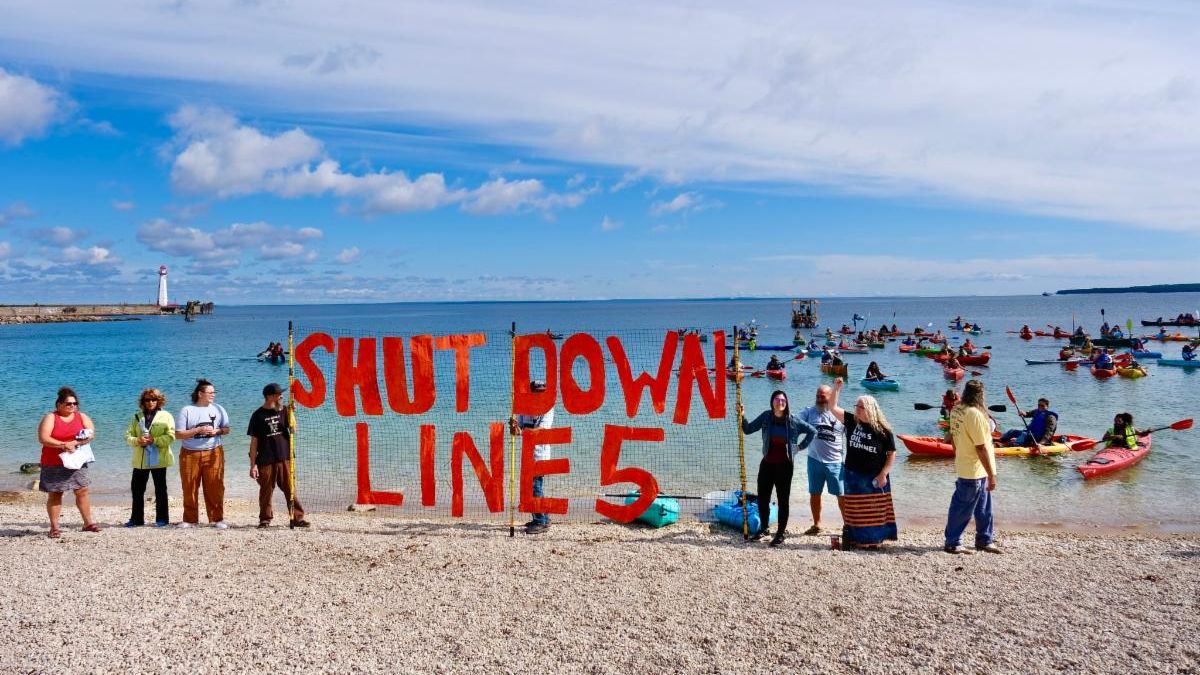
| | Stop Line 5 Advocacy Campaign | | Water Protectors and activists taking action during the Water is Life Festival to call for the shutdown of the Line 5 pipeline in the Great Lakes region. Photo Credit: Ashley Guardado/WECAN | |
The Line 5 pipeline, which is currently operating past its anticipated lifespan, transports 22 million gallons of crude oil each day through northern Wisconsin, Michigan’s Upper Peninsula, and under the Straits of Mackinac. WECAN has taken action throughout the year to stop the damage to land, water, food, and communities across Wisconsin and Michigan through extensive media campaigns, ongoing high-level meetings with government agencies, the amplification of public comment periods, and many other activities.
Sadly, despite deep opposition from Tribal nations, environmental groups, and community leaders, on October 29, the US Army Corps of Engineers approved permits for the Line 5 pipeline reroute. Moving forward with any proposed Line 5 reroute would contribute millions of tons of carbon emissions, threatening our planet and the Great Lakes—the source of 20% of the world’s fresh surface water and the drinking water for over 40 million people. Protecting the Great Lakes is a shared responsibility.
WECAN is honored to facilitate the Indigenous Women’s Treaty Alliance, a group of Indigenous women leaders from the Great Lakes region, as we collectively work to stop the advancement of the Line 5 pipeline. We will continue to work with partners to Stop Line 5. Learn more about our advocacy efforts at the button below.
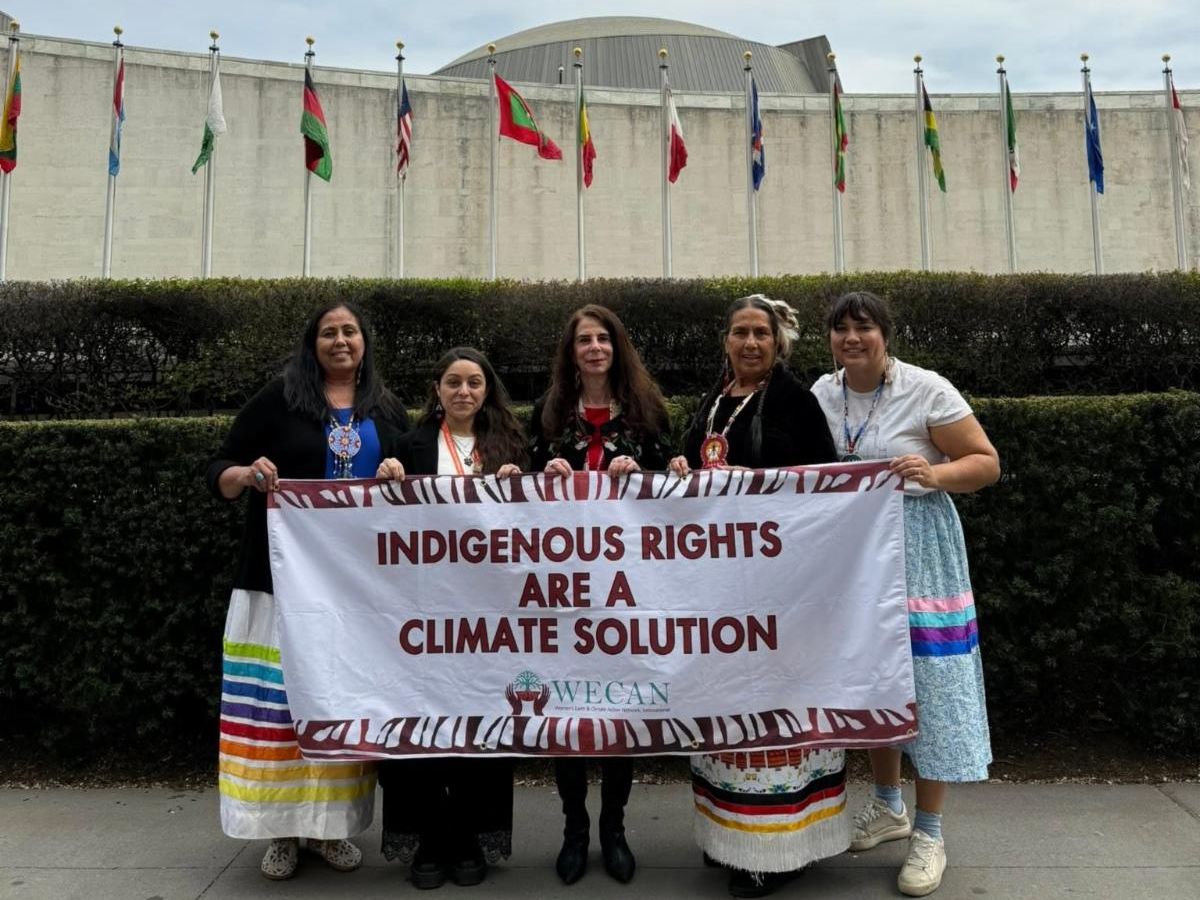
| | Advocacy at the UN Permanent Forum on Indigenous Issues (UNPFII) | | The WECAN UNPFII Delegation outside of the UN Headquarters in New York City during the UN Permanent Forum on Indigenous Issues (UNPFII). Photo Credit: WECAN | |
In April, the Women’s Earth and Climate Action Network (WECAN) was on the ground in New York City at the 24th Session of the United Nations Permanent Forum on Indigenous Issues (UNPFII), advocating for the urgent recognition and implementation of Indigenous rights as central pillars of climate justice, gender justice, and thriving democracies.
WECAN engaged in global dialogues and partner convenings focused on Indigenous rights and the pathway to COP30, Indigenous women’s leadership in biodiversity and climate justice, and the role of Indigenous rights in advancing a Just Transition and Rights of Nature. At the UNPFII, WECAN spoke out against false climate solutions, colonization, Indigenous rights violations, and harms to frontline communities and Mother Earth. We also advocated for implementing solutions and policies that uphold Indigenous rights and sovereignty, align with climate justice frameworks, practice traditional knowledge systems, Rights of Nature, and advance policies and practices for climate justice. Find a full report back from the UNPFII at the button below.
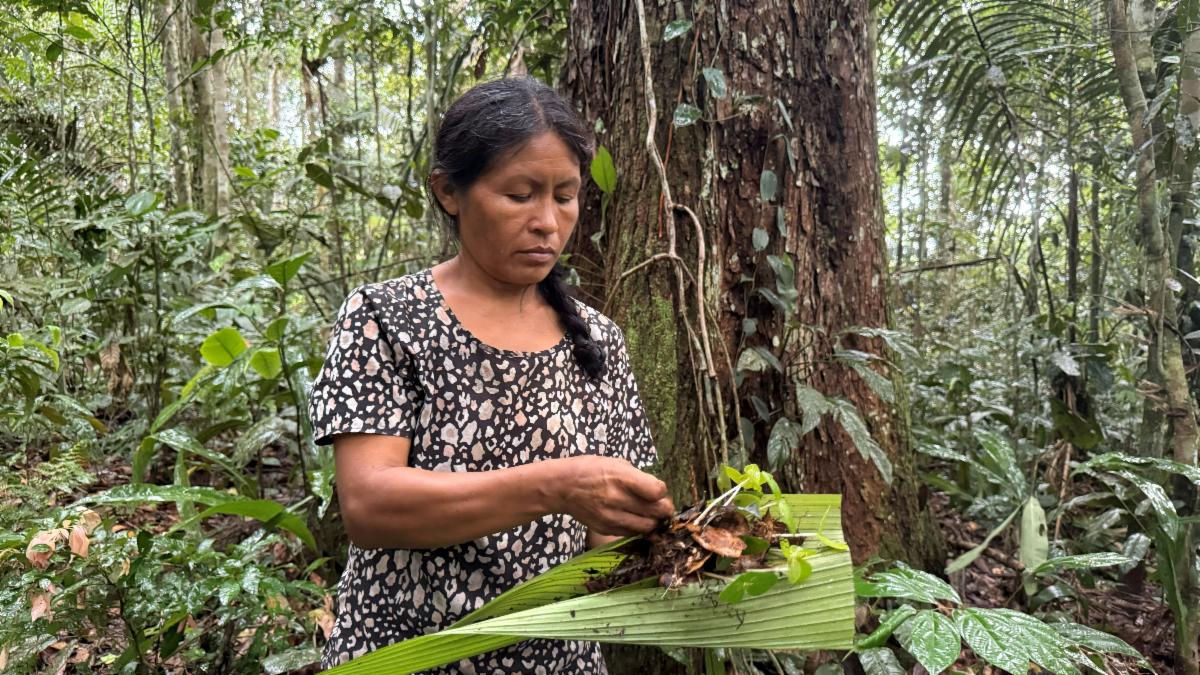
| | Indigenous Women of the Ecuadorian Amazon Reforestation and Forest Protection Project | | A Sarayaku project participant in the jungle planting endangered tree seedlings as part of the WECAN Reforestation and Forest Protection project in the Sarayaku territory of the Ecuadorian Amazon. Photo Credit: WECAN | |
Working in partnership with the Women’s Association of Sarayaku, WECAN’s Indigenous Women of the Ecuadorian Amazon Reforestation and Forest Protection Project aims to safeguard endemic tree species within the 135,000 hectares of Sarayaku territory and restore once-polluted waters to ensure vital ecological integrity.
The Indigenous women participating in this initiative have made significant strides in advancing reforestation goals. To date, over 100 different plant species have been hand collected and planted across seven community nurseries, with plans to continue adding species based on their seasonal fruiting cycles.
In 2025, WECAN released a short video documenting the project. Please see it here:
Indigenous women of Sarayaku Nurturing and Restoring the Ecuadorian Amazon Rainforest
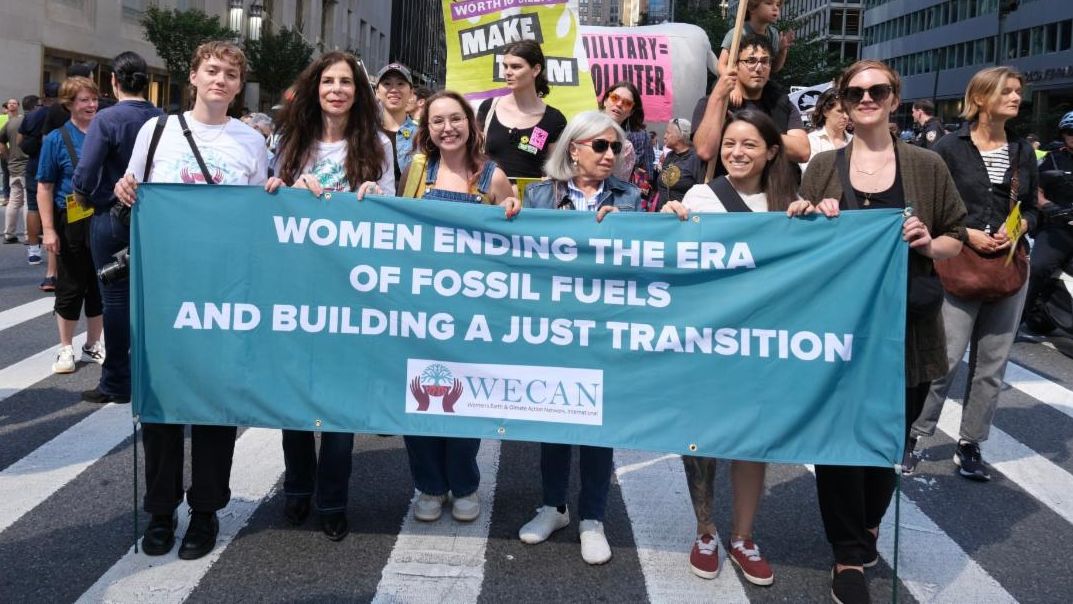
| | Ending Fossil Fuels and Advancing a Just Transition | | The WECAN Team in action at the Global Make Billionaires Pay March held during Climate Week in New York City. Photo Credit: WECAN | |
To end the era of fossil fuel extraction, one of the leading drivers of the climate crisis, the Women’s Earth and Climate Action Network employs a two-pronged approach focused on divestment advocacy and resistance to fossil fuel infrastructure and projects.
WECAN also engages in several coalitions to end the era of fossil fuels. WECAN sits on the Steering Committee for the Fossil Fuel Non-Proliferation Treaty, and in 2025, participated in global efforts to advance the Treaty, hosted advocacy events for the Treaty, and engaged in ongoing strategy sessions.
This year, Colombia and the Netherlands announced their plans to host the First International Conference on the Just Transition Away from Fossil Fuels in April 2026. The 18 participating countries that have endorsed a Fossil Fuel Non-Proliferation Treaty have agreed to pursue the convening of a conference bringing together diverse stakeholders to chart a fair and equitable path beyond coal, oil, and gas. At the start of 2026, WECAN will be in critical dialogues to support the Conference.
in 2025, WECAN also formally announced our Just Transition and Climate Resilience program, where we are engaged in Just Transition movements worldwide to advance climate justice solutions that uplift community well-being, ecological balance, and respect for human rights.
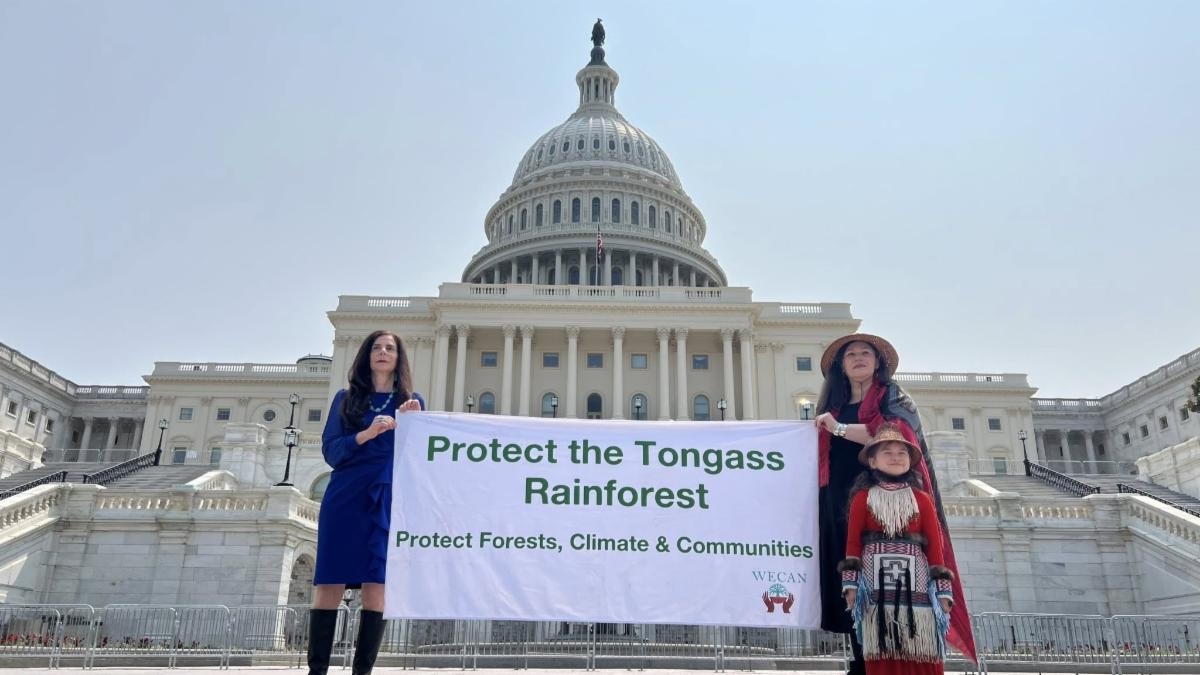
| | Protect the Tongass Forest Campaign | | Yolanda Fulmer (Tlingit), WECAN Tongass Representative and her daughter (right), and Osprey Orielle Lake, WECAN Executive Director (left), in Washington, D.C., to demand that the U.S. Administration and Congress take action to protect U.S. National Forests and Public Lands. Photo Credit: WECAN | |
On June 23, 2025, the U.S. Department of Agriculture announced plans to strip Roadless Rule protections nationwide, including from Alaska’s Tongass National Forest. This would remove critical safeguards against industrial logging and roadbuilding from over 9 million undeveloped acres within the 17-million-acre forest. The attempt by the Administration to log these forests is a threat to the climate and a violation of Indigenous sovereignty, endangering cultural lifeways, local economies for everyone in Alaska, and food access for Tribal nations across the Tongass. While we prepare again to protect sacred forests and stand with Indigenous peoples, it is clear that the Roadless Rule must be codified into law to ensure that it cannot be rescinded by any Administration moving forward.
WECAN has a longstanding campaign to protect the Tongass National Forest, including organizing multiple Indigenous Women’s Tongass Delegations to D.C., and in 2025, we continued our work to ensure the Tongass remains standing! Learn more about Tongass campaign efforts at the link below, and look for more details in the new year for ways to take action.
| | WECAN Okla Hina Ikhish Holo Food Sovereignty Program | | |
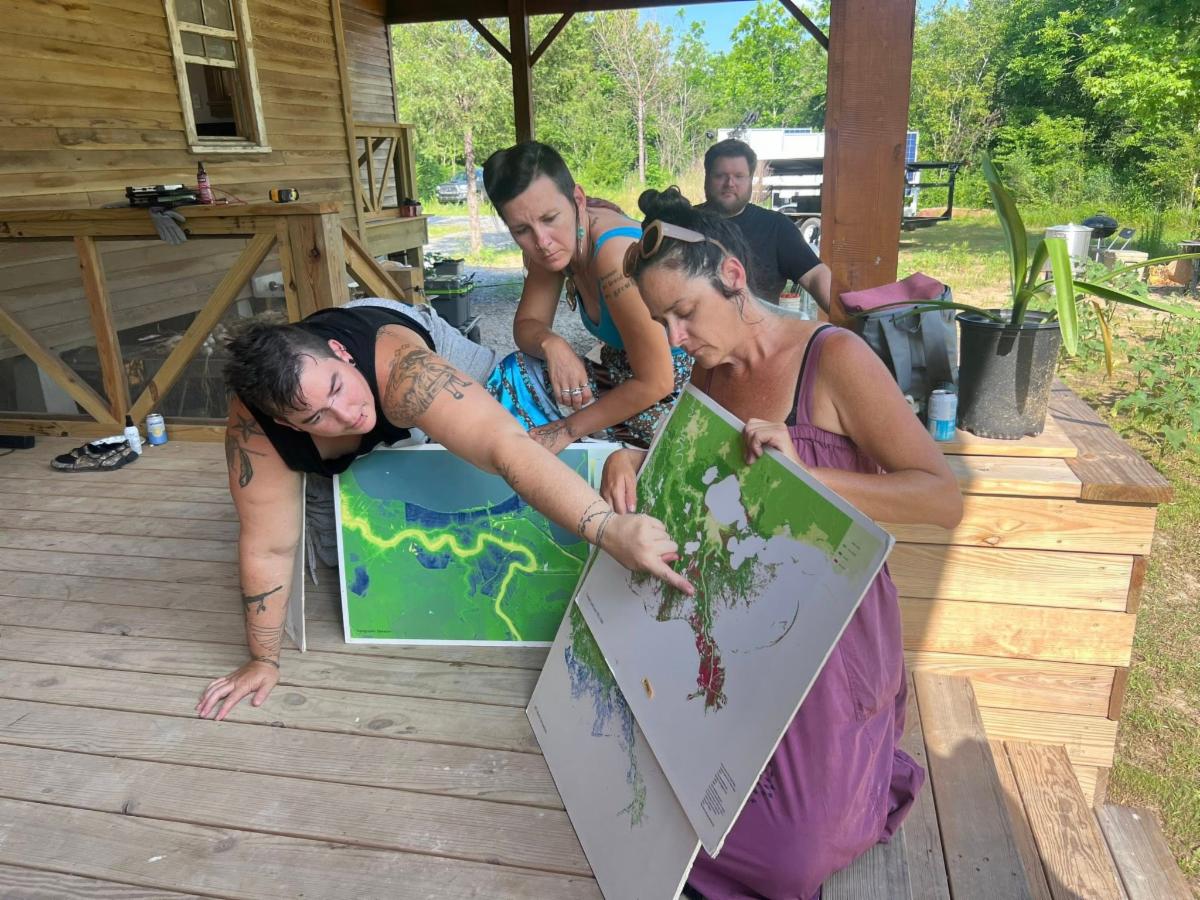
WECAN Okla Hina Ikhish Holo members Ida Aronson, Jenna Mae, and WECAN Gulf South Coordinator, Monique Verdin, present various maps showcasing land loss and fossil fuel extraction throughout the Gulf South.
Photo Credit: Sophia Lovato / WECAN
| | |
Initiated in 2020, we are working to defend, protect, and restore the lands and waters of the Mississippi River Delta and within the ancestral territories of the Chata and Mvskoke. The project is led by WECAN Gulf South Coordinator Monique Verdin (Houma Nation). In the shift from industrial food production, WECAN’s focus on food sovereignty supports community resiliency during cascading crises of climate and colonization.
The Okla Hina Ikhish Holo Collective is reclaiming and revitalizing Indigenous agricultural techniques and narratives, promoting native seed saving, conducting workshops, medicine exchanges, and building emergency response hubs equipped with solar power, water storage, and autonomous communication systems. These grassroots solutions are not only addressing immediate food and medicine needs but also laying the groundwork for long-term community resilience in a region that is heavily impacted by fossil fuel extraction and facing accelerated land loss, biodiversity loss, and intensifying climate disasters.
| | Advocacy During Climate Week | | |
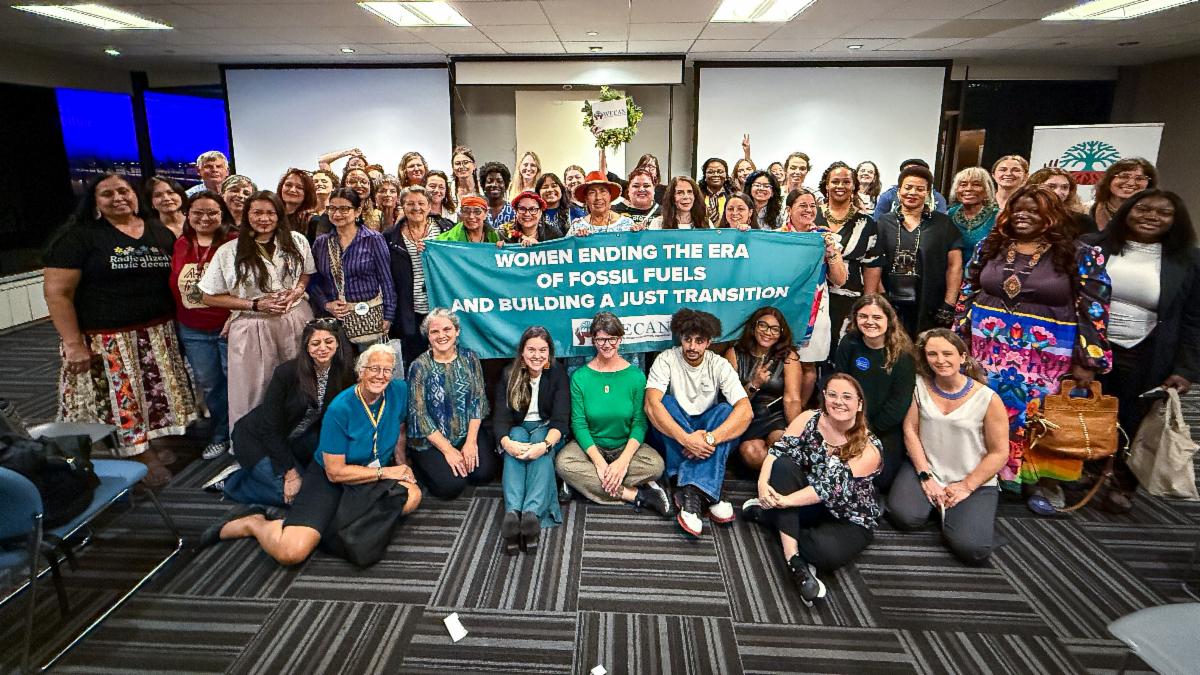
WECAN, colleagues, partners, and friends at the WECAN Climate Week event “Women in Action for Climate Justice and a Just Transition: Path to COP30 and Beyond," held on September 24 in New York City.
Photo Credit: Katherine Quaid / WECAN
| | |
In September, WECAN participated in Climate Week 2025 held during the UN General Assembly. Amidst the dialogues and discussions, WECAN presented our strategies, solutions, and policy analysis, and uplifted our urgent calls to action for climate justice, democracy, Just Transition, Rights of Nature, and women-led solutions for people and the planet.
Please find a report back from Climate Week at the button below.
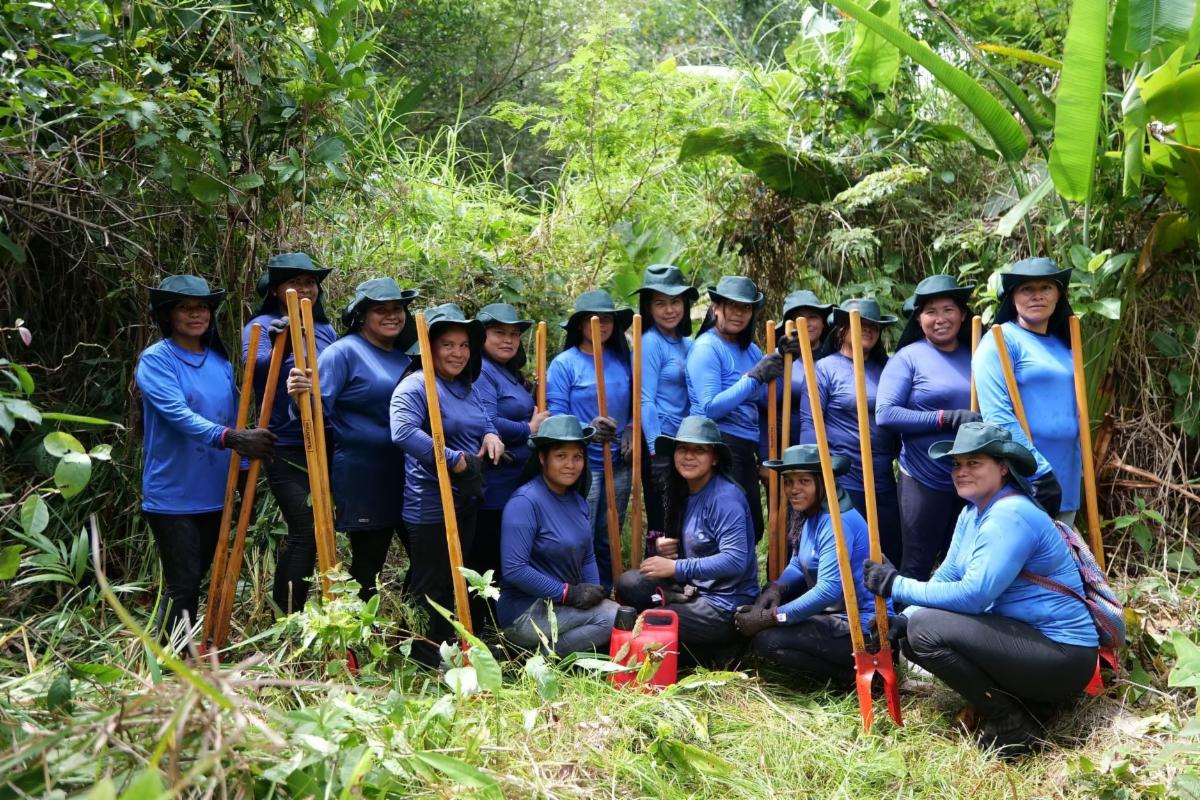
| | Indigenous Women Restoring and Protecting the Brazilian Amazon: Guajajara Territory | | Guajajara women project participants transplant tree saplings as part of the WECAN Reforestation and Forest Protection project in the Araribóia Territory, Brazil. Photo Credit: WECAN | | |
The WECAN Indigenous Women Restoring and Protecting the Brazilian Amazon: Guajajara Territory project addresses critical environmental and social challenges Indigenous communities face in the Brazilian Amazon region. Through the leadership and knowledge of Indigenous women from the Guajajara communities, this reforestation initiative is restoring the degraded lands of the Arariboia territory in Brazil. By improving soil quality and planting native trees, the project is restoring biodiversity and strengthening both community and climate resilience.
This project represents a holistic approach to reforestation and forest protection founded on the leadership and knowledge of Indigenous women and the WECAN Women for Forests program analysis, practices, and methodologies. By addressing environmental degradation, economic challenges, and social issues, we aim to build a resilient future for Indigenous communities, the plant and animal life in the Amazon, and people worldwide who depend on a thriving Amazon rainforest.
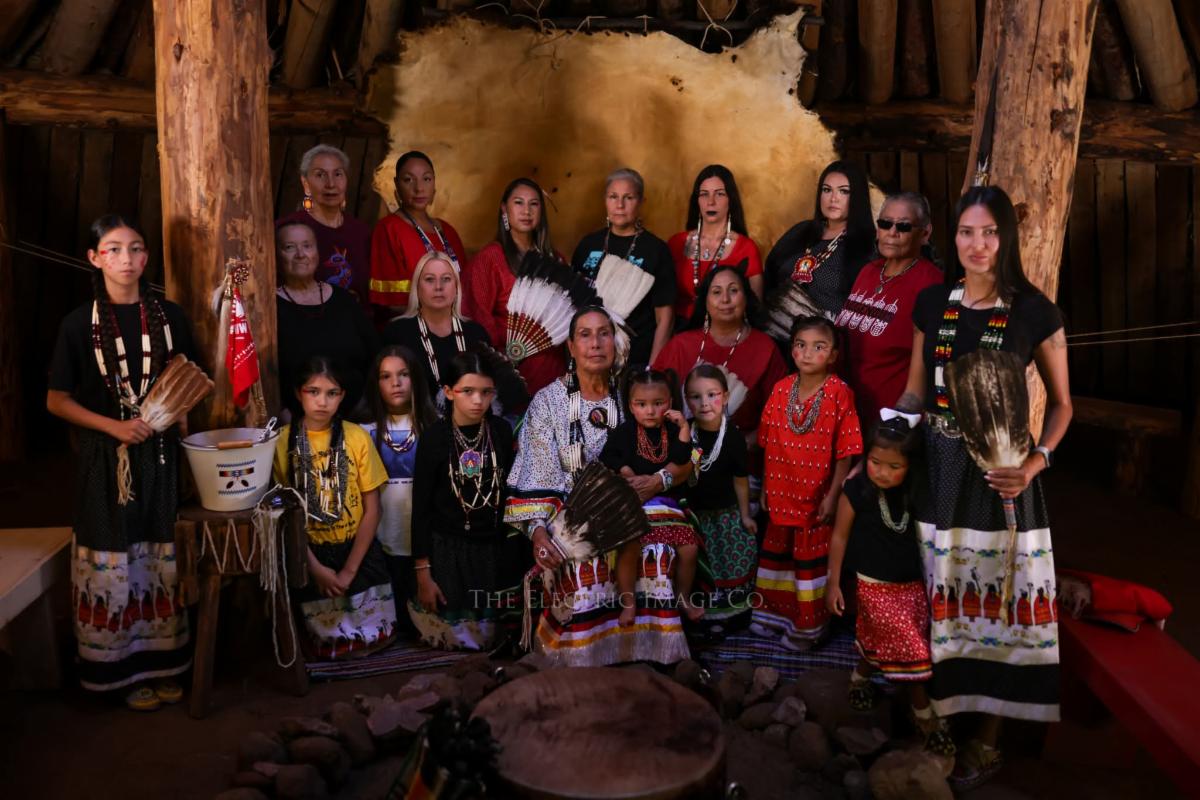
| | The Earthen Lodge Project - Ponca, Oklahoma | | Casey Camp-Horinek (Ponca Nation), WECAN Board Member, Julie Horinek (Ponca Nation), WECAN Project Coordinator, and the Pa'tha'ta Women's Society inside the Earthen Lodge as part of the WECAN Ponca Earthen Lodge Project in Ponca Nation, Oklahoma. Photo Courtesy of Casey Camp-Horinek and Julie Horinek | | |
With Indigenous Ponca Nation Environmental Ambassador, Casey Camp-Horinek, and the Pa'tha'ta Women's Society in the Ponca community, WECAN partnered to launch the Ponca Earthen Lodge Project for an Indigenous Just Transition. The Ponca Nation is located in Oklahoma, where decades of fracking, pipelines, petrochemical plants, and oil refineries pose a significant threat to the health and well-being of the community.
Grounded in Indigenous wisdom and knowledge of the Ponca Nation, the Earthen Lodge was constructed in 2023 on Ponca land to serve as a vital source of community spiritual, cultural, and physical resilience. The structure not only supports traditional food and medicine stewardship but also provides shelter against natural disasters exacerbated by the climate crisis. WECAN’s ongoing Just Transition program includes building mutual aid, advocating for Rights of Nature, practicing food sovereignty, generating cultural revitalization, deploying community renewable energy, and more.
| | WECAN Advocacy at COP30, Brazil | | |
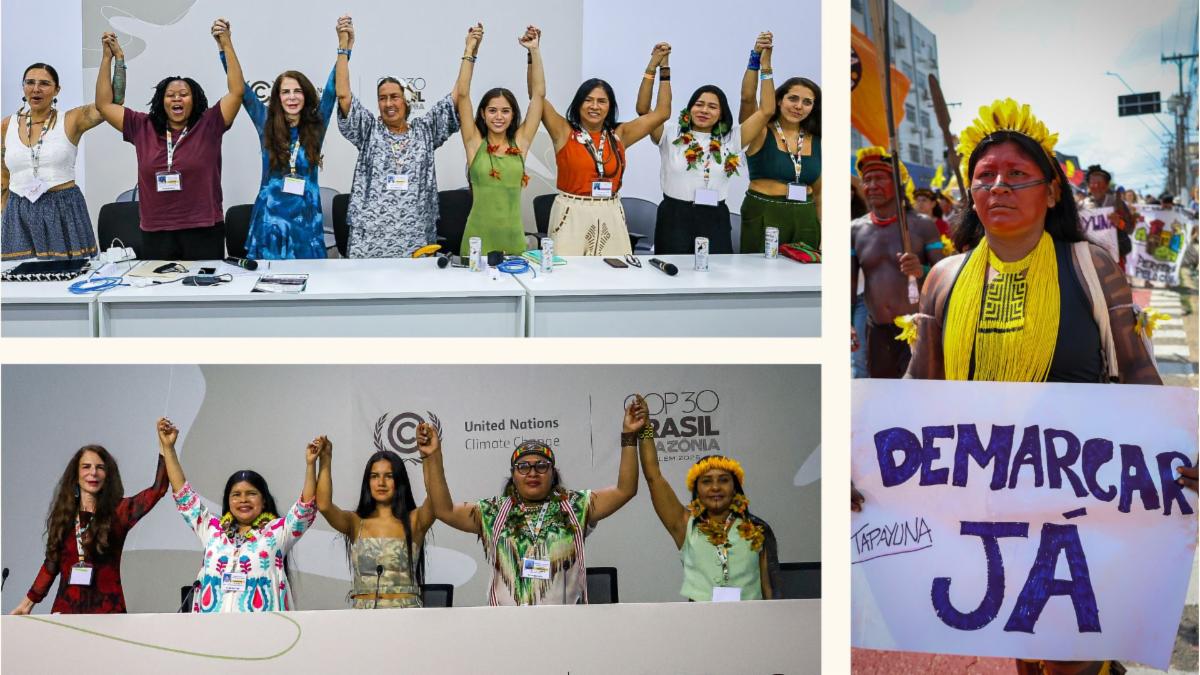
A collage of photos from WECAN's advocacy at the UNFCCC COP30 in Belém, Brazil.
Photo Credit: Katherine Quaid/WECAN
| |
In November 2025, WECAN advocated with an outstanding Frontline and Indigenous Women's Delegation at the UNFCCC COP30 to demand world governments take bold and transformative action for climate justice.
In Belém, Brazil, at the mouth of the Amazon, the two weeks of COP30 unfolded against the backdrop of the world’s largest rainforest and the frontline and Indigenous communities who defend it. We witnessed powerful Indigenous-led mobilizations, relentless civil society advocacy, urgent demands to phase out fossil fuels and keep 1.5°C within reach, climate-charged downpours flooding the venue, and efforts to fight for a healthy and just world. Globally, movements are organizing as the climate crisis accelerates around us, and in this moment of intersecting loss and resolve, WECAN continues to say: We can act now, and we must act now!
Please read WECAN’s full COP30 report back by clicking the button below.
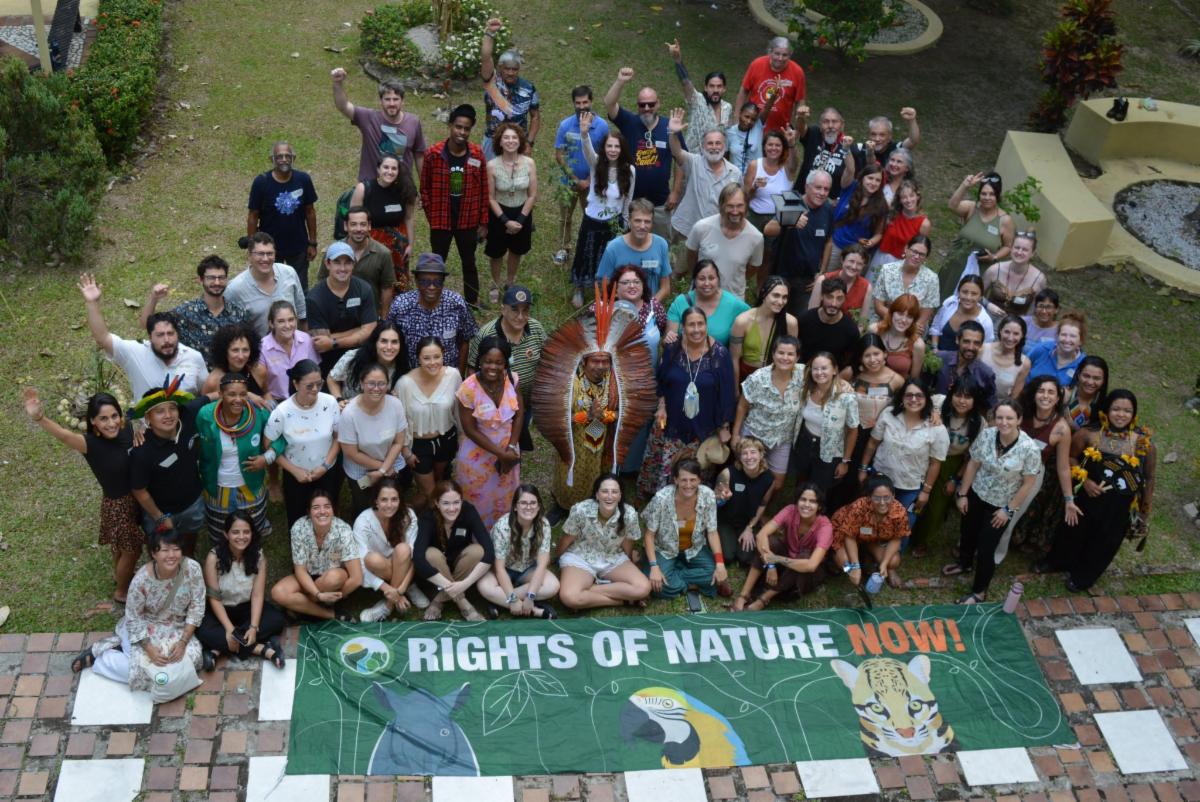
| | Rights of Nature Advocacy | | WECAN with colleagues from the Global Alliance for the Rights of Nature (GARN) during the 15-year anniversary and strategy meeting held ahead of COP30 in Belém, Brazil. Photo Credit: GARN | |
WECAN is honored to serve on the Executive Committee for the Global Alliance for the Rights of Nature (GARN). Throughout the year, we've written reports, policy briefs, and coordinated and supported several advocacy events and activities to amplify and accelerate the Rights of Nature movement. Notably, WECAN helped co-organize, alongside GARN and other members, two Rights of Nature Tribunals.
Rights of Nature laws have led to many victories—halting destructive projects, restoring ecosystems, and shifting legal precedent toward ecological personhood. For climate justice advocates, this global growth proves that Rights of Nature is not an abstract legal theory but a rapidly maturing field reshaping environmental law.
| | WECAN Reports, Policy Briefs, and Toolkits | | |
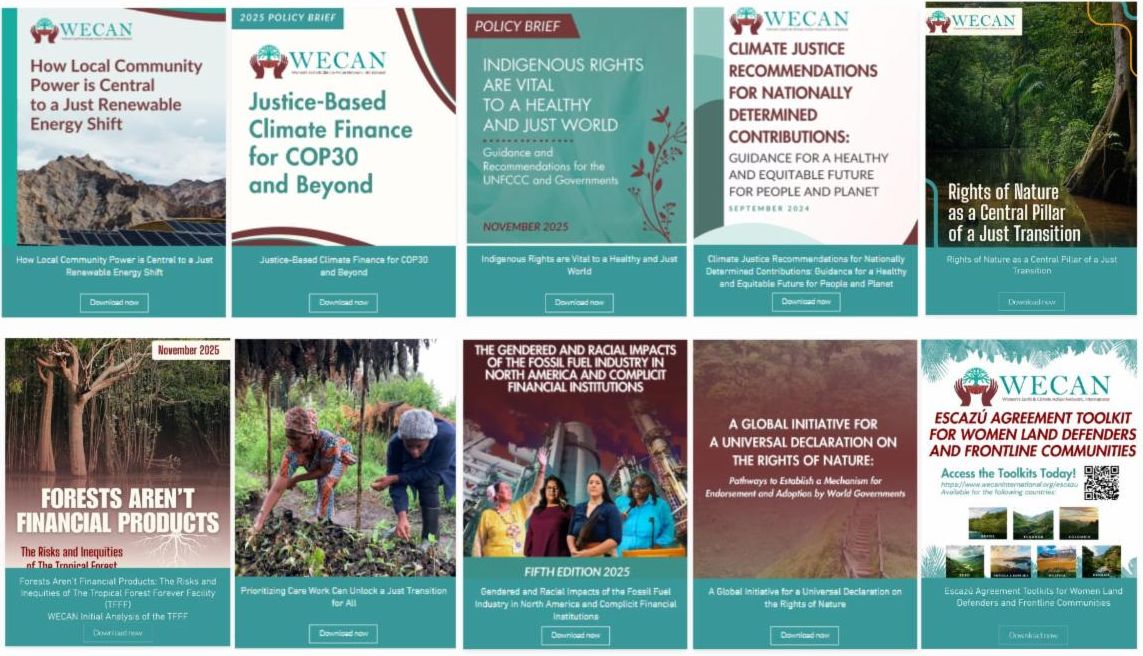
In 2025, WECAN wrote, released, and circulated over 10 reports, policy briefs, and toolkits. These resources are distributed and utilized by policymakers, advocates, activists, health professionals, academics, students, and climate/environmental organizations.
Research and analysis have always been of paramount importance, as we seek to demonstrate the importance of women, Indigenous Peoples, and frontline communities as agents of climate justice and solutions in these times of great urgency and change. WECAN is continuing to grow our research work to provide analysis and critical studies for ending fossil fuels, supporting gender justice, upholding Indigenous and human rights, and advancing a Just Transition.
| | Please consider supporting WECAN as we continue to uplift the leadership and solutions of women worldwide fighting for climate justice and the defense of the planet for current and future generations. | |
For the Earth and All Generations,
Women's Earth and Climate Action Network
(WECAN) International Team
| | S T A Y C O N N E C T E D | | | | |