October 2025

Greetings!


This month, we want to highlight some resources that have helped us reflect on cultural context and history in our evaluation. How might we shift our practice so that it moves away from Western- and White-centered paradigms? How has that been showing up in your own practice already?

 
Meeting the Moment

To balance a newsletter with timeless resources you can refer back to, and resources that feel alive with the rapid changes we're seeing in our world, our first resource now features an article or link that is for RIGHT NOW. We want you to have the best and most current information about what's going on in the world that could affect your work.

Food Banks Brace for Overwhelming Demand

In early November, funding is ending for the United States' largest food assistance program. Without it, the 42 million Americans who rely on SNAP will have to find other ways to feed themselves and their families. Read this article to learn more, and if you are able, connect with your local food bank or mutual aid group.


Find your local food bank.

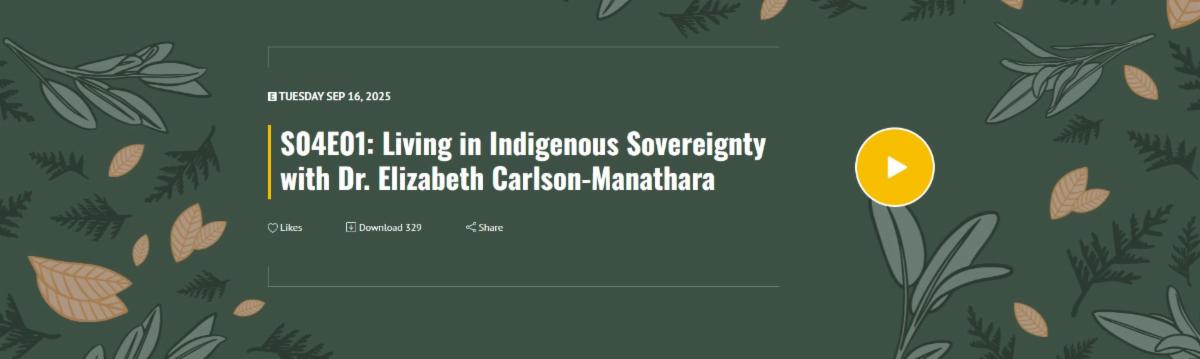
Living in Indigenous Sovereignty

Reimagining evaluation as a site of transformation

In this podcast episode, Dr. Gladys Rowe is joined by Dr. Elizabeth Carlson-Manathara to discuss decolonial and anti-colonial evaluation. They explore how their own practices have evolved, the responsibilities of non-Indigenous peoples in decolonization and decolonizing evaluation, and what it means to live in Indigenous sovereignty. 

+ READ MORE

Culturally Responsive and Equity-Focused Evaluation Philosophies and Approaches

An evaluation matrix

This evaluation matrix from Strategic Learning Partners for Innovation and The Colorado Trust offers a practical examination and comparison of different philosophies and approaches to evaluation that center cultural responsiveness. This tool highlights key principles of each philosophy, when they might be best suited for a project, and additional resources to continue your exploration of culturally responsive evaluation.

+ READ MORE

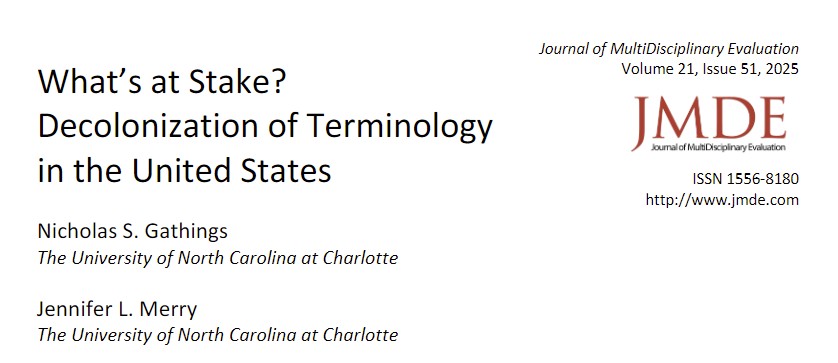
What’s at Stake? Decolonization of Terminology in the United States

Ensuring language used in evaluation is culturally responsive

What’s in a word? This brief article from Nicholas Gathings and Jennifer Merry reflects on the colonial roots of some of the common terminologies we use every day in our evaluation practice and explores how we might better build knowledge in a more inclusive and decolonized way. 

+ READ MORE

New at Innonet

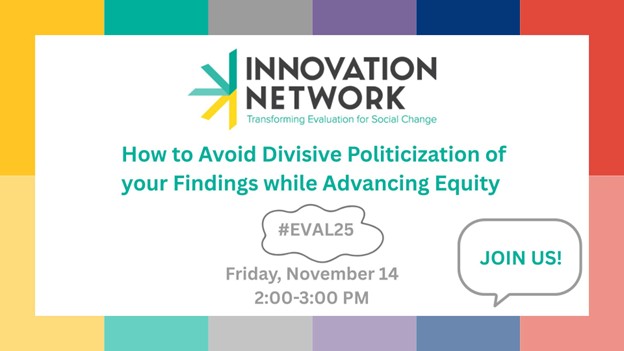
See you in Kansas City?

Our team is excited to be attending Evaluation 2025 in Kansas City, MO next month! And we're looking forward to the session we're hosting. Hope you can join us!


How to Avoid Divisive Politicization of your Findings while Advancing Equity

Friday, November 14, 2:00-3:00 PM

Presenters: Shelli Golson-Mickens, Cory Georgopoulos, and Rebecca Perlmutter


Culture wars. Trigger words. “Woke” language bans. Evaluators are navigating an increasingly divisive political environment. And for evaluators advancing social justice, it can feel impossible to share findings in a way that resonate across the political spectrum. If nonpartisanship is your goal (and it may not be!), we can learn from advocates across the country, particularly those in red states, who are experimenting with language to further their message without compromising their values of social justice. In this Think Tank, we will share a brief presentation of politically divisive language such as “equity” and “DEI” and some alternatives we’ve learned in our advocacy and policy work that have broader acceptance without sacrificing meaning. Then, participants will join breakout groups to share strategies for navigating the choice of being seen as political vs nonpartisan, and sharing findings to further social justice in divisive political environments.


From the Innovation Network Team


Follow us for more free resources!

If you aren't already, follow us on LinkedIn @Innovation-Network. We'll keep you up to date on the latest trends, articles and comical musings coming out of the field of evaluation, and our annual conference.