|
Reflections from our Pastors
October 21, 2025
“Look to him, and be radiant;
so your faces shall never be ashamed.”
— Psalm 34:5
What Do We Do With Our Shame
By Jim Berry, Transitional Deacon Candidate, Mary of Magdala ECC
This week’s reflection invites us to bring our shame into the light of Christ — to stay by the fire long enough for grace to find us.
Most of us carry shame like a shadow. We may not talk about it, but it lingers — the memory of a harsh word, a mistake we can’t undo, a moment when we fell short of who we hoped to be. Sometimes it sounds like that inner voice saying, You should have known better. Sometimes it hides behind a smile that says, I’m fine. But underneath, shame keeps whispering the same lie: You’re not enough.
Psychologists describe shame as that sick feeling that makes us want to hide our faces, to shrink, to disappear. We all know it. It cuts us off — from others, from joy, from the sense of being loved.
Teresa of Ávila knew that ache well. She spoke of what she called spiritual dryness — those long, quiet stretches when God seems absent and prayer feels empty. But Teresa didn’t see this emptiness as punishment. She saw it as invitation. She said that God sometimes allows us to be “undone,” not to destroy us, but to teach us to depend on love instead of pride. “True humility,” she wrote, “is given by God’s light — it causes an embarrassment that undoes one, but it does not destroy.”
That’s the difference between toxic shame and holy shame.
Toxic shame isolates us; it whispers that we’re beyond God’s reach.
Holy shame humbles us; it draws us closer to mercy.
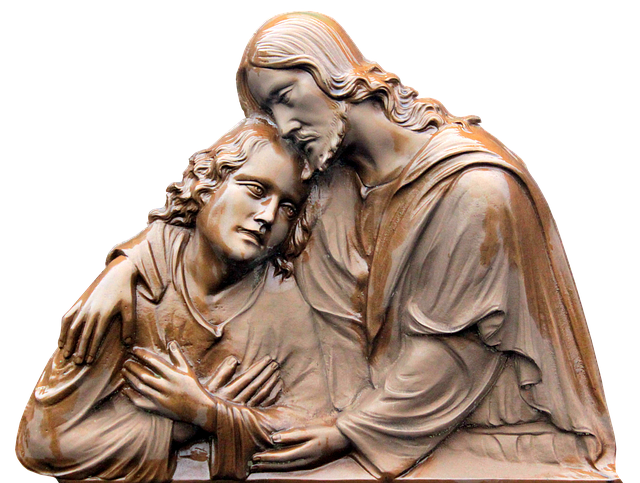
Peter knew that difference. After his three denials, shame could have silenced him forever. But he stayed close enough to hear Jesus call his name again. When Jesus met him on the beach, he didn’t scold or lecture him. He just asked one simple question: “Do you love me?” Three times — once for each denial. Each question was a thread pulling him back into relationship.
That’s what grace does. It doesn’t erase our past; it reclaims it.
The very place of our weakness becomes the place where love takes root.
In daily life, shame shows up in small ways — the friend we avoid calling, the prayer we skip because we feel unworthy, the moment we doubt we belong. But when we let Christ meet us there, something shifts. The gaze that once felt exposing begins to feel freeing.
So what do we do with our shame?
We stay at the fire. We resist the urge to run. We let Christ look at us until our shame softens into compassion — not just for ourselves, but for others too. Teresa would say, Keep your eyes on the One who loves you; he will sustain you.
At Mary of Magdala ECC, we practice that kind of seeing. We hold one another’s stories — even the hard ones — in the steady light of mercy. Around the Eucharistic table, we learn again and again that love is stronger than shame.
Blessing:
May you have the courage to stay at the fire,
to meet Christ’s eyes without turning away,
and to find in that gaze not judgment, but joy. - Jim
*Next week: Part II — “Shame Transformed: Peter at the Fire.”*
|