|
New Jersey Business Immigration Coalition
Pursuing Bipartisan and Evidence-Based Immigration Policy
| | Solving America's Undocumented Immigration Problem | | |
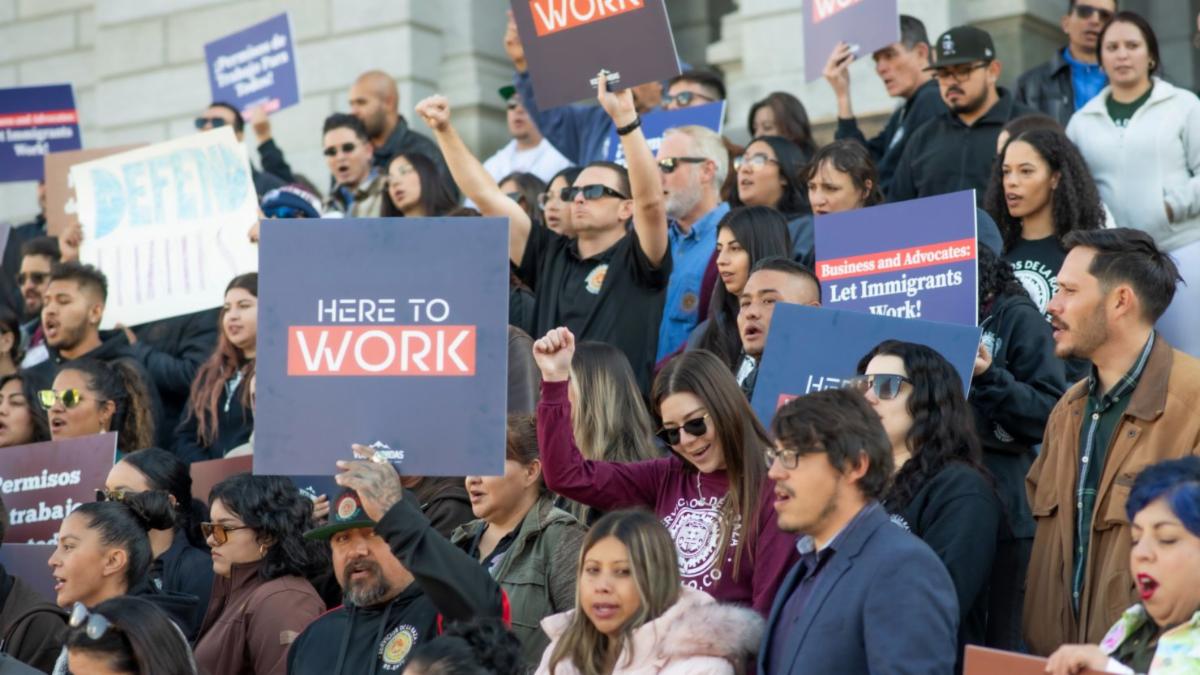
There are two major reasons why many immigrants have entered the United States without permission: first, they are seeking jobs that would otherwise go unfilled, and second, they lack legal pathways for admission to the country.
These immigrants are often concentrated in the most dangerous, hazardous, and otherwise unappealing jobs in the labor market. In a certain sense, they are providing huge benefits to the economy, by enabling many businesses to thrive, and by allowing U.S.-born workers to fill jobs more aligned with their skills and preferences.
Some would argue that the entire country benefits from the presence of people with the courage and determination to rebuild their lives in America -- making them “Americans” from the moment they enter the country.
There is no denying, however, that they are bypassing the normal migrant review process that would screen them for health and safety risks. Given this serious omission, the United States must make appropriate investments to secure our borders.
However, mass deportation is not the best solution for several reasons: it’s probably impossible to achieve; it’s damaging to the American economy; and it’s punishing for many other people, including citizen spouses and children of undocumented immigrants. In this edition of our newsletter, we’d like to suggest some possible ways to correct this problem. We begin, however, by explaining the limitations of the current immigration system.
| | |
Why Don't Unauthorized Immigrants
Just Come Legally?
| |
|
Many individuals who enter the U.S. without authorization do not have legal pathways to enter or remain in the country, making it impossible for them to "just come legally.”
Most legal pathways are for people with close family relationships in the U.S. Only 16% of all permanent resident visas are awarded to immigrants for economic purposes, and almost all those visas are reserved for high-skilled and college-educated immigrants.
In other immigrant-receiving countries like Australia, Canada, and Germany, efforts have been taken to increase the number of immigrants legally admitted for employment purposes. The percentages of work-related admissions are now over 50% in these countries.
Created in 1965, our current immigration system is now 60 years old. The Coalition believes it is time for both Republicans and Democrats to work together to reform the system to benefit the economy and to avoid any future surge in undocumented migration.
One organization that has put forward a plan for a new immigration system to safeguard America's security, expand economic growth, and make us stronger is the Center for American Progress. Another organization is the George W. Bush Presidential Center. A bipartisan group of house members has also recently introduced a comprehensive immigration reform proposal called the Dignity Act.
The Coalition believes that there are solutions available to our immigration problems, and Congress may have the inclination to act.
| | | | Has Congress Given Up on
Bipartisan Immigration Reform? | | Conventional wisdom holds that Congress has abandoned bipartisan immigration reform since the "Gang of Eight’s" failed effort to overhaul the immigration system in 2013. The legislative record, however, tells a somewhat different story. In a report just published by the Bipartisan Policy Center, researchers analyze immigration-related bills introduced on a bipartisan basis since the beginning of the 114th Congress in 2015 and find consistent engagement across party lines to advance an array of immigration reforms. These efforts have largely been unsuccessful, but they highlight potential paths forward for members of Congress interested in passing bipartisan immigration bills. | | President Ronald Reagan signing the Immigration Reform and Control Act in 1986 | | |
Instead of an Amnesty Program, Establish an Earned Legalization Program
There are two general types of legalization programs: an amnesty program and an earned legalization program.
An amnesty program grants legal status to a group of undocumented immigrants without requiring them to meet specific conditions beyond their presence in a country for a certain number of years. This was the type of program passed in 1986 which required continued residence in the U.S. since before January 1, 1982.
An earned legalization program requires undocumented immigrants to meet certain conditions, such as working for a specified period, paying fines, avoiding criminal behavior, and/or demonstrating English language proficiency, before being granted legal status. Essentially, amnesty is a "blanket forgiveness," while earned legalization requires individuals to "earn" their legal status.
Since undocumented immigrants had to avoid normal screening procedures for potential immigrants, it makes sense for some requirements to be imposed in the legalization process.
However, given the benefits brought to the economy by undocumented immigrants and the limitations on legal pathways for admission, these requirements should not be excessive.
Moreover, the U.S. should continue to fund educational programs helping to facilitate the integration of immigrants into American society.
| | |
Avoid Implementing a
Restrictive Immigration System
One of the concerns of the Trump Administration and many Republican voters is that the large number of immigrants, both documented and undocumented, who have settled in the US over the last 30 years will deviate from the values and traditions that have characterized American society throughout our history.
Instead of bringing in more immigrants, we have to ensure that those who are already here are fully integrated into American society. For some Americans, the racial and religious dimensions of the immigrant population are worrisome and disturbing. They believe we have reached a moment in our history when we have to implement the kind of severe restrictions on immigration that we did a century ago, when we banned Asian immigration and greatly curtailed immigration from southern and eastern Europe.
There are many reasons why this argument doesn't make sense. For one thing, the percentage of immigrants in the United States (roughly 15 percent) is much lower than at least 20 other countries, including Australia, Canada, New Zealand, and many European countries, including Austria, Norway, and Sweden. For another, the U.S. has a below replacement birth rate of 1.6 today, roughly half the 3.29 rate a century ago. This means that the U.S.-born workforce will not be able to meet the labor force needs of the future. And finally, the immigration restrictions of the 1920s likely contributed to the severity of the Great Depression.
The diversity of the American population is an asset of great value, enabling the U.S. to draw on talent from around the world and maintain our global leadership role. Diversity should not be eliminated; it must be understood and respected. And legal immigration numbers should meet the needs of American industry.
| | |
|
WELCOMING NEW MEMBERS TO THE COALITION!
Check out our NJ Business Immigration Coalition policy goals here and if your company or organization (or you as an individual) agrees with our basic principles, we encourage you to sign up as a member of the Coalition. There is no fee to become a member.
Share your thoughts on the immigration reform challenges facing the United States. How is your industry affected? What specific reform proposals are you championing?
Write us at: info@njbusinessimmigration.org
| | | |
The New Jersey Business Immigration Coalition,
c/o Einstein's Alley, P.O. Box 175, Plainsboro NJ 08536,
info@njbusinessimmigration.org
| | |
THE NEW JERSEY BUSINESS IMMIGRATION COALITION | |
| | | |