Robert Hiett
Executive Director
| | Creating Regional Solutions Since 1971 | | |
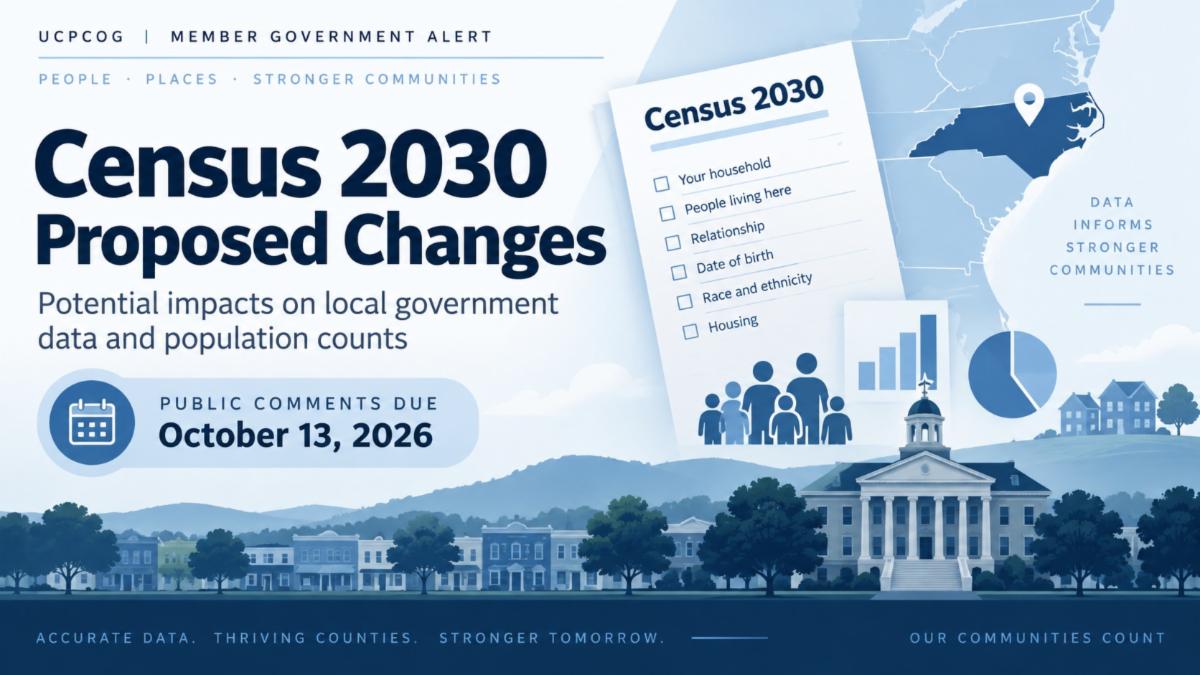
Census 2030 Proposed Changes Could Affect Local Government Data and Population Counts
The U.S. Census Bureau has proposed significant changes to how the 2030 Census would determine where people are counted and what demographic information would be collected through the decennial census.
The proposed regulations could affect population counts, redistricting data, demographic analysis, planning, grant development, and other activities that rely on Census data. The North Carolina State Data Center, housed within the N.C. Office of State Budget and Management, has encouraged organizations and local governments to review the proposals and consider submitting comments. The last census rule changes cost the UCPCOG region nearly 15,000 residents so be sure to respond to these proposed rules before the deadline.
Key Info Resource Links:
Proposed Rule: Federal Register :: Decennial Census of the Population of Americans; Proposed Residence Criteria and Proposed Regulations for Demographic Questions
Public comments are due October 13, 2026. You can submit comments here: Submit Comments - Decennial Census of the Population of Americans; Proposed Residence Criteria and Proposed Regulations for Demographic Questions
What Is Being Proposed?
The Census Bureau has proposed two separate regulatory changes as part of the same rulemaking.
1. Changes to Census residence criteria
The first proposal would modify the rules used to determine a person's "usual residence" for the 2030 Census.
Rather than relying primarily on where a person lives and sleeps most of the time, the proposed rule would generally determine residence based on where the person lawfully spent the greatest number of days between January 3 and April 1, 2030. The proposal also calls for the use of tax records and other administrative records to help determine or verify residence.
The proposal would also change which residents are included in the population used for congressional apportionment. U.S. citizens and lawful permanent residents would be included, while other foreign citizens would generally be excluded from the apportionment population. The Census Bureau is specifically requesting public input on how different immigration classifications should be treated.
The Bureau is also seeking comment on whether a question concerning citizenship or immigration status should be included on the 2030 Census questionnaire. Such a question is being considered but is not established by the proposed regulation itself.
2. Changes to race and ethnicity questions
The second proposal would prohibit questions about race and ethnicity on the decennial census questionnaire used to enumerate the population.
The proposed rule would not prevent the Census Bureau from collecting race and ethnicity information through other programs, such as the American Community Survey, or receiving demographic information from administrative and other data sources.
The proposal therefore raises questions for state and local governments about what demographic information would be available following the 2030 Census, at what geographic level it would be available, and whether the resulting data would remain comparable to previous decennial census data.
Why This Matters to Local Governments
Census information supports far more than the once-a-decade population count. Counties and municipalities routinely use Census data for:
- Comprehensive and land-use planning
- Economic and community development
- Grant applications and funding analyses
- Housing and infrastructure planning
- Workforce and labor-market analysis
- Aging and human-services planning
- Transportation planning
- Demographic and socioeconomic analysis
- Redistricting
- Monitoring population and community changes over time
Changes to residence criteria also could have implications for communities with college students, military personnel, seasonal residents, people with multiple residences, individuals who recently moved, and residents whose physical residence may differ from the address contained in tax or other administrative records.
For rural and smaller communities, another important question is whether replacement demographic data would provide the same geographic detail and statistical usefulness as information currently derived from the decennial census.
Questions Member Governments May Wish to Consider
As local governments review the proposal, officials may wish to consider:
- Will comparable demographic data remain available at the census-block, block-group, tract, municipal, and county levels?
- How would changes affect comparisons between the 2020 and 2030 Censuses?
- How would tax and other administrative records be used to verify where residents should be counted?
- What procedures would address outdated, incomplete, conflicting, or incorrectly matched administrative records?
- Could rural residents or populations with fewer administrative records be affected differently?
- What Census data used by federal or state funding programs could change?
- How would the Census Bureau produce race and ethnicity information needed for redistricting and other governmental purposes?
- What steps would the Bureau take to evaluate the effect of the proposed changes on Census participation and enumeration accuracy?
Public Comment Opportunity
The Census Bureau is accepting comments on the proposed regulations through October 13, 2026.
Organizations may submit comments electronically through Regulations.gov. Comments should reference:
Docket: USBC-2026-0628
Proposed Rule: Decennial Census of the Population of Americans; Proposed Residence Criteria and Proposed Regulations for Demographic Questions
Federal Register Citation: 91 Fed. Reg. 57524
The Census Bureau advises that submitted comments generally become part of the public record. Organizations may enter comments directly or attach a prepared document through the federal comment portal.
Additional Information and Resources
Member governments may wish to review the following materials before determining whether to submit comments:
U.S. Census Bureau / Federal Register
The complete proposed rule, including the Census Bureau's explanation of the proposals, specific questions on which it is seeking public input, supporting documents, and formal comment instructions.
Regulations.gov Comment Portal
The federal portal through which organizations and individuals can submit comments directly on Docket USBC-2026-0628.
North Carolina State Data Center
The State Data Center, part of the N.C. Office of State Budget and Management, serves as North Carolina's primary liaison with the Census Bureau and provides information and technical assistance concerning Census and demographic data.
NPR Overview
The North Carolina State Data Center also shared an NPR report providing additional national background and context concerning the Census 2030 proposals. You can find that interview here: Trump proposes altering census, stopping race question : NPR
UCPCOG will continue monitoring the proposed regulations and other Census 2030 developments for potential impacts on Edgecombe, Halifax, Nash, Northampton, and Wilson Counties and their municipalities.
| | |
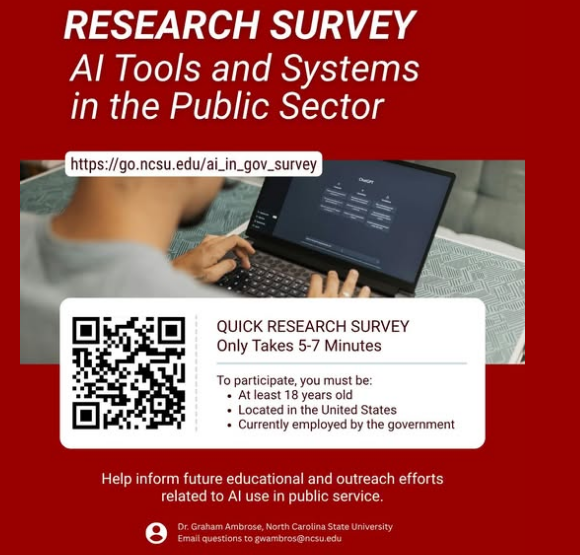
How are you using AI in your day-to-day work?
Our friends at the NC State School of Public and International Affairs are conducting a new research study to examine how people are using artificial intelligence tools and systems on the job—and how AI is shaping the future of the public sector. Whether you are using AI daily or just starting to explore it, your input will help build a clearer picture of how technology is transforming our work across the state.
Learn more and take the survey at go.ncsu.edu/ai_in_gov_survey
| | |
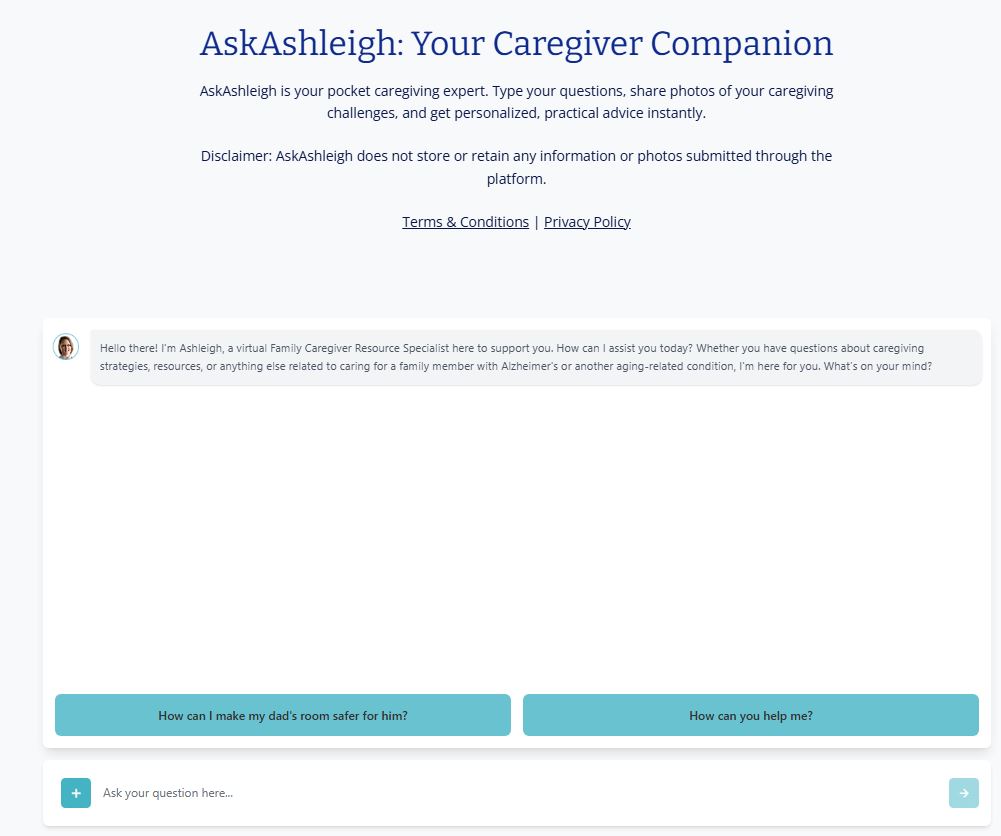
AskAshleigh is the first virtual caregiver integrated into an Area Agency on Aging in the nation. AskAshleigh provides immediate, personalized support with deep local knowledge, accessible at any hour of the day or night. Imagine having the expertise of Family Caregiver Resource Specialists right at your fingertips, helping you navigate caregiving challenges with real, actionable advice.
Caregiving is often an unexpected journey, filled with late nights, endless questions, and emotional challenges. For many families, especially those caring for loved ones with dementia, the journey can feel overwhelming and isolating.
This isn't just technology; it's a promise that no caregiver has to navigate this journey alone. For residents of Edgecombe, Halifax, Nash, Northampton, and Wilson counties, AskAshleigh is ready to provide the support you need.
Learn more: https://ucpcog.org/askashleigh/
| | Funding Opportunites and Resources | | |
2026 Diesel Emissions Reduction Act (DERA) National Grant Program Notice of Funding Opportunity: NOW OPEN
The U.S. Environmental Protection Agency (EPA) is announcing a Notice of Funding Opportunity (NOFO) for approximately $180 million under the Diesel Emissions Reduction Act (DERA) Program and solicits applications from eligible entities to incentivize and accelerate the upgrade or retirement of the nation’s legacy diesel engine fleet. Read the NOFO here.
The EPA anticipates that up to 4–12 awards per EPA Region will be made. For EPA Region 4 that is approximately $17,800,000. The maximum federal funding request per application is $4,000,000. Awards funded under this opportunity are expected to have a 2–4 year project period.
The following entities are eligible to apply:
1. A regional, state (including the District of Columbia), local agency, Tribal agency, or port authority that has jurisdiction over transportation or air quality. School districts, municipalities, metropolitan planning organizations (MPOs), cities, and counties are all generally eligible entities under this grant program to the extent that they fall within this definition.
2. A nonprofit organization or institution that:
- Represents or provides pollution reduction or educational services to people or organizations that own or operate diesel fleets; or
- Has, as its principal purpose, the promotion of transportation or air quality.
Eligible activities include the retrofit or replacement of existing diesel engines, vehicles, and equipment with certified engine configurations and verified retrofit and idle reduction technologies.
Eligible Diesel Vehicles, Engines, and Equipment
School buses, transit buses, medium-duty or heavy-duty trucks, marine engines, locomotives, nonroad engines and equipment.
Diesel Emission Reduction Solutions
Eligible replacement highway vehicles include those certified by the EPA or CARB to run on diesel or clean alternative fuel engines (including gasoline), electric generators (gensets), hybrid engines, and zero-emission power sources (i.e., grid, battery, or fuel cell).
Deadline
All application packages must be submitted electronically to EPA through Grants.gov no later than Friday, January 22, 2027, at 11:59 p.m. (ET) to be considered.
For more information on DERA funding, please visit www.epa.gov/dera.
Applications must include projects that meet program eligibility requirements. Program goals are achieved through the implementation of the above eligible activities. In addition, eligible entities may also use funds to reduce long-duration idling using verified idle-reduction technology with certain vehicles or equipment described above.
If you have any questions or for more information, please feel free to reach out to Ron Townley at rtownley@ucpcog.org.
| | |
Each year, the Golden LEAF Foundation invites organizations from counties from a different Prosperity Zone to participate in our $11 million Community-Based Grants Initiative (CBGI). The process is competitive, but organizations from all counties within the Prosperity Zone will have an opportunity to apply.
The CBGI is designed to identify projects with the potential to have a significant impact. It is a focused process with grants targeted toward investments in the building blocks of economic growth. Funds are limited to projects that address job creation and economic investment, agriculture, and workforce preparedness.
Available Funds Eligible Entities Process Regional Projects
A total of $11 million is available to support projects in the region. Awards are limited to no more than three projects in any county and may total no more than $1.5 million in any county. Not all proposals will be funded and there is no assurance that there will be a funded project in every county. Funds may also be awarded for regional projects (see information below), which will not count toward the limit of projects in a county, but regional projects are funded through the overall $11 million program budget.
Counties from the North Central Prosperity Zone are invited to participate in our Community-Based Grants Initiative (CBGI). The counties in the North Central Prosperity Zone are Chatham, Durham, Edgecombe, Franklin, Granville, Harnett, Johnston, Lee, Nash, Orange, Person, Vance, Wake, Warren, and Wilson.
| | |
USDA and EDA Update Resources in Joint Guide to Boost Economic Development in Rural Communities
The Stronger Together: Federal funding and planning opportunities designed to promote sustainable economic development in rural America guide has been updated to provide a handy summary of EDA and USDA Rural Development programs that can be used to support common rural development strategies
| |
2026 NC County Map Book
The North Carolina Association of County Commissioners is pleased to share the 2026 County Map Book, compiling relevant North Carolina county data maps into one publication.
These maps and data tables highlight demographic, economic, health, and educational information from North Carolina’s 100 counties. This annual publication is intended to provide context and promote analysis for decisions at the local level in counties across the state.
One page county-specific summaries will be released soon.
| |
Resources for Hurricane Season in North Carolina
In the heart of hurricane season, we know that local governments are at the forefront of safeguarding their communities. Effective hurricane preparedness protects lives and property and strengthens overall community resilience.
Discuss what storm preparedness looks like for your community. Build a plan and stay informed at ReadyNC.gov. Keep an eye on GROW NC's Recovery Resources Hub this hurricane season in the event that a natural disaster does impact your community.
| | |
Digital Skills Training Available to Local Government Personnel
Computer Skills Training Available to Local Government Personnel
Get free training and a free laptop! A free self-paced training offered through UCPCOG includes internet basics, email, Microsoft Word, Excel, social media, career searching, tele-health and more.
Upon successful completion of the 17-module Northstar training, trainees receive a certification of digital skills, and a free laptop from the Kramden Institute.
UCPCOG is pleased to extend this training program to all member governments.
Everyone is eligible:
- Employees of local governments
- Local elected officials
- Local appointed board members
UCPCOG will help set each trainee up in Northstar and provide assistance as needed.
Northstar is a self-paced, virtual training portal. The online modules can be done at work or home. Each module may take about an hour to complete, depending on the self-paced timing.
The trainings are a good refresher or first course in computer skills. They give staff and officials the training necessary to use computers and online resources safely and efficiently.
Contact Ben Farmer (BFarmer@ucpcog.org) for more information on how to get started.
The Digital Economies Project, funded by NC Department of Information Technology, is a collaboration between UCPCOG and the three local community colleges (+ CADA & AMEXCAN) to train community members on digital skills using the Northstar Digital Literacy platform.
| |
EPA Launches Transparent, Interactive Permitting Map
Accessible public tool breaks down permitting barriers and removes confusion to unleash American prosperity
WASHINGTON – Today, U.S. Environmental Protection Agency (EPA) is launching the EPA Permitting Authority Map. The interactive map—accessible via EPA’s website—identifies which regulatory agencies have the authority to issue permits covering all of EPA’s permitting programs and environmental statutes. The development of the map is an integral resource in advancing Pillar 3 of Administrator Lee Zeldin's Powering the Great American Comeback initiative: Permitting Reform, Cooperative Federalism, and Cross-Agency Partnership.
The EPA Permitting Authority Map supports federal agencies, states, territories, Tribal nations, local agencies/governments, and the general public with:
- The ability to make a quick determination whether the permitting authority is with EPA or if there has been an approved delegation, primacy, or authorization given to a state, territory, Tribal nation, or local agency.
- The use of a Geo Platform based web map, which provides maximum flexibility for site visualization and project planning ability.
EPA also released new informational tools and resources to help community members, local officials, data center developers, and other interested parties assess the viability of Brownfield and Superfund sites as possible locations for industrial reuse. EPA's Redevelopment Mapper for Superfund and Brownfield Sites can help screen for suitable site characteristics on a Brownfield or Superfund site. The Mapper provides site locations and options for adding data layers that highlight site features and surroundings.
| | |
Visit the Carolinas Development Assistance and Siting Hub!
NCCETC leads the Carolinas Development Assistance and Siting Hub (DASH) project as part of a U.S. DOE-funded program designed to support large-scale renewable energy development. The new hub will launch this week, featuring an ordinance database, numerous resources, upcoming events, and an extensive FAQ section. Be sure to check the website later this week to access the new features!
Visit the Website ➔
| | |
Announcing the
NC Resilient Communities
Planning Guide!
We are pleased to announce the publication of NCORR’s newest resource:
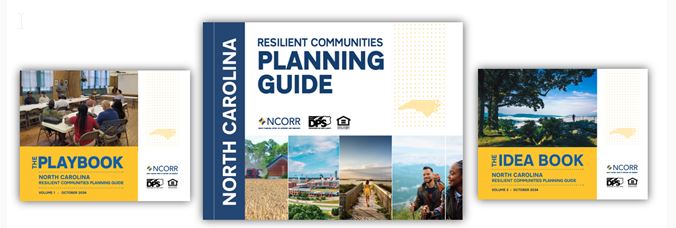
The NC Resilient Communities Planning Guide!
The Guide is a collection of resources tailored to help North Carolina communities develop a resilience plan or integrate resilience into existing planning documents, such as a comprehensive plan or strategic plan. Because each community’s needs are unique, the Guide doesn’t offer a fixed approach. Instead, it provides users with a set of considerations, options to up- or down-scale its approaches and examples of other communities’ actions.
The Guide consists of two volumes: the Playbook and the Idea Book.
The Playbook takes users through the stages of resilience planning, from preparation through plan implementation. Each section of the Playbook includes checklists and questions for consideration, to allow the user to customize their planning process to their organization’s specific needs. While the target audience is local governments, the content will also help community organizations or regional groups craft resilience strategies.
The Idea Book provides insight into strategies that advance resilience across 14 categories. These categories include environmental topics, like Stormwater Management and Flooding; social topics like Communication and Education; and economic topics like Business and Local Economy. For each topic, we explain its connection to resilience, demonstrate strategies for increasing resilience in this area and offer an in-depth case study of a community’s resilience project.
| | |
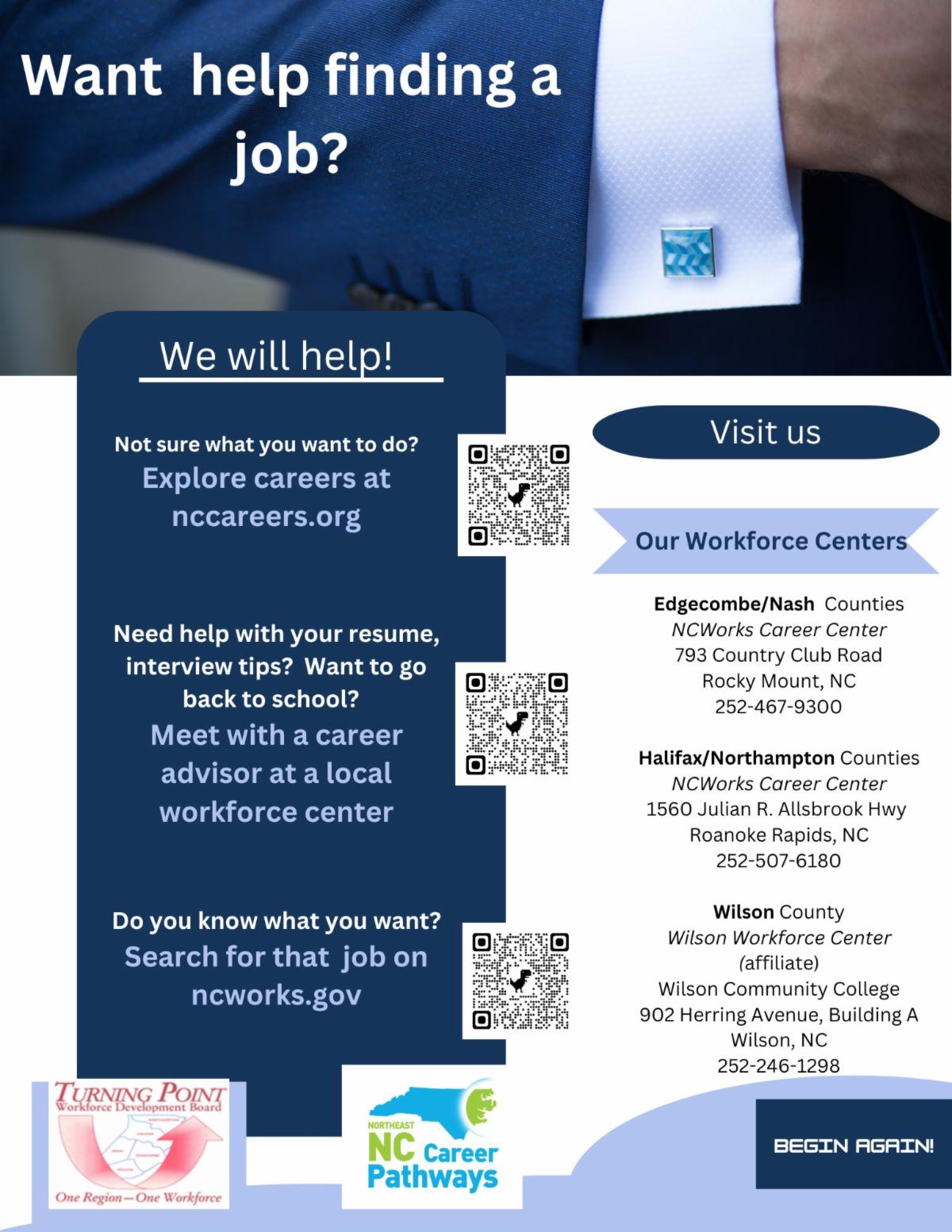
NC Works Career Centers assists both JOB SEEKERS AND EMPLOYERS; Feel free to reach out to the Centers in the Turning Point Region and let a team member know how they can assist! Occasionally, the NC Works Centers (Rocky Mount and Roanoke Rapids share information about events and services), however, feel free to also follow the State's general NC Works page for general information that is statewide, regarding what basic job seeker and employer services are available and what Career Centers basically offer daily; some services are set on a different schedule such as resume writing courses and other partner-offered services throughout the week, however in an effort to assist customers, this information can be shared, just call or visit! The Wilson Workforce Center, powered by Turning Point Local Area is also a resource, located at Wilson Community College campus.
NC Works Career Centers:
NCWorks Career Center, Rocky Mount
NCWorks Career Center, Roanoke Rapids
| |
Healthy Aging Highlights
Staying active is an important part of healthy aging! To help those interested in learning more about exercise, NIA created an Exercise and Older Adults Toolkit to share reliable health information, research news, infographics, publications, and videos that highlight the benefits of physical activity. The materials are designed for older adults, caregivers, and health care providers.
Explore and share the toolkit to help encourage safe, enjoyable exercise at any age
| | |
Ethics for Elected Officials
On-demand version available until October 31, 2026
Course Cost: $75
Under North Carolina law, members of governing boards of cities, counties, local boards of education, unified governments, sanitary districts, and consolidated city-counties are required to receive at least two (2) clock hours of ethics training within twelve months after each election or appointment to office. The ethics training requirement is an ongoing obligation, triggered by each subsequent re-election or reappointment to office.
| | |
Building and Earning Trust
November 5, 2026 | Chapel Hill
9:00am-4:00pm | Course Cost: $495
Open to professionals and elected officials
Trust is integral to developing high performing teams and personal well-being in the workplace. However, genuine trust can be challenging to build and easy to lose with colleagues, supervisors, and direct reports.
How can managers and leaders in the public sector more effectively build and earn trust in their organizations?
What You'll Learn:
- Better understand the components of trust
- Recognize differences in how others bestow trust
- Strengthen strategies for earning and maintaining trust
- Repair broken trust
- Create environments that enable others to be more trustworthy
| | |
Navigating Organizational Dynamics: Communicating Up and Across
November 9, 2026 | Chapel Hill
9:00am-4:00pm | Course Cost: $495
Front-line supervisors and middle managers face distinct challenges in managing staff and influencing both senior leaders and peers. Traditional management programs often overlook the importance of influencing upward and laterally; this course fills that gap with strategies to broaden impact and navigate obstacles when working with colleagues and managers.
What You’ll Learn:
- Analyze common workplace scenarios and leadership challenges.
- Recognize habits and behaviors that can hinder effective leadership.
- Develop skills to build stronger, more productive workplace relationships.
- Improve communication and collaboration across all organizational levels.
- Apply leadership concepts to real-world situations through interactive exercises.
- Use practical strategies to enhance workplace effectiveness and influence.
| | |
Top 10 Primer: Gifts, Favors, and Conflicts of Interest
November 10, 2026 | Online
10:00-11:15am | Course Cost: Free
Elected officials are often bombarded with good will. Sometimes, that good will takes the form of gifts, most unsolicited but no less problematic. What’s an elected official to do?
This highly interactive online workshop will cover the ten most important points for elected officials to know about the legal and ethical boundaries of accepting gifts and favors, and conflicts of interest.
What You'll Learn:
- What is a conflict of interest?
- How does North Carolina law define gifts and favors?
- When can you accept gifts and favors, and when should you politely decline?
- What is the difference between a financial interest and a direct benefit?
- What does it mean to have a Duty to Vote? When can you be excused from voting?
- What do federal rules restrict regarding gifts, favors and financial interests?
| | |
Intermediate Purchasing Seminar
November 17-19, 2026 | Chapel Hill | 9:00am-4:00pm | Course Cost: $535
This three-day seminar will sharpen participants' purchasing skills and deepen their understanding of the legal and practical aspects of public purchasing.
This course is intended for officials with two or more years of experience in local governmental purchasing.
What You'll Learn:
- Bidding and property disposal
- Capital leasing
- Performance management and benchmarking
- Insurance and risk management
- Electronic bidding and contract management
- Effective communications
- Ethics and conflicts of interest
- Practical skills training, including handling difficult bids
| | |
Basic Principles of Local Government Purchasing
January 25-27, 2027 | Chapel Hill or Online | Course cost: $685
This course is designed for new local government purchasing officials and covers basic principles and legal requirements for local government purchasing.
What You'll Learn:
- Competitive bidding requirements for purchasing and construction contracting
- Purchasing ethics and conflicts of interest in public procurement
- Practical skills such as vendor relations, developing specifications, and preparing bid solicitations
- Purchasing policies and electronic bidding
- Decision analysis, motivational strategies, and effective communication
- Local government law overview, including open meetings and public records laws
- Budgeting and fiscal control
- Surplus property disposal
- Tips for success from experienced local government purchasing professionals
| | |
2027 Rural Summit
Our Legacy, Our Future
We hope you'll join us for the NC Rural Center’s 2027 Rural Summit on March 24-25, 2027, at the Sheraton Imperial Hotel in Research Triangle Park.
In 2027, the Rural Center will celebrate the 40th anniversary of our founding — 40 years of working together to build vibrant communities in North Carolina. This year's Summit will honor the people, ideas, and communities that have shaped our history and continue to build places where all people can live and thrive.
Early-bird registration will open on Wednesday, January 6, 2027.
If you're invested in building our state's future, the Summit is an opportunity to network with peers and community leaders, learn about what's happening now, and ideate on what's to come in rural North Carolina.
| |
121 W. Nash St. Wilson, NC 27893
252-234-5952
| | | | | |