Protecting Prairies & Promoting Native Plants | | |
You can walk out on any MPF prairie and exclaim, "Wow, this is beautiful!" And that will be true.
But do we know if our stewardship is perpetuating and even enhancing the irreplaceable biodiversity of our prairies? Yes, we do, because we conduct species and natural community surveys, repeat them over time, and allow researchers, via an application process, to collect data and conduct a variety of field studies on our unplowed, old-growth prairies and prairie plantings.
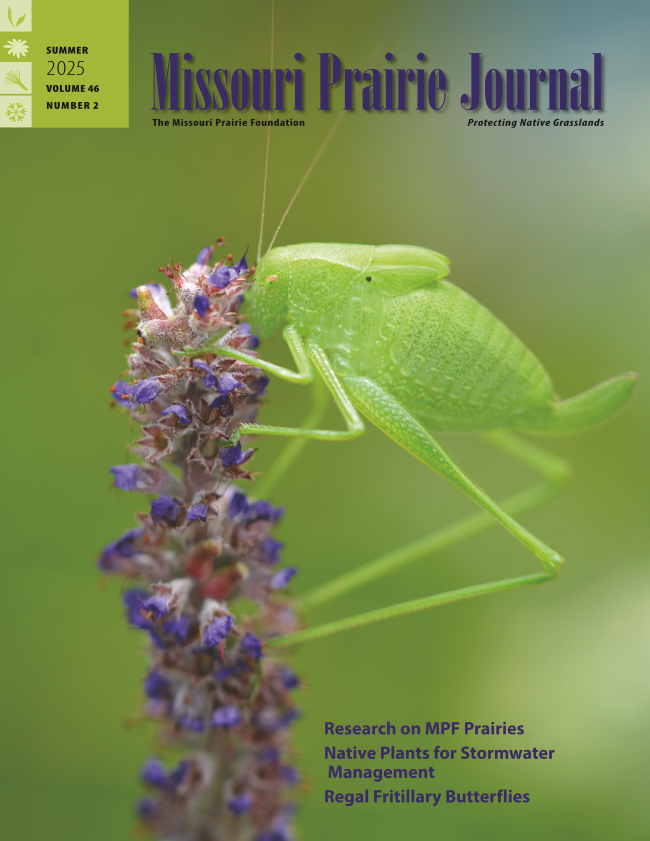
The summer 2025 issue of the Missouri Prairie Journal, published three times a year by MPF since 1979, features an article about eight researchers who are carrying out species inventories, gathering soil and natural community data, and conducting other work on MPF prairies in 2025 to further their knowledge about specific aspects of prairie biology and conservation. Their work not only informs MPF's management, but also benefits prairie and native grassland conservation nationwide.
In this issue, you can also read about a completed regal fritillary butterfly study by Tiffany Perron and Dr. Dan Marschalek at the University of Central Missouri, the field work for which included numerous MPF prairies, and the importance of soil health research for successful natural community management, by Dr. Sam Lord at the University of Missouri. We also congratulate Sam on the recent, successful defense of his doctoral thesis, and on the publication of the paper "Soil nutrients influence floristic distribution and quality across remnant and degraded grasslands," (Lord et al) on July 2, 2025 in Restoration Ecology. Most of the remnant prairie sites for this research were MPF prairies.
MPF is proud to further the understanding of prairie and other native grasslands through our collaborations with researchers and to share their knowledge with MPF supporters and other prairie enthusiasts.
MPF members and other financial contributors help make research on MPF prairies possible. If you are not a member, we invite you to become a member today. One benefit of membership is that you will receive your own copies of the Missouri Prairie Journal in your postal mailbox.
| | MPF Annual Dinner in Columbia, Missouri | | You are invited to enjoy an evening in celebration of prairie at the MPF Annual Dinner on Saturday, August 16, 2025 in Columbia, Missouri at the Stoney Creek Hotel. The event will include a silent auction and social hour, dinner, presentation of awards, and a presentation from Dr. Jesse Nippert entitled "Managing for Healthy Tallgrass Prairies in an Era of Woody Plant Encroachment." | | |
Dr. Jesse Nippert, Distinguished Professor of Biology at Kansas State University in Manhattan, Kansas, has led the Long-Term Ecological Research program at Konza Prairie since 2017. He studies plant physiological responses to climate change in North American grasslands and Southern Africa Lowveld savannas with a particular emphasis on C4 grass physiology, vegetation responses to drought, and the dynamics of tree/grass resource competition. For the past 15 years, he has studied the drivers and consequences of shrub expansion into grassy ecosystems.
Learn more and register here. MPF members will receive personal invitations in postal mail. We look forward to seeing you on August 16!
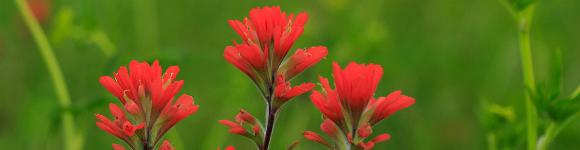
Photo of paintbrush (Castilleja coccinea) by Ethan Freese; Photo of Jesse Nippert courtesy of Jesse Nippert
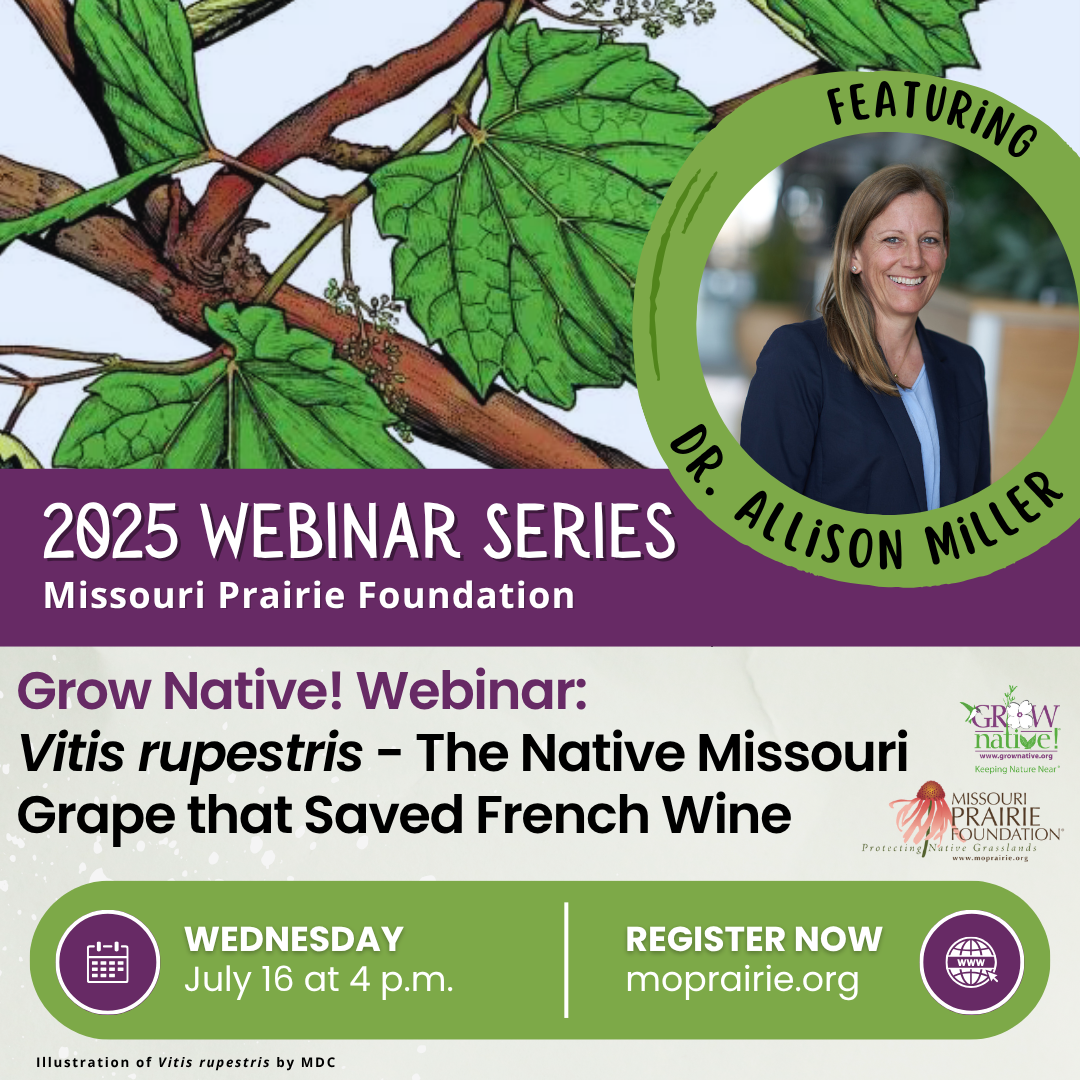
| | July 16: Grow Native! Webinar: Vitis rupestris – The Native Missouri Grape that Saved French Wine | | |
Join Dr. Allison Miller on a journey to learn about the native Missouri grape that saved French wine, and other botanical superstars!
Wild species have contributed significantly to global agriculture and hold great promise for future agricultural innovation. In this presentation, Dr. Miller will focus first on native Missouri grape species and their current and future roles as the roots of viticulture around the world. She will then consider the question—which other wild species might be the progenitors of our future crops? Dr. Miller will share a developing strategy to build the requisite foundation and ultimately the seed resources required for future diversification of agriculture.
This free webinar, to be held via Zoom, will include a presentation and a live question-and-answer session. The webinar will be recorded, with a link to the recording sent to all registrants and posted to the MPF YouTube channel.
Wednesday, July 16 at 4:00 p.m. 1 GNPCP CEU. Register here.
Illustration of Vitis rupestris by MDC
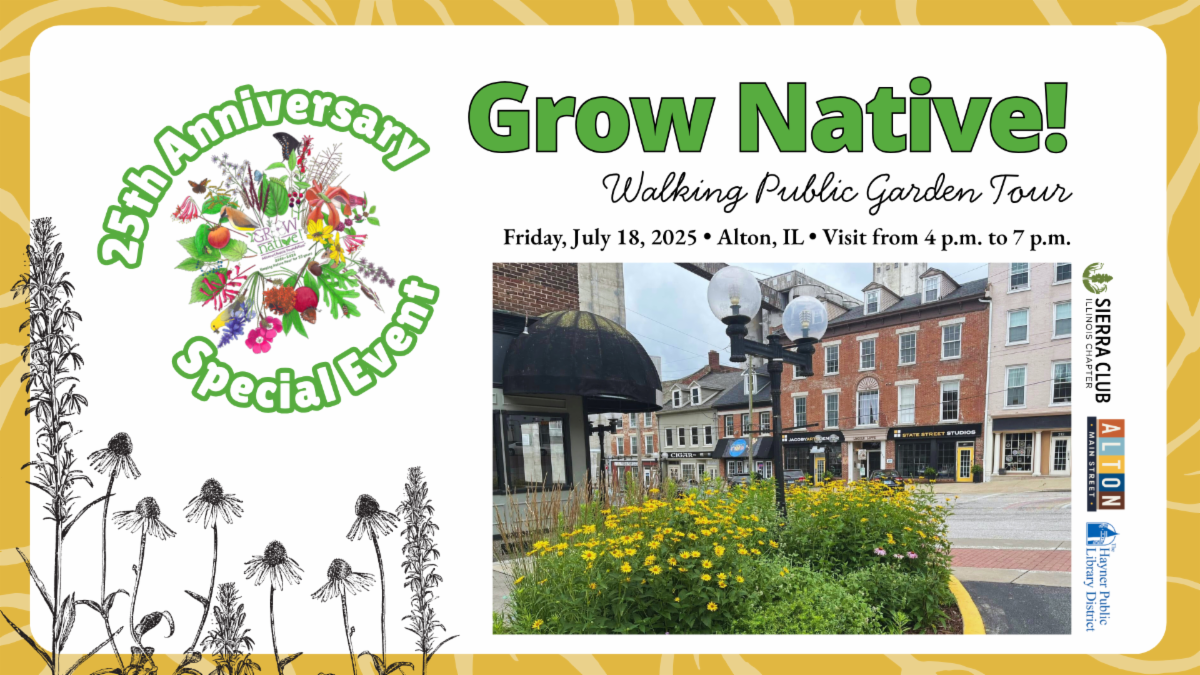
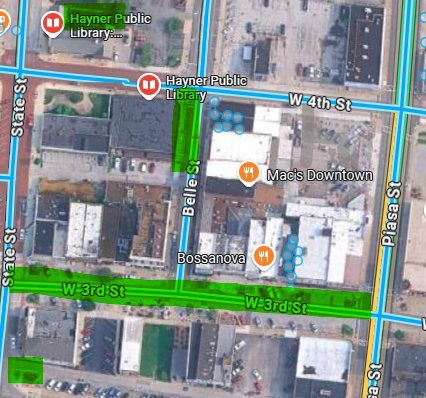
| | July 18: Grow Native! 25th Anniversary Event: Public Garden Walking Tour in Alton, Illinois | | This specific tour is a multi-stop, walkable tour of public garden beds in Alton, Illinois by Grow Native! Professional Member Sierra Club – Piasa Palisades Group, the Hayner Library District, and Alton Main Street. The tour route covers a three-block area from 3rd Street between State Street and Piasa Street, the 300 Block of Belle Street, and the sitting area adjacent to the Library’s Belle Street parking lot. The stops, in green on the map below, may be visited in any order. | |
As an extra-special treat, BossaNova will offer tour-goers 21 years old or older a complimentary Riverbend Bloom Spritz, consisting of house-made native wildflower simple syrup, fresh lemon juice, sparkling water, and your choice of gin or vodka. Additionally, Flourish will offer a variety of their sparkling herbal teas made with real ingredients. Stop by the Sierra Club booth to find out how to get your drink coupon. Limited to one drink per tour-goer, while supplies last.
Registration is required for the tour. Registrants may arrive any time during the visit window listed below. Specific details will be sent to registrants the day before the tour. This tour provides 1 GNPCP CEU.
Cost: Free. Friday, July 18; walking tour is open 4:00 p.m. to 7:00 p.m. Register here.
| | Governor Kehoe Signs Invasive Plant Bill into Law | | |
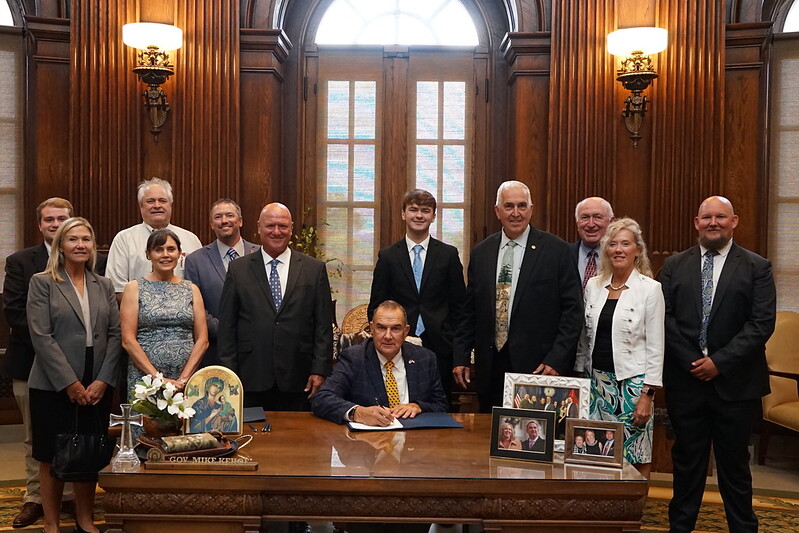
On July 14, 2025, Missouri Governor Kehoe signed Senate Bill 105 into law. The law will halt the sale in Missouri of six invasive plants: sericea lespedeza, burning bush (‘Compactus’), Callery pear, Japanese honeysuckle, perilla mint, and wintercreeper (variety Coloratus). The implementation date for the legislation is August 28, 2025. The legislation allows five plants in the bill to continue to be sold through January 1, 2027 and two others to be sold through January 1, 2029 to mitigate revenue loss for plant sellers who may have a current inventory of any of these species. Read all details in the final bill language here.
MPF is very grateful to Governor Kehoe, Senator Bernskoetter, Representative Sassmann, other legislators who supported the bill, Conservation Federation of Missouri lobbyist Kyna Iman, and all citizens who contacted their elected officials to voice their support for it.
Pictured above are members of the Missouri Invasive Plant Council (Bill Ruppert (back) and Carol Davit (front), both second from left, with other supporters of SB 105 at the bill signing. Photo courtesy of the Governor's Office.
| | July 30: Grow Native! Webinar: Lessons Learned at Primrose Prairie | | |
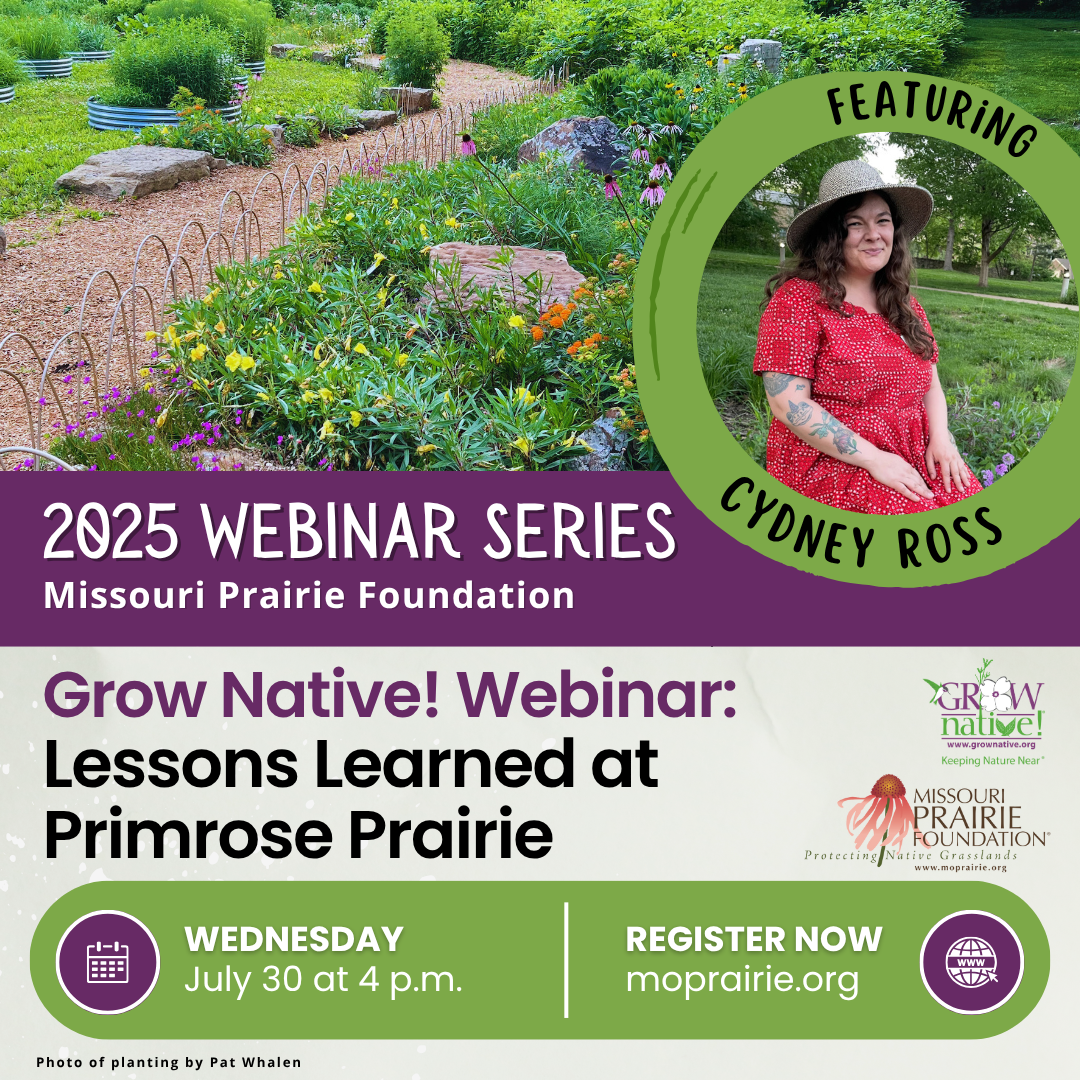
Join Cydney Ross, Outdoor Education Manager at Deep Roots KC, as she discusses the challenges and successes of “Primrose Prairie” in this Grow Native! webinar. In its fourth growing season, this native planting at the Anita B. Gorman Conservation Discovery Center in Kansas City was Cydney’s first public native garden that she designed, installed, and maintained. Learn about plant selection, design creation, installation methods, and about on-going maintenance in this dynamic native garden.
This free webinar, to be held via Zoom, will include a presentation and a live question-and-answer session. The webinar will be recorded, with a link to the recording sent to all registrants and posted to the MPF YouTube channel.
Wednesday, July 30 at 4:00 p.m. 1 GNPCP CEU. Register here.
Photo of planting by Pat Whalen
| | August 1: Free Native Pasture Tour Highlighting Productive Prairie Forage | | |
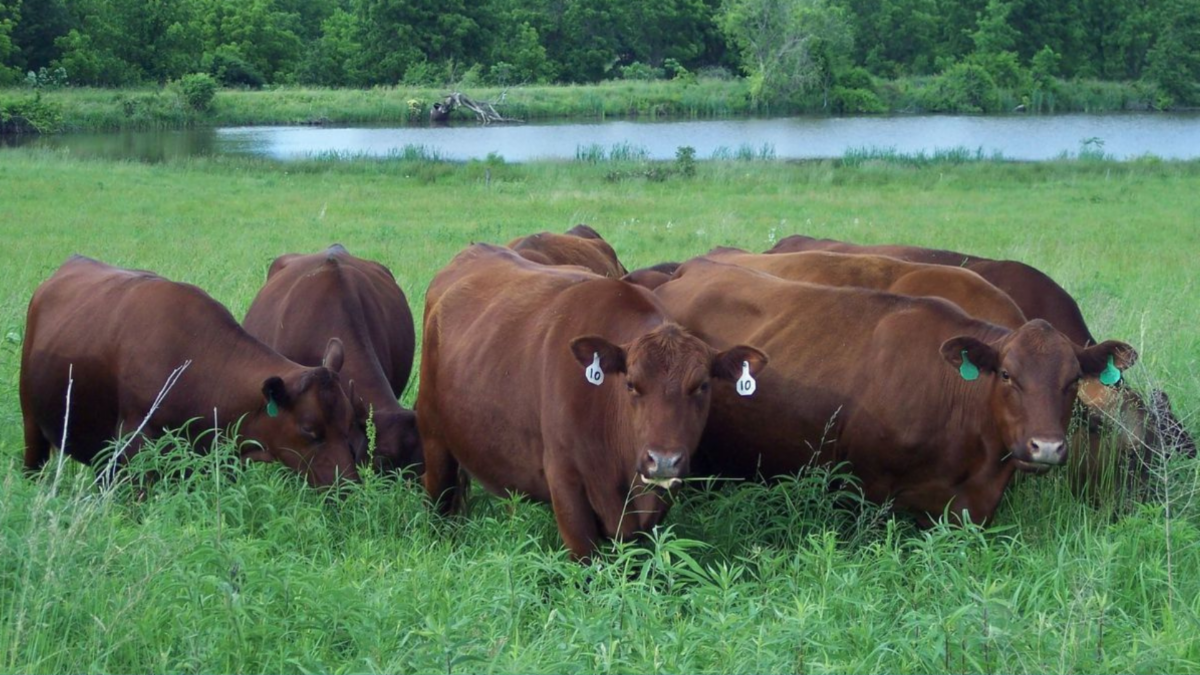
“Even in very dry conditions, my native pastures provide quality forage, and my cattle gain weight faster than on fescue,” said Steve Clubine, retired grassland biologist and cattle producer, who, through his “Native Warm-Season Grass News” published regularly in the MPF’s Missouri Prairie Journal, shares his expertise on native grazing systems.
Steve Clubine is opening up his farm near Clinton, Missouri, on Friday, August 1 at 4:00 p.m., for an MPF tour to help others see first-hand the benefits of establishing and maintaining a native forage grazing system. This walking tour is limited to 25 people.
Cost: Free. Friday, August 1 at 4:00 p.m. Register here.
Photo by Steve Clubine
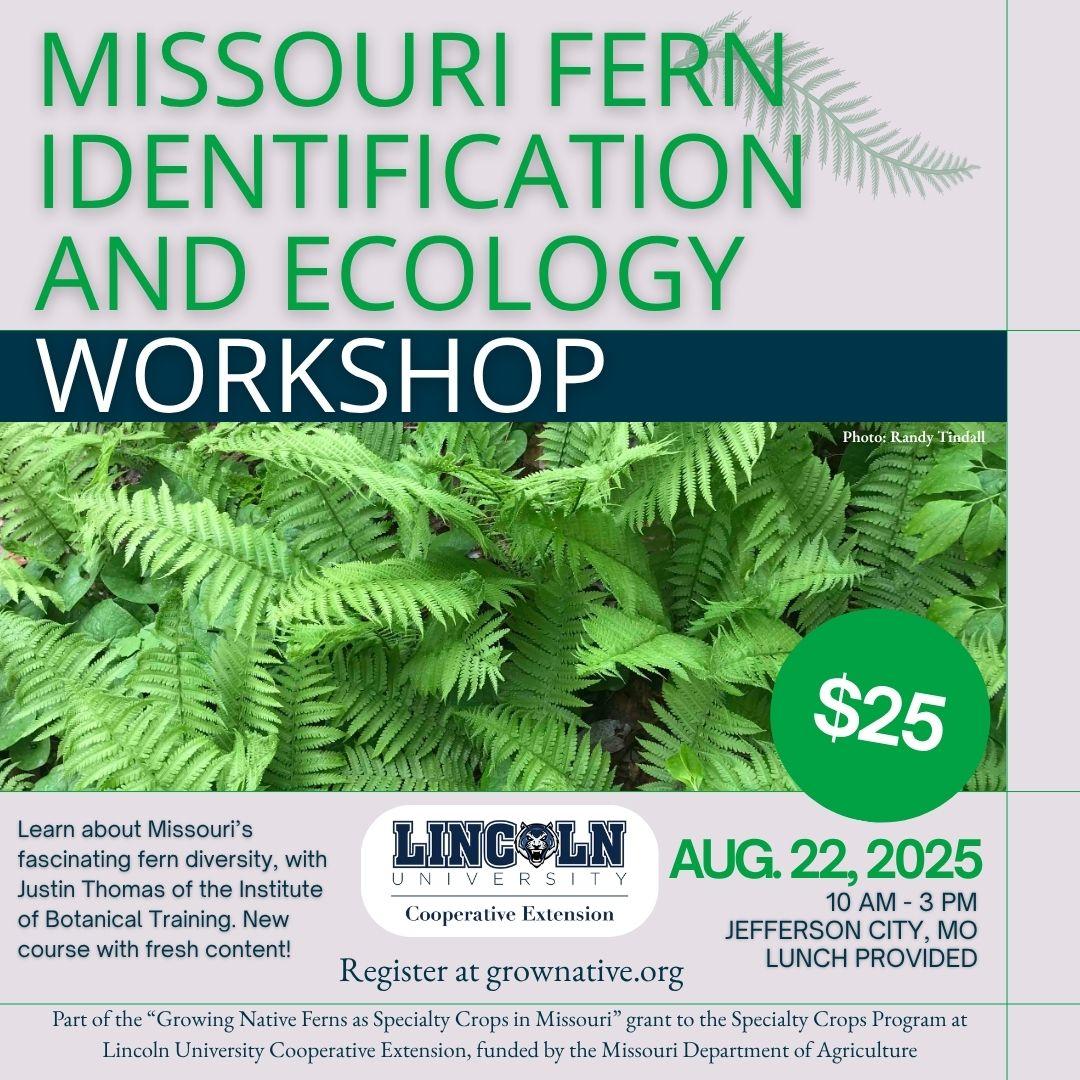
| | August 22: Introduction to Missouri Fern Identification and Ecology Workshop (and August 15 Ferntastic Fair - Save the Date!) | | |
Learn about Missouri’s fascinating fern diversity with Justin Thomas of the Institute of Botanical Training at Lincoln University in Jefferson City.
From hard-scrabble, desert-like glades to wet, foggy Ozark hollers, Missouri is blessed with a fascinating fern diversity. This four-hour course focuses on fern identification, ecology, and appreciation, and will also cover their curious reproduction strategies, specialized terminology, and geographical patterns. In short, how do we tell ferns apart, where do they live, how did they get there, and why do they stay? In the last hour of the workshop, there will be a review of the workshop content. This course is ideal for anyone curious about plants up to fully fledged experts. Note: This workshop will cover the same content as the fern workshop offered in May.
This course is part of the “Growing Native Ferns as Specialty Crops in Missouri” grant to the Specialty Crops Program at Lincoln University Cooperative Extension, administered by the Missouri Department of Agriculture and with participation of MPF's Grow Native! program.
Cost: $25, includes lunch
Friday, August 22, 10:00 a.m. to 3:00 p.m.
Location: Dickinson Research Center, 1219 Chestnut Street, on the campus of Lincoln University in Jefferson City, Missouri.
For those who are part of the Grow Native! Professional Certification Program (GNPCP), this event is eligible for 4 CEUs. See details about earning GNPCP CEUs here.
Capacity is limited; registration is required. See more details and register here.
Also, save the date for Lincoln's Ferntastic Fair! August 15, from 5:00 to 7:00 p.m., at the Lincoln University Finca EcoFarm, 1204 Chestnut Street, Jefferson City, the fair will feature activities all about native ferns with propagation demonstrations, food, fun, arts and crafts, and tours! Look for more about the Ferntastic Fair in the next enews.
| | Grow Native! Professional Certification Program (GNPCP) Welcomes Nine New Pros | | MPF’s Grow Native! program welcomes nine new Certified Pros into the Grow Native! Professional Certification Program (GNPCP), which provides a consistent credential in the use of native plants for landscaping in developed areas of the lower Midwest. Grow Native! offered a testing opportunity for the GNPCP on June 27 at Missouri Botanical Garden Commerce Bank Center for Science Education in St. Louis, Missouri. Test results confirmed that the following individuals earned certification after the June test: | | | 25 Years of Native Landscape Resources | | |
Whether you've grown alongside Grow Native! since its beginnings or are a recent fan from the native plant community at large, we hope you've been enjoying our anniversary year so far. Perhaps you've collected a free commemorative sticker at an event, enjoyed a guided tour of a residential or public native garden, or enjoyed other special events hosted by our professional members. It’s been a pleasure to serve and work alongside such a vibrant community!
As summer continues to heat up, we invite you to take a break and cool down in the AC with a few of our online resources.
Grow Native! offers numerous landscape plans, native plant top 10 lists, and fact sheets available for instant download to guide your projects and answer common questions. For some topics, we've created more in-depth resources that address the nuances of different plant choices and maintenance situations. Curious about Natives, Cultivars, and “Nativars”? There's a resource page for that! Wishing you could get your hands on a detailed season-to-season list of "to-dos" for your landscaping? There's a Native Landscape Care Calendar page for that, too.
While you're exploring everything the Grow Native! site has to offer, take a detour to the MPF YouTube channel where you can revisit webinar recordings on popular perennial topics, like those linked below.
| | |
Grow Native! Webinar:
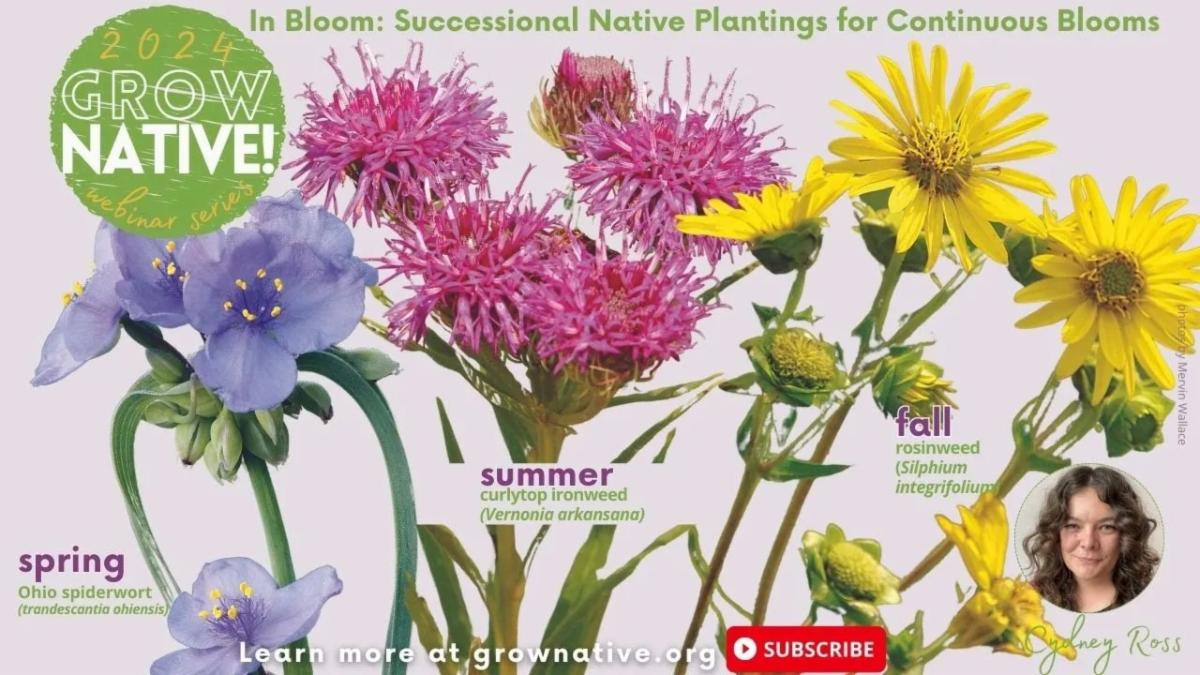
In Bloom: Successional Native Plantings for Continuous Blooms with Cydney Ross
| | Grow Native! Webinar: Transforming a Yard from Invasives to Natives with Carrie Coyne | | Grow Native! Webinar: Gardening for Beneficial Insects with Dr. Ed Spevak | | We hope you will continue to join us in celebrating this milestone by taking a walk down memory lane among our resources revisited in this blog post. | | The Missouri Prairie Foundation respectfully acknowledges that the land we work to protect was the homeland of a diversity of Native American nations prior to European-American settlement. The land in our care continues to have cultural significance for the Ni-U-Ko’n-Ska (Osage), Nyut/\achi (Missouria), Asakiwaki and Meskwaki (Sac and Fox), Báxoje (Ioway), Kaw, and other Native American nations. We are mindful that these nations had a significant role in shaping the landscape and that they continue a sacred relationship with the lands we protect. We recognize and appreciate their contributions to the cultural heritage of this region and to the history of North America. We honor them as we protect the ecological integrity of the lands in our care. | | | |
Newsletter content ownership: Missouri Prairie Foundation.
Missouri Prairie Foundation Statement on Use of Artificial Intelligence (AI)
You are receiving this message because you are a subscriber to this enewsletter, a Missouri Prairie Foundation member, supporter of Missouri's prairies, and/or interested in native plants. If you are not a member, please join us! Member support is vital to our outstanding prairie protection efforts. E-mail us at info@moprairie.org, call us at 1-888-843-6739, or visit us at www.moprairie.org. Please forward this message to other prairie supporters. If you do not wish to receive these periodic messages, please unsubscribe below.
| | | | | For State Employees: #8426 | | |
Missouri Prairie Foundation
PO Box 200
Columbia, MO 65205
(888) 843-6739
| |
| | | |