|
The Hardest Passage: A Psychoanalyst Accompanies her Patient into Dementia is both the title of this presentation and Maxine Anderson’s forthcoming book that grew out of an encounter with one of her first analytic patients; a woman who recontacted her some 40 years following termination of the patient’s analysis, hoping for help to face the deepening impact of dementia.
Feeling “too little is known about the disease,” Anderson’s patient and her husband generously permitted the author to write about their end-of-life work together. Her presentation offers glimpses of rarely documented clinical experiences over a three-and-a-half years period as the patient’s illness deepened. Included are observations from the patient’s point of view, her care-givers, and the analyst’s own responses, including dreams, which aided the analyst's evolving understanding.
Anderson concludes that we all fear dementia because we are reminded of the losses that we may encounter as we age. Moreover, that this fear may trigger a turning away rather than a turning toward the declining patient, who may then turn away from him- or herself, deepening the progression of the disease. Attentive dementia care, Anderson suggests, involves facing these feared losses squarely, as part of the patient’s current reality. In a word, this quality of care involves mourning; that is, recognizing loss and change as part of reality rather than remaining haunted by fear and avoidance.
During her decline, Anderson’s patient retained the capacity of self-reflection. Part of the patient's agony involved a conviction that parts of her mind were “flying away”; a vivid description of the feeling of being abandoned by her own receding capacities. In their work together, Anderson discovered that the patient felt calmed by the analyst’s presence and her ability to speak clearly and quietly to the difficult realities of the progressing disease. It became clear that this deep level of emotional accompaniment—that is, being with the patient’s dreads—quieted them, allowing both to feel in touch with the richness of experience still available.
Anderson concludes that if we, as psychoanalysts (and caretakers of loved ones), can turn toward, rather than turn away from truly being with and even daring to be in this elder time of life, we may help ourselves and others to look and to feel beyond the inevitable fears of this hardest passage toward new depths of lived experience. If so, this turning toward may offer wisdom, hope, and the discovery of new aspects of our common humanity.
Learning Objectives
1. Following the presentation, the participant will have a deeper appreciation of the emotional impact of dementia upon the sufferer, her care-givers, and the community.
2. Following the presentation, the participant will have a deeper appreciation of the value of emotional accompaniment in facing the difficult truths incurred in deepening dementia.
3. Following the presentation the participant will have a deepened appreciation of the function of mourning in attentive dementia care.
About the Presenter
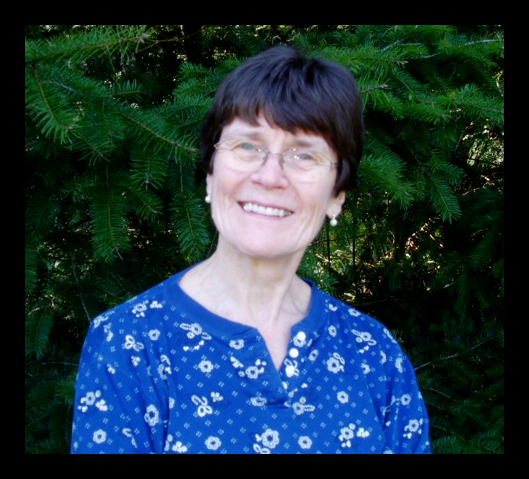
Maxine Anderson MD, FIPA is a founding member, an IPA training and supervising psychoanalyst, and a current Board Director with Northwestern Psychoanalytic Society and Institute. She lives and practices in Seattle, Washington. Recent publications include (2024) “Entrenched Grievance as a Harbour for the Unmourned”, The International Journal of Psychoanalysis,105: 153-168. Previous books include The Wisdom of Lived Experience (2016, Karnac Books) and From Tribal Division to Welcoming Inclusion (2019, Routledge). Her forthcoming book, The Hardest Passage: A Psychoanalyst Accompanies her Patient into Dementia (Karnac, at press) may be preordered HERE
About the Moderator
Caron Harrang, LICSW, FIPA, BCPsa is board certified psychoanalyst with a full-time private practice in Seattle, Washington. She is an IPA training and supervising psychoanalyst on the faculty of Northwestern Psychoanalytic Society and Institute and teaches throughout North America. Recent publications include “River to rapids: Speaking to the body in terms the body can understand” C. Harrang, D. Tillotson, & N.C. Winters (Eds.), Body as Psychoanalytic Object: Clinical Applications from Winnicott to Bion and Beyond (Routledge, 2021), winner of the 2022 Gradiva Award for best edited book; “Possibility Clouds Arising from a Close Reading of Civitarese and Berrini's ‘On Using Bion's Concepts of Point, Line, and Linking in the Analysis of a 6-Year-Old Child’” (Psychoanalytic Dialogues, 2022); “Introduction. Truth and Lies: Psychoanalytic Perspectives” (American Journal of Psychoanalysis, 2023a); “On Grotstein’s ‘truth’ in Bion's theory of ‘O’” (American Journal of Psychoanalysis, 2023b); and Nancy C. Winters, Caron Harrang & Stefanie Sedlacek “Transformations in O Online: Group Process in the Virtual Realm” (The Psychoanalytic Quarterly, 2024).
|