|
|
Don't miss this timely program!
|
|
|
is pleased to present the
30th Annual Melanie Klein Lectureship
Hidden Persuaders: Psychoanalysis, Culture, and Politics in an Age of Extremes
|
featuring
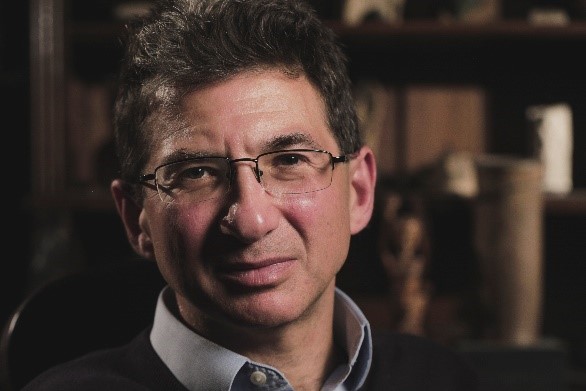
Daniel Pick, PhD, FIPA
British Psychoanalytical Society
|
Saturday, January 12, 2019
8:30 am to 3:15 pm
PCC Conference Center
11500 W. Olympic Boulevard, Suite 505
Los Angeles, CA 90064
|
Program Description
In this timely conference, historian and psychoanalyst Daniel Pick will focus on the theme of hidden persuasion, coercion, and influence in an age of extremes. He will draw upon a range of psychoanalytic texts-including those of Freud, Klein, and Bion-to explore dynamics of the mind, freedom and 'thought control' in psychoanalytic theory, history, politics, and current-day clinical practice.
His first lecture, 'The Anxiety of Influence', draws on his own and other clinical work, and concerns particular patients' shifting perceptions and phantasies of compulsion, freedom and suggestion in the consulting room. He explores examples where the patient fears 'brainwashing', and seeks to fathom the true nature of their analyst's 'tie' to the institution of psychoanalysis, and the work of analysis itself. The final section makes more general remarks about ideas of freedom and compulsion that have circulated widely in the cultural reception of psychoanalysis. The aim is to invite discussion about the field of influence, real and/or imagined, in clinical work; and to explore past controversies regarding the functions of training, and the risks of persuasion, or even indoctrination, as perceived by some notable commentators across the last century.
In his second lecture, 'The State We Are In: Psychoanalytic Resources for Thinking about the Current Crisis of Democracy', Professor journeys into the rich history of psychoanalytic thought about authoritarianism, democracy and fascism. He sketches a history of encounters between psychoanalysis and politics, notes the context of Freud's pioneering work, and maps how various analysts and historians since Freud have envisaged the political vicissitudes of psychoanalytic practices and institutions, and the applications of psychoanalytic thought in politics. He shows how psychoanalysis has sought to identify particular political 'states of mind' and considers especially three significant themes: the challenge of 'free association'; the changing practices of psychoanalysis, in an age of total war, Cold War, and 'War on Terror'; and finally, the rich resources that psychoanalytic thought provides for facing the precariousness of democracy and freedom today.
Audience
MD's, Psychologists, LCSW's, MFT's, Registered Nurses, and other learners interested in developing psychoanalytic understanding.
Course Objectives
As a result of this course, participants will be able to:
1.
|
Identify and track changes in patient phantasies of compulsion, freedom and suggestion in clinical sessions;
|
2.
|
Assess the risks of persuasion and influence in psychoanalytic training;
|
3.
|
Differentiate the practice of psychoanalysis in an age of total war, Cold War, and "War on Terror";
|
4.
|
Apply psychoanalytic thought to contemporary issues related to democracy and freedom in the political sphere.
|
|
|
Program Faculty
Professor Daniel Pick works as a psychoanalyst in private practice in London. He is a fellow of the British Psychoanalytical Society, and professor of history at Birkbeck, University of London. His books include
Svengali's Web: The Alien Enchanter in Modern Culture
(Yale UP 2000),
The Pursuit of the Nazi Mind: Hitler, Hess, and the Analysts
(OUP 2012),
Psychoanalysis: A Very Short Introduction
(OUP 2015) and, as co-editor,
Dreams and History: The Interpretation of Dreams from Ancient Greece to Modern Psychoanalysis
(Routledge 1994) and
Psychoanalysis in the Age of Totalitarianism
(Routledge 2015). He has recently co-edited a feature series, 'Thinking about denial', in History Workshop Journal (autumn 2017). Professor Pick currently holds a senior investigator award from the Wellcome Trust for a team-based historical project at Birkbeck, entitled
Hidden Persuaders? Brainwashing, Culture, Clinical Knowledge and the Cold War Human Sciences c. 1950-1990
.
|
|
Program Schedule
| 8:30 am |
Registration and continental breakfast
|
| 9 am |
Conference Introduction, Dr. Jennifer Kunst, CE Chair
|
| 9:15 am |
The Anxiety of Influence, Dr. Daniel Pick
|
| 10:30 am |
Coffee break |
| 10:45 am |
Audience discussion
|
| Noon |
Lunch Break (a light lunch is provided)
|
| 12:45 pm |
The State We Are In: Psychoanalytic Resources for Thinking about the Current Crisis of Democracy, Dr. Daniel Pick
|
| 2:00pm |
Coffee break
|
| 2:15 pm |
Audience discussion
|
| 3:15 pm |
Closing remarks and adjourn
|
|
|
|
|
Continuing Education Credit
|
|
|
The Psychoanalytic Center of California is accredited by the Institute for Medical Quality/California Medical Association (IMQ/CMA) to provide continuing medical education for physicians.
The Psychoanalytic Center of California designates this live activity for a maximum of 5
AMA PRA Category 1 Credit(s)™
. Physicians should claim only the credit commensurate with the extent of their participation in this activity.
As per the California Board of Psychology, psychologists may apply AMA PRA Category 1 Credit(s)™ earned by attendance at this CME accredited live activity toward their continuing education requirement for licensing.
The Psychoanalytic Center of California is approved by the California Association of Marriage and Family Therapists (CAMFT) to sponsor continuing education for LMFT's and LCSW's (CAMFT Approved Provider # 135374). This course meets the qualifications for
5
hours of continuing education credit for LMFTs, LCSWs, LPCCs, and/or LEPs as required by the California Board of Behavioral Sciences. These
learners must attend the entire course to claim credit; no partial credit is offered according to CAMFT requirements.
This course is approved by the California Board of Registered Nursing (Provider #CEP6003) for up to 5 contact hours.
The PCC maintains responsibility for this program/course and its content.
Claiming Credit:
Participants will receive a certificate of attendance at the event, which can be used toward licensing requirements. Credit is offered for actual instruction time and does not include breaks.
Refunds/Cancellations:
Refunds, less a $10 administrative fee, will be made if cancellation notification is phoned or postmarked three (3) business days in advance of this program. There will be no refunds on requests received after the refund deadline. Full refunds are made in the event that PCC must cancel this program.
Returned Checks:
A $25.00 service charge will be assessed for checks returned by the bank.
Grievances:
While PCC goes to great lengths to assure fair treatment for all participants and attempts to anticipate problems, there will be occasional issues which come to the attention of the PCC staff which will require intervention and/or action on the part of the staff. Visit
www.p-c-c.org/ethics
for PCC's procedural guidelines for handling such grievances.
Special Needs:
Facilities are accessible to persons with disabilities. If you have a special need and plan to attend the conference, please contact the PCC Office by phone at (310) 478-4347 or via email at 0ffice@p-c-c.org. Special needs requests will be fulfilled if received one week prior to the event, which will ensure we have ample opportunity to meet your needs.
Commercial Support Disclaimer
: The planners and presenters for this event have not received commercial support for this event nor are there any relevant financial relationships between the sponsors, presenters, program content, research, grants or other funding that could reasonably be construed as conflicts of interest.
Financial Support Disclaimer: The planners and presenters for this event have no financial relationships to disclose.
Continuing Education Membership: Any person who attends a PCC Continuing Education conference shall become a Continuing Education Member for one year. The registration fee for the conference covers the cost of membership. A Continuing Education Member will be provided with a PCC newsletter as available, and the option to participate in periodic forums to discuss continuing education offerings. Continuing Education Members will also be eligible to attend Continuing Education planning meetings.
Confidentiality: By registering for this educational event, attendees agree to strictly maintain confidentiality of any clinical material shared and will not distribute or convey such confidential material outside of the conference.
|
|
CE Committee
Jennifer Kunst, PhD (CE chair and CME coordinator); Persila Conversano, PsyD; Chris Minnick, MD (CME chair); Susan Mitchell, PhD; Honey Pietruszka, PsyD; Ellyn Singer, PsyD; and Leigh Tobias, PhD.
PCC Executive Committee
Jennifer Langham, PhD, President
Leigh Tobias, PhD, Past President
Patricia Antin, PhD, Secretary-Treasurer
The PCC Referral Service
PCC offers referral for low cost psychoanalysis and reduced cost psychoanalytic psychotherapy provided by PCC candidates in training. For information and referral call (310)208-1053 .
Contact the PCC Office
Telephone (310) 478-4347
Email office@p-c-c.org
Web
www.p-c-c.org
|
|
Make it easy and register on-line!
Please Note: A light lunch is included.
General Admission: $200
Pre-registered by 1/7/19: $175
Candidate Admission: $145
Pre-registered by 1/7/19: $120
Full-time Students with valid ID: $50
PCC Candidates in seminars: FREE
|
|
|
|
|
|