December 2023

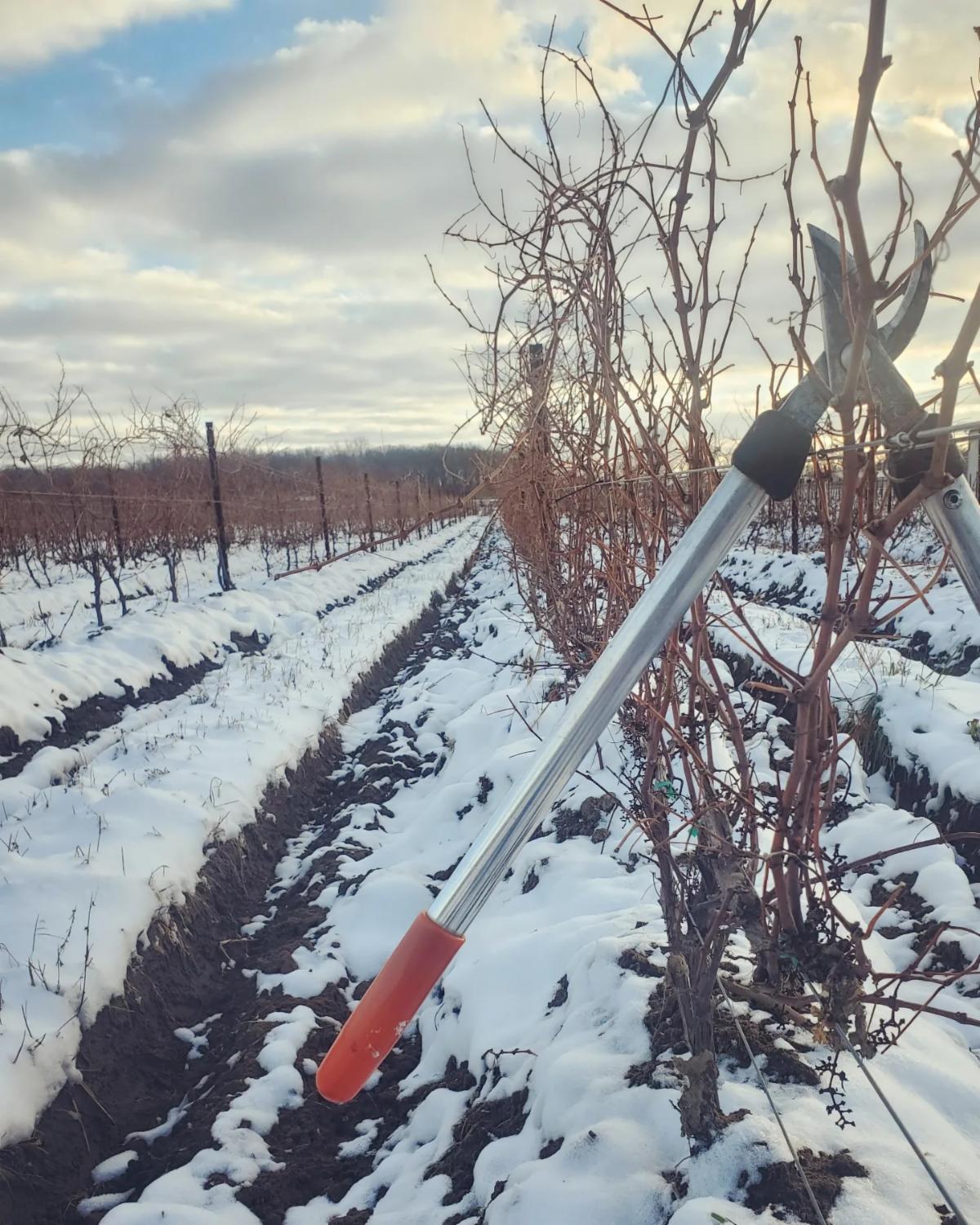
Photo credit: Joe Juniper, Vermilion Valley Vineyards, Wakeman, OH

REMEMBERING DEBORAH GOLINO

Deborah Golino

Deborah Golino, the Director of UC Davis’ Foundation Plant Services (FPS) until her retirement in 2021, passed away on December 23, 2023. Deborah was a long-time NGRA Board member. Later, she would become one of our first three Science Advisory Council members, appointed in 2020. She was ever an ally, advisor and friend to the grape and wine industry.


A tribute written by her successor at FPS, Maher Al Rwahnih, noted the tremendous advances Deborah oversaw there. In 1992, the original Foundation Plant Materials Service had eight staff members. After Deborah was named its first director in 1994, the agency grew. At the time of her retirement, Maher wrote, “FPS has 45 employees and maintains over 100 acres of grapevines, roses and trees for the benefit of the respective industries. The research and service programs Deborah has managed at FPS have played a key national and international role in improved methods of pathogen detection, streamlining virus elimination techniques for clean stock and quarantine programs, and distributing new crop varieties and healthy planting stocks.” She was, he adds, “one of the top grape research and extension administrators in the country.”


The arc of Deborah’s career traces not only the origins of FPS but also the National Clean Plant Network. Research and technology for the production and propagation of clean plants, including grapevines, strawberries, fruit trees, nut trees, sweet potatoes and roses (which flourish in her own home garden) was her life’s work and passion. She will be sorely missed but her legacy will live on in these programs, the classes she taught, the research and extension she did, and the sense of community she fostered among those who believe in science as a means to advance agriculture and/or viticulture.


It is a tremendous honor to have known and worked with Deborah and an equally tremendous shock to know she’s gone. Our deepest condolences go out to her family, friends and colleagues. At the time of this writing, Deborah's obituary had not yet been published. When it is, we'll post it here.

Donnell Brown

President

Photo of Deborah is courtesy of UC Davis.


AROUND THE U.S.

Meet Us in Sacramento!

For the first time ever, NGRA will have an exhibitor booth at the Unified Wine & Grape Symposium! The auspicious 30th anniversary of the show will take place January 23-25, 2024, in Sacramento, CA, where NGRA is based. The exhibits will be open on Day 2 and 3 of the show, and our booth (A2152) will be at the top of the escalator to the second floor. Come meet NGRA Board members and President Donnell Brown, and talk with top grape and wine scientists during breaks from the conference agenda. See the schedule (in development) of who you can chat with at our booth!

Mike Grgich Dies at 100

On May 25, 1976, a California Chardonnay made by Mike Grgich, a Croatian immigrant, was judged to be the top wine at what became known as The Judgment of Paris. At the time, he was the winemaker at Chateau Montelena in Napa Valley. “Not bad for kids from the sticks,” said the winery’s owner, Jim Barrett, of the news. Mike went on to establish his own acclaimed Napa winery, Grgich Hills Estate. He passed away on December 13, 2023, at the age of 100.

New Leadership at USDA-APHIS

USDA announced this month new leadership at its Animal and Plant Health Inspection Service (APHIS) division. After more than 40 years at APHIS, and the last 10 as Administrator, Kevin Shea was named Senior Advisor to the Deputy Secretary of Agriculture. He will be succeeded by Dr. Michael Watson, who has been the APHIS Associate Administrator since 2018. 

Changing of the Guard at Washington Winegrowers

Colleen Frei has been named Executive Director of the Washington Winegrowers Association, an NGRA member-organization, effective January 1, 2024. Most recently, she was a partner for 18 years at Wenatchee-based law firm Jeffers, Danielson, Sonn & Aylward, P.S. Her expertise is agricultural law. Colleen succeeds Vicky Scharlau, who has led the nonprofit since 1999, and has been a longtime member of NGRA’s Board of Directors. Vicky will continue with Washington Winegrowers in an of-counsel capacity and will facilitate select programs.

Gina Bianco is the New Oregon Wine Board ED

Gina Bianco is departing the Rogue Valley Vintners in southern Oregon to become the next Executive Director of the Oregon Wine Board (OWB). She succeeds Tom Danowski, who served as the OWB ED for 12 years. The job opening attracted nearly 100 candidates from the United States and abroad. 

UC Davis’ Helene Dillard to Retire

Helene Dillard, Dean of the UC Davis College of Agricultural and Environmental Sciences, is retiring in 2024 after 10 years there. A national search for her successor began this month; Helene will retire once her successor is in place. The renowned Viticulture and Enology Department is among the 14 departments the Dean oversees. Programmatic responsibilities include the College’s Agricultural Experiment Station and Cooperative Extension network.

James Osborne is Named Director of OWRI

Late last month, Oregon State University’s College of Agricultural Sciences announced that James Osborne has been appointed as the new Director of the Oregon Wine Research Institute (OWRI). James is a professor and enology extension specialist in the Food Science Department at Oregon State University, where his research focuses on the impact of wine microorganisms on wine quality. He will continue to lead his research and extension program but with some reduced responsibilities as he takes on this new leadership role at the OWRI.

Texas A&M AgriLife Extension Welcomes a New Viticulture Specialist

The Texas A&M AgriLife Extension Service recently welcomed Patrick O’Brien as a new viticulture specialist serving the Texas High Plains region. “Dr. Pat” arrived in Lubbock in mid-August after spending seven years in South Australia finishing his graduate studies in viticulture while working and performing research. He joins a team of 11 AgriLife extension specialists and researchers across the state, including the Gulf Coast, Hill Country, North Texas and the High Plains, which is home to 80% of the state’s wine grape production.

Mark Chien Is the New LISW Inspector 

Mark Chien is the new inspector for the Long Island (NY) Sustainable Winegrowing (LISW) program. Although he lives in Lancaster, PA, Mark is committed to overseeing and managing LISW’s inspection program and promoting sustainable wine-growing practices in the region. Mark has previously held roles at Long Island’s Pindar Vineyards (his first job after attending UC Davis’ Viticulture Technology program), Penn State and the Oregon Wine Research Institute.

OWRI Seeks a Communications & Outreach Manager

The Oregon Wine Research Institute (OWRI) seeks a Communication and Outreach Manager. Based in Corvallis, OR, the manager develops and implements OWRI communication and marketing strategy, produces and delivers audience-appropriate written and multimedia material about OWRI and its program/project outputs, manages external outreach events, and coordinates internal OWRI member meetings in conjunction with the OWRI Director. Learn more and apply by January 9, 2024.


RESEARCH FOCUS

THE CLOCK IS TICKING: THE NEED FOR PRECISION GRAPE BREEDING

By Margaret Leigh Worthington

On June 7, 2023, Margaret Leigh Worthington, Associate Professor of Horticulture and Director of the Fruit Breeding Program at the University of Arkansas System Division of Agriculture, testified at a hearing of the US Senate Subcommittee on Food and Nutrition, Specialty Crops, Organics and Research on the Farm Bill’s Horticulture Title, which includes the authorization for the all-important Specialty Crop Research Initiative (SCRI). Margaret was speaking on behalf of the American Seed Trade Association (ASTA), but as a breeder of wine, table and muscadine grapes, her excerpted and lightly edited remarks here illustrate the need for and value of innovation in grape breeding and biotechnology. Read the full transcript of her remarks.


Plant breeding dates back thousands of years to when people first domesticated wild plants. As the years have gone by, plant scientists’ understanding of agriculture has continued to progress. Building on the foundational principles that have been used for generations, new and evolving plant breeding innovations are allowing us to more efficiently and sustainably address the real and pressing challenges facing food and agriculture production. The continuous advancement in the understanding of plant genomes provides new opportunities to meet these challenges in a safe and sustainable way, both today and in the future. 


Universities and companies alike are utilizing gene editing tools in research projects across all plant species for a range of needed applications benefiting farmers, consumers and the environment—from disease resistance and drought tolerance, to added nutritional benefits, better taste, and food safety. Importantly, this research includes critical applications in small-acreage, high-value specialty crops, which face unique challenges and have not previously been able to fully utilize the potential of the latest breeding tools due to the high cost and associated regulatory burdens. It is well-documented that regulatory hurdles have contributed to limiting GM technology to only a few crops affordable by only multinationals, denying specialty crops an essential tool to meet global challenges. Unfortunately, investment in gene editing tools and trait targets in the specialty crop sector is similarly limited, due to uncertain regulatory outcomes in the U.S. and global inconsistency of regulatory policy.


I direct active cultivar development programs in blackberries, peaches, grapes and muscadine grapes at the University of Arkansas System Division of Agriculture. When I first started in my position in 2016, it was hard to envision how we would be able to make use of gene editing given our lack of understanding of fundamental genetics in these specialty crops. However, advances in genomics in the past seven years have enabled the discovery of genes associated with disease resistance, flowering time and consumer quality traits, even in relatively low-acreage crops like blackberries and muscadine grapes.  


For example, elite wine and table grape varieties are susceptible to many diseases. In a typical growing season, growers can be expected to make 10 to 15 fungicide applications. This heavy spray schedule causes environmental impacts and financial burdens for growers. There are 45 known disease-resistance loci within the sexually compatible gene pool for grapes, many of which were discovered in part due to funding from the Farm Bill’s Specialty Crop Research Initiative, or SCRI. The process of backcrossing these resistance loci from wild relatives to elite germplasm is incredibly time-consuming, especially considering the long generation time in many perennial specialty crops. Traditionally, it has taken 20 to 80 years from making an initial cross to release of a new grape cultivar with a disease resistance locus. And, unfortunately, the market for new disease-resistant wine grape cultivars is limited as many consumers demand traditional wine grape varieties like Cabernet Sauvignon or Pinot Noir. However, gene editing could be used to develop a cultivar that is identical to Cabernet Sauvignon with stacked resistance loci for powdery and downy mildews in a fraction of the time of traditional breeding methods. This technology would enable consumers to enjoy the same wines they love, while allowing growers to drastically reduce the number of fungicide applications they make each year.


I recently co-authored a paper in the journal Nature Plants that demonstrated how various breeding methods, including gene editing, can lead to the same seedless grape phenotype. The same can be said for pest-resistant phenotypes. In essence, precision tools like gene editing can allow us to reach the same outcome as could be achieved through more traditional breeding methods, or that could have happened in nature over time through natural mutation, but in a much more targeted, efficient and much faster way. This is critical as we’re up against the clock to address the very real and rapidly evolving threats facing the future of a secure and sustainable food and agriculture system. The tools of yesterday are simply too slow to address the challenges that are fast becoming reality today. 


Precision breeding tools like gene editing are desperately needed to support the production of more resilient plants that can grow, for example, with less water, fewer pesticides and other inputs, and result in fruits and vegetables that stay fresher longer. These are all important characteristics needed by US farmers to address sustainable agriculture production and food security. Even if we can only explore these tools in experimental frameworks today, tomorrow will be too late to get started.


With the help of federal research funding since its founding in 1964, the University of Arkansas System Division of Agriculture Fruit Breeding Program that Margaret now leads has developed and released 66 fruit varieties that are now grown, not only in Arkansas but on six continents around the world.

Editor’s Note:

On December 27, 2023, USDA-APHIS reopened the comment period on a proposal published on November 14, 2023, for five additional exemptions for plants with genetic modifications that could be achieved through conventional breeding. The comment period will remain open until January 19, 2024.

Funding Opportunities

Washington Wine Commission

If you were invited to submit a full application to the Washington Wine Commission’s Short-Term or Intermediate Grants programs, your materials are due January 19, 2024.

CDFA PD/GWSS Board 

The CDFA Pierce’s Disease and Glassy-winged Sharpshooter Board (PD/GWSS Board) provides funding support to research and outreach projects focused on protecting vineyards, preventing the spread of pests and diseases, and delivering practical and sustainable solutions. Project proposals are due January 31, 2024. Award notifications will be made in May 2024 for a July 2024 start. 

Unified Grant Management for Viticulture and Enology 

This one-stop-shop for several grant programs is now open. Click the link above to view requests for proposals from:

• American Vineyard Foundation

• California Grape Rootstock Improvement Commission

• California Grape Rootstock Research Foundation

• Oregon Wine Board

• PD/GWSS Board (see above)

The application deadline is January 31, 2024, for all programs.

FFAR Fellows

This graduate fellowship, offered by the Foundation for Food and Agriculture Research (FFAR), offers leadership and professional development training to Ph.D. students studying food and agriculture-related sciences in the US and Canada. North Carolina State University leads the initiative, which provides Fellows with training, networking opportunities and peer support. Applications for the 2024-2027 cohort are now open; deadlines are February 22, 2024, for the Stipend + Professional Development category and April 15, 2024, for the Professional Development category.

Crop Protection and Pest Management 

The USDA-NIFA CPPM program addresses high-priority issues related to pests and their management using integrated pest management (IPM) approaches at the state, regional and national levels. CPPM also addresses IPM challenges for emerging issues and existing priority pest concerns that can be addressed more effectively with new and emerging technologies. Deadline is February 15, 2024.

Applying for a grant? Request a letter of support!

NGRA is pleased to provide letters of support for research projects that directly address our industry research priorities. Request a letter via our online request form at least two weeks prior to the grant deadline (or any internal deadline you may have). Requests are reviewed and approved by NGRA Research Committee leadership, so processing times may vary.


IN THE NEWS

Wine Magic: A Toast

December 20, 2023 | Wine Industry Advisor

How do I love thee? Let me count the wines—er, ways. WineAmerica President and NGRA Board member Jim Trezise reminds us how much there is to be grateful for in the grape and wine industry. He notes that vineyards preserve the earth and its open space, our businesses provide jobs and a robust infusion to the US economy, and that advances in new varieties help to expand wine’s reach. But most of all, Jim reminds us that “wine magic” brings people together. “If music is the universal language,” he writes, “wine is the global toast.” (He also includes toasts in 14 languages.)


Small Purchases, Big Payoffs

December 27, 2023 | Good Fruit Grower

A Washington grape-growing family’s $16,000 purchase of a tractor-mounted hedger three years ago has saved an estimated $6,600 in labor costs each year, and delivered more consistent canopies and better spray coverage across their 40-acre vineyard, more than paying for itself. It “proves small operations can thrive with mechanical tools boosting efficiency and quality,” and strategically reducing costs.


Grapes Can Bring Good Health in the New Year—and Some Luck, Too

December 20, 2023 | American Heart Association

Scientifically speaking, eating grapes on New Year’s Eve is good luck—or at least good for your health. A tradition from Spain (or maybe France) has gained acceptance worldwide: eating 12 grapes at midnight—one for each chime of the clock. Doing so is “supposed to make wishes come true, but if the goal is for better health,” says the American Heart Association, “people munching on (grapes) [to ring in the New Year] would be wise to eat them every day.” The organization cites properties in grapes, whether table grapes, raisins or juice, that can help improve heart, brain, eye and liver function.


Some Hemp with Your Wine? Study Shows Better Soil, Potentially Flavors from Intercropping

December 19, 2023 | Mongabay

A new study from New Zealand tests intercropping wine grapes with hemp (e.g., as an inter-row cover crop) to increase soil health and potentially add another cash crop to vineyards. After three years of testing, researchers found there were positive benefits for both soil health and carbon storage, that hemp didn’t compete for water, and, surprisingly, the wine from grapes grown near hemp tasted better. Further research is planned.


Genetic Diversity of Wild North American Grapes Mapped

December 19, 2023 | UC Davis

An international team of scientists led by UC Davis’ Dario Cantù developed and used state-of-the-art technology to construct a comprehensive pangenome—a complete genetic blueprint—or super-pangenome, in this case, of nine North American wild grape species. It catalogs similarities or differences among the nine species and pinpoints traits of interest, such as salinity and drought tolerance. It is the first North American wild grape pangenome, Dario says.


Reducing Cluster Rots in Michigan Wine Grapes Using Combined Pathogen and Vinegar Fly Control

December 15, 2023 | Crop Protection

Seeking to reduce cluster rots in your vineyard? This Michigan State University team found that incorporating insecticides into late-season IPM programs not only manages insect vectors but reduces cluster rot incidence, too.


California Chill Report: Understanding the Nuances of Cold Temperatures

December 13, 2023 | AgNet West

In California, a new chill portions (or dynamic) model is now being used to calculate chilling hours for the state’s trees and vines. As UC Cooperative Extension Orchard Systems Advisor Kat Jarvis-Shean explains, the longstanding chill hours model (used since the 1930s) simply counted the number of hours that temperatures were below 45 degrees F; it didn’t account for varying levels of chill or factor in cool but not cold overnight temps. The dynamic model weights temperatures differently, offsets chill accumulation if warm temps follow cold, and accounts for mild and cool conditions.


Metal Toxin Threat in Wildland Fires Determined by Geology and Fire Severity

December 12, 2023 | Nature Communications

Research from Stanford University finds that the high temperatures generated during wildfires can catalyze the transformation of chromium into its carcinogenic form, hexavalent chromium, in soil and ash, particularly in places where the geology is metal-rich. The scientists found reactive hexavalent chromium in wind-dispersible particulates, and elevated hexavalent chromium in surface-level soil for up to 10 months post-fire.


On Target for a Weed Control Victory in Vineyards

December 11, 2023 | Growing Produce

As robots roll out that can automate vineyard tasks like weeding, spraying and suckering, Cornell AgriTech’s Lynn Sosnoskie is helping growers make sense of the options. She and her team began trialing vision-guided precision spray systems, targeted sucker control, electric weed control and other technologies at the Cornell Lake Erie Regional Extension Lab in 2022 and will continue in 2024.


A New Way with Table Grapes in the Upper Midwest

December 6, 2023 | University of Minnesota Extension | Fruit and Vegetable News

Cold-hardy table grapes have been in development at the University of Minnesota since 1944, when Bluebell was first introduced. Fast forward to 1977 and the joint release by legendary grape breeder Elmer Swenson and UMN of the Swenson Red variety. Then, starting in 2015, cold-climate table grapes were included in UMN’s breeding efforts, better known for wine varieties like Marquette, Frontenac and Itasca. Intrepid growers are field-testing them now.


Breakthrough Research Proves Wine Has Signature of Its Terroir

December 2023 | Jane Anson Inside Bordeaux

In a study published in the journal Communications Chemistry, a team of scientists report their success with an algorithm they developed that can pinpoint where a wine was produced based only on its chemical makeup. Achieving 100% accuracy identifying the chemical signature of wines from seven Bordeaux estates, the model also predicted the wine’s vintage with about 50 percent accuracy.


Identification of Grapevine Host Factors with Pro-Viral Activity to Target for Resistance Against Red Blotch Virus Through CRISPR Gene Editing

December 2023 | California PD/GWSS Board Bulletin

Geneticists at Oregon State University are exploring the use of CRISPR gene editing technology for resistance to grapevine red blotch virus (GRBV). With funding by the PD/GWSS Board, they seek to identify the specific genes that act as pro-viral hosts that interact with GRBV replication proteins during the initial infection phase, enabling GRBV to take hold. They will characterize candidate genes via CRISPR knockouts, examining whether the virus can replicate when those genes are absent. It’s a promising technique for developing non-transgenic grapevines resistant to red blotch. Story on page 3.


Wonder Why You Get Red-Wine Headaches? This New Study Might Explain the ‘Centuries-Old Mystery’

November 22, 2023 | Los Angeles Times

A new study by a trio of University of California scientists finds that red wine headaches may be caused by the flavonoid quercetin, which is abundant in reds and not white wines. The study shows that a crucial enzyme is inhibited by quercetin when it’s metabolized with alcohol, causing a buildup of inflammation-inducing acetaldehyde and preventing it from being converted to acetic acid. Human trials to further test the theory could begin in January.


US Consumer Support for Genetically Modified Foods: Time Trends and Assessments of Four GM Attributes

November 18, 2023 | GM Crops & Food

Research led by the University of Vermont shows that, while opposition remains, there is movement toward neutrality for GM technology. Five years of consumer survey data shows that people are most supportive/least opposed to GM attributes that improve flora (plant health or drought tolerance) and that there is overall support of the use of GM technologies in agricultural production.


Planting for the Future

November 17, 2023 | Oregon Wine Press

From Walla Walla to the Rogue Valley, as Oregon vineyards experience erratic weather and warmer, drier temperatures, grape growers and winemakers seek to adapt. They’re looking to drip irrigation, field blends, new wine styles, grape varieties that are better adapted to heat, or ripen at different times, and drought-tolerant rootstocks to help weather the change.


Challenges of Developing Field Sensors for Vineyard Nitrogen Status

November 2023 | HiRes Vineyard Nutrition Podcast

Chenchen Kang, a former Ph.D. student at Washington State University, now a post-doc at Penn State, was part of the ongoing NGRA-initiated HiRes Vineyard Nutrition project’s engineering team, exploring the development of sensors to detect grapevines’ nutrition status. Using hyperspectral imaging Chenchen says, “The main question I was exploring is if we can determine the nitrogen levels in grapevines by analyzing how their leaves reflect light.” Listen in as he describes some of his findings, including the counterintuitive result that the more spectral bands analyzed, the less accurate the results.


Don’t Be Salty: How Irrigation, Soil Health and Climate Affect Vineyard Salinity

November 2023 | Wine Business Monthly

To improve water use efficiency, many grape growers have moved to drip irrigation or micro-sprinklers. But as UCCE’S Chris Chen explains, without mass influxes of irrigation water in spring and summer (as with flood irrigation), sodium chloride can accumulate in the upper layers of vineyard soil. High-quality irrigation water with little to no NaCl can help. Improving soil health can, too. Story on page 62.


Using a Camera System for the In-Situ Assessment of Cordon Dieback Due to Grapevine Trunk Diseases

October 18, 2023 | Australian Journal of Grape and Wine Research

To reduce labor-intensive scouting, researchers in South Australia developed a vehicle-mounted, smartphone-based algorithm to assess dieback due to grapevine trunk diseases, training it over two seasons and 13,000 Shiraz vines. The computer vision-powered model tested within 10% of experts’ assessments of trunk disease 84% of the time, enabling real-time analysis and row-level monitoring and mapping with nothing more than a mobile phone.


Evaluation of a Laser-Guided Intelligent Sprayer for Disease and Insect Management on Grapes

August 2023 | American Journal of Enology and Viticulture

In trials over three growing seasons, intelligent laser-guided sprayer technology was found to effectively and sustainably manage fungal and oomycete diseases and Japanese beetles. Compared to conventional air-blast sprayers, it was found to reduce the volume of pesticides used by up to 83% (or about $712 per hectare) without compromising control of foliar diseases or Japanese beetles, or impacting yield.


Microbes Key to Sequestering Carbon in Soil

May 24, 2023 | Cornell Chronicle

Soil holds three times more carbon than the atmosphere, making it a vital carbon sink in the fight against climate change. And soil microbes play a critical role. In fact, microbial processes are at least four times more important than any other processes, including decomposition of biomatter, in the soil carbon cycle.


Why Do Grapes Spark In The Microwave?

February 22, 2019 | Science Friday

An oldie but a goodie—NGRA’s holiday grape research gift to you! A paper published in the esteemed Proceedings of the National Academy of Sciences explains the mystery of why, “if you microwave a grape it can explode in a violent fireball,” taking your appliance out with it. “Having experimented (with) and destroyed several microwaves in the process,” reports Science Friday, the team of Canadian scientists found that grapes—either one split in half or two touching—concentrate microwave energy into hotspots that, when touching, spark an ionized gas. Click for video of the phenomenon (and a link to the paper)!


Find these stories and more, published every weekday, on our Facebook and X (formerly Twitter) feeds. You can also find us on LinkedIn. Use #graperesearch to join and grow the conversation!


UPCOMING EVENTS

January 10, 2024

San Joaquin Valley Grape Symposium

Easton, CA


January 22, 2024

NGRA Annual Meeting & First-of-Year Board Meeting

Sacramento, CA


January 23, 2024

New York Wine & Grape Foundation Webinar

Update on New Wine Grapes with Improved Cold Tolerance & Disease Resistance

Virtual event


January 23-25, 2024

Unified Wine & Grape Symposium

Includes NGRA exhibitor booth

Sacramento, CA


January 24, 2024

WGA Leadership Luncheon

Includes presentation of the Rich Smith Award of Excellence

Sacramento, CA


February 5-7, 2024

WineVit

Kennewick, WA


February 13-14, 2024

Oregon Wine Symposium

Portland, OR


February 13-15, 2024

World Ag Expo

Tulare, CA


February 15-16, 2024

USDA’s Agricultural Outlook Forum

Arlington, VA + virtual option


February 19-20, 2024

50th-Annual Ohio Grape & Wine Conference

Dublin, OH


February 28-29, 2024

Pennsylvania Wine and Grape Industry Conference

State College, PA

 
Find all upcoming events on the NGRA website.
 

The monthly NGRA Update is provided as a service to the U.S. grape and wine industry.
If you're not a member of NGRA, please consider joining us.
Contact Us
Facebook  Twitter