| Click here to view as a webpage. |
 |
 |
| |
|
|
| |
The 2025 Pistachio Industry Annual Conference in Monterey was an unparalleled success, bringing together nearly 1,400 attendees for three days of education, networking, and community building. |
|
| |
|
|
 |
 |
|
| |
|
|
| |
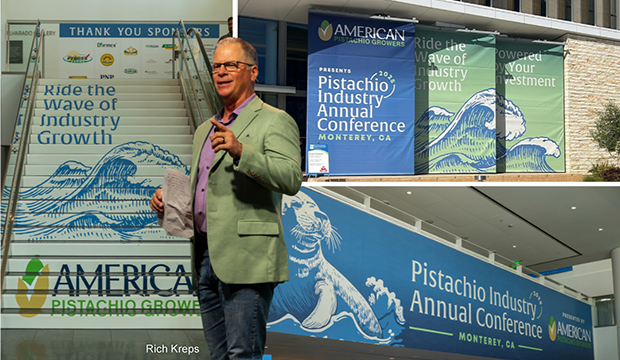
The Conference kicked off with remarks from APG Board Chair Rich Kreps, who introduced APG's new President and CEO, Zachary Fraser, setting an energetic tone for an event dedicated to positive growth within our organization as well as our industry. |
|
| |
|
|
| |
 |
|
| |
|
|
| |
Fraser began presentations by hosting a live senior leadership panel that included Vice President, Global Marketing, Scott Fryer; Vice President, Government Relations, Cadee Condit; and Director, Sustainability and Member Outreach, Joe Coelho. The panel set the tone for the conference and gave insight to how each department is working together to 'raise the tide' of American pistachios. |
|
| |
|
|
| |
 |
|
| |
 |
Joe Coelho took the stage to introduce his new role as Director, Sustainability and Member Outreach. He shared insights from his personal journey as a pistachio grower, highlighting how the decisions he has made as a generational farmer have shaped his path in the pistachio industry. |
|
|
| |
|
|
| |
 |
|
| |
 APG Senior Director, Global Nutrition, Amber Wilson, provided an update on Nutrition Research, highlighting its importance as the backbone of global marketing efforts. APG Senior Director, Global Nutrition, Amber Wilson, provided an update on Nutrition Research, highlighting its importance as the backbone of global marketing efforts.
The APG marketing team then took attendees on an immersive journey through each of APG's target markets, demonstrating the intricacies and diversity of each priority market. Marketing leadership was accompanied onstage by representatives from India, China and Europe to provide their expert insight on current market and consumer trends.

|
|
|
| |
 |
|
| |
The 2025 APG Annual Conference was meticulously designed to provide growers with actionable strategies to enhance financial sustainability through reduced costs, improved yields, or both, all while also prioritizing environmental wins, if possible. Every session focused on practical ways to increase net profitability—whether by optimizing resource use, lowering input costs, or implementing sustainable practices that benefit both the bottom line and the land. By integrating economic resilience with environmental stewardship, the conference highlighted how growers can succeed in an evolving agricultural landscape while ensuring the long-term viability of their operations. All conference presentations will soon be hosted on our website for you to revisit. |
|
| |
|
|
| |
TUESDAY AFTERNOON: |
|
| |
Optimizing Orchard Performance |
|
| |
|
|
| |
 |
Racers, start your engines! The production seminar, moderated by Bob Beede, kicked off like an Indy car race with a discussion on sampling bloom, nut fill, and slip to determine harvest timing and cultural practices. Beede emphasized how precise monitoring of these factors can help growers make more informed decisions throughout the season. |
| |
|
 |
Aaron Salsedo followed with a presentation on the top 10 practices to increase production, where he highlighted the importance of balanced nutrition, effective irrigation, and timely pest management in achieving optimal yields. |
| |
|
 |
Julio Ramos then provided a detailed overview of best management practices for pruning, stressing that early structural training, strategic hedging, and male tree management are essential for maximizing fruiting potential and tree health. He followed his informative talk with a first of its kind, live pruning demonstration on stage! |
|
|
| |
|
|
| |
The focus then shifted to integrated pest management, with Dr. Joel Siegel discussing the development of a sanitation standard to mitigate navel orangeworm infestations. He also discussed various spray technological research that he and I have conducted, and new research we are working on. Dr. Houston Wilson continued the navel orangeworm deep dive as he introduced smart trap technology for real-time pest tracking, presenting a data-driven approach to reducing damage. He also covered a recently funded decision-making tool as well as the implications of regional, aggregated NOW research. |
|
| |
|
|
| |
WEDNESDAY MORNING: |
|
| |
Water Policy and Practice |
|
| |
|
|
| |
The morning session focused on water sustainability, opening with an on-farm recharge pilot project overview by Rogell Rogers. He highlighted successful case studies on groundwater recharge in pistachio orchards, demonstrating how growers can contribute to aquifer replenishment. |
|
| |
|
|
| |
 |
|
| |
|
|
| |
Blake Sanden then shared insights on maximizing water use efficiency, emphasizing the importance of precision irrigation techniques and soil moisture monitoring to optimize water allocation while preventing salinity buildup. |
|
| |
|
|
| |
Ryotaro Takanashi introduced Project Mizu, a groundbreaking initiative leveraging AI-driven water tracking and recharge credit accounting tools to help growers comply with SGMA regulation. |
|
| |
|
|
| |
The keynote address by the Director of DWR, Karla Nemeth, provided an industry-wide perspective on California's evolving water policies, stressing the role of innovative water management practices in ensuring long-term sustainability. |
|
| |
|
|
| |
A dynamic panel discussion moderated by Louie Brown and featuring key water experts, including William Bourdeau, Daniel Hartwig, Aaron Fukuda, Justin Mendes, as well as Karla Nemeth, explored regulatory frameworks, conservation strategies, and grower adaptation methods in response to climate challenges. |
|
| |
|
|
| |
 Pistachio Power Hour with Paul Loeffler Pistachio Power Hour with Paul Loeffler
The conference took a new and dynamic turn with the Pistachio Power Hour, a talk show hosted by Paul Loeffler, the voice of Fresno State athletics. The segment began with a conversation on estate, succession, tax, and financial planning, where experts Nick Rosa, Tim Ryan, and Tommy Irvine shared strategies for ensuring long-term business stability and generational continuity.
Alicia Adler of Bryant Christie Inc. then discussed various grant opportunities and described the ongoing work between BCI and APG in this realm.
The next segment focused on soil health, featuring a Healthy Soils Case Study Video followed by a discussion with industry leaders Justin Wylie, Kevin Brooks, and Karun Samran. They emphasized how sustainable soil practices contribute to financial viability and long-term orchard productivity. |
|
| |
 |
|
| |
|
|
| |
Ag innovation and tech trends rounded out the Power Hour, with Bill Hume, Jonah Parker, Nate Haverkamp, and Dan Rooney exploring emerging technologies in biopesticides, see-and-spray technology, variable rate application and digital twins, and soil health through the use of microalgae to help growers improve efficiency and sustainability. |
|
| |
|
|
| |
WEDNESDAY AFTERNOON: |
|
| |
Innovation and Technology in Agriculture |
|
| |
|
|
| |
Dr. Mae Culumber led the afternoon discussions with a session on bridging the gap in soil health, highlighting the impact of organic amendments and cover cropping in improving soil structure and microbial diversity. |
|
| |
|
|
| |
Cary Crum followed with a presentation on advanced cover cropping strategies, emphasizing the benefits of enhanced soil biodiversity, reduced pesticide use, and improved water infiltration. |
|
| |
|
|
| |
Patrick Brown introduced the concept of variable rate application technology, showcasing how precision agriculture tools can help growers optimize nutrient and irrigation inputs based on orchard variability. |
|
| |
|
|
| |
The conference wrapped up with a discussion on biostimulants, led by Orlando Tapia, who explained how cytokinin-based treatments like X-Cyte™ can improve fruit set, heat stress tolerance, and nutrient uptake. |
|
| |
|
|
| |
 |
|
| |
|
|
| |
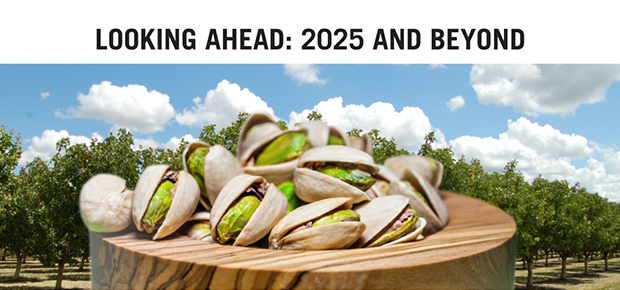
The 2025 conference education and production components were crafted to reinforce a common theme: sustainability and efficiency are key to future success. Growers face increasing challenges, but through data-driven management, innovative technology, and economically-wise decisions, the industry is well-positioned to adapt. Whether through precision irrigation, pest management advancements, or the latest research in plant physiology, pistachio production continues to evolve. |
|
| |
|
|
| |
As we move forward, we will assist you in navigating the adoption of research-backed strategies and collaborative industry efforts will be essential to ensure both profitability and environmental stewardship for generations to come. |
|
| |
|
|
| |
 |
|
| |
|
|
| |
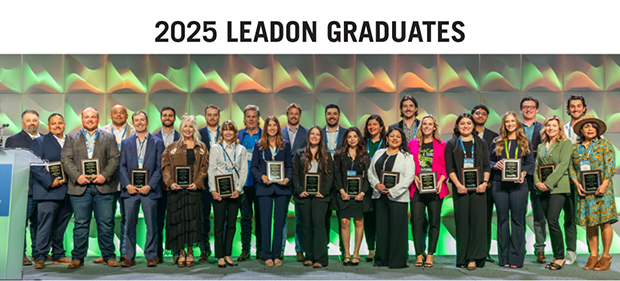
Congratulations to the 2025 graduates of APG's leadership program, LeadOn, a year-long program that educates and motivates the next generation of leaders in our industry. |
|
| |
|
|
| |
 |
|
| |
|
|
| |
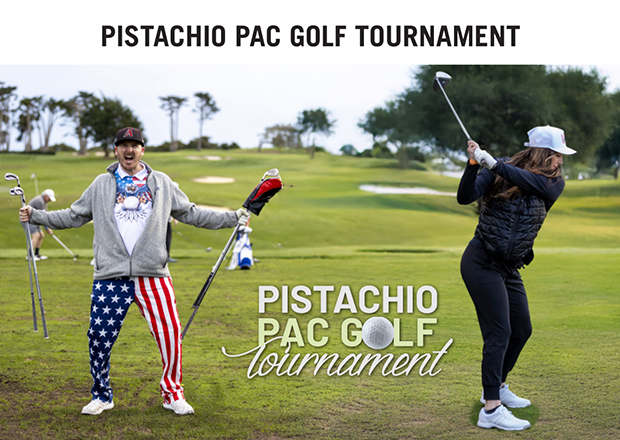
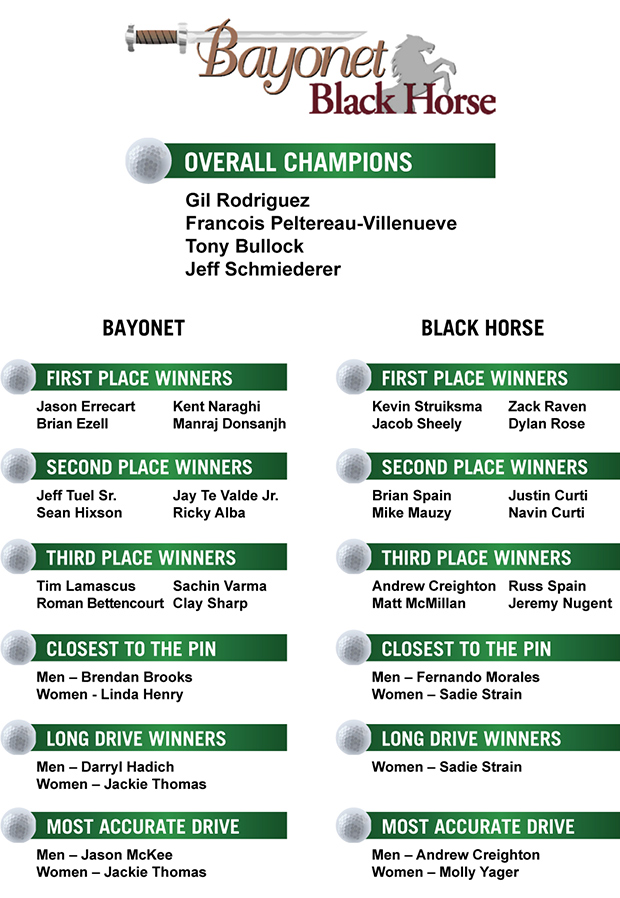
The 37th Annual PAC Golf Classic turned out to be a beautiful, sunny day in Monterey, well spent with friends and friendly competition. It kicked off with nearly 200 golfers competing while supporting APG's government relations programs. This year's tournament raised over $160,000 for the federal Pistachio Action Committee (PAC). Thank you to the generous support of PAC sponsors, volunteers and the pistachio industry for a successful 37th PAC Golf Tournament. |
|
| |
 |
|
| |
 |
|
| |
|
|
| |
 |
|
| |
As guests ascended the escalators, the excitement was palpable. Greeted by the dazzling glow of marquee letters spelling C A S I N O and a stunning hostess in a champagne dress, attendees knew they were stepping into a night of glamour, entertainment, and high-stakes fun. |
|
| |
 |
|
| |
|
|
| |
Inside the grand ballroom, the atmosphere was pure elegance. Red and gold lighting bathed the room in a warm, inviting glow, setting the perfect stage for an unforgettable evening. The mesmerizing sounds of Gold Standard Music filled the air, drawing guests to the dance floor, where mirror ball dancers spun and shimmered under the lights. Showgirls in extravagant costumes glided through the crowd, pausing for photos with delighted partygoers. |
|
| |
|
|
| |
 |
|
| |
|
|
| |
Lining the perimeter of the room, a variety of casino tables beckoned guests to test their luck. From blackjack to roulette, the thrill of the game was in full swing, with players cheering over winning hands and friendly wagers. Outside on the patio, the evening took on a relaxed sophistication as guests savored freshly rolled cigars beneath the Monterey night sky. |
|
| |
|
|
| |
 |
|
| |
|
|
| |
Of course, no APG celebration would be complete without an exceptional dining experience. The menu was nothing short of indulgent, featuring butternut squash bisque, classic Caesar salad, and entrées of grilled flank steak, slow-roasted bone-in chicken breast, and roasted salmon. Decadent sides like white cheddar mac and cheese, whipped potatoes, and sautéed broccolini rounded out the feast, with rich chocolate and carrot cake providing a sweet ending to a perfect night. |
|
| |
|
|
| |
As the evening wound down, guests lingered—reluctant to leave the magic of the moment behind. No real money was won or lost, but the memories made at Casino Night were the real jackpot. |
|
| |
|
|
| |
 |
|
| |
|
|
| |
 |
|
 |
| |
|
|
| |
 |
|
| |
|
|
| |
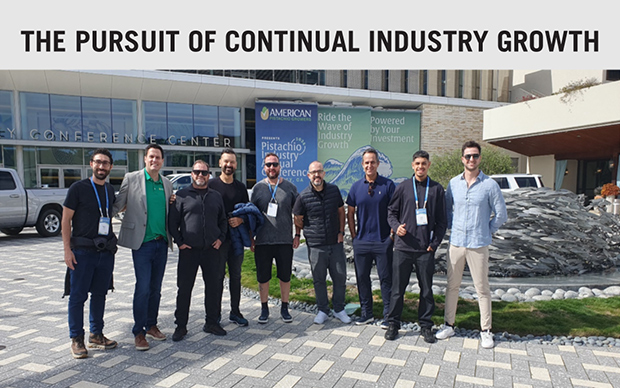
As the pistachio Industry continues to grow, and with anticipated larger production over the coming years, APG continues to look to the future for growth. One particular area is South America. Given less than 1% of our shipments go to South America, we feel there is opportunity to increase demand. The largest country by population is Brazil, with over 211 million people living there. Yet we shipped less than 1 million pounds of pistachios last fiscal year to Brazil. To drive further demand, APG used federal government grant money, and flew 8 representatives from Brazil to learn more about the pistachio industry. Six of those representatives were from various companies, like food service, retailers, and wholesalers, who would be purchasers of pistachios. |
|
| |
|
|
| |
|
|
| |
 |
|
| |
APG is proud to recognize the generosity of one of our members, Rod Stiefvater, whose recent donation to UC Davis is helping to advance pistachio research. His $335,000 contribution will support the university's Pistachio Breeding Program, focusing on the development of new rootstocks that can withstand climate challenges. |
|
| |
|
|
| |
Stiefvater's donation reflects the same philosophy that drives APG membership—understanding that strengthening the pistachio industry benefits all growers. Whether through contributions to vital research, supporting industry advocacy, or engaging in grower education, our members recognize that these investments help secure a more sustainable and profitable future for pistachios. |
|
| |
|
|
| |
Read more about this exciting contribution and its impact on the industry here. |
|
| |
|
|
 |
| |
|
|
| |
When we set the brand for this year's Annual Conference as 'Ride the Wave,' I loved the idea that the tide is rising with pistachios as the 'it' nut around the world (it is rising). |
|
| |
|
|
| |
I am a little concerned that the universe misunderstood our desire to utilize a nautical theme concept. |
|
| |
|
|
| |
Coming out of the conference excited and energized, the next week was more 'choppy waters' than rising tides, with news on tariffs related to key export markets announced by the federal administration. (Being more specific and clearer with the universe is a take-away for improving the conference experience). |
|
| |
|
|
| |
Please don't misunderstand me: tariffs, and the potential effects on the family farms that make up the majority of our membership, are a major issue. The last two weeks - and the seemingly daily (hourly) changes to the tariff conversation - have allowed our team to be intentional and reflective about how we can best serve our growers. |
|
| |
|
|
| |
We have coalesced around what farmers have done so well for generations: focus on those things within our control. |
|
| |
|
|
| |
| • |
Paying attention to how we invest - on behalf of our industry - to increase desire and demand for American-grown pistachios. Our marketing team is setting the standard around the world, and experiences like our Jasprit Bumrah relationship is putting us at the top of the mind of billions of people that want to eat American pistachios. The marketing work being done today is ensuring markets for crops five, six, seven years (and more) from now. |
| |
|
| • |
Be intentional with our engagements with growers - particularly related to best practices that help drive sustainably managed farms (environmentally and operationally). Farms that last to the next generation of pistachios are a daily responsibility of our office - it is how we stay in business. |
| |
|
| • |
We live and market and sell in a world that relies on relationships with those chosen to govern. We could spend $50m a year marketing (we don't...and are competing against consumer choices that do!), and without a meaningful investment in the relationships with those elected officials that set the rules that govern trade, and dialogue with their counterparts in our partner nations that affect our export markets, those marketing investments will be worth nothing. |
|
|
| |
|
|
| |
As a team, we are more united than ever in doing these things really, really well - being good at controlling what is in our direct control. Just as the best farmers in the universe grow American pistachios, you have some of the best people in the industry steering the ship through these choppy waters here with American Pistachio Growers. |
|
| |
|
|
| |
And we may look at a different theme for next year, lest we tempt the universe. |
|
| |
|
|
| |
 |
|
| |
|
|
| |
|
|
| |
 |
|
| |
|
|
| |
|
|