5 Reminders when operating EWP's
-
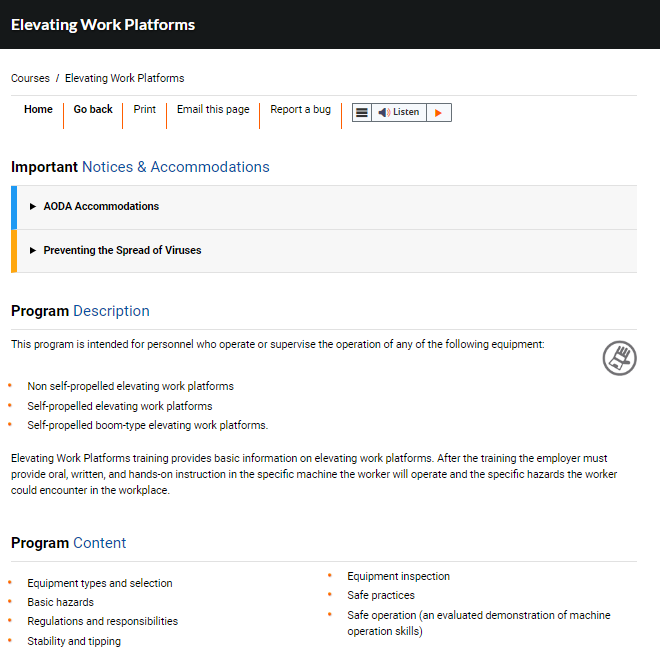
Training in Working at Heights: Ontario workers utilizing an Elevating Work Platform on a construction project will be required to use a method of fall protection to protect themselves from a fall or ejection hazard and must receive approved working at heights (WAH) training. In addition, a WAH refresher course must be taken every three years.
-
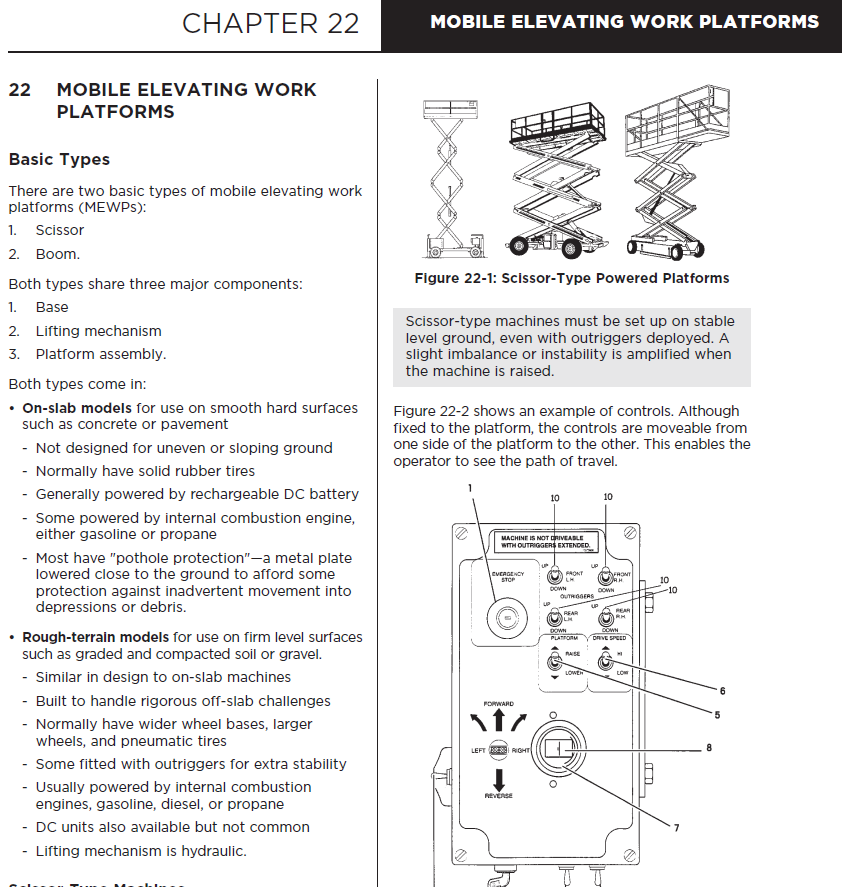
Training on the specific type of equipment: Workers must be trained to operate that class of EWP and be given oral and written instructions before using the platform for the first time. Instruction must include the manufacturer’s instruction, load limitations, limitations on the type of surfaces, and a hands-on demonstration of the proper use of all controls (O. Reg. 213/91,s. 147).
-
Protection from Ejection: An elevating work platform shall not be moved unless all workers on it are protected from ejection by being attached to an adequate anchorage point by a method of fall protection. In addition, when a self-propelled or vehicle-mounted boom-type elevating work platform or a vehicle-mounted aerial device is in use, all workers must be attached to an adequate anchorage point on the elevating work platform by a method of fall protection (O. Reg. 213/91, s. 148(1)).
-
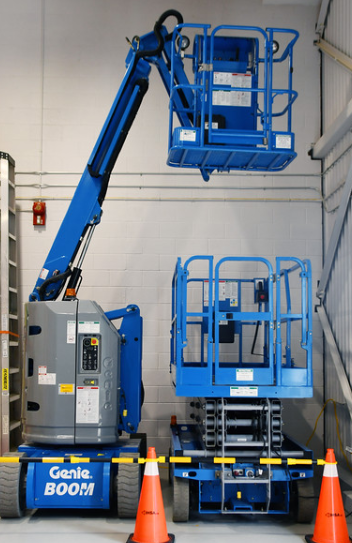
Know and follow Manufacturer's Instructions: For the specific MEWP a worker will use, operators must be familiar with and follow the manufacturer’s operating manual, manufacturer warning and caution signs, the location of all emergency controls and emergency procedures and the daily maintenance checks requirements.
-
Equipment Inspections: All components that bear directly on the safe operation of the MEWP and can change from day to day must be inspected daily. Inspection is mostly visual—done in a quick but thorough manner. Users must check the operator’s manual for a complete list of pre-operational checks.
WARNING: Never operate equipment if you have not been trained or if you are not
comfortable operating it. Even if you are qualified to operate it, take time to familiarize
yourself with the operating characteristics of the equipment you are currently using,
especially if it is different from the type of equipment you have previously used. The
safety of you and others on site depends on the competent, knowledgeable operation of
equipment.
View as Webpage
|