Fleet Orders and Sales Experience Dramatic Increase | |
|
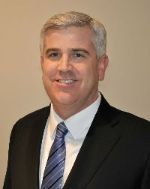
By Ken Sopp, NVLA President
As we move into spring, there’s exciting news to report. Fleet orders and sales are finally getting more focus from manufacturers.
According to Cox Automotive, sales into large fleets were up 48% year over year in February. With new vehicle inventories up for many brands, manufacturers are finally supporting fleet sales and allocation. Rental fleet sales were up 77% over last year, government fleet sales up 42% and commercial fleet up 23%. The Cox article states, “Stellantis and Ford had the largest fleet volume gains – up more than 50% – in February compared to last year". Automotive News also recently reported that Nissan fleet sales are up 83% and GM is up 27% in Q1 2023.
Strong demand has allowed us to do well over the last couple of years given the tight inventory and lack of discounts, but the return to fleet allocation, more availability and discounts/programs is very welcome!
In this month’s LeaseWire, longtime member and prior Clemens-Pender award winner, Jeff Barron of The Bancorp Bank, celebrates the benefits of the NVLA to himself both personally and professionally over the years. Jeff writes, “When I look back at my 34 years in leasing, I know I wouldn’t be where I am now without the NVLA”. As you renew your membership or consider joining, think about what the NVLA have offered you in the past and can continue to offer you in the future. NVLA is a place where you’ll find top-notch education and opportunities to network that you won’t find anywhere else.
Sloan Schickler of Schickler & Schickler PLLC, offers an introduction to the CFPB’s final rule to implement Section 1071 of the Dodd-Frank Act, requiring financial institutions to collect certain information about credit applicants and report the same to the CFPB annually. This requirement will likely include our members.
Eva Kellershoff, Client Partner at NETSOL Technologies, explains the benefits of MaaS (Mobility as a Service) and other digital technologies, such as Artificial Intelligence and Machine Learning in streamlining business processes, reducing operational costs, and improving the customer experience.
Tarry Shebesta offers a LinkedIn Tip of the Month, reminding us what a valuable tool this can be in generating sales leads as well as networking. Be sure to take advantage of all that LinkedIn has to offer you and your business.
Also, if you haven't renewed your NVLA membership yet, please renew today!
I look forward to seeing all of you in Austin, TX, for our national conference on October 11-13, 2023, at the Sheraton Austin at the Capitol.
| |
New Small Business Data Collection Rule: It May Apply To You | |
|
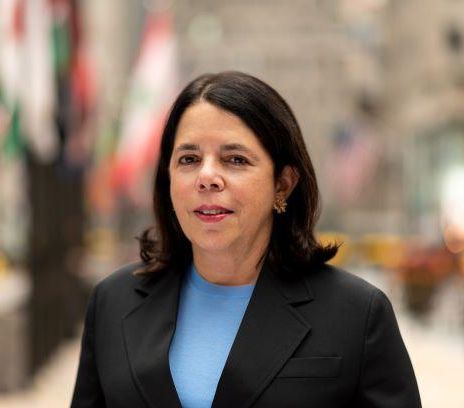
By Sloan Schickler, Esq., Managing Partner at Schickler & Schickler PLLC
On March 30, 2023, the Consumer Financial Protection Bureau (CFPB) issued the final rule to implement Section 1071 of the Dodd-Frank Act. This provision amends the Equal Credit Opportunity Act to bolster fair lending protections for minority owned small businesses including women, veterans and others. Financial institutions will be required to collect certain information about credit applicants and report the same to the CFPB annually.
The rule requires determination in the first place as to whether an entity is a covered financial institution. A covered financial institution is one that engages in financial activity and includes both depository and non-depository institutions such as online lenders, platform lenders, independent and captive equipment and vehicle financing companies and commercial finance companies. Motor vehicle dealers are exempt from compliance under the rule.
Covered credit transactions are extensions of credit for business, commercial or agricultural purposes such as lines of credit and loans and include sales-based financing and merchant cash advance. Leases as defined under Article 2A of the Uniform Commercial Code are among the transactions exempt from coverage.
A covered small business is one that had $5 million or less in gross annual revenue for the preceding fiscal year. Non-profits and governmental agencies are not considered small business under the final rule.
While the rule is effective 90 days after publication in the Federal Register, compliance is staggered based upon the number of transactions a financial institution originates. Financial institutions that originated at least 100 covered transactions in each of 2024 and 2025 are required to comply by January 1, 2026. Financial institutions with 2,500 or more originations annually must comply by October 1, 2024, while those that originated less will have compliance deadlines by April 1, 2025.
Data to be collected will include among other things, information about the application and the applicant, the credit product applied for, amount approved or originated, action taken, denial reasons, pricing, including interest rate, origination charges, broker fees and prepayment penalties, the number of workers in the business, number of principal owners of the business, minority-owned, women-owned and LGBTQI-owned status as well as ethnicity, race and sex of the principals. The applicant is not required to report its minority or ethnic status and if the applicant does not do so, the financial institution is required to report this to the CFPB.
The foregoing is a summary of the highlights of the rule. If you think the rule might cover your financing transactions, be sure to consult your legal advisor.
Sloan Schickler is a partner in the commercial finance law firm, Schickler & Schickler PLLC. Schickler, a veteran vehicle leasing, finance and bank attorney and her firm have decades of experience representing and protecting lessors, banks, captive and independent finance companies in all facets of the vehicle leasing and financing business. She has served as the NVLA Legal and Legislative counsel since 2017 and is currently the only woman on the board of directors. She can be reached at sloan.schickler@schicklerlaw.com or (212) 262-5297.
| |
What NVLA Has Meant to Me | |
|
By Jeff Barron, Managing Director, Commercial Fleet Leasing, The Bancorp Bank
One of the questions we as Board Members get asked regularly is, “what am I getting for my membership?” In years past, the answer was a little easier to quantify because we could point to local chapters and our education programs. There is no question that these offerings were beneficial to a certain type of member but to me it’s always been about the conference and the ability to network all year with like-minded lessors and vendors. When I look back at my 34 years in leasing, I know I wouldn’t be where I am now without the NVLA.
During my 25 years of operating a San Francisco-based leasing company, I knew I could find new lending sources when our banks exited the market. I knew I could call a member to find a vendor to fill a unique need, or a fleet dealer in their area. What I didn’t expect, but happened organically, was when fellow members helped me advance my career, and later opened doors to new business opportunities. Even as recently as last week, we looked at two new opportunities presented to us by good people I’d met through the NVLA years ago.
No doubt our association is smaller than it once was due to years of consolidation and attrition. But our core values are still there. I always remind prospects and members that you get out of the NVLA what you put into it. You have to attend the conferences and engage the other attendees. You need to volunteer for a committee or serve as a board member. And, most importantly, you have to be ready to help another member whenever the phone rings.
| |
|
By Tarry Shebesta, First Vice President, NVLA
tarry@acscorp.com
LinkedIn is an incredibly powerful social media platform for business. From generating sales leads, looking for employees to hire, finding a strategic partner to work with, or sharing your experience and knowledge as an SME (Subject Matter Expert), LinkedIn is a resource your business cannot do without.
To get the most out of LinkedIn, there are some things you will need to do. Some are quick hits and others will be more involved. The more time you put in, the more the payoff.
In each LeaseWire publication, I'll share tips, tricks, and some personal successes from using this incredible social media business platform.
First up, your profile. This is the basics and will build upon all your interactions with other LinkedIn users. It goes far beyond posting a resume and it's not a set and forget.
- Complete your profile: Ensure that your profile is 100% complete by adding a profile picture, header image, headline, summary, work experience, education, and skills. This will increase your chances of being discovered by potential customers and shows the depth of your professional background and why you are an SME (Subject Matter Expert).
- Optimize your headline: Use your headline to describe your current position, industry, and skills. This will make it easier for people to understand your professional identity and what you have to offer.
- Customize your URL: Customize your LinkedIn profile URL to make it more personalized and easier to share. Ideally, your LinkedIn URL should include your first and last name.
Have questions or some tips of your own? Shoot me an email so we can share with our members.
| |
LeaseWire Call for Content! | |
|
Do you have something exciting and worthwhile to share with NVLA members? Even if you are a non-member, you can still contribute!
LeaseWire is distributed monthly to more than 1,000 subscribers. The articles are also posted to the searchable newsfeed on www.nvla.org and on NVLA’s LinkedIn feed.
We are looking for content that fits the following criteria:
Specific Actionable Insights: Articles should be geared to offering valuable information that answers a reader’s question or provides insights advantageous to their business operations.
Niche Market Unique: Set your content apart by addressing the reader’s needs that no one else is addressing.
Best Practices: Provide content that stresses best practices. Make it practical and applicable and use clear-cut examples, citing resources. Readers should feel that they learned something new, were inspired by the content, and were able to apply the insights directly to their business and daily activities. We are looking for high value industry thought leadership.
Non-Promotional: Presentations should be brand agnostic to the fullest extent possible. Content should be educationally oriented and not self-promotional.
For the full list of editorial guidelines, click here.
Please send your submissions to: leasewire@nvla.org
Don’t miss out on this opportunity to contribute. We hope to hear from you!
| |
Fleet Finance Transformation through MaaS | |
|
Featured in the World Leasing Yearbook 2023
By Eva Kellershoff, Client Partner, Otoz (NETSOL Technologies)
The Mobility-as-a-Service (MaaS) model is rapidly gaining momentum in the mobility ecosystem. MaaS integrates various services through a single platform, enabling users to access different modes of transportation from a single source. The MaaS model also optimizes resource utilization while reducing operational costs and the carbon footprint of operators and passengers. It is imperative for businesses to stay ahead of the curve when it comes to embracing new technologies. Companies that lag behind their competitors risk losing market share and revenue, which can have an adverse impact on profitability, stock value, and future growth potential.
Introduction
Transformation is not easy, but there are steps businesses can take to optimize their fleet operations with MaaS and other digital technologies such as Artificial Intelligence (AI), Machine Learning (ML), the Internet of Things (IoT), and Blockchain. The digital transformation of the retail industry has been rapid and continues to evolve, but supply chain finance has remained a complex and manual process. Manufacturers and suppliers struggle to maintain visibility throughout the fulfillment process, leading to a lengthy administrative process. Amid this backdrop, MaaS or 'Mobility-as-a-Service' refers to the trend of services that enable mobility through leasing or subscription-based transportation services. With MaaS, businesses can simplify their supply chains and empower their partners with visibility in real time.
What is MaaS?
MaaS is a single platform that integrates various services, including booking, routing, payment, tracking, and more, from different transportation providers (i.e. taxi, public transit, car rental, etc.). It provides a seamless travel experience, enabling users to seamlessly navigate through various modes of transportation. MaaS optimizes resource utilization and reduces operational costs for service providers. It also increases passenger convenience due to its single-source booking function. In the mobility sector, MaaS is primarily used to book private and public transportation services, including passenger cars, taxis, shuttles, and ride-sharing services. The MaaS model is also referred to as a 'passenger economy', where passengers can access multiple modes of transportation from a single omni-channel platform. For example, if passengers want to book a cab from their home to the airport, they can use a single app to look for nearby taxis and select a ride-sharing option, if suitable. According to Global Marketing Insights Inc., demand in the car-sharing market is expected to cross $6.5 billion by 2027.
Benefits of MaaS
MaaS offers various benefits for businesses, customers, and society. For fleet operators, it improves customer satisfaction, operational efficiency, and service quality. It also has a positive impact on the environment, lowering greenhouse gas emissions and improving air quality. For customers, it provides convenience and flexibility while reducing transportation costs. Furthermore, it offers operational benefits, such as real-time booking and scheduling, optimized resource utilization, and cost reduction. Even regulators and policymakers recognize the tangible benefits of MaaS, as it has the potential to positively disrupt the mobility sector. For society, it can help reduce traffic congestion, pollution, and carbon emissions, which can have a long-term impact on public health and the environment. It can also have a positive impact on transportation costs and productivity. For example, MaaS can help businesses improve the productivity of employees by reducing the time spent commuting to work.
Importance of digital transformation in fleet management
Fleet management is a critical function for businesses that rely on a fleet of vehicles for their operations. Fleet operators are responsible for managing the lifecycle of vehicles, including maintenance, repairs, fuel, insurance, and driver recruitment. Fleet managers also need to comply with industry regulations and government guidelines, including safety standards. With the advent of new technologies, fleet operators can leverage a digital transformation strategy to streamline business processes and reduce costs. To achieve this, they can use a single app to integrate their fleet operations with other services such as insurance, maintenance, and booking. For businesses, digital transformation provides an opportunity to transform their business operations through the use of new technologies. It also helps organizations reduce costs and improve the customer experience. For example, fleets can leverage MaaS to improve the process of booking a ride and simplify the payment flow for passengers. Digital transformation can be challenging for businesses, as it requires a cultural shift towards adopting new technologies. It also requires investment in resources, especially in hiring data scientists and engineers who can use AI and ML to optimize business processes.
Streamline Business Processes with AI and ML
AI and ML are algorithms that help organizations - including fleet operators - make data-driven decisions. These technologies are especially important for fleet operations, which generate large amounts of operational data. AI and ML can help businesses identify and analyze patterns in data, increasing operational efficiency and enabling them to make timely decisions. Businesses can use AI and ML to identify patterns in operational data generated by their fleets. With this insight, they can optimize business processes, including insurance, maintenance, and bookings. For example, if a vehicle part of a fleet experiences an accident, AI can alert the fleet manager. After receiving the notification, the fleet manager can use AI to look at the details of the accident and determine the required action.
To read more on Fleet Finance Transformation through MaaS, click here.
| |
Thank you Conference Sponsors! | | | | |