|
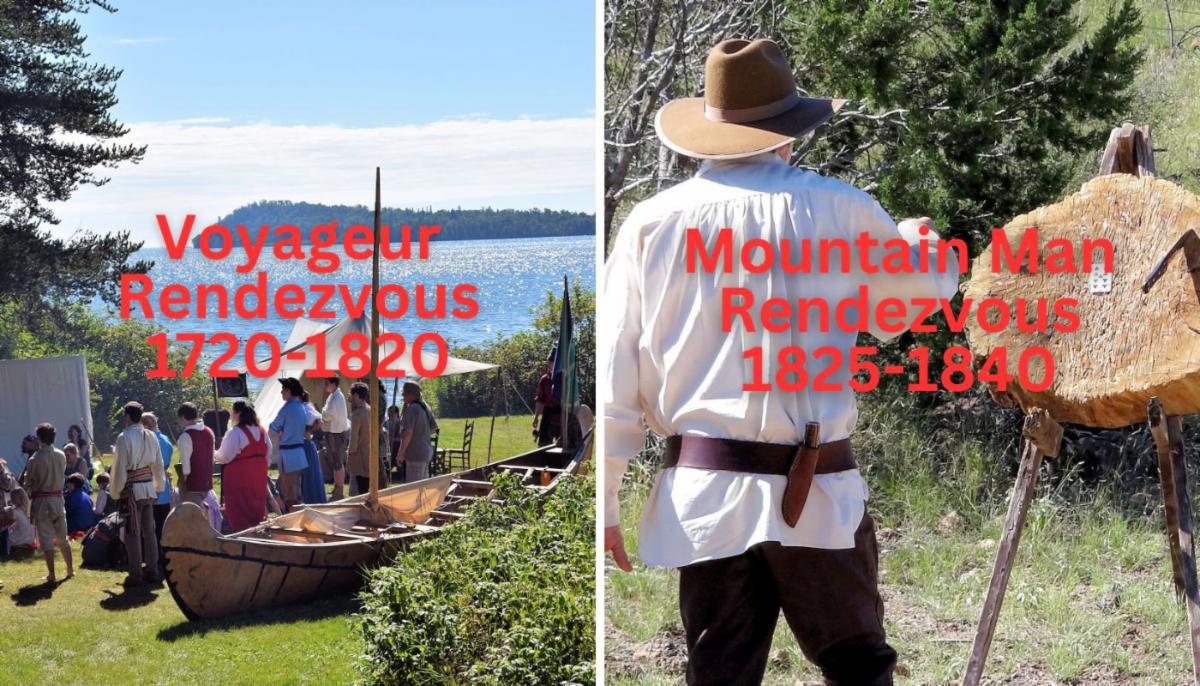
When most people hear “rendezvous,” they often picture the rugged mountain men of the American West—bearded, buckskin-clad trappers gathering in a festive wilderness carnival. These Rocky Mountain Rendezvous, held annually from 1825 to 1840, indeed form a dramatic chapter in American frontier history. But they represent only a fraction of the North American fur trade’s long and complex story.
In contrast, the Voyageur Rendezvous—centered in the Great Lakes and Canadian Shield—spanned nearly two centuries. French traders, Indigenous nations, and later British and Métis participants engaged in an extensive fur trading network that was both more enduring and more deeply interwoven with Native life than its Western Rocky Mountains counterpart. These gatherings were held regularly between the 1730s and early 1800s, with some activity dating back as far as the mid-1600s.
This article has just undergone a major update, expanding greatly on our previous work. We include timelines of both rendezvous types, and provide a wider view of the very nature of what the American fur trade meant, not only to America's economy and all those lives touched by it (with focus on the trappers, traders, fur companies, and of course, the Native American population that was impacted most of all. Did you know that the main goal of Jacques Cartier's first (French) exploration in 1534 that discovered the St. Lawrence River was to find a shorter western route to China? It was also to find gold and other wealth as the Spanish did much further south. He found neither. Instead, he found an unexpected source of wealth in furs, initially trading European goods to local Indigenous peoples for those pelt that were in such demand in Europe.
It's a BIG story that will be added to in the near future to include the Southern Rockies fur trade and that of the west coast that involved Spain, England, and Russia. Spoilers alert: the U.S. bought Alaska from Russia for 2 cents per acre ($15M) in 1867 after the trapping was played out. Little did they know that the world's 15th largest gold discovery was only 30 years away!
|