|
I hate to do this…
I have news.
It’s not good, so adopt the brace position.
Historically, the NHS faces the highest winter demand in the third and fourth week of January, onwards.
The consequences of Xmas and new year travel and jollities.
We are in the first week of January struggling with an avalanche of patients and I’m pretty sure, there's a lot more to come down the mountain.
How come…
... the simple fact, for most of the year the NHS operates at well over 90% capacity. The recommended safe levels are around 80%.
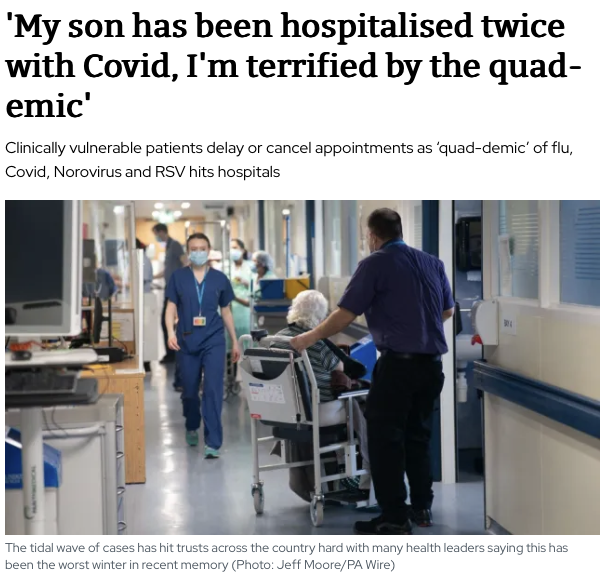
The service is run ‘hot’, flat-out. When the four horsemen of the quad-ocalyps arrive with a multi pronged infection-wave, there’s no head room.
What to do?
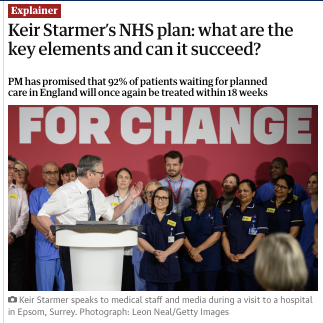
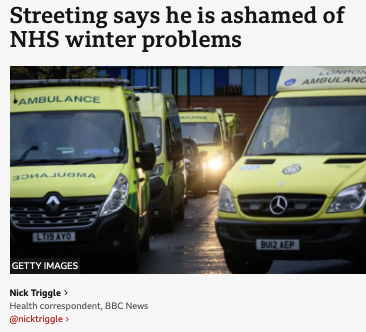
Wes Streeting says he’s ashamed and that’s about it.
We could ask our new Prime Minister, Elon Musk, or perhaps the chancellor of the exchequer, Vladimir Putin?
This year is a write-off. Management by muddlin-thro is about the best we've got.
Plus the usual: cancel electives; get everyone working at the blue-light front-door; everyone else working on discharge. Think Flo’. Not Florence. Where there’s no flow-thru, hospitals become dangerous.
The standard plans are
-
Expand Capacity in Key Areas; put up beds in corridors.
-
Boost Staffing Levels; agency and overtime.
-
Leverage Technology and Innovation; virtual wards.
Or, we might think about two paradoxes… (should that be paradoxum?)
First, the capacity paradox;
‘… adding capacity to a system can make it worse.’
Here’s why. Increase the capacity of:
-
ambulance services and you’ll answer 999 calls more efficiently… but, you’ll clog up A&E capacity, quicker.
-
A&E and you’ll end corridor-care, dwell-time and services will become safer… but, you’ll use-up admission beds quicker.
-
Wards with more beds, people will be safe and care efficient… but you’ll overload the capacity for discharge care-packages.
-
discharge… but, you’ll overload domiciliary care, care homes and community services…
… and you’ll have fewer resources to stop people needing hospitalisation in the first place.
That’s the paradox.
Extra money is like trying to stop desperate drug-addicts stealing handbags, by spending money on a campaign to ban handbags.
Somehow, we have to figure out how to make the big fat NHS pound do the work of two, slim, fit ones.
Possible? Maybe.
The most frequent users of emergency services are the elderly and children under 9yrs. That shouts; ‘… do something about elder and family care' and if you do you'll find you have created the headroom to do more other things.
It’ll mean taking parts of primary care, community and social care. The best components of the three, invest in integrated technology systems and new standards of preventative elder and family care…
… incentivised to keep people out of the system… which will… release hospital capacity. The Holy Grail.
Real integration is brutal and steps well beyond the boundaries of healthcare...
... trespasses into social care with all it’s anxieties around governance and cost shifting… all the way into the benefits agency and the voluntary sector.
But it’s worth it.
They started it in Denmark with an Integrated Home Care project initiated in the Skaevinge Municipality in 1984. By 1997, this initiative led to a 30% reduction in hospital days for individuals over 67 years old.
It’s highly likely that most of our elderly, in hospital, will be on a frailty-index or database, known to primary or social care or live in a care home.
Astonishingly, residents in care homes can account for nearly 200,000 emergency admissions each year, with; falls, infections (urinary or respiratory), dehydration, and exacerbation of chronic conditions like heart-failure or diabetes…
… well over 1.46 million emergency bed days. Meaning, up to 40% of emergency admissions are potentially avoidable.
The second paradox… the admissions paradox.
'... vulnerable people admitted to hospital may become more vulnerable'.
Elderly people in hospital decondition at about 1% a day.
Three-weeks in hospital means yer-granny, will struggle to make a cuppa, when she gets home.
Fixing all this doesn’t need buildings, or expensive machines and could probably be achieved by recycling the money in the system.
It needs a national blueprint of basic standards and a system that rewards admission avoidance.
And here’s the magic… estimates say a £100 invested in proper community based services will save 30% in secondary care.
Slim, fit pounds working for the system.
A full blown, focussed, admissions avoidance service built on the foundations of community care, merged with elements of adult social care.
We have the components, there is a model to copy…
… we just need clarity of purpose, leadership and a sense of urgency…
... not another report.
|