View as Webpage

Reproductive Health Hotline Hero Banner for Oct. 14, 2026 Newsletter

A Note from Jen

Welcome to the first ReproHH quarterly newsletter.


The idea behind ReproHH grew out of experiences I had long before we answered our first call. During my training at UCSF, I first learned about the National Clinician Consultation Center (NCCC) and saw the value of giving clinicians access not only to the latest evidence, but also to another clinician they could talk with when caring for a patient became complicated.


Later, through my work with the Miscarriage + Abortion Hotline, I saw clinicians themselves reaching out for reproductive health information and support. It reinforced something I believe deeply: frontline clinicians across the country can provide excellent reproductive health care across the lifespan—from adolescence through the menopausal transition and beyond—when they have access to the right evidence, tools, and people to turn to. That belief became ReproHH.


Since answering our first call in June 2025, we have received more than 400 calls from clinicians across the country. Those calls have reinforced something else: even seemingly common clinical problems can generate complicated questions, and having a guideline doesn't necessarily make a clinical decision simple. Sometimes what you need isn't another document to read—it’s another clinician to think through the situation with you. That's what I love about what ReproHH has become: a community of clinicians supporting one another in caring for patients.


We want this newsletter to be another part of that. Each quarter, we'll bring you a few things we think are worth knowing—new evidence or guidance that may change your practice, clinical questions our team has taken a deeper dive into, and practical resources you can use with your patients.


Most of all, thank you to everyone who has called us and trusted us with your questions. We hope ReproHH starts to feel less like a hotline and more like a colleague you can call when you want someone to think through a question with you.


And if you haven't called us yet, give us a ring.


In community,


Jen

(ReproHH Clinical Director)

SAVE OUR NUMBER


1-844-ReproHH

844-737-7644


Reproductive health expertise across the lifespan.


From contraception, abortion and miscarriage care to abnormal bleeding, sexual health, pregnancy, menopause, and more, our clinicians bring expertise across the full spectrum of reproductive health care.


ReproHH is a national resource, with clinicians calling us from across the country.


No question is too simple to call. We're here to think it through with you.

Free and confidential clinician-to-clinician consultation

On Our Radar

Three things we're reading—and what we think clinicians should know.

 
Generic bottle of ibuprofen

Can taking ibuprofen before an IUD insertion reduce pain?


Bottom line: A multidose regimen of ibuprofen given before IUD insertion reduced pain during the procedure compared with placebo.


In this randomized trial, patients took three 800-mg doses over about 24 hours before insertion. Median pain was lower with ibuprofen (5 vs. 7). A single dose has not consistently helped in prior studies, making the dosing strategy here particularly interesting. 

 
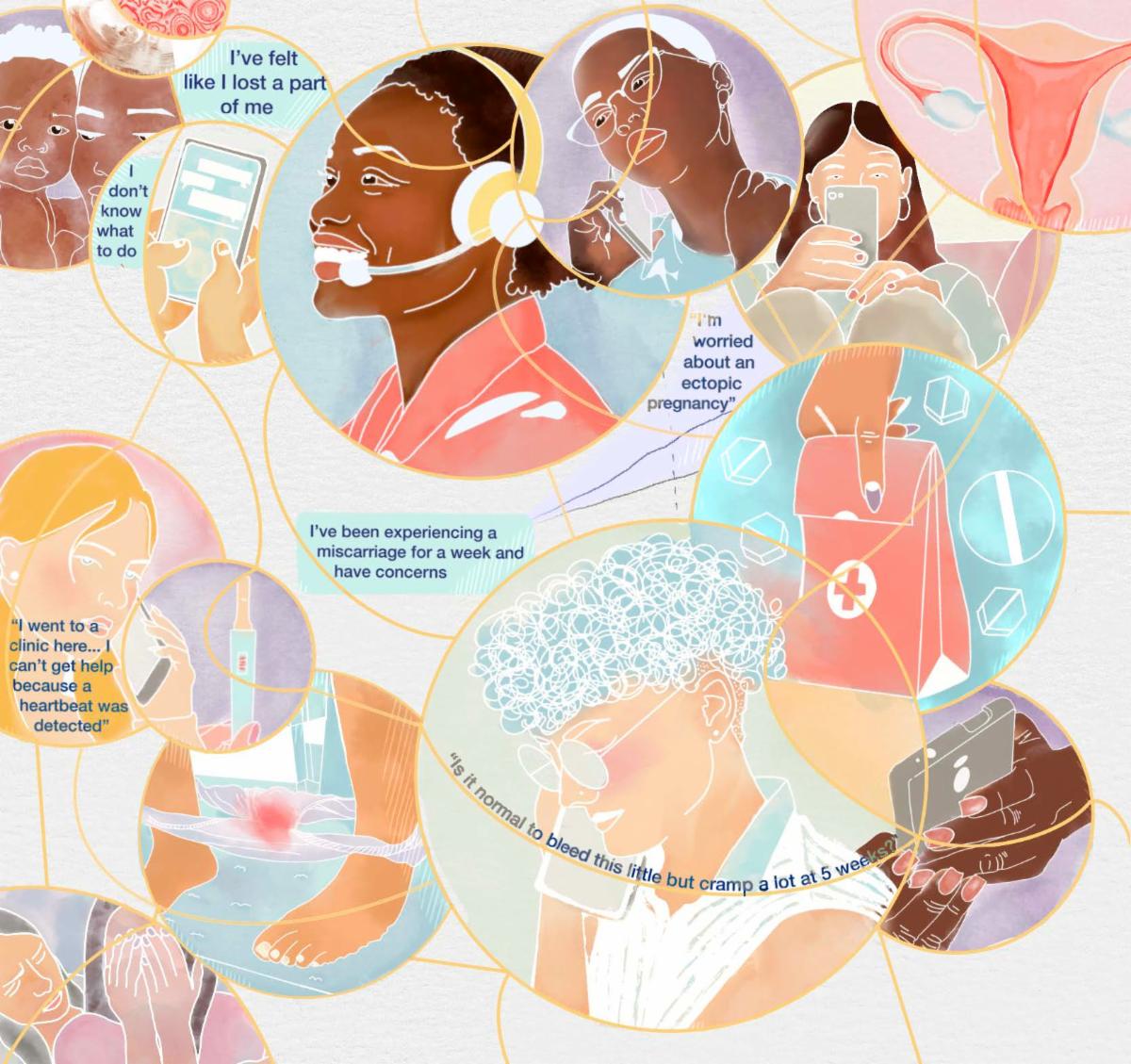
Artwork by Emma Hernandez

What happened to abortion and miscarriage hotline use after Dobbs?


Bottom line: Hotline contacts increased 210% after Dobbs, but use was already increasing before the decision, particularly in states that later banned abortion.


A new study, senior-authored by our own Clinical Director Jennifer Karlin, examined more than 16,000 contacts to the Miscarriage + Abortion Hotline before and after Dobbs. The findings point to a growing need for confidential, clinician-supported resources for people navigating abortion and miscarriage care.

 
ACOG logo

What does person-centered pregnancy options counseling look like?  


Bottom line: Counseling should center the patient's values and reproductive autonomy—and make room for uncertainty or not being ready to decide.


A new ACOG Committee Statement emphasizes unbiased, evidence-based information about all pregnancy options without assuming what outcome a patient wants. It also addresses counseling when legal or institutional constraints affect what care a clinician can provide.

From the ReproHH Clinical Team

Clinical questions we've taken a deeper dive into.

My patient has PCOS. What does the new PMOS terminology mean for me? 


Clinical pearl: The name has changed, but the diagnostic criteria and evidence-based management largely have not.


Polycystic ovary syndrome (PCOS) has been renamed Polyendocrine Metabolic Ovarian Syndrome (PMOS) to better reflect its multisystem nature.


So what actually changes in practice? Our ReproHH clinical team walks through diagnosis and long-term management, with a practical diagnostic flowchart and key takeaways for clinicians.


PMOS

Can my patient self-collect an HPV sample instead of having a pelvic exam?


Clinical pearl: Yes—for appropriately selected patients, self-collected HPV testing is now an option for cervical cancer screening.


Consider the patient who has avoided screening because of discomfort or a prior traumatic pelvic examination. They ask whether they can self-collect an HPV sample instead.


Our ReproHH clinical team reviews the current evidence and guidelines, who is eligible for self-collected testing, how it fits into cervical cancer screening, and how to interpret the results.

HPV Icon from Canva

How can we help keep pregnant patients safe when seeking care may put them at risk?


Clinical pearl: Fear of immigration enforcement can be a barrier to reproductive health care, and clinicians may need to consider safety and access alongside the clinical care itself.


This piece grew out of a call to ReproHH from a clinician caring for an 18-year-old undocumented patient undergoing medication abortion follow-up in Minnesota.


Our clinical team pulled together guidance and resources for clinicians caring for pregnant patients affected by immigration enforcement, including resources from ACOG.


Photo of pregnant mother and child

For Educators

Put ReproHH in your curriculum.

Do you teach residents, NP, PA, or midwifery students?


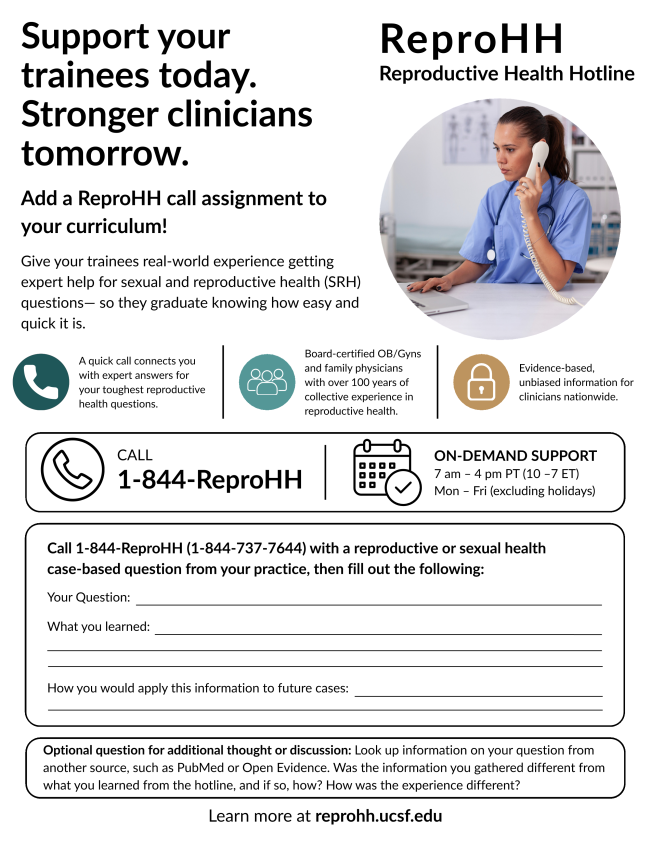
Have your trainees choose a real reproductive or sexual health question they encountered and call ReproHH to discuss!


We've created a simple, ready-to-use assignment that gives trainees experience seeking evidence-based, clinician-to-clinician consultation—something they can continue to use throughout their careers.

ReproHH Assignment Flyer

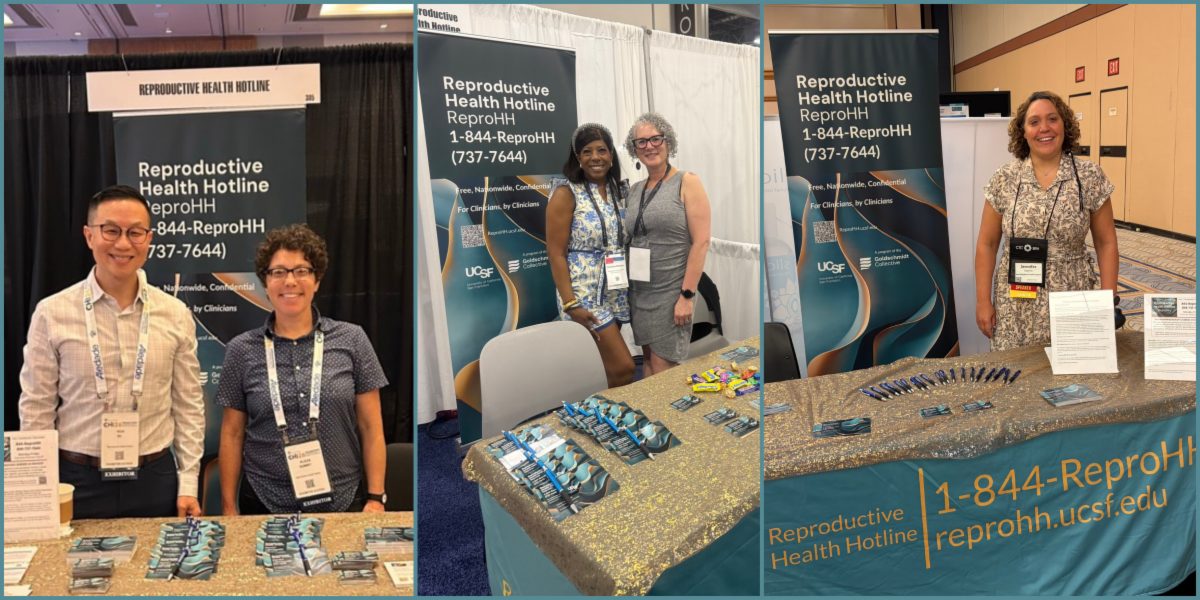
ReproHH on the Road

Where we've been — and who we've been meeting.

This summer, members of the ReproHH team hit the road, attending meetings with nurse practitioners, family physicians, reproductive health clinicians, trainees, and community health center teams across the country.


We love these meetings because they give us a chance to get out from behind the phone and meet the clinicians and organizations who are helping shape ReproHH. We hear what's coming up in practice, learn what resources clinicians need, and get to put faces to some of the people we talk with throughout the year.


We hope to see you somewhere soon.

ReproHH 2026 Conference Collage

ReproHH on the road: AANP Conference • National Reproductive Health Conference • AAFP FUTURE Conference• NACHC Conference.

We're Curious

What reproductive health questions are coming up most often in your practice right now?

We'll share what we hear—and use your answers to help shape

future ReproHH resources.

Have a case you want to talk through?

That's exactly what we're here for.

Contraception, abortion and miscarriage care, sexual health, pregnancy, abnormal bleeding, menopause—or another reproductive health question. Sometimes you just want another clinician to think through the patient in front of you.


Wherever you practice in the U.S., we're here.


1-844-ReproHH | (1-844-737-7644)

TGC Program Logo

To unsubscribe, click "Unsubscribe" and select "Reproductive Health Hotline." If you are a caller, you may still receive necessary clinical communications related to your case