RESEARCH HORIZONS
Newsletter from the Office of Research & Biotechnology
| | |
Message From The VPR
This issue covers the federal changes most likely to affect your funding and compliance work this year: NIH success rates, new policies on animal testing and clinical research, and expanded access for cannabis and psychedelic research.
I encourage you to stay informed about these developments and to engage with the resources available through the Office of Research & Biotechnology. Our team remains committed to supporting your research endeavors, helping you navigate policy changes, and advancing your programs of scholarship.
I would also like to congratulate Dr. Yun Lyna Luo and Dr. Jerome LaCroix on their outstanding publication in Nature Chemical Biology. Their achievement exemplifies the high-impact research being conducted at WesternU and serves as an inspiration to our entire community.
Together, we will continue to strengthen WesternU's research mission and expand our contributions to science, healthcare, and society.
Happy reading!
The Office of Research & Biotechnology
| |
| | |
|
FDA Releases Report on Reducing Animal Testing in Nonclinical Studies
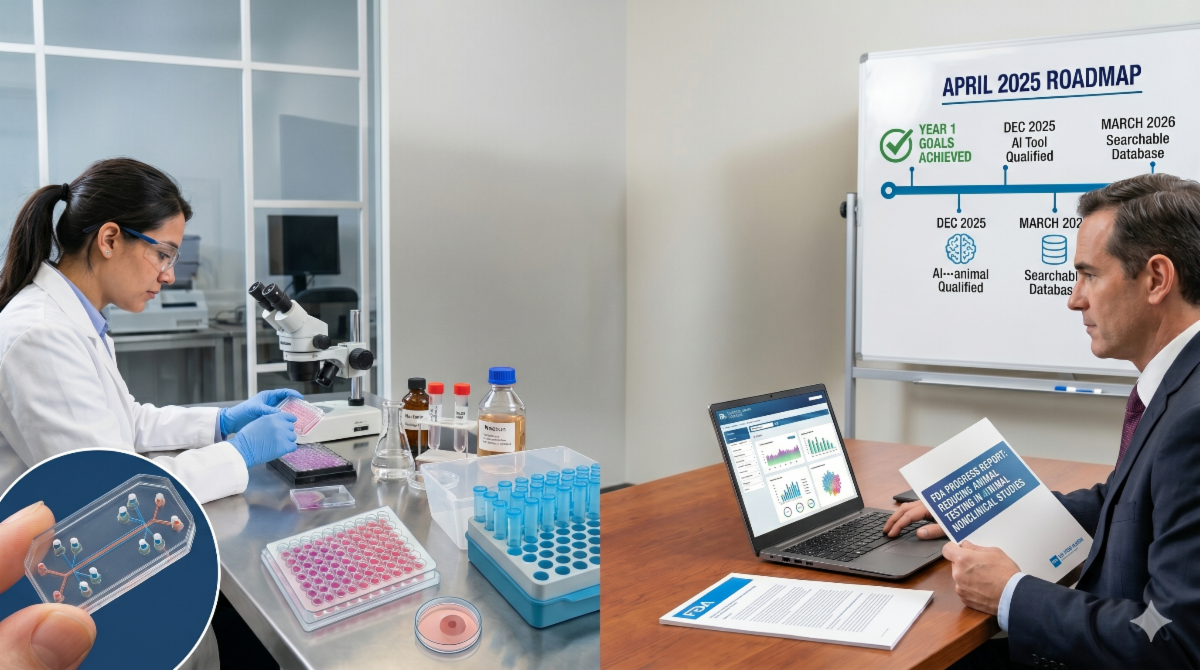
On April 20, 2026, the FDA reported first-year progress on its plan to reduce animal testing. Milestones include new policies ending primate studies for monoclonal antibodies, alternatives to animal carcinogenicity studies, the first AI-based drug development tool, and a searchable database showing where alternative methods are accepted.
| |
| | |
|
ORI Publishes Guidance Documents on Research Misconduct Final Rule
The Office of Research Integrity (ORI) released guidance to help institutions comply with the updated research misconduct rule (42 CFR Part 93), effective January 1, 2026. The documents address three key areas: confidentiality requirements, practical considerations for conducting interviews, and application of the subsequent use exception in misconduct proceedings.
| |
| | |
|
Federal Agencies Increase Availability of Cannabis & Psychedelic Drugs for Research
On April 23, 2026, the Department of Justice and the Drug Enforcement Administration moved FDA-approved, state-licensed medical marijuana products to Schedule III of the Controlled Substances Act, effective immediately.
The agencies also advanced the rule-making needed to remove marijuana from Schedule I entirely, with a hearing set for June 29, 2026. Separately, the FDA issued national priority vouchers to fast-track review of psilocybin for depression and methylone for PTSD.
| |
| | |
|
NIH Success Rates Fell in FY25
NIH success rates fell sharply in FY25. R01-equivalent awards dropped from 7,720 to 5,885, partly from greater use of multi-year funding.
Early-stage investigators were hit hardest, with their success rate sliding from 26% to 19%. NIH acknowledged the pressure on early-career researchers and pointed to support efforts underway.
| |
| | |
|
All Members of the U.S. National Science Foundation’s Governing Body Dismissed
All 24 members of the National Science Board, the body that sets NSF policy and oversees the agency’s director, were dismissed. The unprecedented move clears the slate for new appointments and raises questions about continuity in NSF’s leadership and strategic direction.
| |
| | |
Court Permantely Blocks the 2025 NIH Indirect Cost Change
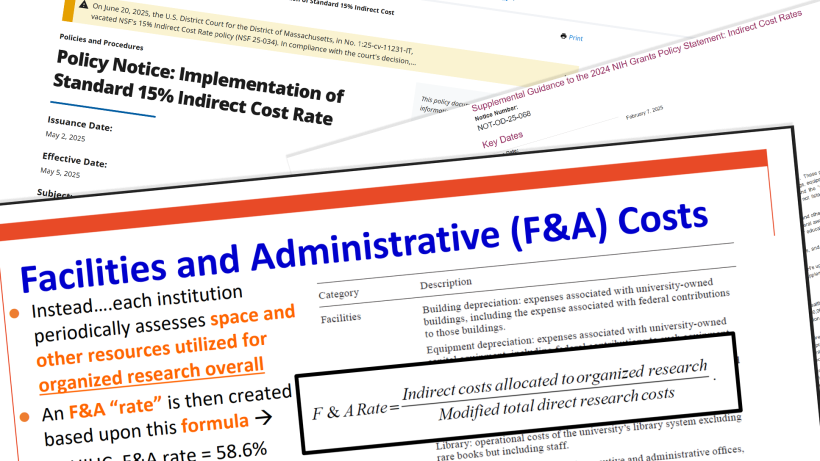
The flat 15% indirect cost rate is permanently blocked. After the Department of Justice declined to seek Supreme Court review, the district court's injunction against the NIH's February 2025 notice stands. The AAMC and co-plaintiffs prevailed.
| |
| | |
White House Proposes Political Oversight of Federal Research Grants
Draft OMB regulations would give senior political appointees final authority over federal grant approvals. Critics warn the change could weaken the role of peer review in funding decisions. The rules are open for public comment for 45 days before a final rule issues.
| | | |
|
NIH Grant Awards Lagging Behind Historical Averages
The AAMC's Tracking NIH Funding dashboard shows NIH well behind prior years on new grants and obligated funds. A seven-week government shutdown to open the fiscal year cancelled or delayed study sections. NIH set broad priorities last August and began an agency-wide funding strategy in January 2026, but with few awards issued so far, how those priorities translate into decisions remains unclear. The AAMC Science Policy Hub now offers ongoing tracking, issue briefs, and community calls.
| |
| | |
|
NIH issues changes to BESH applications
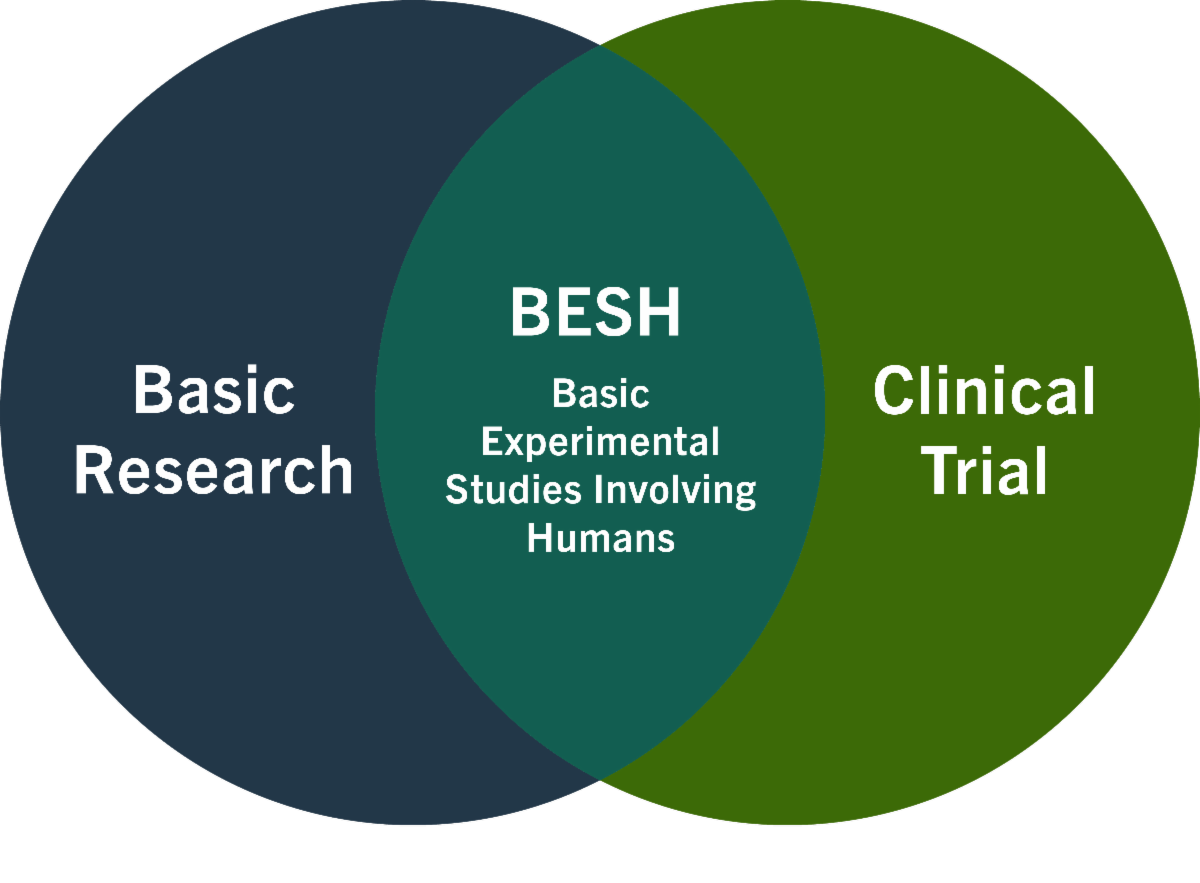
Effective May 25, 2026, Basic Experimental Studies Involving Humans (BESH) will no longer fall under the NIH Clinical Trial Definition. NIH's April 6 guide notice, NOT-OD-26-032,also specifies which funding opportunities to use for competing BESH applications submitted on or after that date.
| |
| | |
|
Updates to Prior Approval Requirements for Domestic Sub-awards
Effective June 1, 2026, prime grant recipients must obtain NIH prior approval before adding a new domestic sub-award when the arrangement was not originally part of the peer-reviewed and approved application. The change is intended to help NIH monitor prime recipients and ensure compliance with sub-award monitoring and reporting requirements.
| |
| | |
|
New Data Management and Sharing Plan Requirements
For applications due on or after May 25, 2026, NIH requires use of a new simplified Data Management and Sharing (DMS) Plan format. DMS Plans should reflect the proposed approach to managing and sharing scientific data, be updated as needed throughout the project, and align with FAIR (Findable, Accessible, Interoperable, and Reusable) data principles when appropriate.
NIH policy also requires that all DMS-related costs be addressed in the budget justification, including a summary of the DMS Plan and any requested costs for data curation, repository fees, and local data management. If no DMS costs are requested, applicants must provide a brief explanation.
| |
| | |
|
Looking for an Undergraduate Research Intern?
WesternU faculty are invited to participate in our Undergraduate Research Internship Program, which provides motivated undergraduate students from nearby universities with valuable hands-on research experiences in WesternU laboratories.
Faculty participation is simple: just contact our office and provide a brief description of your research project. We will help connect interested students with available opportunities.
Students can learn more about your research programs and submit applications online through the Office of Research Outreach (ORO) website.
| |
| | |
|
Faculty Research Website Initiative
The Office of Research is collaborating with the OpenScholar team to develop and enhance the research websites of more than 30 faculty members using their AI-powered Site Starter platform.
Over the next few months, participating faculty will receive an email notification once their website has been published. Faculty are asked to carefully review all uploaded content, including biographical information, research descriptions, and publications, to ensure accuracy and completeness.
If you identify any discrepancies, missing information, or publication errors, please notify the Office of Research promptly so corrections can be made as quickly as possible.
| |
| | |
|
Congratulations to Drs. Yun Lyna Luo & Jerome LaCroix on their publication in Nature Chemical Biology: Mechano-electrical coupling in PIEZO2 ion channels (2026).
This study provides key insights into how cells sense and respond to mechanical forces and may help accelerate the development of PIEZO2-targeted therapeutics for mechanical allodynia.
| |
| | |
Please send your accomplishments (e.g., extramural grants, publications in high-impact journals, high-profile honors & awards, etc.) to UniversityResearchOffice@westernu.edu
| | | |
|
Informational Notice regarding NIH SBIR/STTR Awards
Following the April 13, 2026 reauthorization of the Small Business Innovation Research (SBIR) and Small Business Technology Transfer (STTR) programs, NIH released a series of policy changes and implementation requirements. These include changes to discretionary technical and business assistance funds and modifications to the SBIR/STTR Foreign Risk Due Diligence program.
The reauthorization also caps the number of SBIR/STTR applications that any small business may submit across the federal agencies per fiscal year.
| |
| | |
| How did you like this email? | | | | For more information about the WesternU Office of Research, please visit our website | | Our Company | Contact Us | FAQs | Privacy Policy | | | | |