|
Research @ Pace
A newsletter highlighting faculty research & scholarship
September 2026
| | |
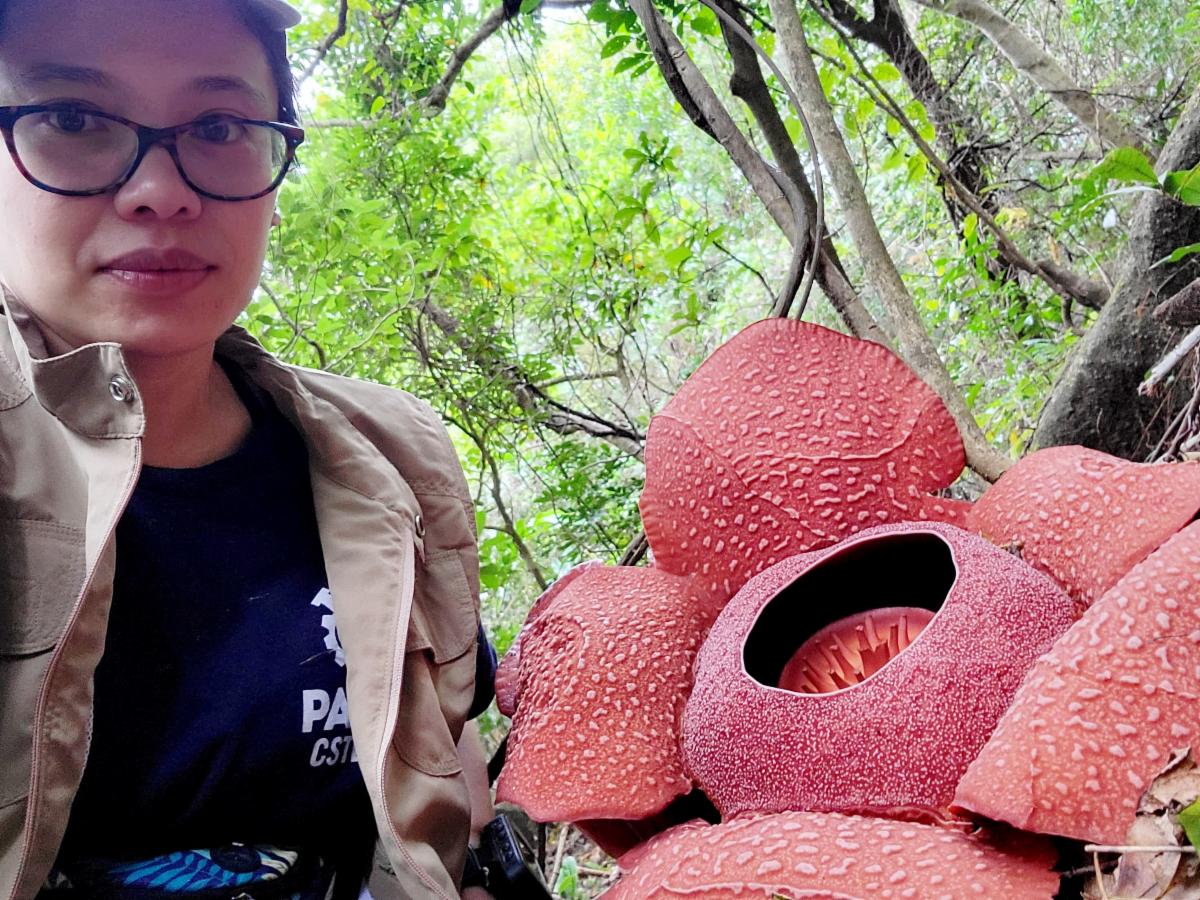
Jeanmaire Molina, PhD is an Associate Professor in the Biology Department (NYC, Dyson College of Arts and Sciences). This summer, her research program in parasitic plant biology and conservation reached several major milestones, expanding from the Philippines to Washington, D.C., the United Kingdom, and Namibia.
A highlight was Molina and colleagues’ study, “Growing a plant you cannot see: ex situ propagation of the endoparasite Rafflesia speciosa to strengthen in situ conservation,” published in The International Journal of Botanic Horticulture 25 (2026), which documented the first successful ex situ cultivation of Rafflesia in the Western Hemisphere. Conducted in collaboration with the United States Botanic Garden (USBG), Filipino scientists and conservation partners, and Pace biology student James Hill, the work demonstrated that Philippine Rafflesia speciosa could survive within its Tetrastigmahost and produce buds in cultivation. The breakthrough was featured by Pace University in Cultivating the Future of Conservation and by the Philippine newspaper Business Mirror which highlighted the project as a Filipino-led international conservation achievement.
Building on this success, Molina received her fourth cooperative agreement funding from the United States Botanic Garden (USBG) to continue Rafflesia conservation research. The next phase links ex situ research with in situ conservation by training Filipino collaborators in propagation methods that can be applied directly to endangered wild populations, including Rafflesia schadenbergiana, the Philippines’ largest flower and one of its rarest species.
Molina also established a new collaboration with the Royal Botanic Gardens, Kew, funded through 2030, expanding Rafflesia ex situ conservation to the United Kingdom while supporting field-based conservation in Southeast Asia.
As part of this collaboration, Molina conducted a June 2026 workshop in Namibia, training students affiliated with the Cheetah Conservation Fund in Oxford Nanopore metagenomic sequencing while collecting the parasitic plant Hydnora, for research and future ex situ propagation at Kew.
Together, these accomplishments highlight Molina’s growing international conservation program, which integrates cutting-edge research, student training, global capacity building, and both ex situ and in situ approaches to protect some of the world’s rarest and most extraordinary plants.
| | |
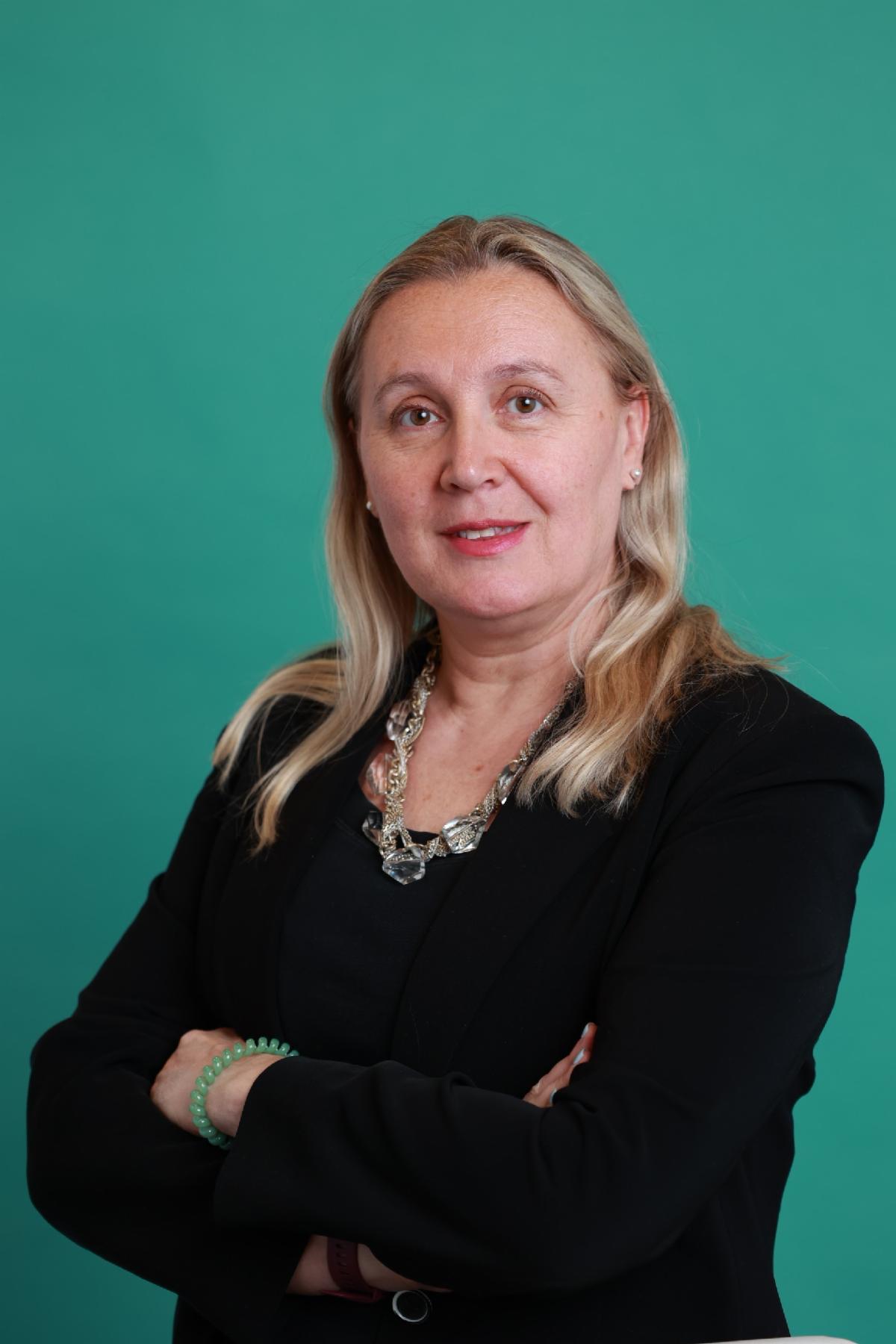
Christelle Scharff, PhD is Professor of Computer Science, Associate Dean, and Director of the Pace AI Lab (Seidenberg School of CSIS). Her research interests include artificial intelligence, responsible AI, machine learning for image generation, AI education, symbolic AI and global software engineering.
Professor Scharff ‘s recent research in AI and fashion explores the creation of datasets and models to generate patterns, apparels and accessories. This research spanning several years has been highly collaborative with faculty, especially Prof. Bathula, PhD, and students as part of the Pace AI Lab. It culminated with a Best Paper award at the International Conference on AI-based Systems and Services (AISyS). As interdisciplinary, it brings together computer science researchers, fashion professionals, and art artisans to examine both the technical and creative dimensions of generative.
Professor Scharff also works on AI education. She helped develop several programs, the BS in Artificial Intelligence, the AI Minor, and the MS in Artificial Intelligence. In 2025, togetehr with her colleagues, she published “Systematically Incorporating Equity into Design Thinking for AI Education” in AI magazine (46.2, Summer 2025). She leads the annual Seidenberg Summer Undergraduate Student Research (SSUR) program that brings together undergraduate students, graduate students as mentors, and faculty as advisors. The program has also integrated the national Computing Research Association (CRA) UR2PHD initiative. With her colleagues involved in SSUR, she published “Scaling Undergraduate Research in Artificial Intelligence” at ACM SIGSE 2026.
Professor Scharff was awarded Fulbright scholarhips in Senegal in 2011 and 2019. More recently, in 2026, she served as a U.S. Fulbright Specialist at Université numérique Cheikh Hamidou Kane (UN-CHK) in Senegal. She was selected as an O.P. Jindal Global University (JGU) Senior Fellowship, where her research included the development and evaluation of AI models trained on Indian fashion, extending her earlier work on African fashion.
As Co-director of the Pace AI Lab, Professor Scharff focuses on advancing AI education and research while creating opportunities for students, faculty, and industry partners to engage with emerging AI technologies.
| | |
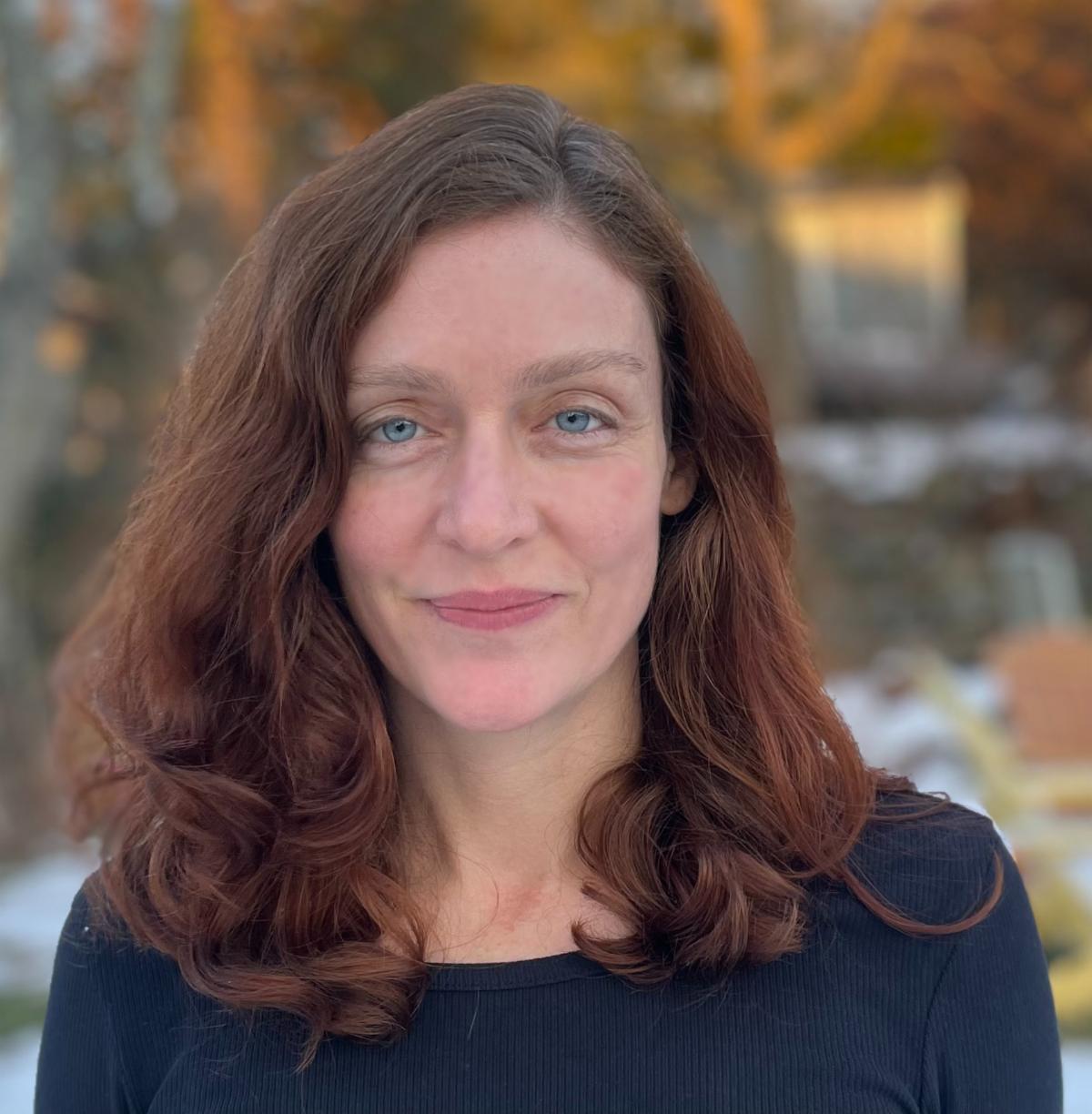
Anne Toomey, PhD is Associate Professor and Chair in the Department Environmental Studies (NYC, Dyson College of Art and Sciences), where her research centers on leveraging scientific inquiry to address real-world environmental and policy challenges.
Professor Toomey published Science with Impact: How to Engage People, Change Practice, and Influence Policy (Island Press, 2024), which was selected as one of Choice’s annual Outstanding Academic Titles for 2025 and won Silver in the 2025 Nautilus Book Awards in the Relationships and Communication category. The book was reviewed in the Journal of Science Communication, The Biologist, Popular Science, Choice, and Wildlife Activist, and covered on NPR, Talk Nerdy with Cara Santa Maria, Ecotopia, and Land and Climate Review.
Professor Toomey has given over a dozen talks in the last year alone on the book, including to students at Stanford University, NYU, Oregon State, the Hackensack Meridian School of Medicine, and Penn State, as well as to scientists at the Cary Institute for Ecosystem Studies, the USDA Forest Service, the Fred Hutch Cancer Center, and the American Physical Society, among others.
Last year, she published a paper on a decade-long collaboration with the Billion Oyster Project, titled “Improving citizen science through collaborative research partnerships between social scientists and environmental practitioners,” Urban Ecosystems 28.42 (2025). She collaborates with research teams around the world on making research more ethical and impactful, and on shifting science communication away from persuasion and toward engagement. This research has resulted in several publications including “Rethinking the language of research impact,” Research Evaluation 35.1 (2026); “Does science communication have its goals wrong? From persuading science skeptics to promoting scientific empowerment,” The Journal of Science Communication, 25.1 (2026); and “Responsible research impact: Ethics for making a difference,” Open Research Europe 5 (2025).
She is currently writing a paper for Issues in Science and Technology that draws on lessons from the career of French chemist Louis Pasteur to rethink science's social contract and research policy in the United States and beyond.
| | |
Pace Center for Global Health
The Pace Center for Global Health brings together research, education, advocacy, and partnerships to address pressing global health challenges. A central focus of the Center is chronic respiratory diseases (CRDs), including asthma and chronic obstructive pulmonary disease (COPD), and the need to elevate these conditions as a global public health priority.
One of Pace Center for Global Health’s key initiatives is its Journalist Training Workshop on Chronic Respiratory Diseases, which equips journalists with the knowledge, resources, and practical tools needed to accurately report on CRDs and their impact on individuals and communities. By strengthening health journalism, the Center aims to drive policy changes and improve public understanding of respiratory diseases and bring greater visibility to these often-overlooked conditions.
To date, Pace Center for Global Health has organized three journalist training workshops in Mexico, Malaysia, and South Africa, bringing together journalists and global health experts to facilitate knowledge-sharing and discussion around CRDs. The Center’s next journalist training workshop will take place in Brazil in November 2026, followed by a high-level multi-stakeholder meeting in India to raise awareness about CRDs. These events help in continuing the efforts to build a global network of informed health journalists and amplify accurate, evidence-based reporting on chronic respiratory diseases.
Through these efforts, the Pace Center for Global Health seeks to connect knowledge with action and contribute to making lung health a greater global health priority.
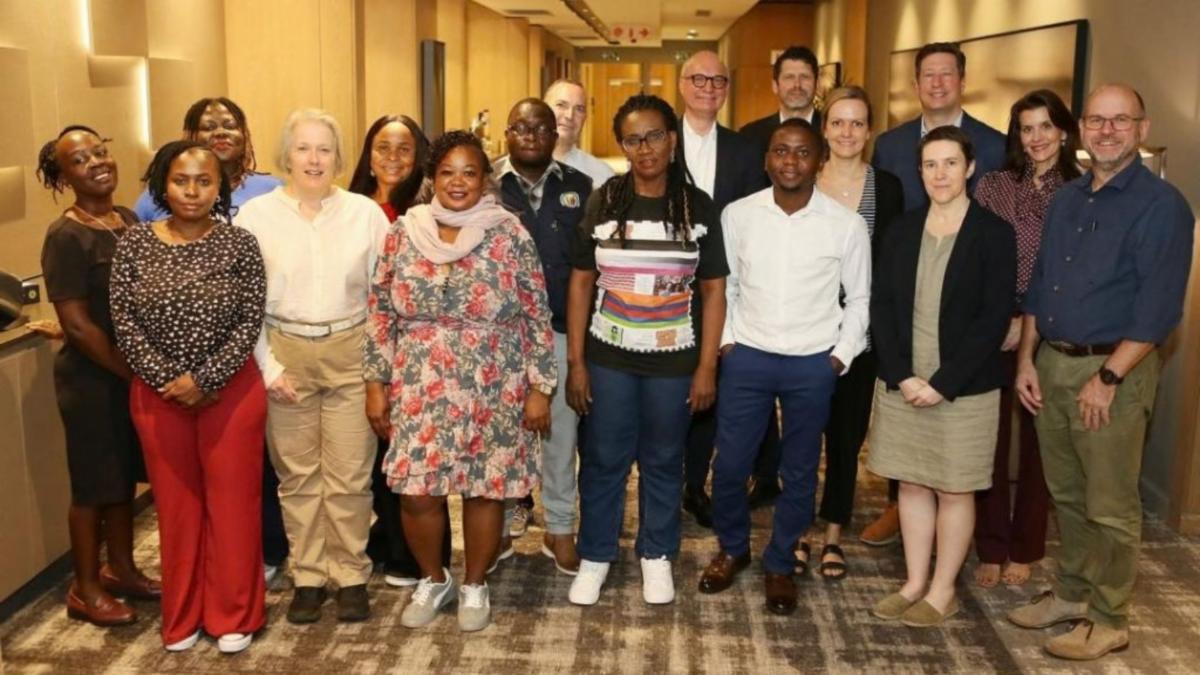
| José Luis Castro (far right), Director of the Pace Center for Global Health, with the panelists at the journalist training workshop in South Africa | | |
Join Pace Center for Global Health for a Lecture and Reception
in Memory of Andrew Rendeiro
The Pace Center for Global Health invites you to a lecture and reception in memory of Andrew Rendeiro on Monday, October 5, 2026, at the NYC Campus. The lecture, titled "Beyond Borders: The Human Purpose of Global Health," will be delivered by José Luis Castro, WHO Director-General's Special Envoy for Chronic Respiratory Diseases and Director of the Pace Center for Global Health. Through the lens of COPD, asthma, and other chronic respiratory diseases, he'll explore the human purpose of global health and reflect on Andrew Rendeiro's leadership, service, and lasting contributions to public health worldwide.
The lecture and reception honor the memory of Andrew Rendeiro, Pace University Class of 1987, was a respected attorney whose career came to encompass a deep commitment to global public health. As Chief Strategy Officer and Vice Chair of the board of Vital Strategies, he worked alongside José Luis Castro for two decades, helping guide the organization's growth and international public health work. A devoted partner of the Pace Center for Global Health, Andrew contributed his expertise to initiatives around the world, including international journalist training programs on chronic respiratory diseases. He brought to this work intellectual rigor, humanity, and a profound belief in service.
The lecture runs from 3:30 p.m. –5:00 p.m., followed by a reception from 5:00 p.m.–6:30 p.m., at the Bianco Room, 15 Beekman Street. Register for this event
| | Beau Anderson, PhD (Associate Dean for Allied Health, College of Health Professions) was lead author of the editorial "Acupressure in Contemporary Integrative Care: From Tradition to Translation," published in EXPLORE: The Journal of Science and Healing 22.4 (2026). The editorial introduces a special issue highlighting emerging evidence for acupressure as a safe, low-cost, non-invasive intervention across a wide range of healthcare settings, including oncology, cardiology, obstetrics, palliative care, nephrology, and chronic disease management. Synthesizing findings from eight clinical studies, the editorial underscores acupressure's growing role in symptom management, patient self-care, and integrative healthcare. The authors also identify key priorities for future research, including standardization of treatment protocols and greater understanding of mechanisms of action, helping advance the translation of traditional healing practices into evidence-informed contemporary care. | | |
Professor Anderson also co-authored the editorial "The Pipeline and the Paradox: A Proposal for Timely Field-Wide Inquiry into the Core of Acupuncture Training," published in the Journal of Integrative and Complementary Medicine 32.9 (June 2026). The editorial examines the growing paradox facing the acupuncture profession in the United States: increasing scientific evidence, healthcare integration, and patient demand occurring alongside a shrinking educational pipeline and workforce. The authors outline the policy, educational, and workforce challenges contributing to this trend and propose a national research initiative using a "Wisdom of Crowds" Delphi methodology to identify the essential competencies required for entry-level acupuncture practice. The article aims to inform future educational reform through a rigorous, evidence-informed, practitioner-driven consensus process.
| | |
Elmer-Rico E. Mojica, PhD, co-authored the book chapter "Applications of Absorption Spectroscopy in the Authentication, Differentiation, and Adulteration Detection of Honey” in Spectrophotometry in Food Analysis: Fundamentals, Applications and Methods (Elsevier, 2026). The chapter reviews the use of UV-Vis, NIR, and FTIR spectroscopy, combined with chemometrics and machine learning, to determine honey origin, detect adulteration, and assess authenticity. It highlights the potential of these rapid and minimally destructive techniques as practical tools for honey authentication and quality assurance.
In addition, Prof. Mojica and eight former Pace University undergraduate researchers co-authored the article "OPPORTUNITAS: A Dialogue Reflection on Lessons Learned by Minority Alumni from Undergraduate Research” in PURM: Perspectives on Undergraduate Research and Mentoring. The article presents alumni and mentor reflections on the role of undergraduate research in supporting students from underrepresented backgrounds in STEM. Drawing from their experiences in an analytical chemistry research group, the authors highlight how hands-on research, mentorship, collaboration, and scientific presentations helped students develop technical skills, confidence, resilience, professional identity, and a stronger sense of belonging in STEM.
| |
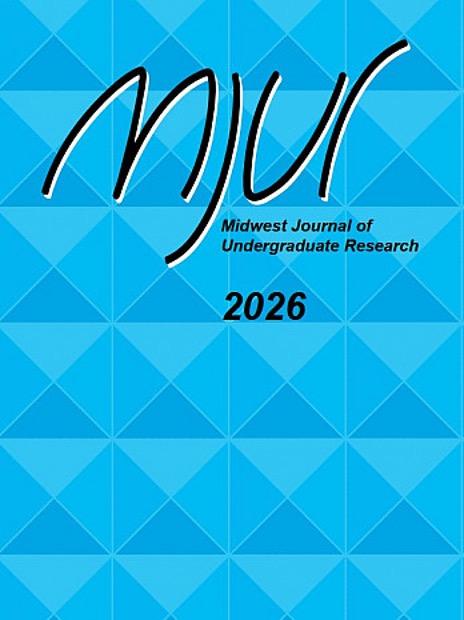
A research study by Prof. Mojica’s former student Amy Yarygina (Biochemistry, 2025), entitled "Quantification of Caffeine and Benzoic Acid in Commercial Beverages: A UV-Vis Spectrophotometry Approach,” was published in the Midwest Journal of Undergraduate Research 17 (2026). The study used UV-Vis spectrophotometry to quantify caffeine and benzoic acid in commercial energy drinks and soft drinks, demonstrating how an accessible analytical technique can be applied to beverage analysis and quality assessment.
| | |
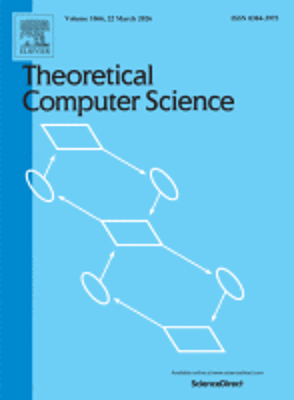
Miguel Mosterio, PhD (Computer Science, NYC, Seidenberg School of CSIS) and his co-author Dariusz R. Kowalski , PhD (Augusta University) have recently published ground breaking new research in Elsevier’s Theoretical Computer Science (March 2026), a top 3 journal in CS theory. In this work, titled “Anonymous Adversarial Dynamic Networks with Logarithmic Memory and Communication”, the authors take a bold step to bring a thoroughly studied fundamental model (Anonymous Dynamic Networks) closer to practice by adding realistic restrictions to communication and computational resources, yet showing rigorously that all algebraic-computation problems can still be solved in polynomial time. This work is a follow-up of previous award-winning work by the same authors that appeared in the Journal of the ACM.
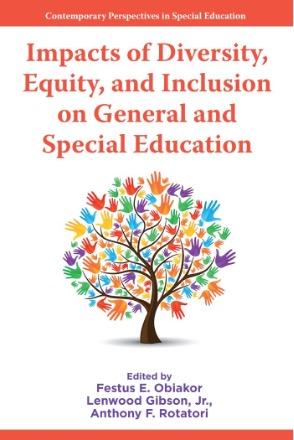
| | Shobana Musti, PhD (School of Education West, Pleasantville, Dyson College of Arts and Sciences) and Tanya Wiggins,PhD (School of Education, NYC, Dyson College of Arts and Sciences) co-authored a book chapter “Special Education Practitioners: Incorporating Diversity, Equity, and Inclusion Frameworks” in Impacts of Diversity, Equity, and Inclusion on General and Special Education (Emerald Publishing Limited 2026). Disability is considered a form of human diversity, and to date, several pieces of significant legislation have laid out the foundation for access to a continuum of necessary educational services for students with disabilities. However, given the multifaceted composite of students’ racial and ethnic identities, gender, and abilities, practitioners need to consider how the intersection of those characteristics may affect experiences and outcomes for students. This chapter seeks to draw from existing frameworks in a holistic discussion of DEI educational practices for special educators that will ultimately foster environments that meet the needs of learners from multiply intersecting experiences and identities. | | |
Chris Campanioni, PhD (English, NYC, Dyson College of Arts and Sciences) won the 2026 Mary Shelley Award for Outstanding Fictional Work for his novel VHS (CLASH Books, 2025). Every year, the MEA (Media Ecology Association) honors a work of outstanding fiction that engages deeply with media, work that explores how communication technologies shape consciousness, culture, and society. In VHS, Professor Campanioni set out to make a novel whose narrative structure more closely resembles videotape, and that reenacts, for the reader, the experience of watching and overhearing. The work engages not only with media technologies as a subject but as a method, a way of bringing other modes of art to writing, which likewise changes how we envision an alphabetical text.
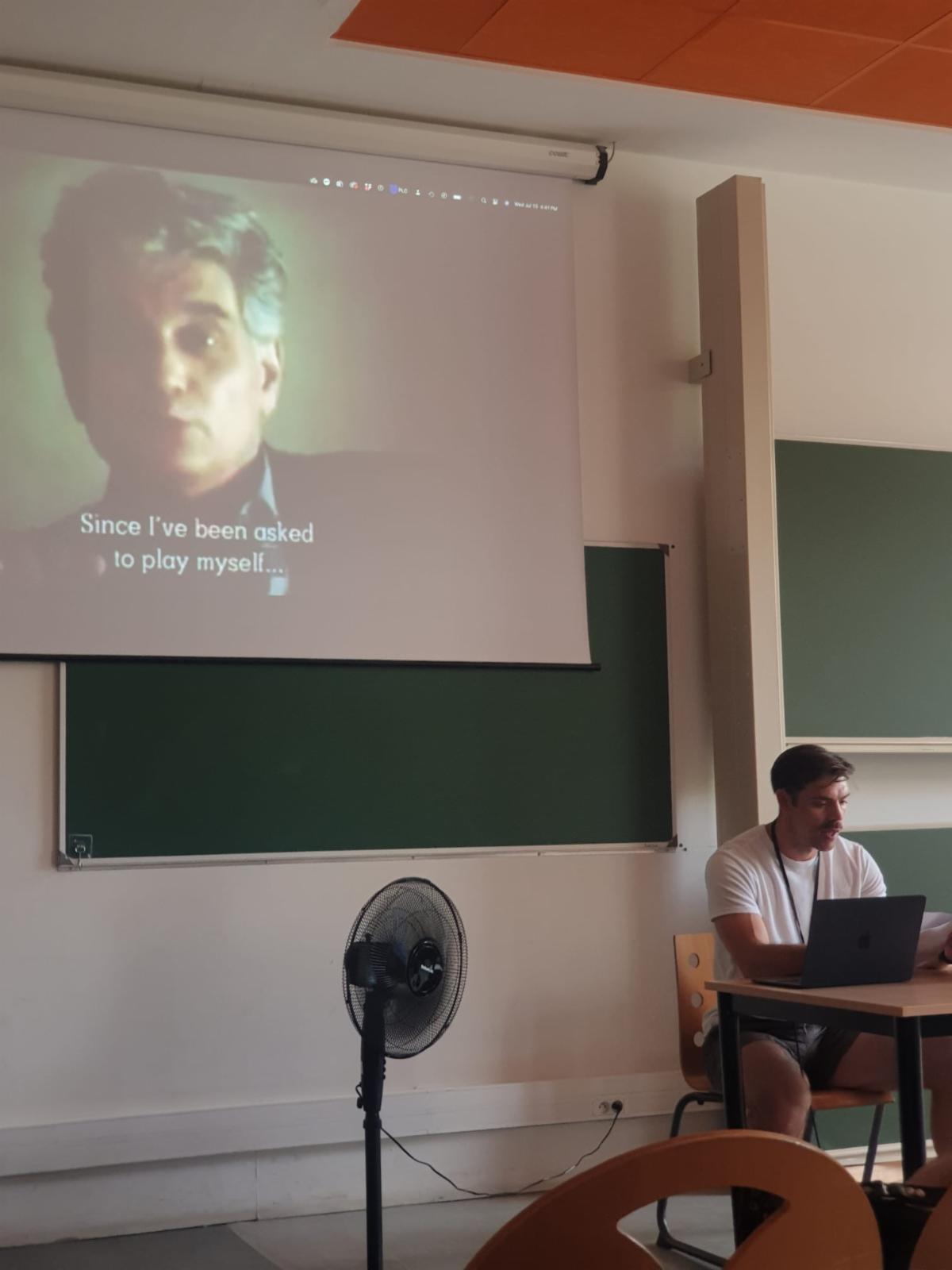
| | This summer, Professor Companioni also delivered a talk entitled “Material for a Film,” for the Derrida Today biennia at the Paris at the École Normale Supérieure. | Professor Campanioni presenting his video essay, “Material for a Film,” at Derrida Today. | | |
Phil Cohen, PhD (Professor Emerius, LegaL Studies and Taxation, Lubin School of Business) published "The Scope of the Claim of Right and Trust Function Doctrines-Reflections on Hyatt Hotels Corp. &Subsidiaries v. Commissioner" in The Tax Payer (Spring 2026). The article's focus is on decisions of the Tax Court and Seventh Circuit that mainly dealt with the applicability of the claim-of-right and trust fund doctrines to a fund established by the taxpayer, Hyatt Hotels Corp. & Subsidiaries in connection with its customer loyalty awards plan known as the Gold Passport Program. The Tax Court accurately characterized “[t]he trust fund doctrine…as a more tailored application of claim of right principles…” It had held Hyatt was subject to income inclusion from its Gold Passport Program under this judicial canon. The Seventh Circuit decision to vacate and remand the Tax Court decision was predicated on the Tax Court’s failure to apply the claim-of-right doctrine as a standalone methodology for determining whether Hyatt was subject to income inclusion from the Gold Passport Program Fund. While the Seventh Circuit's analysis in regard to these judicial canons appears flawed, this should prove moot to the ultimate outcome vis-à-vis the question of Hyatt’s liability for Fund income, assuming the Tax Court, on remand, holds, as it should, that Hyatt has gross income inclusion from the Fund because of the considerable economic benefit of the Fund to Hyatt, in keeping with its purpose, coupled with its significant control over it.
| | Emily Bent, PhD, Associate Professor of Women's and Gender Studies and Interim Associate Dean (NYC, Dyson College of Arts and Sciences) was awarded a $14,000.00 leadership training grant from the Feminist Majority Foundation (FMF). The Girls Global Leadership Project grant supports adolescent girl leaders involved in FMF's Girls Learn International program at the United Nations. Throughout the academic year, Professor Bent - and an undergraduate student intern - will facilitate girls' political leadership development through skills-driven advocacy workshops designed to enhance girls' meaningful participation in the International Day of the Girl and UN Commission on the Status of Women. The workshops are drawn from Professor Bent's research on girls' political action and investment in the girls' human rights agenda. To date, she has worked with hundreds of girl leaders and activists involved with the United Nations; she is currently completing a book project titled Feminist Girls: 30 Years of Girls' Rights at the United Nations to chronicle how adolescent girl leaders and adult allies from around the world have sought to engender the human rights of girls as distinct from and interconnected to the rights of children and women. | | Office of Research and Graduate Education Upcoming Events | | |
Why Facts Aren't Enough: Communicating Science in a Skeptical World
Tuesday, October 6, 2026| 3:25 p.m.- 4:25 p.m.
Where: W621, 1 Pace Plaza, NYC Campus (register to attend in person or join via Zoom)
Whether you're a scientist, a student, or simply someone trying to make sense of competing claims, moving people to understanding—let alone action—requires more than good data. It means moving past the traditional "information-deficit" model and understanding how human cognition, values, and trust shape the way research is received. In this talk, Dr. Anne Toomey draws on behavioral science, real-world case studies, and her own interdisciplinary research to explore how scientists, students, and communicators across fields can bridge the gap between data and decision-making. Whether your interest is environmental science, public health, policy, or media, this session breaks down what it actually takes to make research matter—on campus and in the world beyond it.
Presenter: Anne Toomey, PhD (Associate Professor, Environment Studies and Science, NYC, Dyson College of Arts and Sciences)
Navigating IRB Review: Choosing the Right Path for Your Research
Monday, October 19, 2026 | 12:00 p.m.—1:10 p.m.
Where: 414D, 1Pace Plaza, NYC Campus (register to attend in person or join via Zoom).
This session will break down the different IRB review categories—exempt, expedited, and full-board—in practical, easy-to-understand terms. Faculty will learn what these categories mean, what factors may move a study from one category to another, and the key considerations associated with each type of review. The session will also explore how the review category can affect the timeline for IRB review and approval. Designed for faculty who are thinking about doing research or want to better understand the process, the session will offer practical guidance to help researchers navigate the IRB process with greater confidence.
Presenter: Lindsey Lee, MA, MAT (Coordinator, Human Research Protection Program (HRPP) and Grants, Office of Research and Graduate Education)
Crafting Your Story: How to Write a Compelling Personal Statement for Grants, Awards, and Graduate School
Please share this event with your undergraduate and graduate students
Wednesday, October 21, 2026 | 12:10 p.m.- 1:10 p.m.
Where: W206, 1 Pace Plaza, NYC Campus (register to attend in person or join via Zoom).
This presentation showcases strategies for transforming experiences, interests, and unique qualities into an authentic yet strategically persuasive personal statement. Students will gain practical insights on balancing professionalism with vulnerability to create a lasting positive impression for grants, awards, or graduate school.
Presenter: Anna Beskin, PhD (Director of Faculty and Graduate Research, Office of Research and Graduate Education)
| | |
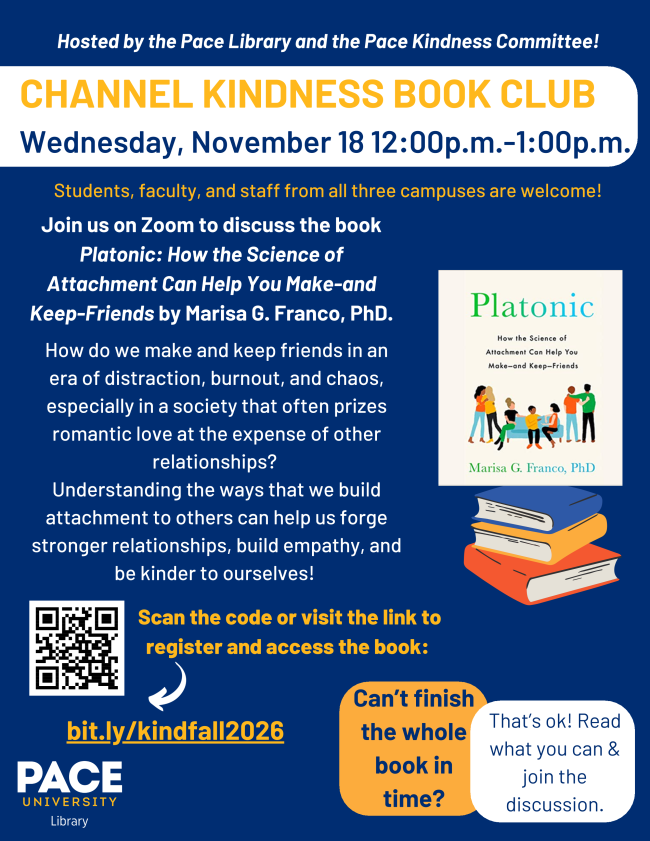
Noreen McGuire and Jessica Kiebler from Pace’s Library are hosting this semester's Kindness Book Club. Join us on Zoom to discuss the book, Platonic: How the Science of Attachment Can Help You Make--and Keep—Friends by Marisa G. Franco PhD!
Wednesday, November 18 12:00p.m.-1:00p.m
Register for the Book Club
In Platonic, Dr. Marisa G. Franco unpacks the latest, often counterintuitive findings about the bonds between us—for example, why your friends aren’t texting you back (it’s not because they hate you!), and the myth of “friendships happening organically” (making friends, like cultivating any relationship, requires effort!). While this book is not directly connected to kindness, understanding the ways that we build attachment to others can help us forge stronger relationships, build empathy, and be kinder to ourselves!
| | |
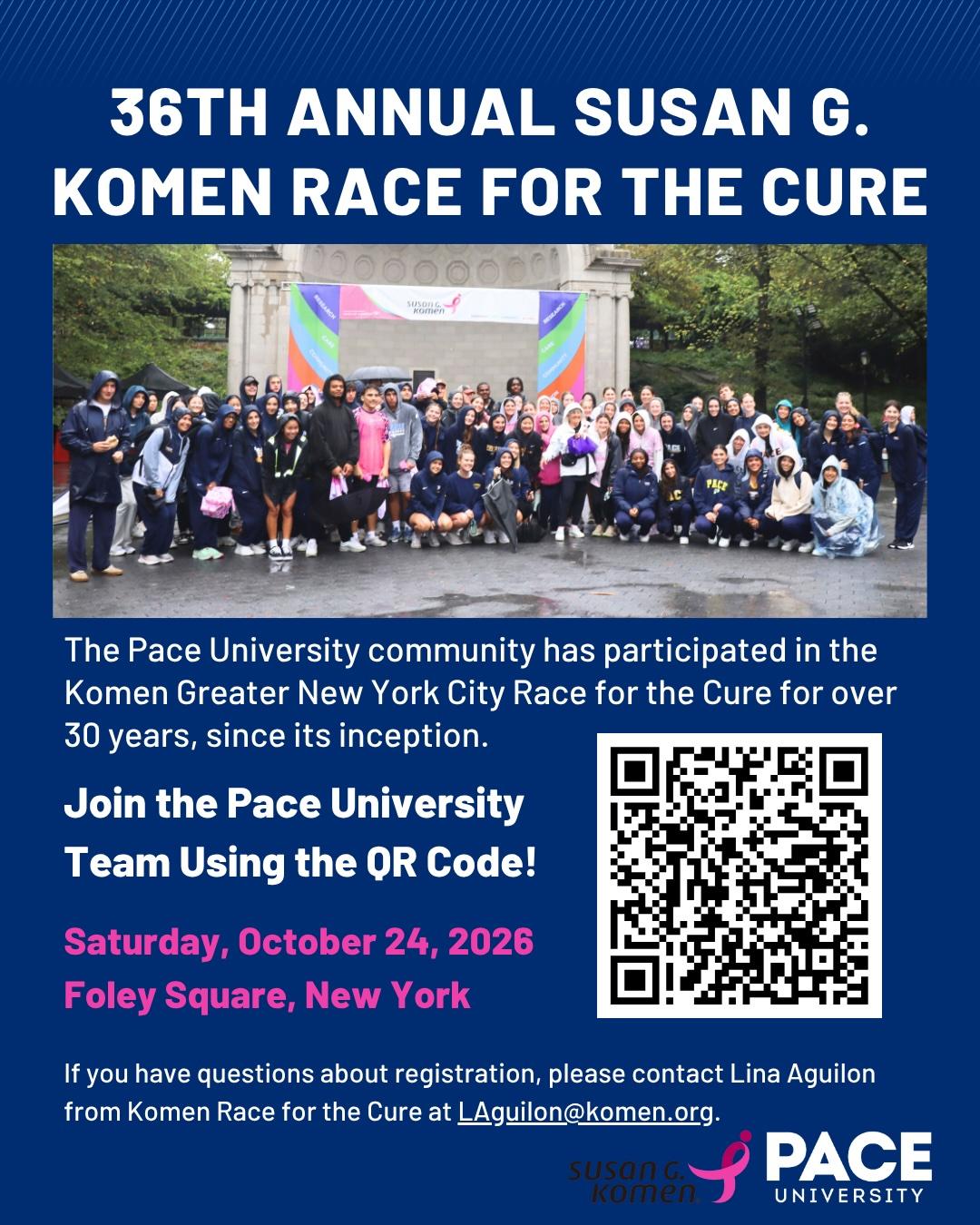
Sign up with Pace Team to Help Beat Breast Cancer! Want to support the 1 in 8 women who will be affected by breast cancer in their lifetime? The Susan G. Komen® 2026 “Race”(actually, just a walk!!) for the Cure is underway, rate! Please consider joining our Pace team (whether in person or virtually as a “sleeper”). It will take place in NYC and together we will all cross the Brooklyn Bridge on Saturday, October 24th! To register, go to the Pace Team Page. This is Pace’s 36th year participating thanks to Professor Emeritus, Ellen Mandel, PhD, and Pace has have consistently received the honor of highest participation rate for a college or university. All staff, faculty and students are encouraged to join and a bus will be provided for those coming from the Pleasantville campus.
| | |
Kindness Book Club
Noreen McGuire and Jessica Kiebler from Pace’s Library are hosting this semester's Kindness Book Club. Join us on Zoom to discuss the book, Platonic: How the Science of Attachment Can Help You Make--and Keep—Friends by Marisa G. Franco PhD!
Wednesday, November 18
12:00p.m.- 1:00p.m
Register for the Book Club
In Platonic, Dr. Marisa G. Franco unpacks the latest, often counterintuitive findings about the bonds between us—for example, why your friends aren’t texting you back (it’s not because they hate you!), and the myth of “friendships happening organically” (making friends, like cultivating any relationship, requires effort!). While this book is not directly connected to kindness, understanding the ways that we build attachment to others can help us forge stronger relationships, build empathy, and be kinder to ourselves!
| | Center for Undergraduate Research Experiences (CURE) Announcements | | |
CURE Faculty Undergraduate Research Mentor Awards
Selected by the CURE Faculty Advisory Committee and funded by the generosity of a Pace Alumnus, the award honors faculty members who have demonstrated exemplary mentoring of Pace undergraduate students in research and creative inquiry projects.
Congratulations to the 2026 CURE Faculty Undergraduate Research Mentor Awardees!
Rita K. Upmacis, PhD (Chemistry/Physical Sciences, NYC, Dyson College of Arts and Sciences - For Exemplary Mentoring of Undergraduate Researchers in Chemistry
Michael J. Rubbo, PhD (Environmental Studies and Science, Pleasantville, Dyson College of Arts and Sciences - For Exemplary Mentoring of Undergraduate Researchers in Environmental Science
The 2027 CURE Faculty Undergraduate Research Mentor Award Call for Applications will be made in the spring.
| | |
2026-2027 Funding Opportunities
The Undergraduate Research Assistantship Program funded by Federal Work Study, and the Student Academic Conference Travel Fund for Undergraduate Research Presentations will be offered for the 2026-2027 Academic Year.
2026-2027 Academic Year Undergraduate Research Assistantship Program funded by Federal Work Study (FWS)
Proposals are accepted on a prioritized basis through October 15, 2026; afterwards, applications will continue to be accepted on a rolling basis until funds are depleted.
The goal of this program is to fund research assistants to support faculty research/creative inquiry projects. Through this program, students have the opportunity to pursue inquiry-based experiential learning through collaboration with a faculty mentor.
To apply, propose a research assistantship position for a specific project. To recruit qualified student applicants, inform your students about the research opportunity so they can better understand the value of their Federal Work Study funds and how those funds can be earned while serving as your research assistant!
Click here to propose your Undergraduate Research Assistantship position
2026-2027 Student Academic Conference Travel Fund for Undergraduate Presentations
Applications will be accepted on a rolling basis, subject to funding availability, to support student participation at external academic conferences. The presentation must be for scholarly research or artistic projects, and the student must be a presenter at the conference and listed in the conference program.
Academic Conference Travel Fund Application Form 2026-2027
| | |
Events and Webinars
Fall 2026 Undergraduate Research Presentation Series (Virtual)
View Program and Register to Attend Sessions
After registering, you will receive a confirmation email containing information about joining the meeting.
The university community is invited to attend the virtual Fall 2026 Undergraduate Research Presentation Series during noon common hours beginning September 23 and concluding on November 9. This series will feature student scholars funded by the Summer 2026 Provost’s Student-Faculty Undergraduate Research and Creative Inquiry Program; Dyson College Student-Faculty Undergraduate Research Initiatives; Amelia A. Gould Undergraduate Research Assistantships in the Creative Arts; and, Council of Independent Colleges (CIC) History and Legacies of American Slavery Program. Please attend to support our student scholars!
Common hour – 12:10 p.m.-1:10 p.m.
- Wednesday, September 30, 2026 - Economics
- Monday, October 5, 2026 | 12:00-1:00 PM - Humanities
- Monday, October 12, 2026 - Psychology and Biology
- Friday, October 16, 2026 - Social Justice and Environmental Studies
- Monday, October 19, 2026 - Mathematics and Statistics
- Wednesday, October 21, 2026 - Social Sciences
- Monday, October 26, 2026 - Creative Arts
- Monday, November 2, 2026 - Biology and Chemistry
- Monday, November 9, 2026 - Humanities
Fall 2026 Student Undergraduate Research Webinar Series
Thursday common hour – 3:25 p.m.-4:25 p.m.
Friday common hour – 12:10 p.m.-1:10 p.m.
Maria Iacullo-Bird, PhD, Assistant Provost for Research
- Peer Undergraduate Research Leaders (PURLs) and Getting Started in Research
o Thursday, October 15, 2026
o Friday, October 16, 2026
- Social Justice, the Responsible Conduct of Research and CITI Training
o Thursday, November 5, 2026
o Friday, November 6, 2026
- Applying for a Summer 2026 National Science Foundation (NSF) Research Experience for Undergraduates (REU)
o Thursday, December 10, 2026
o Friday, December 11, 2026
Register in advance for Thursday meetings
Register in advance for Friday meetings
After registering, you will receive a confirmation email containing information about joining the meeting.
Fall 2026 Faculty Undergraduate Research Webinar Series
Common hour – 3:25 p.m.-4:25 p.m.
Maria Iacullo-Bird, PhD, Assistant Provost for Research
- How to Get Started in Grant Writing and Include Undergraduate Research
o Tuesday, October 13, 2026
- Developing Course-Based Undergraduate Research Experiences (CUREs)
o Tuesday, November 10, 2026
- Applying for a National Science Foundation (NSF) Research Experience for Undergraduates (REU) Program Site or Supplement
o Tuesday, December 8, 2026
Register in advance for Tuesday’s meetings
After registering, you will receive a confirmation email containing information about joining the meeting.
| | |
Resources and Professional Development Opportunities
The Council on Undergraduate Research (CUR) is the leading organizational voice for undergraduate research nationally and globally. Pace has invested in the CUR Enhanced Institutional Membership to enable all faculty, students, and staff to become members of CUR to benefit from its resources and professional development opportunities. Enroll here.
The CUR governance nominations and elections process is open. Learn more here.
| | |
Questions? Email: Elina Bloch, PhD, Associate Director, Sponsored Research
at ebloch@pace.edu
| | | | |