|
The Double Bottom Line
Resident stability isn't just a social outcome, it's a financial one.
February 2026
| | What just landed in my inbox, you ask? | | Welcome to the inaugural issue of CORES Double Bottom Line! This semi-annual newsletter brings HFAs, investors, and lenders the latest trends, data, and practical takeaways on resident services and financing strategies — in under 5 minutes. | | |
Launched in 2018 by the Stewards of Affordable Housing for the Future (SAHF), the CORES Certification has helped unlock additional financing and partnership opportunities for affordable rental housing developers in order to support quality resident services. CORES recognizes organizations that demonstrate the capacity and experience to provide robust resident services.
| | How can CORES be a useful tool for HFAs, investors, and lenders when considering priorities and requirements in underwriting, funding, and support? | | |
CORES Organizations are a Safer Bet for Funding & Lending.
CORES is a 5-year designation for owner-operators and third-party resident services providers that demonstrate organizational competencies and track record to deliver high-quality resident services in affordable rental housing.
Competencies and Track Record Include:
- Developing approaches to sustainably fund resident services
- Leveraging partnerships to enhance onsite services & connect residents to community
- Utilizing data and resident feedback to determine priorities, programs and services
- Using a cycle of data collection to align with community priorities, assure accountability, and demonstrate impact
- Training and supporting staff committed to resident engagement and connection to resources that improve resident stability and wellbeing
Certified organizations have demonstrated experience scaling practices across their portfolio to facilitate partnerships, implement resident-centered programs and services, and measure outcomes and impact of services.
| |
|
"CORES sets a standard for operational excellence and accountability in residential services, which attracts partnerships, funding, and trust from stakeholders who prioritize comprehensive, resident-focused support systems.”
– Enterprise Community Development
| | | | |
CORES & State Qualified Allocation Plans
LIHTC Allocating Agencies in GA, MD, NH, OH, and VA incorporate CORES in their QAPs.
| | | |
CORES & Impact Investors
CORES has strong alignment with several impact investment tools and has been incorporated into the Multifamily Impact Framework. Lenders and investors are utilizing CORES to better understand applicants for financing.
| | | Investment in Resident Services is a Win-Win for Residents, Property Owners and Investors. | | |
Benefits for Residents: Stable, affordable homes are a platform for resident wellbeing and opportunity, particularly when residents have resident services support. SAHF’s Impact report showed SAHF members helped residents weather economic stress of the pandemic, including connecting them with an estimated $29 million in federal Emergency Rental Assistance and local rental assistance programs. 70% fewer households experienced housing instability in SAHF member homes than market-rate renters.
Support for Properties: Studies have shown operational costs related to vacancy loss, bad debt, and legal expenses were significantly lower at properties with resident services than those without resident services – showing average savings from $92-$356 per unit per year.
| | |
Resident Services Industry Trends
What is Happening in the Industry? SAHF helps CORES-certified organizations stay informed about and aligned with resident services industry standards and trends. In each issue of this newsletter, we will feature a couple of key industry trends we are seeing:
| | |
There is a growing demand across the field – from investors and owners – to be able to better tell a story of resident impact. Data collection is an integral part of effective resident services coordination; and we see growing capacity across the field.
Organizations want to better leverage property management and other data sources to demonstrate the impact of onsite service coordination on property and resident success. This data is often critical for unlocking new funding and partnership opportunities.
Many organizations focus on tracking housing stability and resident experience measures as foundational indicators - building out additional surveys and tools that track a broader range of indicators that align with initiatives. While CORES-certified organizations demonstrate strong tools for tracking data and impact, we see a significant number of practitioners focused on collecting resident participation data and not other longer-term outcomes. CORES is supporting the field to build and deepen data capacity through peer exchange and publication of tools (see below).
Additional Resources:
→ Resident Centered
Outcomes Measurement in Affordable Rental Housing Toolkit
→ Aligning Impact Frameworks: CORES in Context
→ Supporting Mission & Margin – Leveraging Resident Services with Impact Investors
| |  | Housing Stability: Healthy Renters = Healthy Properties | |
HFAs, investors, and lenders are increasingly prioritizing resident services to increase housing stability for residents, while also protecting their assets.
Owners see resident services coordination as well as resident engagement and services as critical tools for ensuring household needs are met - increasing resident stability, wellbeing, and improving economic opportunity. Data collected through SAHF’s Housing Stability Cohort showed residents engaging with resident services staff were more stably housed (less likely to be evicted) and had lower arrears than those who did not engage resident services staff. Owners have reported that proactive resident engagement and trust building has improved rates of recertification and lease renewals.
Additional Resources:
→ Housing Stability Cohort Tools & Resource Guide
→ A Foundation for Housing Stability: Prioritizing Preservation Today and Tomorrow
| | | Trends Across the CORES Certified Organizations: | | |
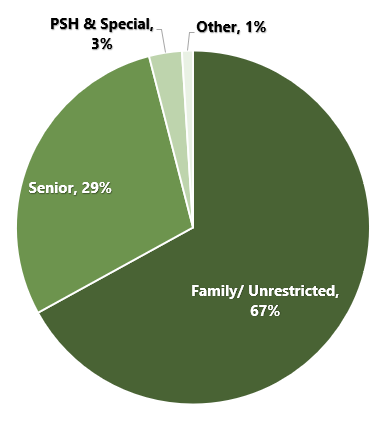
CORES Certified Organization Populations Served
Organizations serve a wide range of populations, including families, seniors, and residents of permanent supportive housing. This chart includes units by population type across the CORES organization portfolio.
| | | |
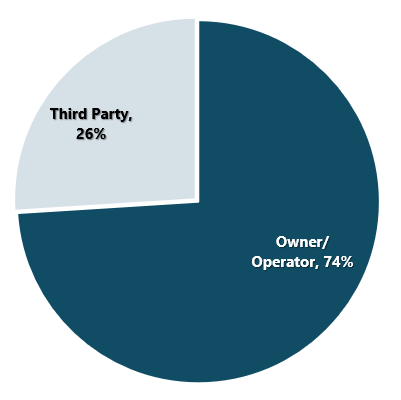
CORES Certified Organizations by Service Model
Resident services can be provided directly by housing owner/operators or by their contracted, third party partners. This chart includes an overview of the CORES organization models.
| | | CORES Portfolio Data as of January 7, 2026. | | What CORES Organizations are Saying: | | |
"The CORES certification enhances the credibility of Resident Services while providing a valuable network of resources and different models with evidence-based data to review and use as a guideline."
– Orlando Neighborhood Improvement Corporation
| | | |
“We highly value our CORES certification as a tool that helps us stay aligned with evolving industry standards and expectations.”
– Portfolio Resident Services
| | |
|
“CORES has helped [our] Resident Services develop clearer metrics and reporting tools to communicate the impact of its services. Internally, this allows Resident Services staff to continue to educate colleagues…so we can align more effectively on goals and outcomes. Externally, it showcases the positive changes residents experience, which strengthens the organization’s reputation and attracts additional funding or partnerships. For Resident Services, this means fostering a deeper connection with residents, listening to their needs, and creating programs that lead to transformative results.”
– Affordable Homes & Communities, National Capital Region housing provider
| | | | Coming in 2026: CORES 2.0 | | |
Since the CORES program launched in 2018, the field has responded to the pandemic, increasing operating costs, & increasing housing and food insecurity - while also experiencing continued growth and transformation. It’s time for an update to the certification and CORES staff have been engaging with practitioners and partners to identify the priorities for these updates.
“CORES 2.0” will launch in late 2026. The program will include updated questions to better understand and recognize staffing models and increased utilization of virtual tools and enhancements.
| | |
Several requirements will also be updated to reflect better alignment with data collection cycles and tools used across the field.
In tandem, SAHF is developing a Property Accountability Framework which will align to CORES standards and help organizations better articulate property-level commitments with their partners and funders. Stay tuned for updates!
| | Received this from a contact? Sign up for the newsletter here! | | | | |