| |
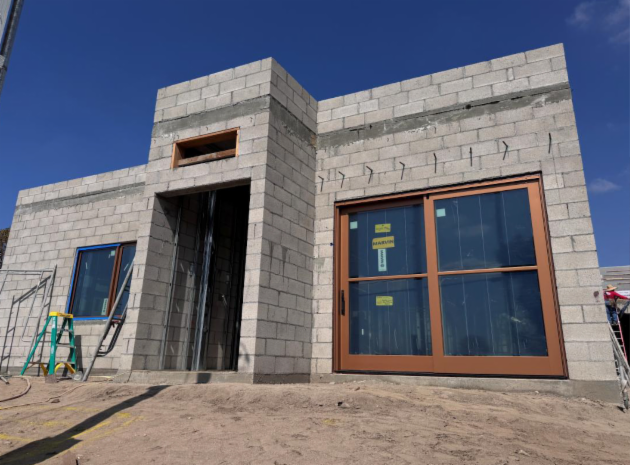
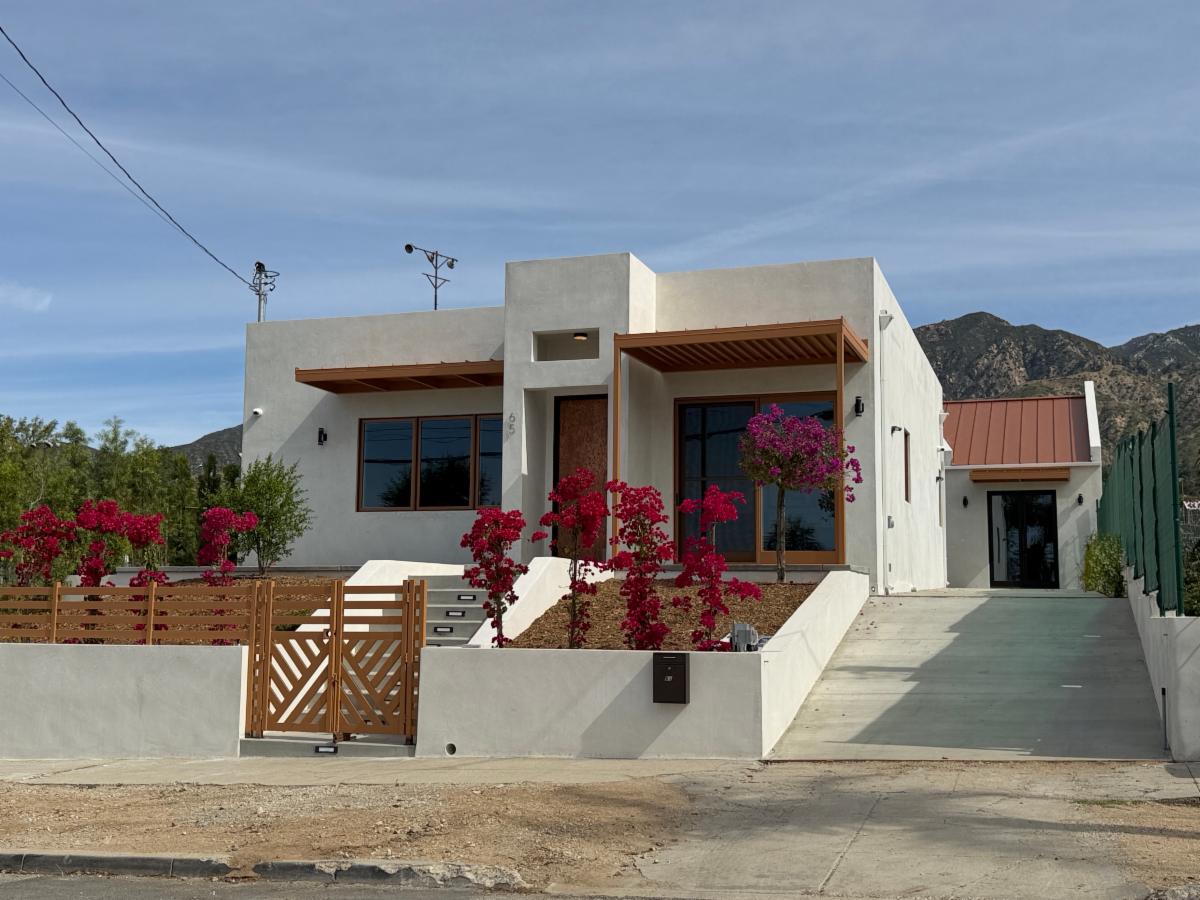
We've included articles in the past that discussed how to rebuild after a fire and the benefits of using masonry to do so. This edition features one example - one of the first homes rebuilt in the Altadena neighborhood. While the designer and owner chose masonry primarily for its non-combustibility, the homeowner is enjoying many of the other benefits of a masonry home, including energy efficiency and a quietier environment. Check out the photo above and article below. Photos courtesy of Trinidad Campbell, TC Design-Build.
One other article of note is the newly published ECHO Project draft guidance on comparative LCAs. While life cycle assessment (LCA) is becoming more common at the building level, doing comparisons between a 'base' building and a 'better' building can still be challenging for design teams. The ASTM standard E2921 provided the only guidance on doing comparisons for a long time. The ECHO Project draft guidance draws from that ASTM standard along with the National Research Council Canada's Whole-Building Life Cycle Assessment Practitioner’s Guide to provide detailed guidance on achieving comparable results.
| |
Christine "Tina" Subasic, PE, LEED AP, FTMS
| | |
What we build after the fire
Architectural Record
This chronicle of one of Altadena’s earliest rebuilds examines how material decisions take on new weight in the face of changing climate risk. For design builder Trinidad Campbell, the Eaton Fire raised a more immediate question: How should that risk influence the way homes are built? For architects, conflagration broadens the question of resiliency beyond an individual property. No wall system can address every vulnerability. Roofs and openings remain critical, as do site conditions and neighboring properties. Material selection is one part of that equation. By rebuilding with structural concrete masonry, the new home not only provides fire resistance, but also improved energy performance. Read more.
| |
Good bones: The decarbonization push heightens interest in reusing old buildings
ENR
While adaptive reuse has been a common practice within the world-wide AEC sector for decades, heightened focus on decarbonization along with net-zero and net-positive goals is driving new interest. Industry firms say they see more building retrofits within their portfolios and more requests for reusing materials that otherwise would go to waste. Read more.
| |
Comparative LCA draft guidance published
ECHO
Nearly all project Life Cycle Assessment (LCA) requirements under current initiatives and policies in the United States offer a comparative assessment option that includes a baseline. However, the lack of substantial guidance on how to effectively approach this assessment is a shared source of frustration for practitioners and reviewers alike. This ECHO Project publication provides aligned guidance on conducting fair comparative project LCAs and articulates baseline modeling practices that can be adopted by embodied carbon programs and policies. The document covers the topics of establishing functional equivalency between baseline and proposed projects, acceptable embodied carbon reduction strategies, and direction on developing a baseline. This guidance has been published in beta form and ECHO is seeking feedback from the practitioner community until the end of June 2027.
| |
Embodied carbon state policy playbook
Carbon Leadership Forum
The Embodied Carbon State Policy Playbook was a collaborative effort developed by the Carbon Leadership Forum (CLF), Natural Resources Defense Council (NRDC), New Buildings Institute (NBI), American Institute of Architects New York (AIA NY), and RMI to provide a clear and aligned vision for the growing number of embodied carbon policies across the United States. This state policy playbook for the next decade lays out a practical, phased theory of change for demand-side embodied carbon policy across three interconnected sectors to realize meaningful emissions reductions: buildings, infrastructure, and products. Read more.
| |
New tool available to help with LEED resilience assessments
USGBC
To help teams get started, USGBC member company Green Badger has created Site Signal, a free tool that gathers public data for a U.S. project address and uses it to pre-populate draft LEED v5 D+C planning workbooks related to the Climate Resilience, Human Impact, and Carbon assessments (as required by prerequisites IPp1: Climate Resilience Assessment; IPp2: Human Impact Assessment; and IPp3: Carbon Assessment). Teams can also download a Methodology & Review Brief showing the data sources, assumptions, and areas that need further input or review. Read more.
| |
October 2026 LEED updates: New guidance, project priorities, ACPs and more
USGBC
USGBC has published new LEED updates that include new guidance documents, project priority credits, alternative compliance paths, and regional guidance. Read more.
| | |
Renew Your Membership Dues for 2027
Membership renewals for 2027 are now open. This past year, members advanced TMS standards, guides and technical programs. TMS hosted 105 participants at the Spring Meeting in Denver, relaunched the Masonry Educators Workshop with 48 registrants from 29 colleges and universities, and received 141 abstracts for the 15th North American Masonry Conference in June 2027. In 2027, TMS will also celebrate its 50th anniversary.
Membership connects you with industry professionals, technical resources, educational programs, member pricing and opportunities to shape the Society’s work. Please renew by December 31, 2026. Renewing early helps TMS plan for the year ahead. Read more.
| |
Masonry Educators Workshop Recordings
Looking for resources to teach masonry? The Masonry Society’s four-part, on-demand workshop offers six hours of instruction covering the Masonry in a Box curriculum, essential masonry concepts and connections to industry practice. Educators and industry professionals involved in education and training will find practical teaching materials and supporting resources. Access is $100 for TMS members and $140 for nonmembers. Learn more and access the recordings.
| | Sustainability News Sponsors | | Articles included in this publication are for informational purposes only and do not constitute endorsement by The Masonry Society. Questions, comments, or article submissions may be sent to: sustainability@masonrysociety.org | | | The Masonry Society | 2629 Redwing Road Suite 136 | Fort Collins, CO 80526 US | | | | |