Resources and support for Mercy Care providers | |
| | |
Providers hours of operation
Providers must offer the same hours of operation that are no less (in number or scope) to Mercy Care members that are offered to non-Medicaid members.
Primary Care Providers (PCPs) are required to provide members with telephone access 24 hours a day, 7 days a week including weekends and holidays.
Mercy Care monitors appointment availability for routine and urgent appointments, as well as after-hours care.
Read Section 4.02 and 4.03 in our provider manual for additional information.
| | | |
| | |
Access to Primary Care
Mercy Care conducts an annual analysis using valid methodology to evaluate access to primary care services. Performance is measured against Mercy Care access standards, including:
-
Routine and regular appointments: within forty-five calendar days
-
Urgent care appointments: within 24 hours
-
After‑hours care: 24/7 access to clinical coverage or guidance
Standards help ensure members receive timely, appropriate care and support ongoing quality improvement.
| | | |
| | |
Access to Behavioral Healthcare
Mercy Care is committed to ensuring members receive timely access to behavioral healthcare in accordance with Mercy Care standards. Each year, the organization uses a valid, systematic methodology to collect and analyze appointment access data across the behavioral health network to evaluate performance and identify opportunities for improvement.
Access is measured against established timeliness standards, including care for non‑life‑threatening emergencies within 6 hours, urgent care within 48 hours, initial routine visits within ten business days, and timely access to follow‑up routine care. Monitoring these timeframes helps ensure members receive appropriate care when needed and supports continuity of treatment.
Through ongoing evaluation and collaboration with providers, Mercy Care continues to strengthen access to behavioral healthcare and improve outcomes for the members it serves.
| | | |
| | |
Access to Specialty Care
Mercy Care annually evaluates access to specialty care using a valid, standardized methodology to ensure members receive timely services. This review focuses on appointment availability for high‑volume specialty care and high‑impact specialty care, which are essential to meeting common and complex member health needs.
Findings from this analysis support ongoing quality improvement, network planning, and collaboration with providers to address access concerns and maintain high standards of care across the Mercy Care network.
| | | |
| | |
Member grievance & appeal rights
When entering a contract with Mercy Care, practitioners, providers, and delegates receive information outlining member rights related to grievances and appeals. Members have the right to file grievances and appeals and are informed of the applicable requirements and timeframes for doing so. Assistance is available to help members through the filing process.
If a member receives an adverse appeal decision, they also have the right to request a State Fair Hearing. Members are advised that they may be responsible for the cost of services received while an appeal or State Fair Hearing is pending.
Mercy Care appreciates providers’ partnership in supporting member rights and ensuring clear communication throughout these processes.
| | | |
| | |
Whole Person Care (Population Health Management)
Mercy Care’s population health strategy focuses on identifying high‑risk Medicaid members, coordinating care across physical, behavioral, and social services, preventing avoidable utilization, and addressing social factors that impact health. This work is conducted through care management, community partnerships, preventive care, and reinvestment in local programs, all aligned with AHCCCS Whole Person Care.
The optional programs available to members include but are not limited to: Healthy Beginnings, Diabetes Management, ER Diversion and Chronic Condition Management. To learn more about these available programs call our member service department at 1-800-624-3879 (TTY 711).
| | | |
| | |
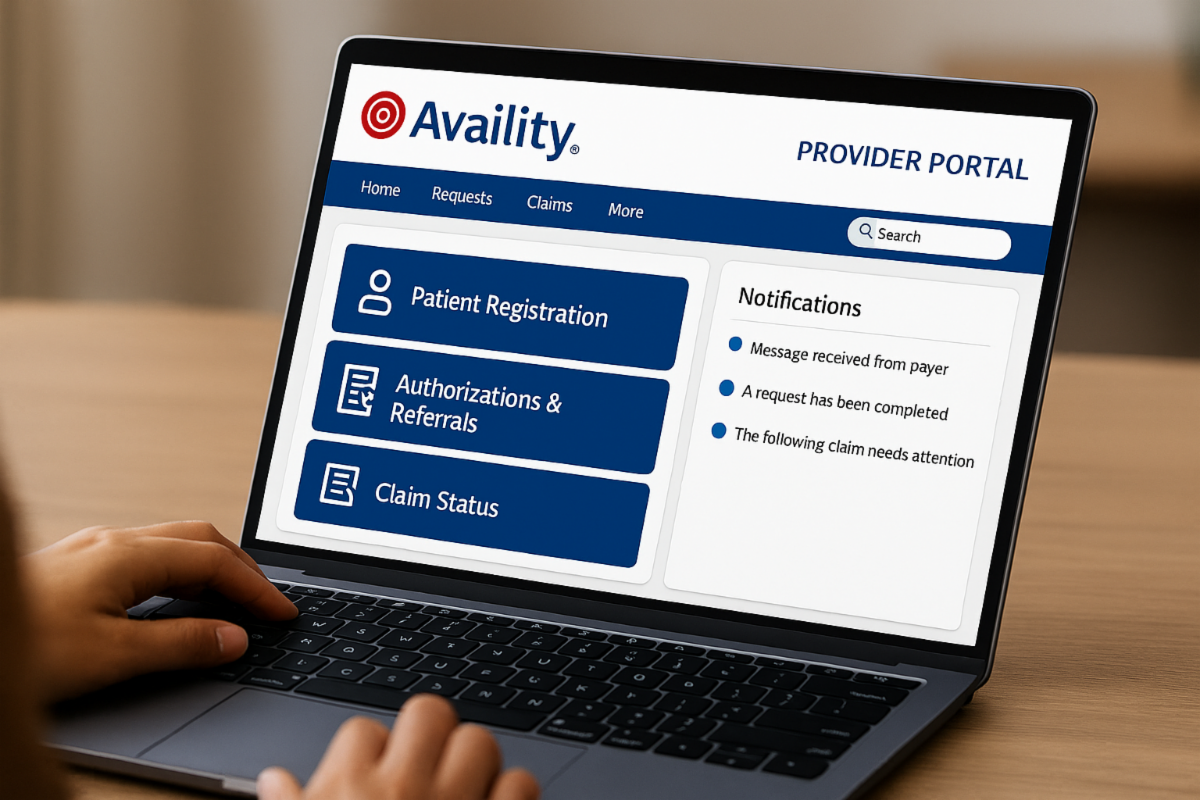
Availity ® provider secure portal
Availity® offers secure online access to and the ability to manage business transactions through a single, easy-to-use site. Availity® features include but are not limited to:
• Claim submission and status
• Eligibility and benefits search
• Authorization request
• Case Management link
• Grievance submission
• Panel roster
If your organization isn’t registered with Availity®, click here to get started today.
| | | |
|
Provider collaboration and support
Mercy Care wants to support our health care providers as we work together to reach health care goals. We offer a variety of webinars and training opportunities throughout the year to help you and your staff stay up to date on essential responsibilities.
To support collaborative care management with provider partners and reduce care fragmentation, the health plan and participating providers will share responsibility for delivering coordinated, patient-centered care. Each party will work collaboratively to ensure timely communication, clear accountability, and seamless transitions across care settings in support of patient outcomes and experience. Roles and responsibilities are outlined below and will be reviewed at least annually or when processes change. This collaborative approach is intended to help reduce patient frustration, improve accountability, and support improved health outcomes.
| | | | | Role | Function | Health plan responsiblities | Provider responsibilities | | Designated point of contact | Assign care management contact(s) and provide contact information. | Assign practice contact(s) and ensure availability for coordination activities and timely response. | | Identification & outreach | Identifying populations and stratifying members based on risk, clinical needs, and social drivers of health. | Support outreach by validating member status, encouraging engagement, and coordinating with the member’s care team as needed. | | Referrals to Care Management | Maintain a defined referral intake process and confirm receipt, triage, and assignment. Communicate enrollment status and next steps to the provider partner. | Refer eligible members using the defined process and provide relevant clinical context. | | Care plan development & updates | Develop an individualized care plan with the member / caregiver and share relevant care plan components and goals with the provider partner. | Engaging patients in recommended care plans and reinforcing care management interventions. | | Documentation & sharing information | Maintain documentation of care management activities and communicate relevant updates to provider partners consistent with privacy, consent, and data-sharing requirements. | Accurately document care coordination and follow up activities in the medical record and provide requested clinical information to support coordinated, patient-centered care. | | Health related social needs | Provide health related social needs resource navigation and community referrals. | Screen for social risks when appropriate; coordinate referrals and document outcomes. | | Gaps in Care Coordination | Communicating care gaps and care management engagement status to provider partners. | Review care gap reports shared by the health plan and take appropriate clinical action within the scope of practice. | | Transitions of care | Coordinate post-discharge outreach, medication reconciliation support, and share discharge-related information with provider partners when available. | Schedule timely follow-up visits, review discharge instructions and reconcile medications as clinically appropriate. | | |
| | |
Care Management referrals
Members may be referred to the Care Management program from multiple sources, including medical management programs, discharge planners, providers, members and caregivers.
For Care Management criteria and information on how to refer a member to Care Management visit the Medical Management page on our Mercy Care website.
| | | |
| | |
Utilization Management and medical necessity criteria
Mercy Care uses Milliam Care Guidelines (MCG) to promote consistency in hospital-based utilization management practices. MCG guidelines span the full continuum of care and reflect best practices for treating common conditions. The criteria are updated regularly as new versions are released.
Utilization Management criteria are available electronically to practitioners.
Click here to access an electronic copy of MCG.
| | | | Your feedback is important to us. Please send us your thoughts and suggestions below | | | | |