Week Ending January 24, 2026 (Week 3)

Each year, the Kane County Health Department (KCHD) monitors respiratory illness activity from October through May. This report summarizes influenza, COVID-19, and respiratory syncytial virus (RSV) activity using data from emergency department (ED) visits, laboratory test positivity, intensive care unit (ICU) admissions, long-term care outbreaks, and influenza-like illness (ILI1) school absenteeism.


All data contained within this report are provisional and subject to change.


The Kane County Health Department thanks all surveillance partners for assisting with collecting and sharing this information.

Overview

Respiratory Illness Activity in Kane County is estimated to be MODERATE2:

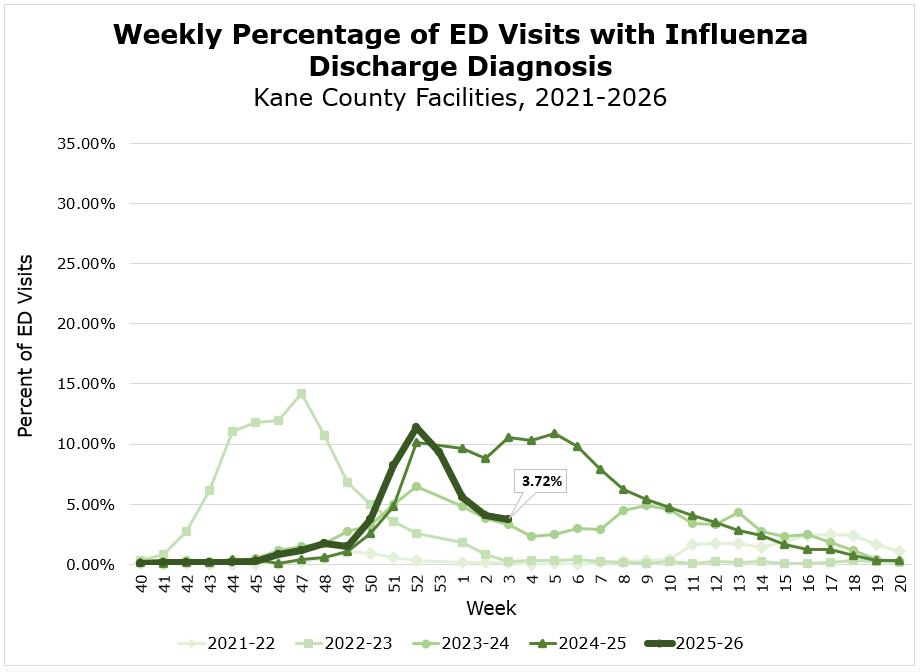
  • 3.72% of all visits at Kane County emergency departments were for influenza.
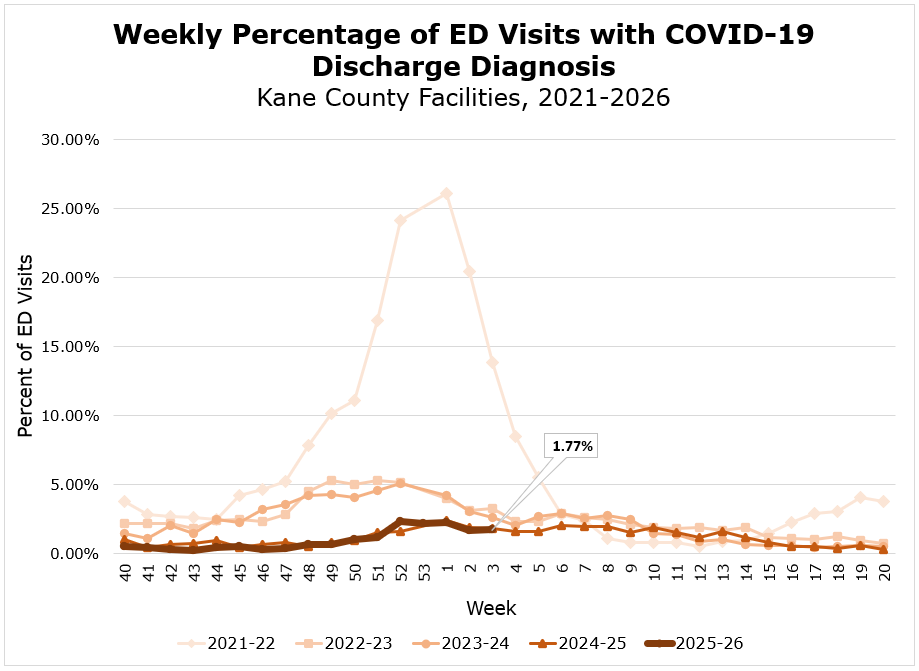
  • 1.77% of all visits at Kane County emergency departments were for COVID-19.
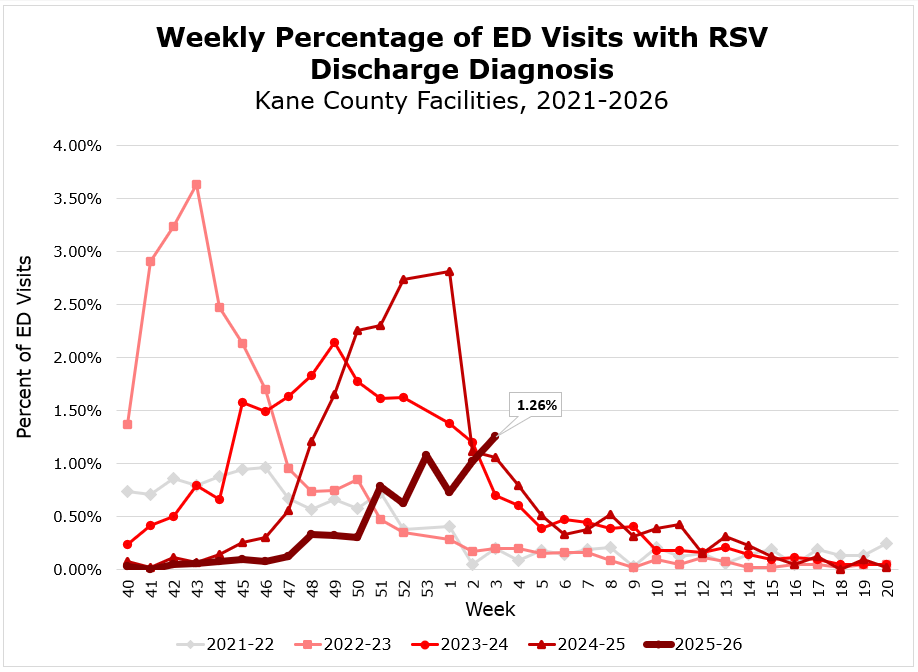
  • 1.26% of all visits at Kane County emergency departments were for RSV.


5 respiratory illness-related ICU admissions was reported to the health department during this week; there has been a total of 71 respiratory illness-related ICU admissions this season.


No pediatric deaths due to respiratory illnesses have been reported this season.


KCHD reported 4 respiratory illness outbreaks in long-term care/assisted living this week to IDPH.  This season, there has been a total of 26 reported outbreaks of respiratory illness in these settings.


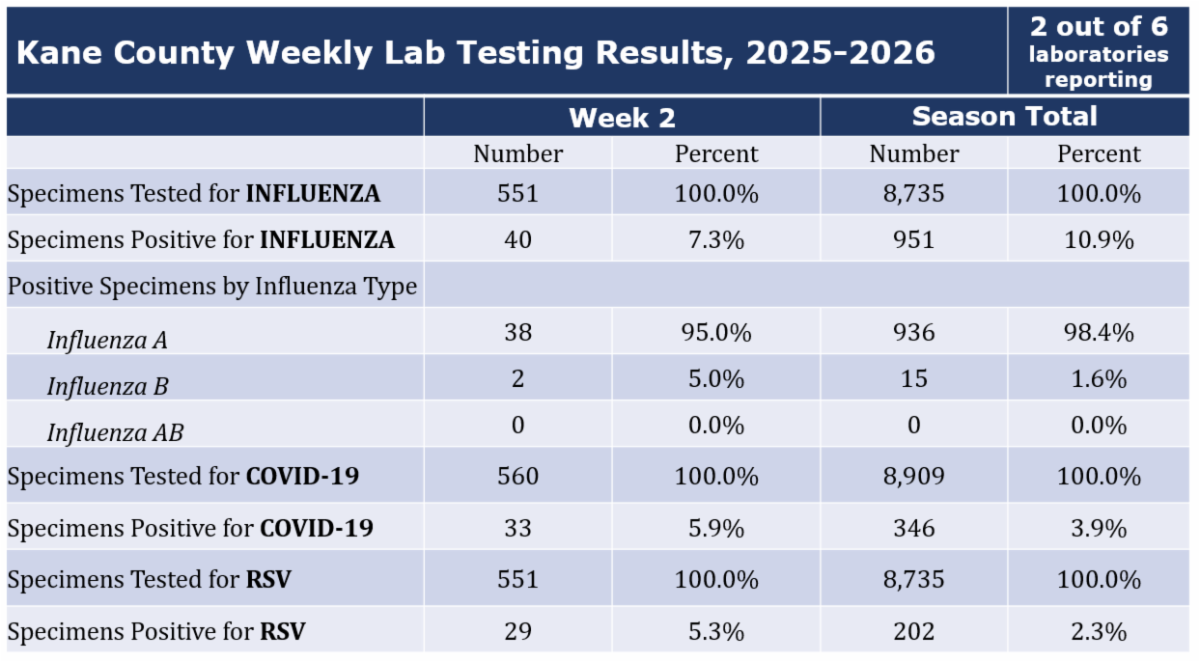
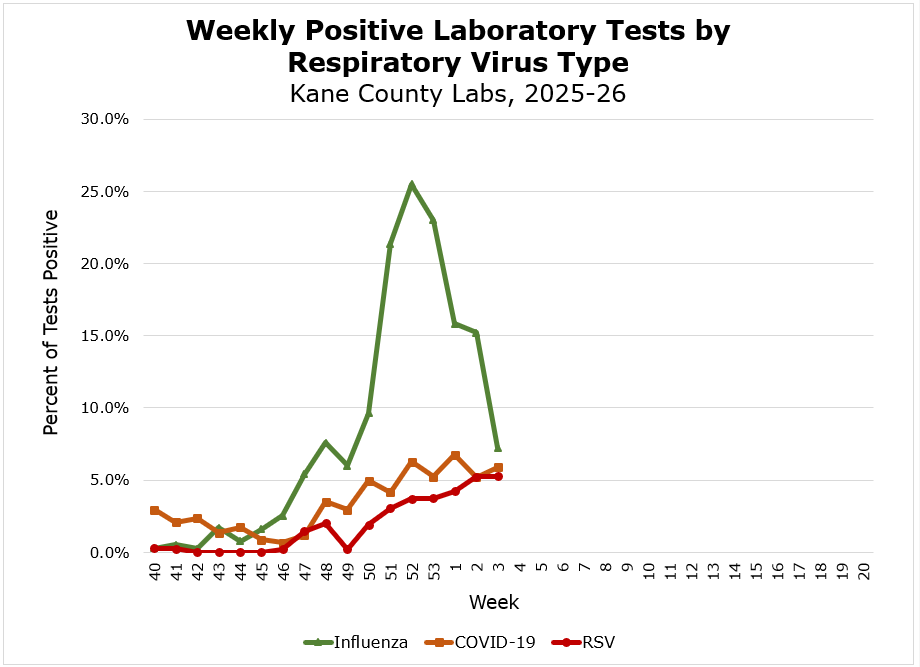
A total of 102 of 1,662 (6.1%) specimens tested for respiratory viruses were positive at 2 Kane County labs:

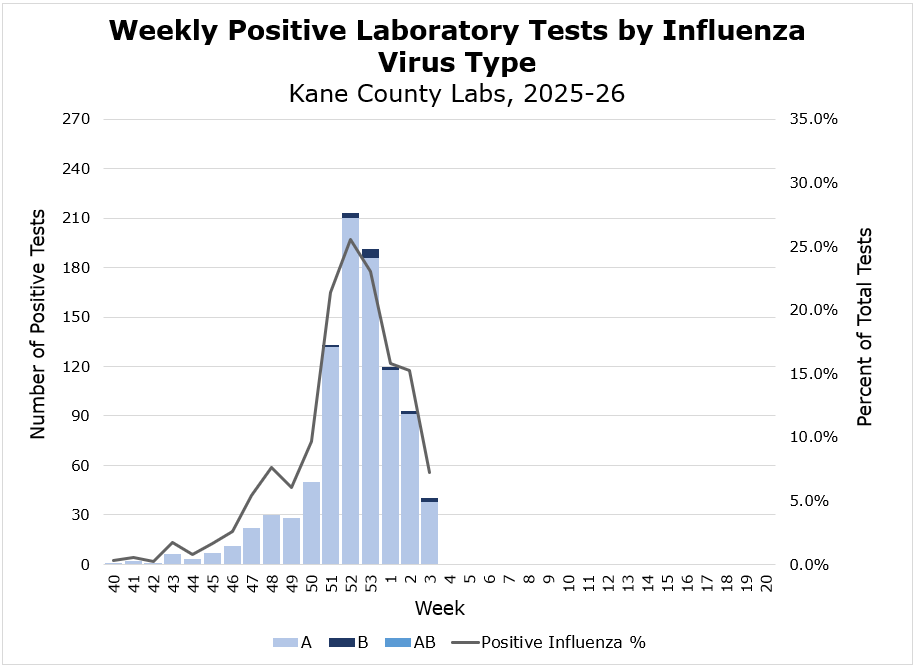
  • 40 of 551 (7.3%) influenza tests were positive3.
  • 33 of 560 (5.9%) COVID-19 tests were positive.
  • 29 of 551 (5.3%) RSV tests were positive.


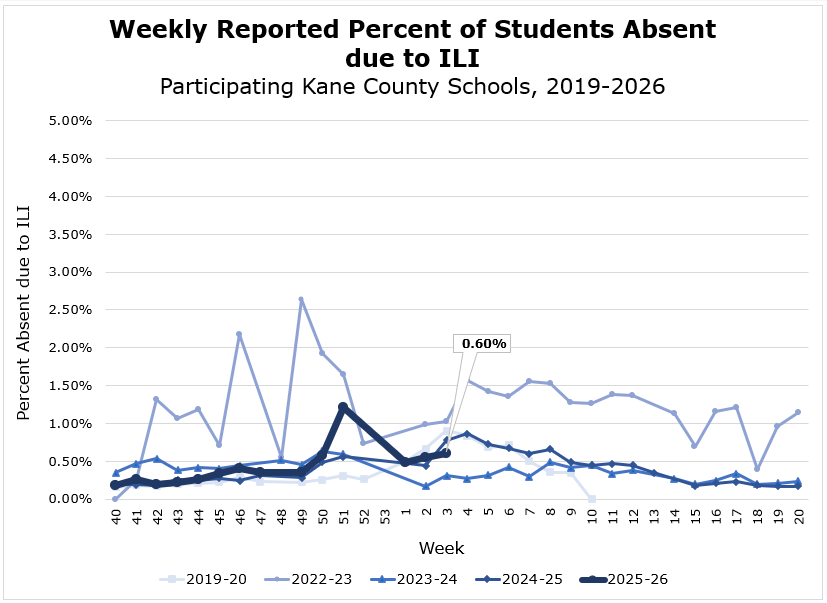
0.60% of Kane County public school students were absent due to ILI.

Emergency Department (ED) Visits

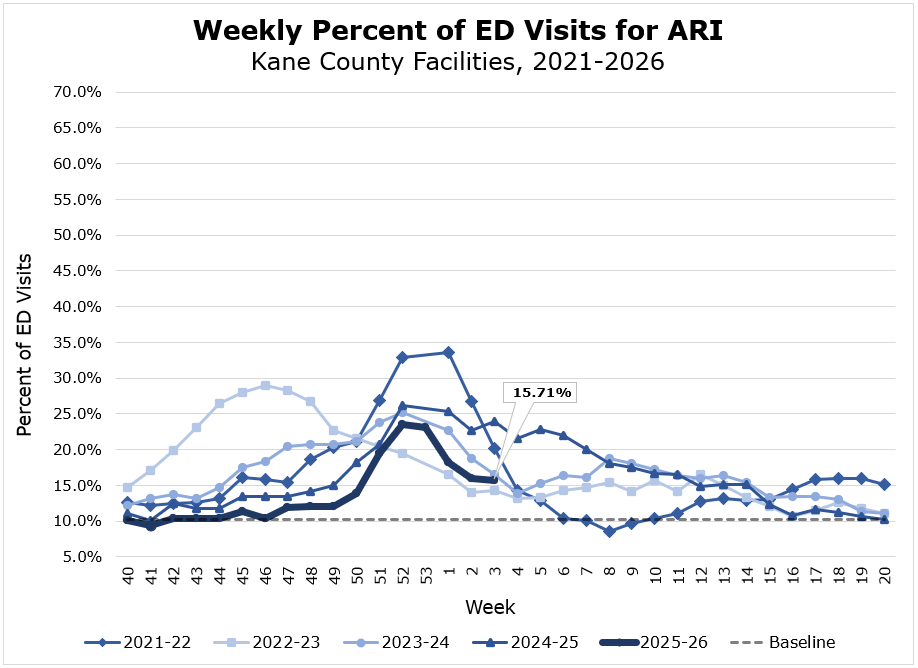
The Kane County Health Department has transitioned from using Influenza-Like Illness (ILI) to Acute Respiratory Illness (ARI)4 as an indicator for overall respiratory illness activity for the 2025-26 season. ARI is a more comprehensive indicator of respiratory illness, and has been currently recommended by CDC.


Each week, data for the 2025-26 season will be presented with data from previous respiratory illness seasons to show the trend of ED visits for acute respiratory illness over time.


The baseline5 for ARI related emergency department visits in Kane County is 10.3% of all emergency department visits.


15.71% of hospital emergency department visits this week were for ARI.


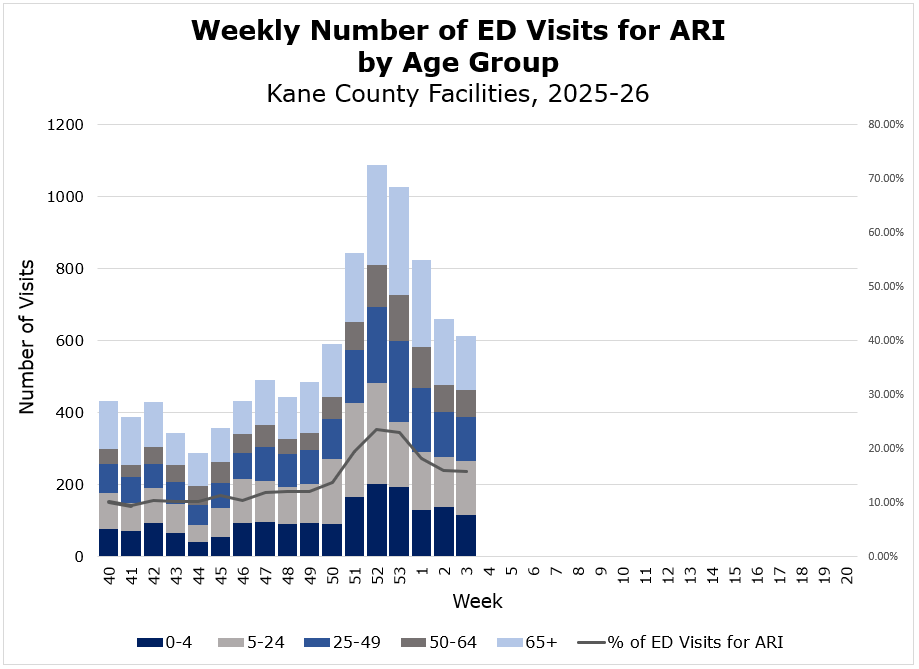
Emergency department visits for ARI in Kane County had the following age distribution:

  • 0-4 years: 19.1%
  • 5-24 years: 24.1%
  • 25-49 years: 20.0%
  • 50-64 years: 12.2%
  • 65+ years: 24.6%

Influenza

3.72% of hospital emergency department visits were for influenza.


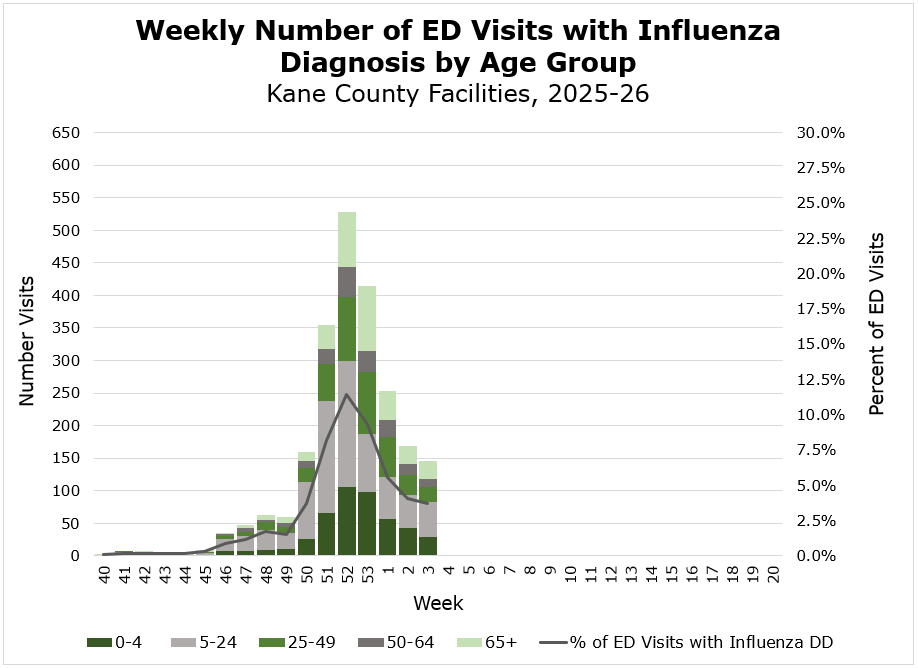
Emergency department visits for influenza in Kane County had the following age distribution:

  • 0-4 years: 20.0%
  • 5-24 years: 37.2%
  • 25-49 years: 15.9%
  • 50-64 years: 8.3%
  • 65+ years: 18.6%

COVID-19

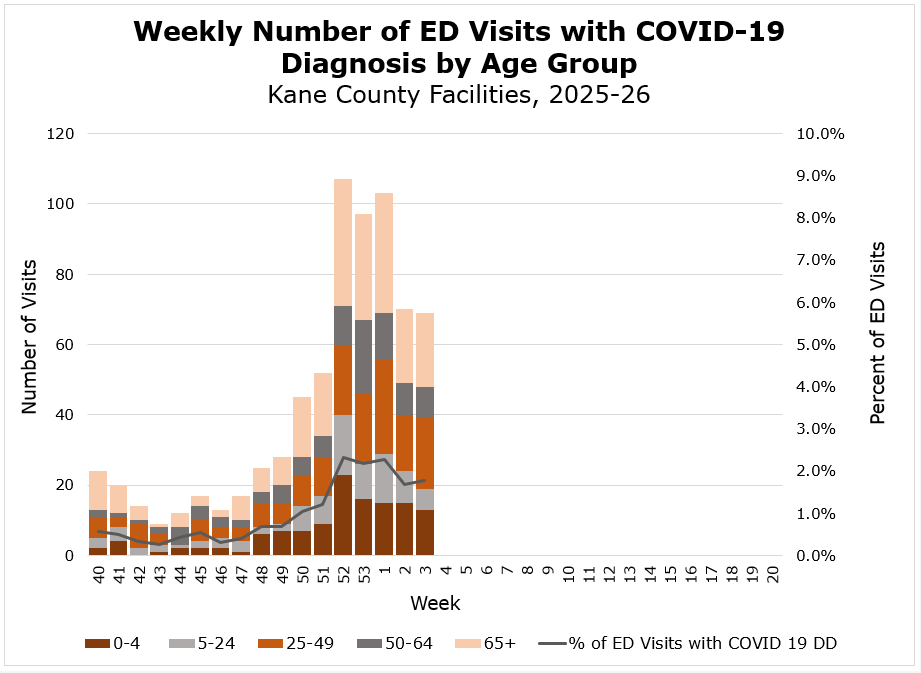
1.77% of hospital emergency department visits were for COVID-19.


Emergency department visits for COVID-19 in Kane County had the following age distribution:

  • 0-4 years: 18.8%
  • 5-24 years: 8.7%
  • 25-49 years: 29.0%
  • 50-64 years: 13.0%
  • 65+ years: 30.5%

RSV

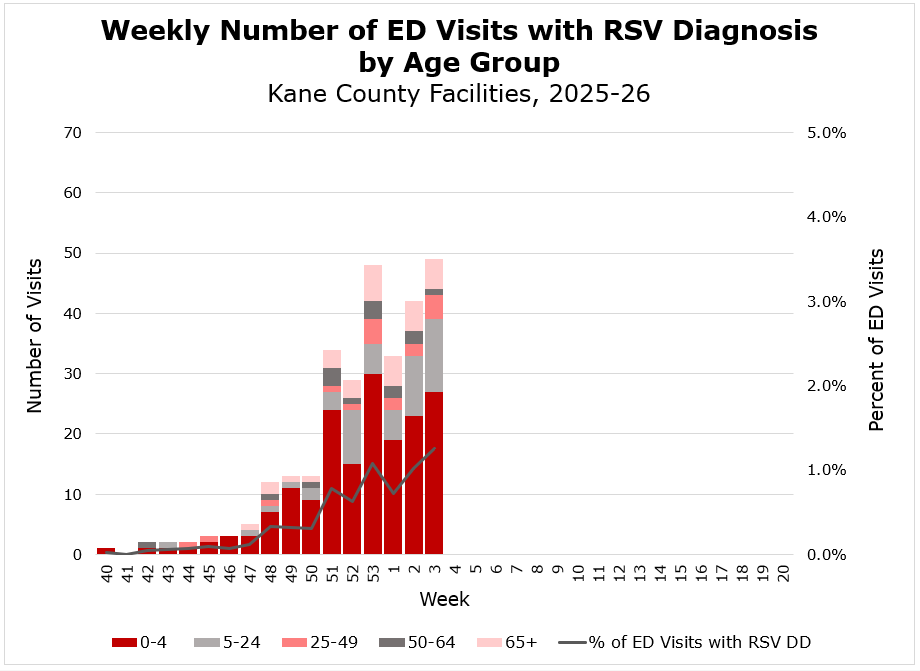
1.26% of hospital emergency department visits were for RSV.


Emergency department visits for RSV in Kane County had the following age distribution:

  • 0-4 years: 55.1%
  • 5-24 years: 24.5%
  • 25-49 years: 8.2%
  • 50-64 years: 2.0%
  • 65+ years: 10.2%

Laboratory Testing

Student Absenteeism

0.60% of students were absent from school due to influenza-like illness (ILI)1 during this week.


The Kane County Health Department received absenteeism reports from 100 public schools.

*School Absenteeism from March 2020 through May 2022 is not reported due to COVID-19.

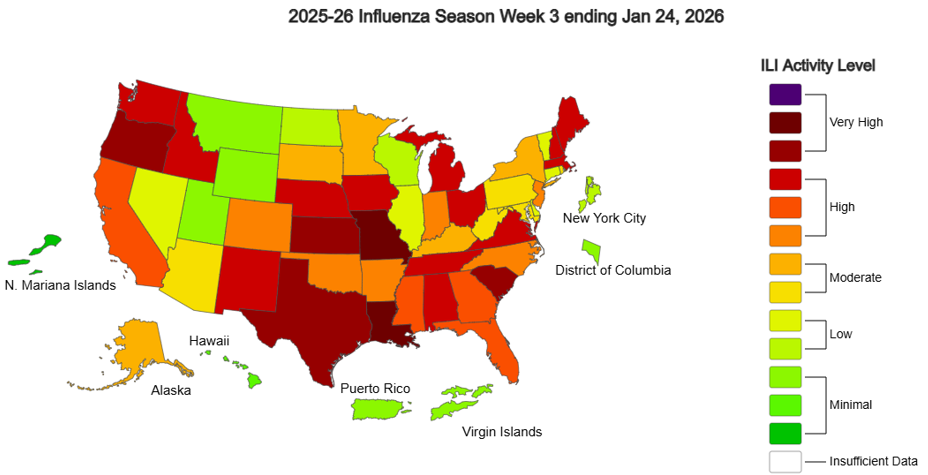
National Snapshot6


  • The activity levels compare the mean reported percent of visits due to ILI during the current week to the mean reported percent of visits due to ILI during non-influenza weeks. The 13 activity levels correspond to the number of standard deviations below, at, or above the mean for the current week compared with the mean during non-influenza weeks. 


  • This map uses the proportion of outpatient visits to healthcare providers for influenza-like illness to measure the ILI activity level within a state. It does not, however, measure the extent of geographic spread of flu within a state. Therefore, outbreaks occurring in a single city could cause the state to display high activity levels.


  • Data collected in ILINet may disproportionately represent certain populations within a state, and therefore may not accurately depict the full picture of influenza activity for the whole state.


1Influenza-like illness (ILI) is defined as fever ≥ 100°F with a cough and/or sore throat.

2Respiratory Activity is defined by: Minimal (0-10% of ED visits were for ARI), Low (10-15% of ED visits were for ARI), Moderate (15-20% of ED visits were for ARI), and High (20-25% of ED visits were for ARI), Very High (25% or more of ED visits were for ARI).

3Rapid influenza testing cannot distinguish influenza infections caused by novel influenza A viruses. The sensitivity of this type of testing has been shown to range between 20-100% for seasonal influenza viruses. A negative result does not exclude influenza virus infection.

4According to CDC, the purpose of using broad acute respiratory illness (ARI) definition is "to assist state, tribal, local, territorial, and federal public health practitioners in identifying visits in the emergency department (ED) and urgent care (UC) settings with diagnostic codes associated with a broad range of acute respiratory illnesses. This includes codes associated with specific respiratory infections (e.g., Influenza, respiratory syncytial virus [RSV], or coronavirus), and codes associated with general respiratory illness such as cough or pneumonia. Co-circulation of multiple respiratory viruses has garnered interest in tracking the impacts of respiratory illnesses together. This is a new definition that was created to monitor the combined effects of multiple respiratory illnesses and aid in identification of the primary cause of increases through pathogen-specific surveillance. This aims for a broad view of respiratory visits and does not attempt to parse out visits due to a specific infection or condition. Additionally, historic baselines would exist and could be used to help determine if a new respiratory pathogen emerges." For additional information, please refer to https://knowledgerepository.syndromicsurveillance.org/sites/default/files/2023-08/CDC Broad Acute Respiratory DD v1 Factsheet.pdf

5The baseline for Emergency Department (ED) visits related to Acute Respiratory Illness (ARI) was calculated using the average percentage of visits during weeks with the lowest respiratory illness activity. This calculation was based on clinical and public health laboratory test positivity data from NREVSS for the three most recent respiratory illness seasons (2022–23, 2023–24, and 2024–25). Specimen data from HHS Region 5 was used as a reference for Kane County. The ARI-related ED visit baseline serves as a reference point for determining current levels of respiratory illness activity. For a detailed explanation of the baseline calculation, please visit: https://www.cdc.gov/respiratory-viruses/data/activity-levels.html#cdc_data_surveillance_section_7-data-notes.

6The National Snapshot comes directly from the FluView interactive portal prepared by the CDC Influenza Division using ILINet data. FluView can be accessed at https://gis.cdc.gov/grasp/fluview/main.html.

Additional Resources

All weekly respiratory illness reports are available online at https://kanehealth.com/Pages/Resp Illness Surv.aspx.


Report an outbreak: https://redcap.dph.illinois.gov/surveys/?s=REAJRF3MPHYAF97F


KCHD Communicable Disease Page: https://kanehealth.com/Pages/Communicable-Disease.aspx


KCHD Respiratory Illness Surveillance Page https://www.kanehealth.com/Pages/Resp Illness Surv.aspx


CDC respiratory illness information can be found at https://www.cdc.gov/respiratory-viruses/about/index.html.


National Respiratory Illness Surveillance: https://www.cdc.gov/respiratory-viruses/data/activity-levels.html.


IDPH Respiratory Illness Surveillance Dashboard: https://dph.illinois.gov/topics-services/diseases-and-conditions/respiratory-disease/surveillance/respiratory-disease-report.html.

Facebook  Instagram  LinkedIn