|
FAQ’s
--Do the current precinct scanners read and tabulate hand marked ballots?
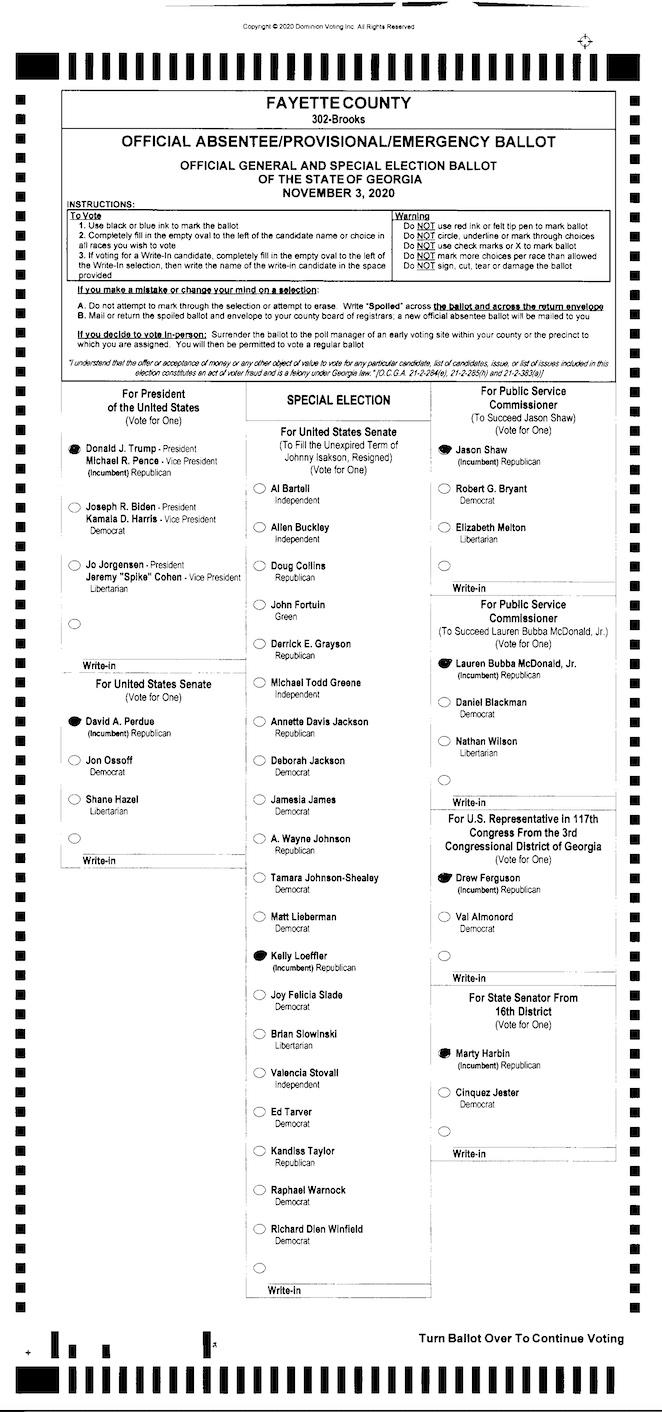
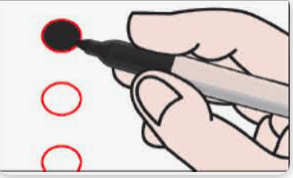
Yes. In all elections, the scanners are currently configured to read either touchscreen BMD QR code ballots or hand marked emergency back-up ballots (like the ballot image above).
--Would the state have to buy new voting equipment?
No. The counties would merely keep most of the touchscreens, printers and back-up batteries in the warehouse and save millions of dollars in 2024 elections in equipment programming, handling, monitoring. The current county election servers and precinct scanners would be used. Post-election audits should be conducted to ensure that the right winners were declared.
-Can’t the problem be solved with curtains around the machines?
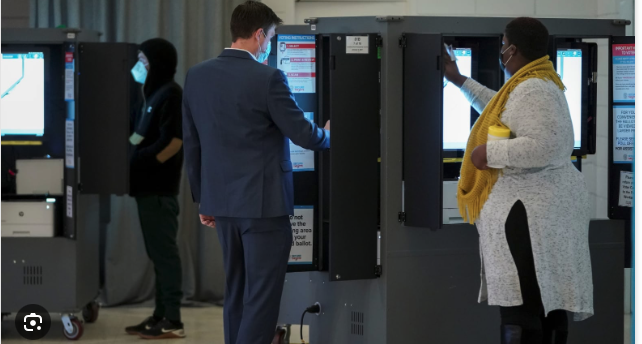
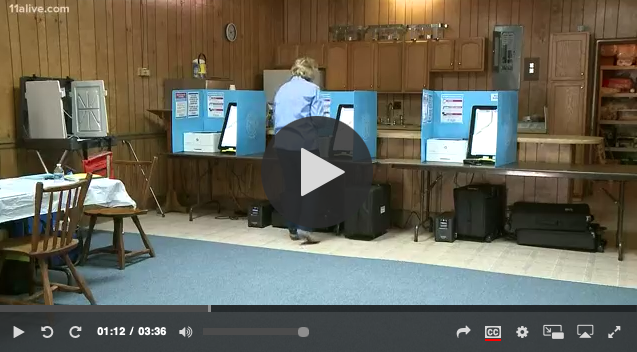
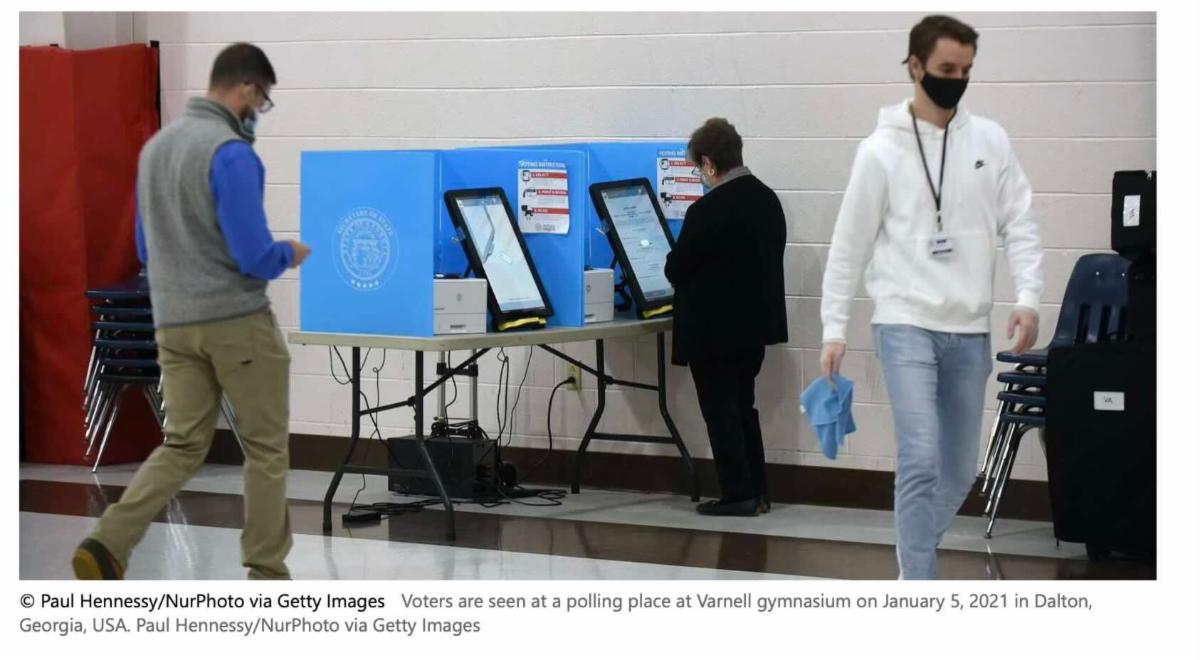
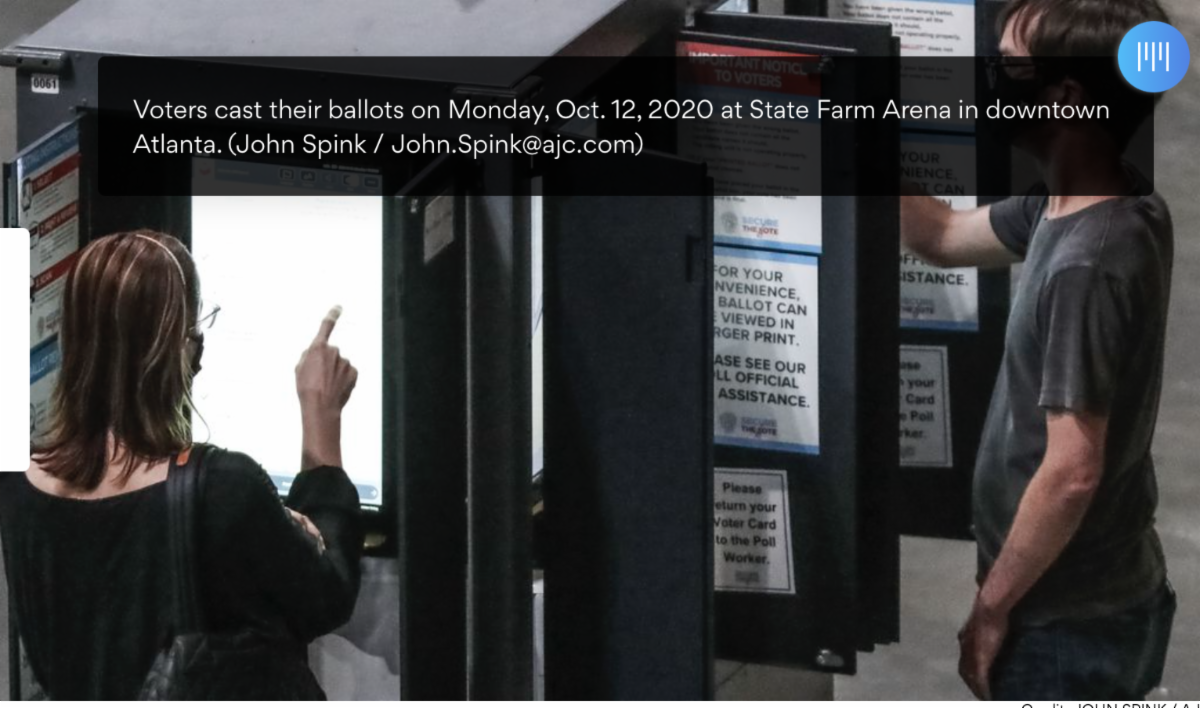
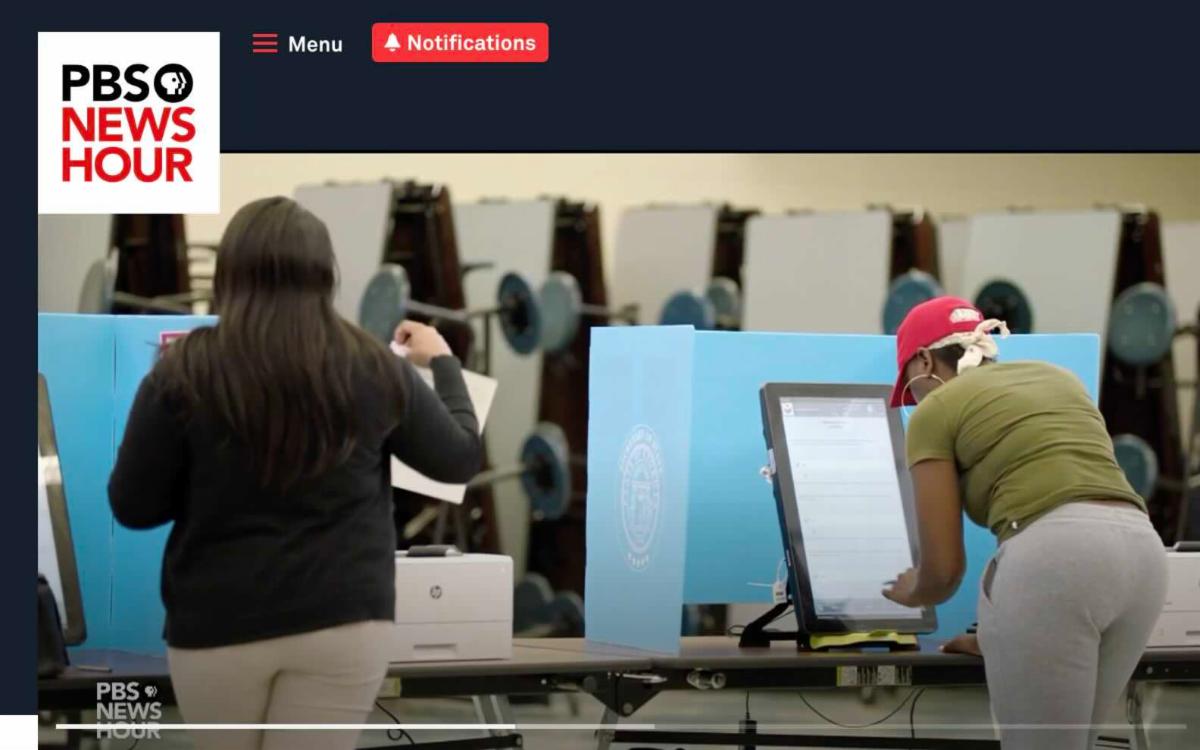
No. Georgia Election Code wisely requires that voting system components be visible to the workers, poll workers and public to monitor for tampering. With the touchscreens at high risk for hacking, the touchscreens and printers must be visible, --a requirement often not met currently.
-Can’t the problem be solved with privacy screen protectors applied to the touchscreen?
We are not aware of any effective, tested, and EAC-certified protective film for these touchscreens that would not risk negatively affecting touchscreen sensitivity, accuracy and clarity.
--We don’t expect electronic privacy in other areas of our lives, isn’t the secret ballot an outdated concept?
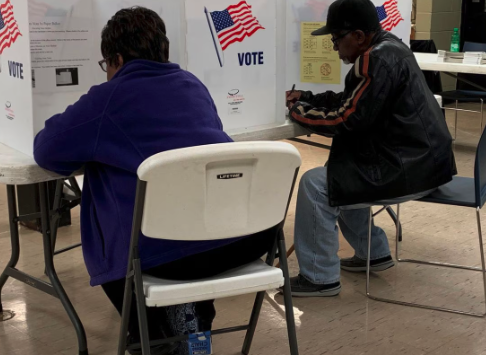
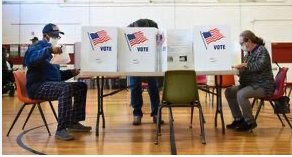
Democratic societies across the world recognize that in exercising their most precious right, voters must be guaranteed that they will never be called on to explain their vote, or expose their choices to the peering eyes of their employers, landlords, religious leaders, law enforcement or other authority figures. We often hear complaints from voters in small communities in rural Georgia who feel intimidated and pressured as they vote in their neighborhood polling place where their votes are watched by local leaders. The majority of rural Georgia voters do not enjoy the benefit of the rather anonymous environments of metro area polling places. All Georgia voters have the irrefutable right to make their choices privately.
--Isn’t this just another way to get the state voting on hand marked paper ballots?
Protecting the voters’ constitutional right to a secret ballot also has the equally important benefit of protecting voters’ constitutional rights to an accountable vote if the voter uses a hand marked ballot.
--Doesn’t Georgia law mandate the use of touchscreen ballot marking devices?
The 2019 mandate (HB316) is not an unconditional mandate. It is a state statute that cannot trump the Georgia Constitution or federal law (Help America Vote Act) secret ballot protections. The BMD law contains the standard provision, “unless otherwise authorized by law.” The secret ballot rights must be protected as a legal priority.
--Does the five-member State Election Board have the authority to make Election Code rules that would restrict touchscreen use?
Yes, the Board is charged with the duty to ensure that Election Code rules provide for the legal conduct of elections.
--Can the Board act in time to protect ballot secrecy and secure ballots for the November municipal elections?
Yes, they should finalize the adoption of this rule this fall before early voting for the November municipal elections begins in October. This would help secure the election from effective electronic manipulation as well as protecting ballot secrecy.
--How does such a rule help protect the local officials?
Local boards and election directors have struggled with the competing pressures from Secretary Raffensperger to deploy the touchscreen BMDs no matter the privacy or security concerns. Yet they risk being charged with felonies at every election as Georgia law (carrying criminal punishment) prohibits looking at a voter’s screen while the voter is voting, and also prohibits anyone from disclosing how a voter voted—two things that local officials simply cannot avoid unintentionally doing in many instances when officials deploy and monitor the touchscreen voting equipment.
Summary
Allowing voters the true secrecy of their ballots is crucial because it shields individuals from potential harm, intimidation, and undue influence. History has shown that without the protection of a secret ballot, voters are vulnerable to various forms of coercion, such as pressure from employers, family members, community leaders, or political parties. People may be forced to vote against their conscience, compromising the integrity of their decision-making process. It's long past time for such protections to be restored for Georgia voters!
Moreover, the absence of a secret ballot can lead to a chilling effect on voter turnout. If voters believe their choices will be revealed and they will face repercussions, they may choose not to vote at all, effectively silencing their voices. This would be a grave disservice to our democratic ideals and principles, undermining the legitimacy of the electoral process.
This is a problem we can easily solve by insisting that the State Election Board address this promptly. Please let the five members of the board know that you support the protection of the secret ballot by sending your own message with a request similar to this sample email.
Our rules petition package includes additional background. Please let us know if you have questions or would like additional information.
Thank you for your interest.
Marilyn Marks
Executive Director
Coalition for Good Governance
Marilyn@uscgg.org
704.292.9802
- CGG filed a similar rule change request in February 2020. The State Election Board tabled the proposal without explanation, failed to notify us of the basis of their decision as required, and has never taken it up again many ballot secrecy complaints.
=========================================================================
Coalition for Good Governance is a nonpartisan, nonprofit organization focused on election security, integrity, and transparency.
|