Mauro Vescera Retiring and Leaving the Museum of Vancouver
Search for the Next CEO is Underway
| |
|
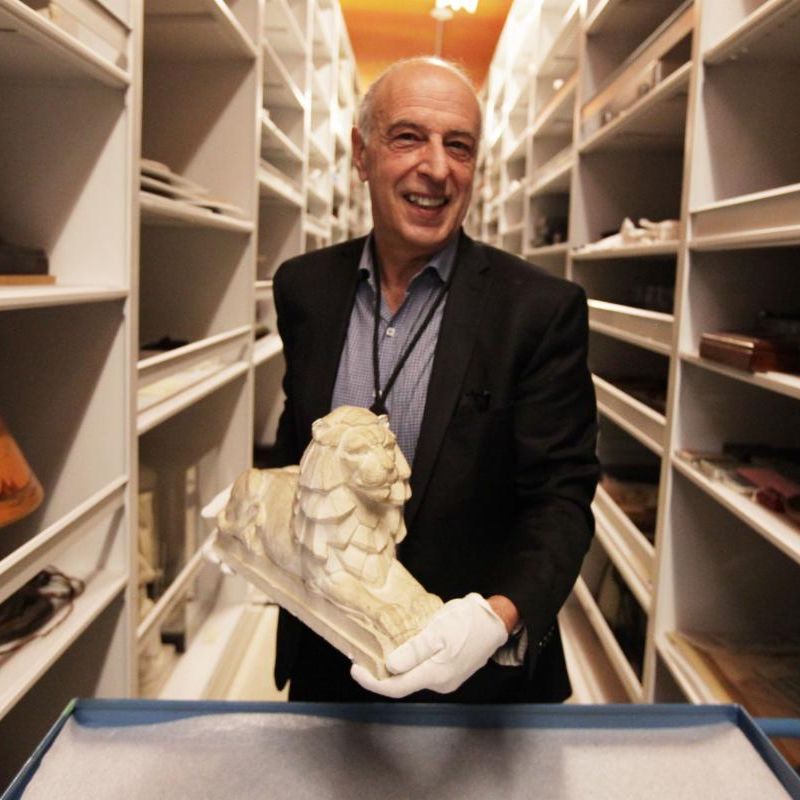
After serving as the Museum of Vancouver’s Chief Executive Officer for nearly seven years, Mauro Vescera will be retiring at the end of 2024.
Mauro brought a wealth of leadership, non-profit, and cultural experience to the Museum, having worked in and with the non-profit sector nationally and internationally for more than 20 years. Prior to his role at the MOV, he served as the Executive Director at the Italian Cultural Centre, was a fundraiser at Simon Fraser University, and was with the Vancouver Foundation (Canada’s largest community foundation) for 12 years where he managed several granting portfolios including Arts and Culture, Environment, Education, Health, Social Enterprise and Animal Welfare.
During this tenure at the MOV, Mauro brought financial stability to the organization and steered the Museum through the challenges of the Covid pandemic. He increased engagement through partnerships, including international agreements, and he worked to deepen the MOV’s partnerships with Indigenous Knowledge Holders which contributed to a robust repatriation program as well as vibrant public and school programming.
“I have learned a lot from my incredible staff and colleagues while working at the Museum of Vancouver,” Mauro says of his time with the Museum. “It is a creative organization with passionate advocates and dedicated people committed to telling the stories of Vancouver.”
The Museum’s Board of Directors have engaged Gerard Search to initiate recruitment for the Museum’s next CEO. Learn more about the position here.
| |
Events at the MOV
It's Spooky Season... Plus Making Public Hearings Less Scary
| |
|
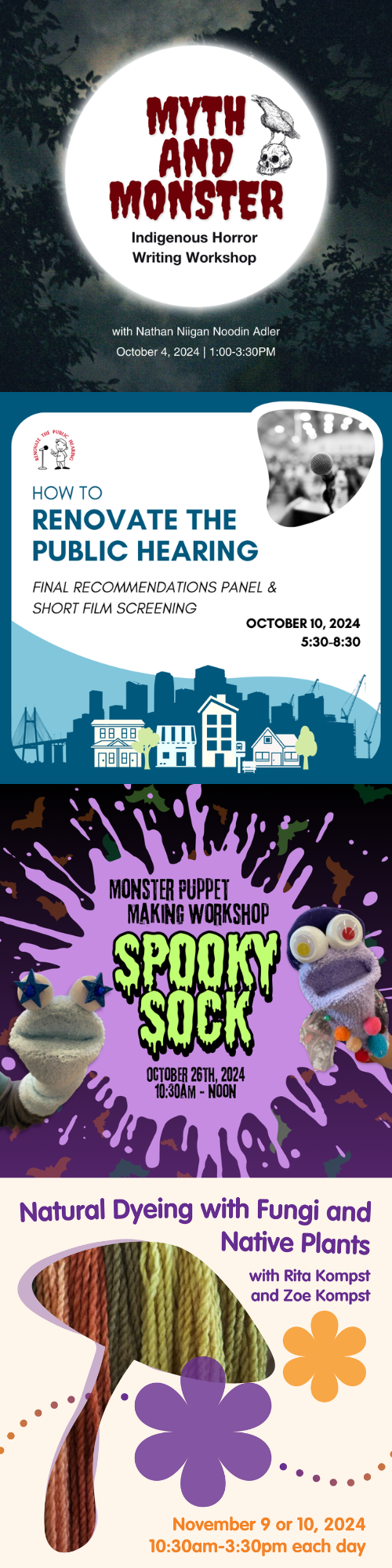
Myth and Monster: Indigenous Horror Writing Workshop
Friday, October 4
Delve into the essentials of writing horror, including monster creation, setting atmosphere and crafting scenes of gore. The workshop will be led by Nathan Niigan Noodin Adler, a Jewish, Anishinaabe, two-spirit member of Lac des Mille Lacs First Nation and author of Wrist and Ghost Lake, among other horror and speculative fiction works. While Nathan writes from an Indigenous perspective, participants from all backgrounds are encouraged to incorporate myths and monsters from their own cultures. Participants will engage in interactive exercises designed to spark creativity and build tension. Sign up here.
How to Renovate the Public Hearing
Thursday, October 10
Decisions about the way we use the land we live on significantly shape our communities and our daily lives. Traditionally, public hearings have been the main forum for the public to gather and be heard regarding land use decisions in their communities. However, 100 years after public hearings were first established, many people are questioning their efficacy and asking to explore alternatives. The Renovate the Public Hearing Initiative will present their investigation into alternative engagement strategies for public participation, plus there’ll be a panel and interactive exhibit. Sign up here.
Spooky Sock: Monster Puppet Making Workshop
Saturday, October 26
Want to make your own monster puppet? This Halloween season, we are teaming up with ventriloquist/puppeteer Kellie Haines and artist Greg Robinson in this fun and interactive puppet-making workshop! You'll make a basic hand puppet—and then let your creativity run wild. Add eyes, nose, hair, horns, ears, wings—anything you want! Afterwards, join a “Monster Mash” march around the Museum and maybe even stop for some candy! All ages welcome! Reserve your spot now.
Natural Dyeing with Fungi & Native Plants
November 9 or 10
Explore traditional dyeing techniques using mushrooms and plants while gaining a deeper understanding of sustainability and Indigenous practices through this hands-on workshop with Rita and Zoe Kompst! Each participant will take home a sample dye card and a skein of wool in their chosen colour dyed during the session. Find more info and sign up here.
| |
Mini-MOV on Display
Scale Model Includes a Lot of Detail
| |
|
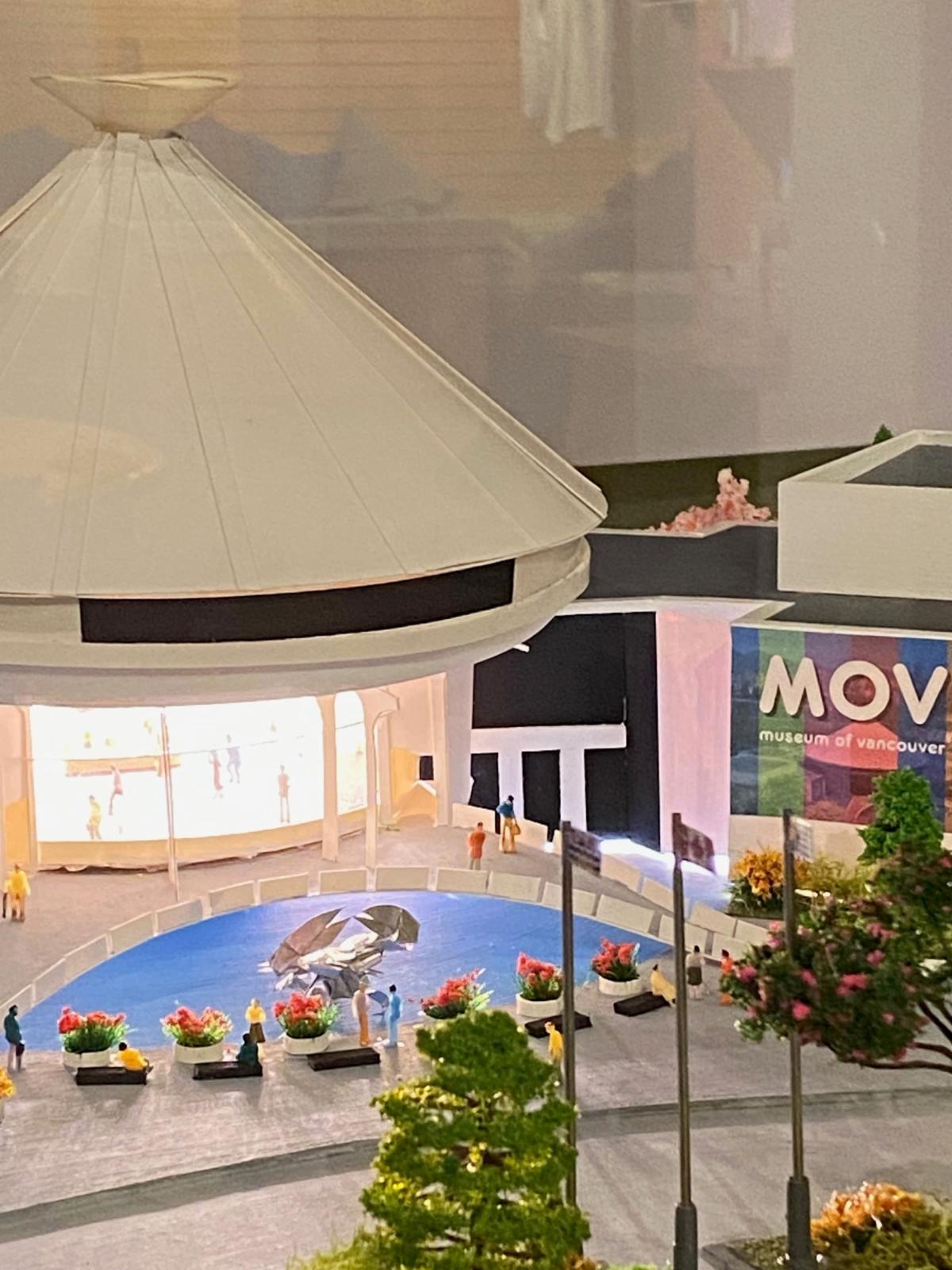
Kyle Chen is an 11th grader with a passion for architecture who started making models just before the Covid pandemic. And now he’s built models of two of Vancouver's most iconic buildings: a 1:500 scale model of Vancouver’s Airport, which was displayed inside YVR from March through the end of May, 2024—and now the Museum of Vancouver.
He reached out to ask if he could build a scale model of the MOV and have it displayed inside the Museum—and we said yes!
The model was officially revealed on September 12th and is now on display in the Museum’s Community Gallery (by the gift shop). The details Kyle added are incredible—he even got the crab right, which he made out of tinfoil pie plate! Check out pictures of the model and the launch party taken by Friday Eve Photo here.
The model will be on display until the end of the year.
| |
Upcoming Repatriation to Australian First Nations
Agreement Inspired Other Museums on their Reconciliation Journeys
| |
|
A new agreement between the Museum of Vancouver and the Queensland Museum in Brisbane, Australia highlights the important repatriation work of both organizations, while also inspiring other museums to continue their own reconciliation journeys.
This partnership follows a visit from Leeanne Enoch, the Queensland Minister for Treaty, Minister for Communities, and Minister for the Arts, to the Museum of Vancouver in November 2023 as part of a broader tour to the US and Canada that aimed to explore and strengthen cultural collaboration.
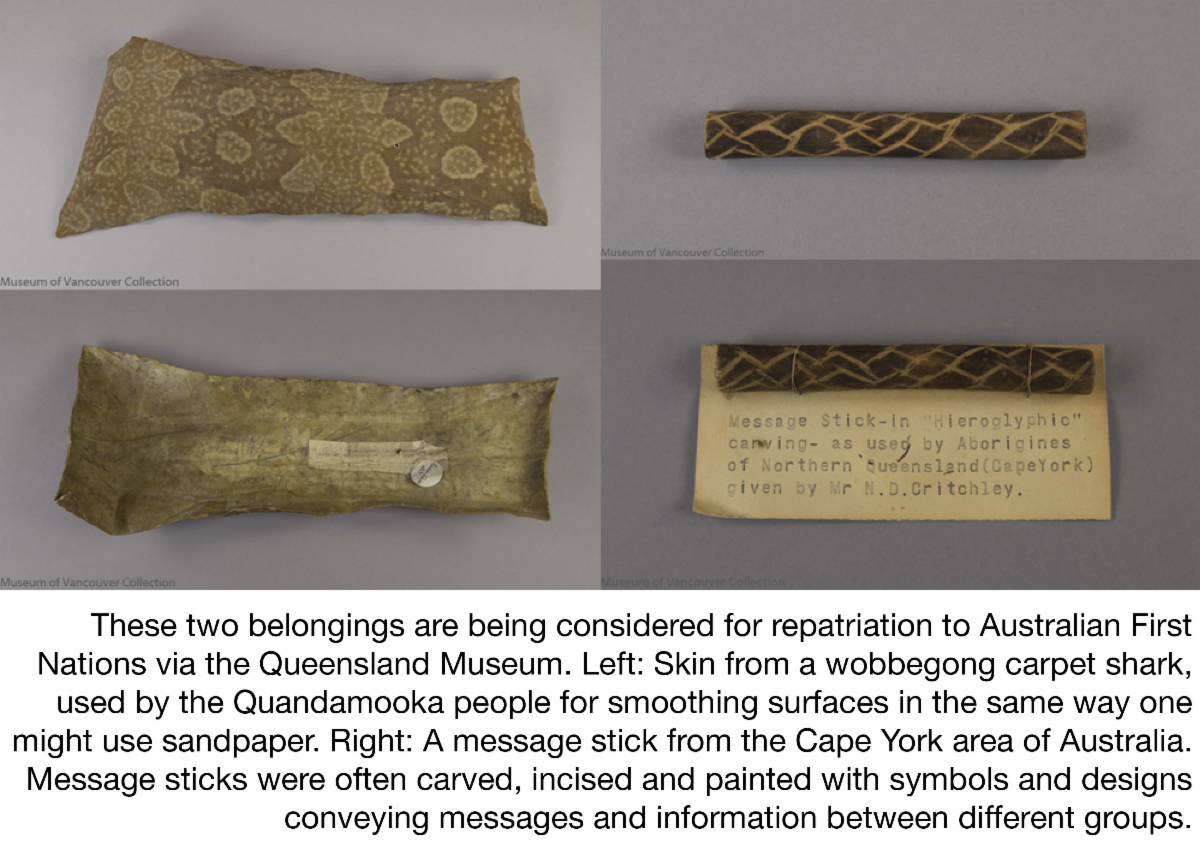
While here, the Minister viewed a selection of objects and belongings that are housed at the MOV. There are six to 12 belongings identified as being from Australia and the First Nations People in Australia, including this sharkskin from the Quandamooka people (catalogue number EA 25) and a message stick from Cape York (EA 24).
Since then, our Senior Curator of Indigenous Collections, Engagement & Repatriation, Sharon Fortney, and the Queensland Museum’s Director, First Nations, Dr. Bianca Beetson have been working together on the process and identification of cultural heritage material. There is an agreement in place that once finalized, we will conduct a museum-to-museum transfer. This will allow for staff at Queensland Museum to research the items and ensure that they are repatriated to the correct communities.
Our agreement with Queensland Museum underscores the importance of fostering respectful relationships and open dialogue regarding cultural heritage and reconciliation. It’s also inspired museums from around the world to continue the reconciliation journey by supporting First Nations communities and the repatriation of secret sacred objects.
Read more about it from Australian media outlets, the National Indigenous Times, Australian Broadcasting Corporation (ABC) and Government News.
Learn about the MOV’s Repatriation Policy here.
| |
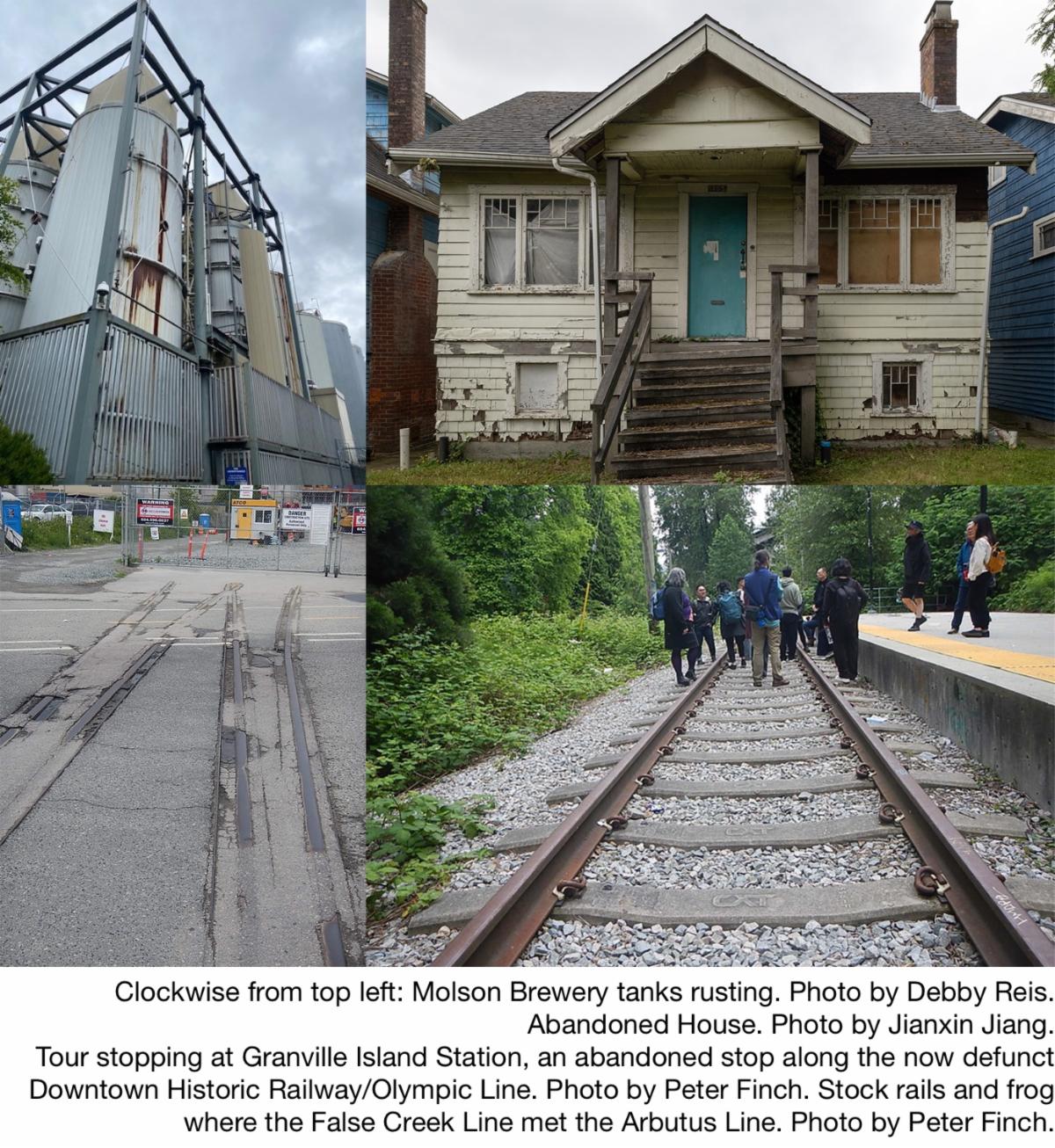
Mirage: Abandoned Public & Private Property in Vancouver
Explore Vancouver's "Mosquito Halls"
| |
|
Know before you go:
-
Museum of Vancouver is open from Sunday-Wednesday 10:00am-5:00pm and Thursday-Saturday 10:00am-8:00pm.
- Ticket sales end 45 minutes before closing.
- Visit on the first Sunday of the month and pay what you can for admission.
- Admission is free for people who self-identify as Indigenous.
- Visit on the last Sunday of the month for Low Sensory Sundays.
- The Museum is wheelchair, stroller and scooter accessible, including washrooms, ramps and elevators, and has wide entrances and exits.
-
Find additional accessibility information on our FAQ page.
-
When booked in advance, groups of 10 or more are eligible for a discounted rate. Learn more.
- The MOV is located at 1100 Chestnut Street in Vanier Park in Kitsilano.
-
The Museum is accessible by Mobi Bike Share, TransLink (#2 bus), Evo Car Share and False Creek Ferries.
-
Car parking is available in the parking lot run by EasyPark. Please pay for parking before entering the building. We do not manage this lot and EasyPark tickets vehicles that have not paid.
- Street parking is also available.
-
Find more directions here.
- Note that Museum Admissions are currently discounted due to HVAC repairs.
| |
We acknowledge that MOV is located within the unceded, ancestral territories of the xʷməθkʷəy̓əm (Musqueam), Sḵwx̱wú7mesh (Squamish) and səlilwətaɬ (Tsleil-Waututh) Nations. | | |
604-736-4431
1100 Chestnut Street
Vancouver, BC
V6J 3J9
| | | | |