|
RETIREMENT SECURITY MATTERS
A forum for retirement innovation information sharing focused on
states, supporters, and service providers.
Vol 59 | August 11, 2022
| | |
Greetings! Lisa, welcome to Retirement Security Matters – where we talk about retirement readiness innovation by the public sector, private sector, and policy organizations. | |
We're in the dog days of August 🐕. Just for you, at the end of this edition, we will go on a road trip together. For now, snag yourself something icy and a comfortable chair, possibly in front of a fan. It’s time to catch up on the world of retirement savings innovation:
-
Is retirement savings the ultimate ledger for personal financial wellness? This and four more hot topics from Aspen’s Ida Rademacher and Karen Andres
-
We are BLOWING UP the state metrics this edition, check it out
-
Updates from California, Colorado, Connecticut, and New Jersey
-
Anchors Away! Duke’s Perry Wright on these, and Defaults
-
Hot Sauce! Cool stuff just for you
- Whew! Pix of the week, possibly from your state …
| Comments or content suggestions? We welcome both. Have something about your program you’d like to share? We are all ears. | |
|
RSM wants your support! Be seen here.
Click here for more information.
| |
A National Strategy for Financial Inclusion? We like it. | |
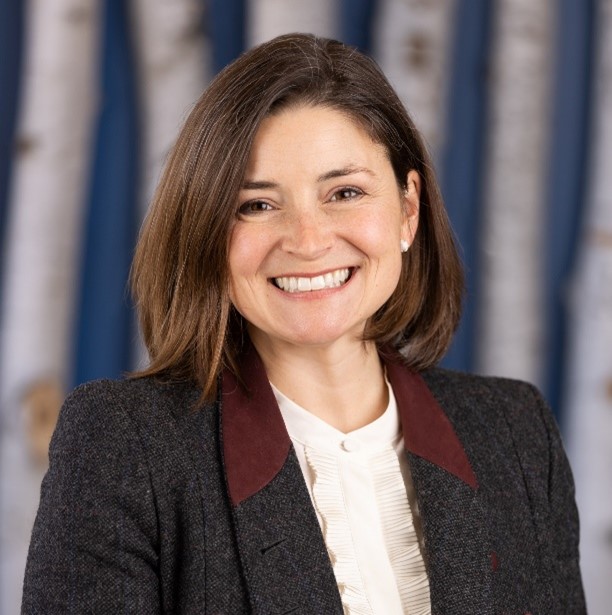
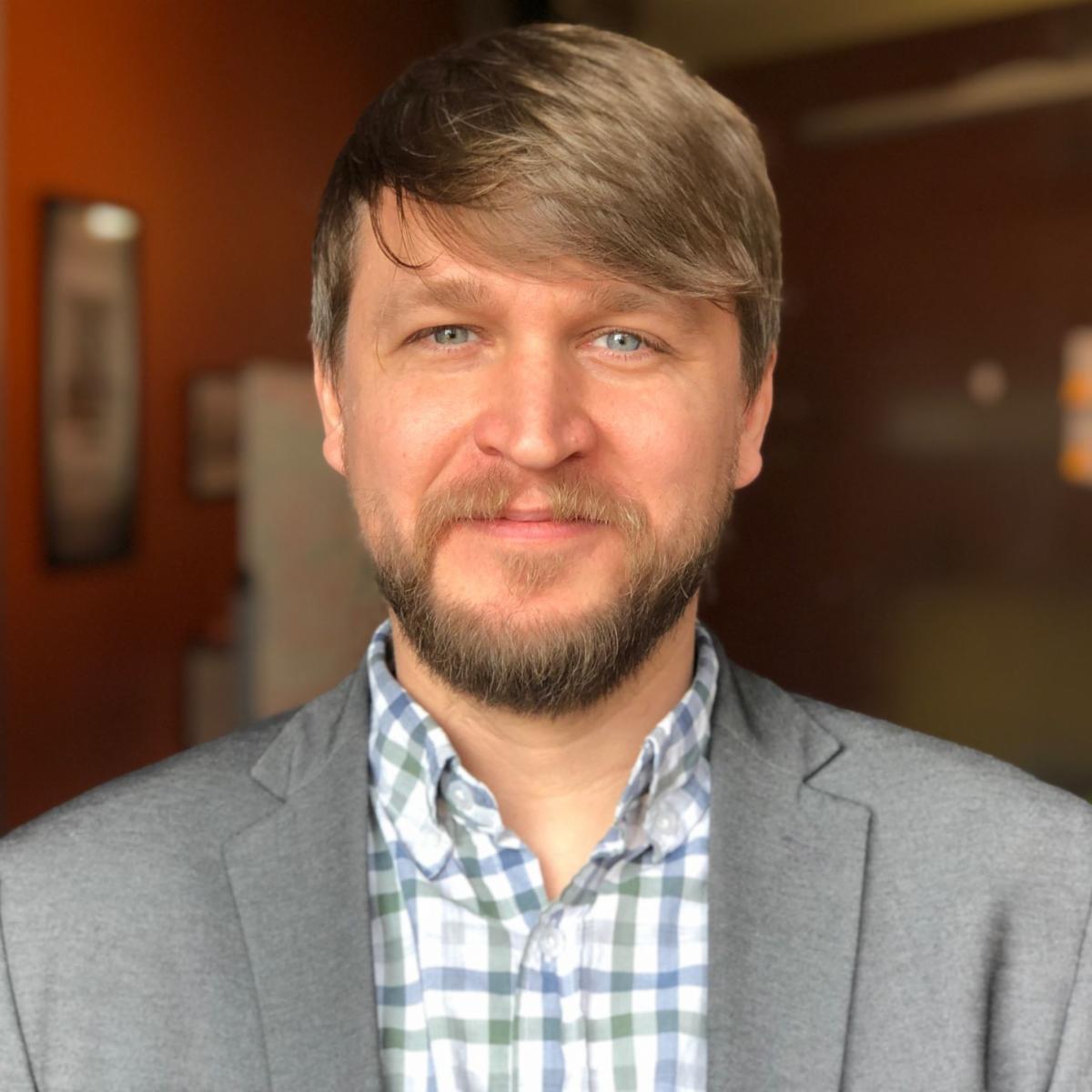
Ida Rademacher, Vice President & Executive Director, Financial Security Program (left) and Karen Biddle Andres, Director & Project Director, Retirement Savings Initiative, Financial Security Program (right) | |
|
This week we have the pleasure of chatting with Ida Rademacher, Vice President and Director of Aspen’s Financial Security Program, and Karen Andres, Director of Policy and Market Solutions for the Program.
We cover four hot topics: the power of automatic enrollment. What happens when we reimagine retirement? Innovation among our financial services providers. And maybe most importantly, the call for a national strategy on financial inclusion.
Let’s jump in! This is an excerpt. The full piece can be found here.
Ida and Karen, you are deeply involved in Aspen’s work on retirement savings and financial security.
Ida: Yes. The financial security program's focus is the grounding and understanding of the critical challenges facing households in America today. And with our retirement security initiative we look at the long-term elements like retirement savings, which is an anchor piece of long-term financial security -- and with it agency, and identity, and legacy.
Karen: We’ll say more about this, but increasingly we think of this not just as a retirement security initiative, but as an inclusive saving and investing initiative.
In 2020 you reimagined retirement in the US. One tenet was the importance of universal access to workplace savings. Are we making progress?
Karen: Access. So among states we are seeing continuing, increasing, focus on retirement savings access, including through Automatic IRA programs.
Federally, the Build Back Better Act (retirement provisions) did not go through, but there was a really robust conversation within that process about how might we structure a national automatic enrollment requirement. The metrics we see are exciting and proof positive of what a more portable solution can look like.
Automated retirement savings is an extraordinarily powerful wealth generating mechanism. At the same time, a couple of data points tell us we have more to do. Vanguard’s How America Saves 2022 shows that a significant portion of plans still don't have automatic enrollment.
Ida, are you seeing other progress since 2020?
Ida: Yes. I think the things that have moved the most include the addition of liquid savings, sometimes called emergency savings, as a critical facet of a saving system. This work has moved forward, both in terms of the strategies for leveraging workplace payroll and how you can do workplace emergency savings. We are seeing retirement-linked and standalone solutions. We are also seeing this as a more main stage conversation with policy leaders and legislators.
Much of your work involves convening and engaging with a wide range of providers and experts in the financial services space. Why?
Karen: So retirement savings occurs within a complicated supply chain. I think that’s forcing some interesting and innovative decisions. (This is an excerpt. The full piece can be found here.)
We may have unintentionally saved the best for last. You’re working on a national strategy for financial inclusion. What do you mean, and how can folks get closer to this.
Ida: We've had a lot of market innovation in this country. However, we are lagging in the application of policy innovation to continue to help more workers have sustainable engagement with the retirement saving system throughout their working lives.
Karen: In fact we are unique among developed nations in not having a national strategy for financial inclusion. So we are working to change that. We now have over 110 organizations, including some big ones, that have added their name to this call for action.
Ida and Karen, we appreciate the fresh thinking you bring to your work every day. It’s been our pleasure to be part of your convenings and innovation, and we can’t wait to see what’s coming next.
Want more? You can connect directly by email: Ida Rademacher and Karen Andres. You can learn more about the Financial Security Program here. You can also connect on Twitter: @AspenFSP
Ida Rademacher is a vice president at the Aspen Institute and executive director of the Aspen Financial Security Program. Her efforts have resulted in the creation of several new cutting-edge initiatives, including the Expanding Prosperity Impact Collaborative (EPIC), the Reconnecting Work and Wealth Initiative, and the Aspen Leadership Forum on Retirement Savings.
As the Director of Policy and Market Solutions and Project Director of the Retirement Savings Initiative at the Aspen Institute Financial Security Program, Karen Andres works to advance promising solutions to American families’ most pressing financial security challenges. Working across sectors and disciplines, Karen and the Policy and Market Solutions team seek to highlight market and policy gaps, jumpstart creative solutions, and build a diverse set of leaders who can turn ideas into action.
| |
*Fresh!* State Auto IRA Program Metrics | |
|
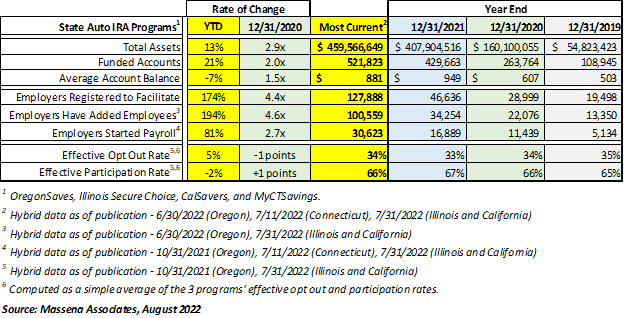
What we see: July figures are rolling in and we've now got a glimpse of the very early MyCTSavings data. Most figures are on the rise with a few dips in average account balance and participation rates as a large number of new savers have become program-eligible.
Highlights: *ding ding ding* Across the four programs, funded accounts have surpassed the half-million mark. For comparison, funded accounts are up 21% this year so far, up 2x since December 2020 and up about 4.8x since December 2019. Nearly 128,000 employers are now registered to facilitate a state Auto IRA program.
Saver assets have kept steady from our last report, up 13% year-to-date and 2.9x since December 2020. Aggregate average account balances have declined to $881, to be expected when new accounts surge. (Note that these include the newest accounts for participants who have just begun saving). Finally, effective opt out rates are steady relative to December 2020 levels, at about 34%.
| |
State Facilitated Retirement Programs - Fresh Highlights | |
|
California (workforce 19 million) – A new CalSavers report shows that over 23,000 savers made their first contributions in July, bringing the total funded saver accounts in the program to just under 300k.
In other news, CalSavers welcomes two new board members, newly appointed Director of Finance Joe Stephenshaw and Dave Low, who was appointed by the Senate Rules Committee. Both bring decades of experience in public policy and retirement to the Board.
Also in local news, when asked what to know about CalSavers, Executive Director Katie Selenski said "we know that about half of Californians are headed towards economic insecurity in their retirement years. Eight million of them don't have access to a retirement plan at work." Well, now they will.
| |
|
Colorado (workforce 3.2 million) – The Colorado Secure Savings Program Board met on July 26, 2022. The agenda included an update on the program and a discussion on marketing and branding from program administrator Vestwell. Key program updates included feedback on initial drafts of Program Administrative Rules, Program’s finalization of investment line-up (operational set-up with BNY Mellon in advance of fall pilot), and completion of branding selection process with the State (we got a preview, and we like it!). Pilot website launch is scheduled for this month with full program website launch in October.
| |
|
Connecticut (workforce 1.8 million) – The Connecticut Retirement Security Authority met on July 22, 2022. Key items on the agenda included the Chairman’s report.
Program administrator Vestwell provided a program status update covering progress of Wave 1 employer sign-ups (employers with 100 or more employees). By the June 30, 2022 deadline, 30% of Wave 1 employers had responded, and the program had over 230 employers registered. As a quick reminder, the program's Wave 2 deadline is October 31, 2022 (employers with 26 top 99 employees), followed by Wave 3 (employers with 5 or more employees) in March 2023.
Also included on the agenda was an updated from RF|Binder, communications consultant, on the actions and results of the program’s marketing and outreach plan.
| |
|
New Jersey (workforce 4.4 million) – *Executive Director Opportunity* Back in June the New Jersey Secure Choice Savings Program Board selected EFL Associates for an ED search. EFL has opened the search. View the position description here.
| |
|
C O M I N G U P
Join where you’d like, and count on us to follow these meetings for you:
-
California (workforce 19.0 million) –The next meeting of the CalSavers Board is scheduled for August 22, 2022.
-
Oregon (workforce 2.1 million) – The next meeting of the OregonSaves Board is scheduled for August 30, 2022.
-
Maryland (workforce 3.1 million) – The next meeting of the Maryland$aves Board is scheduled for September 12, 2022.
| |
Is it De-fault of the Anchor if We Save Too Little? | |
|
Please FORGIVE the corny title, NOT provided by our behavioral scientist Perry Wright, who would certainly prefer we use something with a more academic ring to it. And yet, we think this one captures an important truth.
Behavioral science is a popular topic. We want to know: can tuning our designs lead to better user outcomes?
| |
|
|
In a previous issue, I talked about how the first step in employing behavioral science on behalf of your users is to identify and understand where in your system users are not arriving at the outcomes they intend. Understanding these user-intended outcomes gives you a solid foundation for making changes that are more than simple nudges.
So, what kinds of changes to a system have the largest impact? Well, there are a few, but almost none rival the power of a default.
What is a default? Simply put, a default is a prescribed outcome that happens if a user takes no specific action and proceeds.
Familiar to readers in the retirement space, we often see the power of defaults in three domains related to retirement saving. The first, and arguably most profound use of defaults, is in opt-out plans, or automatic enrollment. Plan participants are automatically enrolled unless they specifically elect otherwise. The second often follows from the first, default investments. Default investments are the specific investments into which user funds will be contributed if no specific plan is selected. The third place we commonly see defaults is in pre-selected contribution elections, usually a provided percentage of wages that plan participants can adjust to their preferred amounts.
Why do defaults work? Defaults are so powerful because they operate on three behavioral principles, helpfully referred to by behavioral scientist Eric J. Johnson as the 3 E’s: Easy, Endorsement, and Endowment.
Here’s what I mean and some thoughts on how you can use defaults to serve users and the influence of anchoring.
| |
In a meta-analysis of experiments featuring defaults, researchers found that defaults are more effective when they operate through endorsement or endowment (two of the three E’s above), over simple ease. So consider what your defaults are conveying to users about your recommended choices for them to make.
Stay tuned for more! / Perry
Perry Wright is a Senior Behavioral Researcher at Duke University's Common Cents Lab, using behavioral science to create solutions that aim to increase the financial well-being for low- to moderate-income people living in the United States and abroad. The Common Cents Lab is funded by the MetLife Foundation and supported by BlackRock as part of BlackRock's Emergency Savings Initiative. For more information and to connect directly, you can reach Perry by email here.
| |
Follow-up from our chat with Aspen’s Financial Security Program friends: | |
|
Recently, Aspen’s work to establish a Presidential Commission to create a national financial inclusion strategy was highlighted on NPR’s 1a program. Ida Rademacher was joined by Mastercard Center for Inclusive Growth’s Founder and President, Shamina Singh and Wole Coaxum, founder and CEO of MoCaFi, to talk about the challenges people are facing in accessing the full range of financial services needed to achieve financial security. To listen to the program, click here.
In our piece summarized above, Karen Andres notes that people just have one financial life, stating: “we don't have a retirement savings life, and an emergency savings life, and a debt life.” You'll see this well portrayed in a recent New York Times piece, When a woman’s retirement account becomes the family emergency fund. (subscription may be required)
| |
Check out new research and resources from our esteemed friends: | |
|
When examining the impact of Auto-IRAs programs, some policymakers and analysts have asked whether these state programs might “crowd out” the private market for plans. Last year the Pew Charitable Trusts did an initial examination, and results suggest that in those states that have created Auto-IRA programs, employers with plans continue to offer them and businesses without plans are adopting new ones at rates similar to or greatbefore the state options were available. A recent piece, with updated federal data for 2020, shows comparable results despite the impact of COVID-19 on the economy more broadly. Evidence from California, Oregon, and Illinois continues to indicate that Auto-IRAs complement the private sector market.
Do you like fact sheets as much as we do? If so, you may want to check out AARP’s updated 51 state fact sheets and get the scoop on your state’s situation by the numbers.
For other informative resources, check out the Center for Retirement Research’s “Closing the Coverage Gap” project page where you’ll find CRR’s latest studies on this topic, fact sheets on up-and-running mandatory programs and much more.
Has attitudes towards retirement changed after two years of rising inflation, market volatility and a global pandemic? The 2022 BlackRock Read on Retirement explores this question and much more. Formerly DC Pulse, provides insights from a research study of large DC plans sponsors, workplace savers, independent savers and retirees in the U.S. New in this year’s survey: Independent savers - measuring the impact of access to workplace savings to improve equity.
| |
And other stuff to expand your mind. | |
|
This will not be to everyone’s taste, but we are digging in to Robert Greenberg’s 30 Greatest Orchestral Works on Audible, which feels like the right way to approach this subject. We’re surrounded by German, Russian and Austro-Hungarian composers. But alert – after a similar contribution in his home country, Czech Antonin Dvorak is just about to come to the US at the request of Jeanette Thurber to foster an American musical school and style. It’s 1892. She is well ahead of the crowd. Julliard’s school won’t be founded for another 32 years.
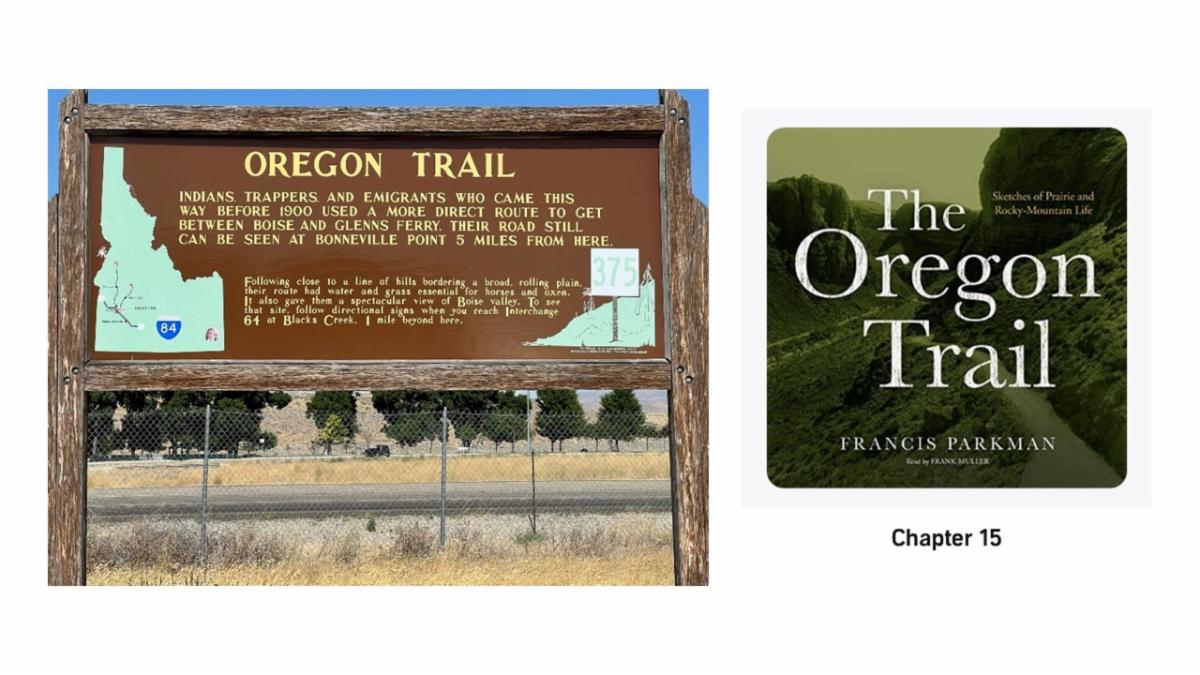
For reasons that will become more obvious in a moment, we also sped our way through Francis Parkman’s autobiographical experiences in the vicinity of The Oregon Trail. Parkman never makes it to Oregon, but he does travel the trail, and its environs, as far west as the Medicine Bow range in Wyoming and Colorado. He shares some pretty crazy stories from the trip and his first-hand observations are fascinating. We will admit, as the tale progressed, we began to like Parkman less and less. We are not alone. Here are two additional summaries: one, two.
When we were done with all that deep stuff, we needed a TikTok palate cleanser. This worked.
| |
... With that lead-in, it's time for some PIX! | |
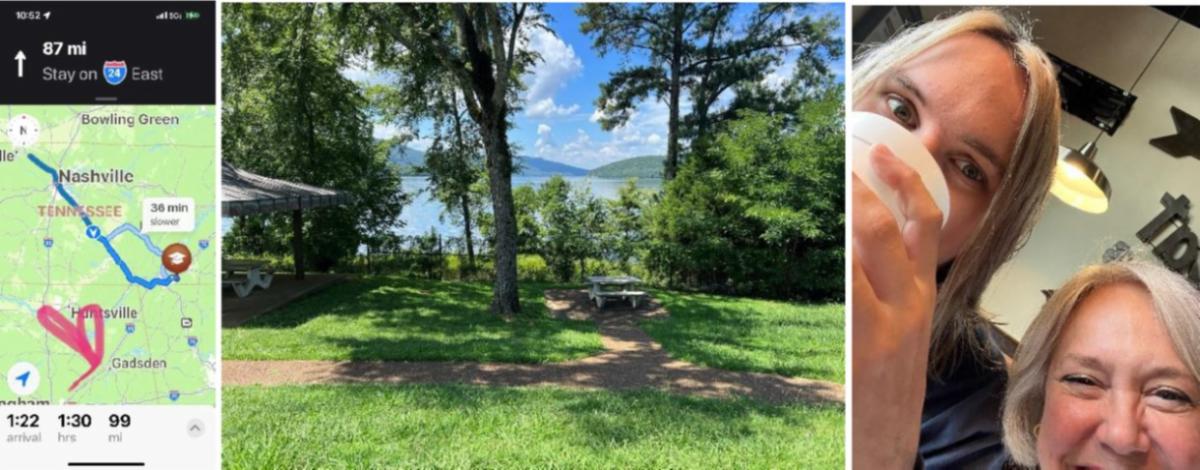
If you are very lucky ☘️, one day in August you will commit to drive a small Jeep from western Oregon to about Chattanooga, Tennessee. Your Jeep may also be sporting a bicycle. | |
When you make it to Salt Lake City, you’ll be feeling good about yourself. Naturally, you’ll be following the Oregon Trail, in reverse, so you’re going to want to listen to the book about that. | |
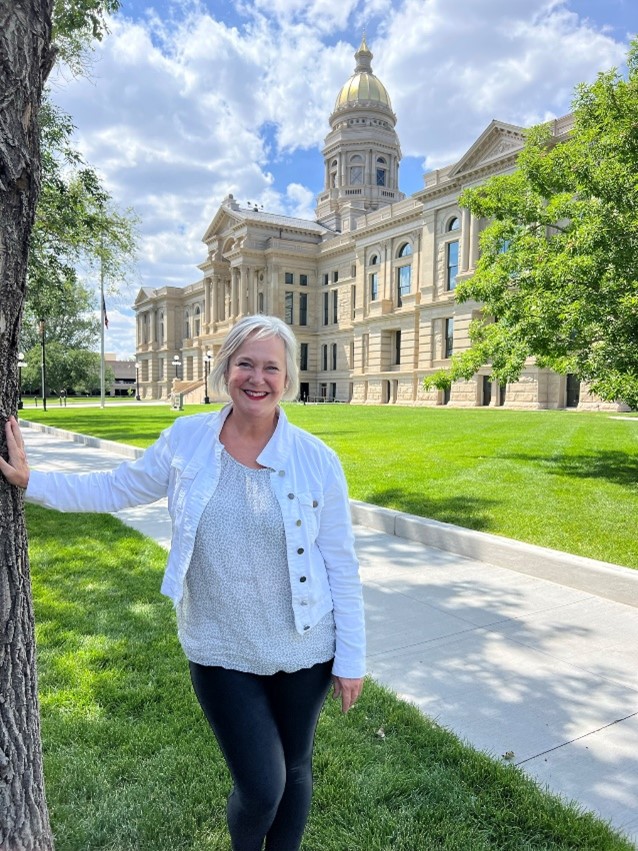
Wait, is this diarist author full of himself? Yes, yes, he is. But the scenery is awesome, and the stories make it even more interesting. You’ll finish the book. When you stop for a late lunch in Cheyenne, Wyoming, you’ll realize the capitol is right there, and a nice family will take your picture. You’re probably going to want to eat lunch in a historic old town joint across from the impressive rail yard (75 to 100 trains passing through a day?!). The joint may not be as old as you think, but the garlic sriracha BBQ sauce will be amazing. #11/10. | |
You’ll probably plan to spend the night in Lincoln, Nebraska. If it’s your lucky ☘️ day, when your bike slides off the rack as you’re barreling down the interstate at 75 miles an hour surrounded by truckers and one car that’s tailgating you, the bike will hang on by a thread, the tailgater will get religion, and you’ll be a lot more alert for the last bit of the drive. | |
Oops. But hey, things are looking up. There’s a great capitol in Lincoln, too. And by afternoon you’ll find yourself at the start of the Oregon Trail, in a way, as you gaze up at St. Louis’ gateway arch. You’ll lay your hand on its beautiful metal side and take about a million pictures from every angle. In the evening you’ll pick a hotel in Paducah, Kentucky, famous for its quilts and its August 8 Emancipation celebration. | |
|
Paducah is not the home of Kentucky’s capitol. That would be Frankfort. But if it’s your lucky ☘️ day, when you look up from your morning orange juice, you’ll spot the esteemed State Treasurer Allison Ball on her way to several local events. Ms. Ball is running for the position of State Auditor for Kentucky. She’ll be in a hurry, but will take a moment to give you a kind Hello anyway. ❤️
Finally, about 2,500 miles later you’ll find yourself closing in on Collegedale, Tennessee. You’re almost there, but this trip needs one more pit stop – at the most beautiful rest area in America, on an island in the middle of Nickajack Lake. Good choice!
| |
Yeah, he’s happy to see you too. And as you hand over the keys to that little Jeep, he’ll probably ask you for gas money. | |
|
That’s it for this edition. ❤️ Hug your people and change the world.
If you like this piece, please stick with us. We’ll be back in about two weeks. If you don’t like it, please unsubscribe below. Comments for us? Please let us know. Want your own subscription? Request one here. All information shared is from public sources or used with express permission.
| |
Massena Associates provides process, policy, and implementation consulting on retirement savings programs and products.
Our clientele includes public entities, policy organizations, and private sector providers. Our specialty – efficient, targeted results. We are an active speaker on retirement security topics, including state-facilitated programs, MEPs and more.
If you’d like to explore working together, we welcome the conversation. Connect with us here, and at 339-236-0684.
| |
|
Looking for a great retirement savings innovation resource? Led by Dr. Alicia Munnell, the Center for Retirement Research at Boston College develops and hosts terrific content and proprietary research related to states, financial security, social security, and more.
The Georgetown Center for Retirement Initiatives, Exec Angela Antonelli, provides excellent information on state-based and other retirement security innovation and policy.
Pew’s Retirement Savings Project studies the challenges and opportunities for increasing retirement savings and is another great resource - check out the work of John Scott and his terrific team.
If you want a great source of broad-based, consumer-focused retirement news, Jeffrey H. Snyder’s The Morning Pulse is your ticket. You can subscribe here.
| | | | | |