|
RETIREMENT SECURITY MATTERS
A forum for retirement innovation information sharing
focused on states, supporters, and service providers.
Vol 63 | October 6, 2022
| | |
Greetings! Lisa, welcome to Retirement Security Matters – where we talk about retirement readiness innovation by the public sector, private sector, and policy organizations. | |
We love October. Not just because we get to over-decorate our houses and buy way too much candy without judgment, but also because here in the U.S. we promote #National RetirementSecurityMonth. It is a time to raise public awareness about the importance of saving for retirement. As our friend Aaron Schumm says, “No one should be too afraid to start saving for retirement.” So join the hashtag, grab your favorite pumpkin spice drink and settle in for some retirement savings updates:
-
6 facts you need to know about inequality with Boston College’s Geoffrey Sanzenbacher
-
Frrreshhh State Auto IRA metrics
-
A closer look at … California, Colorado, Connecticut, Delaware, Maryland, and New York State
- Things we never thought we would see...
-
Hot Sauce, Cool Stuff: Must knows
-
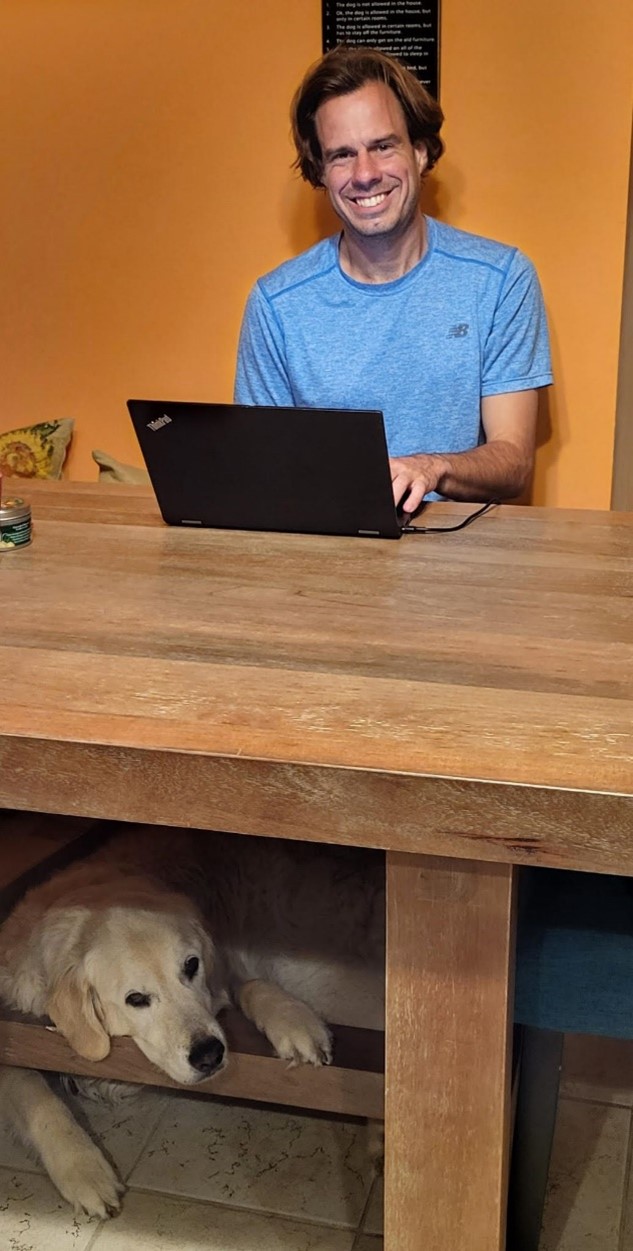
Pix of the week – Willow playing a vital role in nurturing productivity and creativity. Who is Willow, you may ask?
| Comments or content suggestions? We welcome both. Have something about your program you’d like to share? We are all ears. | |
|
RSM wants your support! Be seen here.
Click here for more information.
| |
Why We're Unequal: 6 Facts You Need to Know with Boston College’s Geoff Sanzenbacher
| |
|
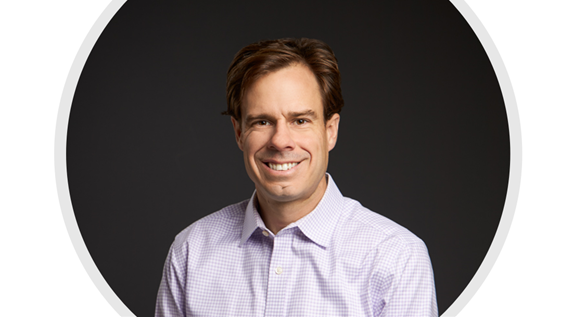
This week we talk with our friend Geoffrey Sanzenbacher, an econ professor and Research Fellow at the Center for Retirement Research at Boston College. In addition to working with students, Geoff researches the role of inequality in late-life finances, the retirement savings decision, and the transition from defined benefit to defined contribution pensions.
Geoff has an interest in how these issues relate to low-income workers. In this piece, we talk about his new book entitled “Six Facts that Matter: Understanding Inequality in the United States.”
Geoff, why this book?
At Boston College, I began teaching a class on what economics has to say about why there is inequality. And, in particular, why inequality in the United States has worsened. To support the class, I looked for an economics-type book. I discovered a few that were good, but not quite right for my class. Many only covered a specific angle, and most had strong points of view which were quite political. I needed something that would summarize the most important facts from a balanced perspective, that strives to be as truthful as possible, and be very readable and relatable. That inspired me to create this new piece.
Don’t have time to read it? Listen to our conversation here.
You successfully reduced the inequality equation to six facts. How did you get to six?
Initially, my classroom teaching was not designed around these six facts at all. However, I realized as I taught that everything, I was covering aligned with one of six topics.
These topics include racial inequality, gender inequality, the middle class, the very rich, the impact of lower marriage rates, and differences in opportunity. These are the key elements that matter most to inequality in America.
Let us start with fact one, the falling middle
You have a lot of different pressures on workers, and they’re all falling on the same workers. For example, you have the introduction of technology, globalization, the decline of unions, the decline of bargaining power for workers, and larger firm sizes, and all of these tend to push more on people in the middle than people up the ladder.
So, there are all these forces: some lifting up people in a certain segment of the population while also simultaneously holding down people in the other segment. And, it’s not like anyone’s made a conscious choice – a lot of it is simply change. But we need to do something, and there are things we can do. (See the book for more!)
You point out a couple of things that would be useful in this space.
To me, we are not doing a very good job of ensuring we have competitive labor markets. I want to see labor have the ability to compete. This means getting rid of non-competes where they’re not necessary, getting rid of no-poaching agreements. Those things need to go. And we need to do a better job of enforcing anti-trust. (This is an excerpt. The full piece can be found here.)
We’ve got five topics to go, let’s pick one more.
The one that I would like people to know the most is that the racial income gap is pretty much stuck where it was in the 1970s. (We must have made some progress, right? why it hasn’t showed up at all in income? More here.)
Final word?
I'd like to point out that this is supposed to be a book for everybody. It's supposed to be honest; it’s not supposed to be biased. I'm trying to use an economist’s perspective. And, so, I'd like people of all stripes to read it and give it a fair shot.
Dr. Sanzenbacher is the author of over twenty peer-reviewed academic articles in the fields of Economics and Policy, including in The Journal of Health Economics, Demography, The International Economic Review, The North American Actuarial Journal, The Monthly Labor Review, and The Journal of Pension Economics and Finance.
He has also published over forty Issues in Brief designed for a lay audience through his work at The Center for Retirement Research at Boston College. These briefs have covered topics related to the asset accumulation of low-income workers, rising inequality in mortality, and the difficulties less-educated workers face in extending their careers.
Additionally, he has contributed an Op-Ed to The Hill on racial wealth inequality. He has been cited in newspapers, including the New York Times and The Wall Street Journal, financial magazines such as Kiplinger’s, and has appeared multiple times on National Public Radio. Impressive! You can connect with Geoff on LinkedIn.
His book, "The Six Facts that Matter: Understanding Inequality in the United States" is available on Amazon here.
| |
*Fresh!* State Auto IRA Program Metrics | |
|
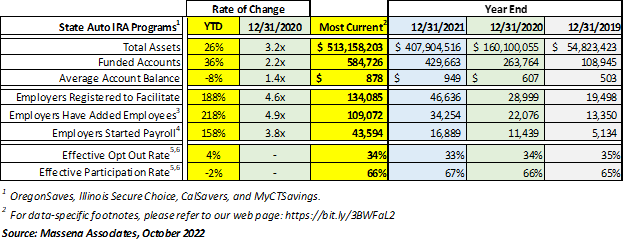
What we see: September figures are rolling in.
Highlights: Across the four programs, we now see over 580,000 funded accounts. For comparison, funded accounts are up 36% this year so far, up 2.2x since December 2020 and up about 5.4x since December 2019.
Over 134,000 employers are now registered to facilitate a state Auto IRA program across the live state programs.
Saver assets saw a slight decrease from our last report, but up 26% year-to-date and 3.2x since December 2020. Because of this we see a slight dip in average account balances, at $878. (Longer term account balances have higher averages.)
| |
State Facilitated Retirement Programs - Fresh Highlights | |
|
California (workforce 19 million) – The CalSavers Retirement Savings Board met on October 3, 2022. Key items on the agenda included an update from Executive Director Katie Selenski on the Board’s agreement with the program administrator Ascensus. At the meeting, the Board discussed future engagement with Ascensus and potential contract amendments for consideration and possible approval by the Board at a subsequent meeting.
CalSavers is also in local news for its efforts to ‘level the playing field’. As savers continue joining CalSavers, new savers' contributions are continuing to grow. In its latest report, CalSavers noted that savers contributed $30 million in September alone, as more than 25,000 new saves joined the program.
| |
|
Colorado (workforce 3.2 million) – The Colorado Secure Savings Program Board met on September 27, 2022. The agenda included an update from Director Hunter Railey and team on sponsorship opportunities; outreach and marketing efforts; program rulemaking; employer data acquisition - a fiduciary agreement is now in place with the Department of Labor and Employment; program rollout and the employer registration deadlines - taking on of the most ambitious registration approach we have seen thus far, Wave 1 is planned for March 2023 (employers with 25 employees or more) followed by Wave 2 (employers less than 25 employees) in May 2023, and fines will commence February 2024; and review of the Interstate Agreement with Consultant AKF.
Provider Vestwell also gave an update on marketing strategy, noting that the full website is targeted to launch along with the pilot this month, October 17, 2022 (for a great summary check out NAPA’s recent post here).
At the meeting, the Board approved various motions including a partnership with other programs within the Treasury Office for sponsorship opportunities; the marketing strategy; the Interstate Agreement and for Treasury staff to actively pursue potential state partnerships under this framework. [Bravo!] New Mexico and Colorado are becoming the trailblazers of partnerships between state Auto IRA programs.
| |
|
Connecticut (workforce 1.8 million) – The countdown begins! The MyCTSavings registration deadline for employers with 26-99 employees is this month, October 31, 2022. Then the largest wave will follow, covering employers with 5-25 employees with a March 2023 deadline.
Small businesses and employees across Connecticut are already raving about the many benefits of the program. The team caught up with a few employers and savers and heard firsthand what their experience was like participating in the program. Don't miss what they had to say! (link to the post here).
| |
|
Delaware (workforce 490,000) – *three cheers* The great state of Delaware held its inaugural Delaware EARNS Board Meeting on October 4, 2022 (see copy of the agenda here). Treasurer Colleen Davis and team led an orientation session to lay a common foundation for the new board. “The composition of the Delaware EARNS Program Board could not be stronger given the critical need for the work to be done,” Treasurer Colleen Davis says. Chairwoman Fayetta Blake added “I am excited to work with such committed people on a project that will help secure financial security for Delawareans who currently have no effective way to save.”
Also included on the agenda was a presentation by expert John Scott of the Pew Charitable Trusts’ Retirement Savings Project on peer programs around the country.
The Board approved a motion to issue program consultant RFP and to establish standing committees – here’s a good place to stay informed.
| |
|
Maryland (workforce 3.1 million) – Since MarylandSaves launched in September, we've seen great coverage from local newspapers, advocates, and experts. For a great summary check out the PLANSPONSOR’s recent post here; Planadviser post here; and don’t miss 401kSpecialist article on the two ways MarylandSaves will be different, link here.
| |
|
C O M I N G U P
Join where you’d like, and count on us to follow these meetings for you:
-
Oregon (workforce 2.1 million) – The next meeting of the OregonSaves Board is scheduled for November 15, 2022.
-
California (workforce 19.0 million) –The next meeting of the CalSavers Board is scheduled for November 21, 2022.
-
Maryland (workforce 3.1 million) – The next meeting of the Maryland$aves Board is scheduled for December 12, 2022.
| |
Things We Never Thought We Would See. They Don’t Make Us Unhappy.
| | |
|
|
Yes! This is a Best Practices piece. And an editorial. Hang with us and see if you agree or disagree with our conclusions. We think this is news you can use.
This week a friend of RSM sent us a note: “Thoughts or reactions to this piece?” OK, he said we could use his name – it was John Scott, of Pew, who labors long and hard in the field of retirement savings.
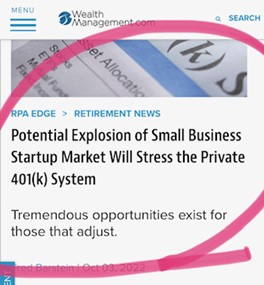
The piece in question is Fred Barstein’s thoughtfully written, Potential Explosion of Small Business Startup Market Will Stress the Private 401(k) System, published in Wealth Management this month.
| |
|
Once we got past the eye-catching title we could get into the heart of the matter. Quoting Georgetown’s Angela Antonelli, Barstein notes that all but four states have been legislatively active and comments that “overnight” state Auto IRA programs seem to be popping up all over the place.
We might not say the progress is occurring overnight, but we agree, it sure is steady and it sure is starting to have an impact.
Let’s bring this wagon back to best practices. We think retirement coverage at work is a best practice. Possibly the best, best practice in this space. Here are a few of the related trends that Barstein observes:
| |
New plan formation is up
- 42% to 71% in Auto IRA states like Illinois, California and Oregon
- Tax incentives and new group plan types (PEPs+) are driving plan formation too
-
As an aside, RSM believes most of these covered workers will be auto-enrolled
Firms are finding innovative ways to serve the market’s small end
- Through state programs
- Alongside state programs
- And, independent of state programs
- But this market isn’t for everyone, and some are staying out
Firms are using the market to discover right-price, right-size services
- Account fees + basis points + setup fees in some cases
- Streamlined service and offering models, with
- Mass customization
- Fast – easy – simple – understandable – accessible
| |
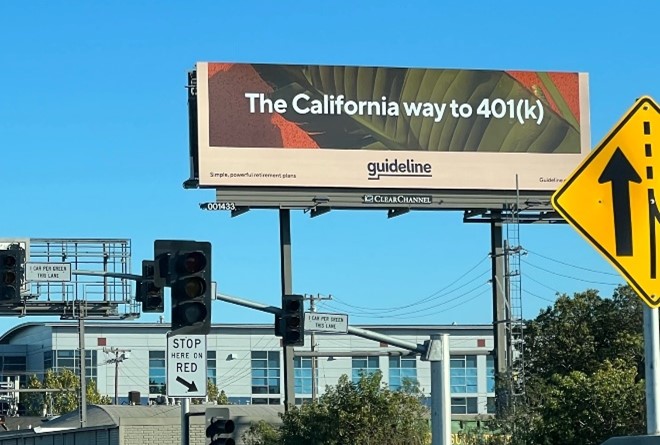
We needed another photo in this piece, so here’s what new plan formation looks like IRL in California this week, as provided by Jeff Rosenberger, COO, Guideline. | | |
|
No free lunch?
Barstein worries that all this new plan formation could swamp the 401(k) provider boat. We’re going to take the other side of that bet. We think the public and private sector have plenty of capacity to serve these new savers and plans, especially at the very deliberate rate with which programs are being authorized (one to two a year), and launched (one to two a year, fewer during a pandemic).
So that’s what we think – but how about you?
Thank you Fred Barstein for the terrific piece and the opportunity to comment on it.
Retirement security matters! / Lisa
This piece was written by Lisa Massena and the views expressed are her own. We wrote independent of Fred Barstein’s review; for your interest we include Mr. Barstein’s author page here.
| |
|
Who’s paying attention to state Auto IRAs? Mores news outlets, all the time. This piece from Forbes contributor Brian Menickella investigates why small business are upping their retirement plan offerings.
Also, the example of successful Auto IRA programs is fueling the renewed look at state-sponsored retirement plans. How likely is it that opposition appears to be receding? A recent Bloomberg Law article interviewed experts in the field.
Upcoming. We believe our love for TikTok is legendary, matched only by our admiration for Gen Z and the soon-to-follow Gen A. We want to know how to talk to these folks. We want to be relatable. We don’t want to be mocked like other Boomers. So we will not be missing this October 18 DCIIA event: Social Media Insights: Trends, Tips And TikTok. You can. Not us though. (Membership may be required to attend)
Cribbed from a friend. “Once again, the power of behavioral defaults supersede volatility-driven risk aversion. Despite Volatility, Average 401k Contribution Rates Remain Stable” – says John Mitchem upon encountering the linked piece in 401(k) Specialist magazine online.
More automatic. When we think about “automatic” we also think about how much easier it could be for folks to keep their retirement assets in one place, despite their own travels through the world of work. See this announcement from Retirement Clearinghouse on collaboration with Alight, Fidelity and Vanguard on a nationwide auto-portability network. At last count, we had 17 retirement savings accounts. Perhaps we should get in line.
Speaking of TikTok. Did you know this? The etymology of “room and board.”
And because it’s Yom Kippur Week. If you Google “Yom Kippur,” you might get 54.8 million results, and yet you might still feel very under-informed if you did not grow up celebrating this Jewish high holiday in your household. As we do, we’ve curated the web for you and found this concise perspective that we like. There are many more, and they differ a bit, reflecting the views from unique seats in the realm of Jewish observance.
Only tangentially related, we’re still chewing through John Polkinghorne’s Science and Religion in Quest of Truth. A great book. But complex.
| |
... It's time for some PIX! | | |
|
We have got PIX this week. Let’s start with our friend Geoff Sanzenbacher. This is what it looks like when Geoff is writing a book. Or a lesson plan. Or blogging on the economy. We love dogs. And we think Willow looks very supportive. Very supportive. Good girl, Willow! | |
|
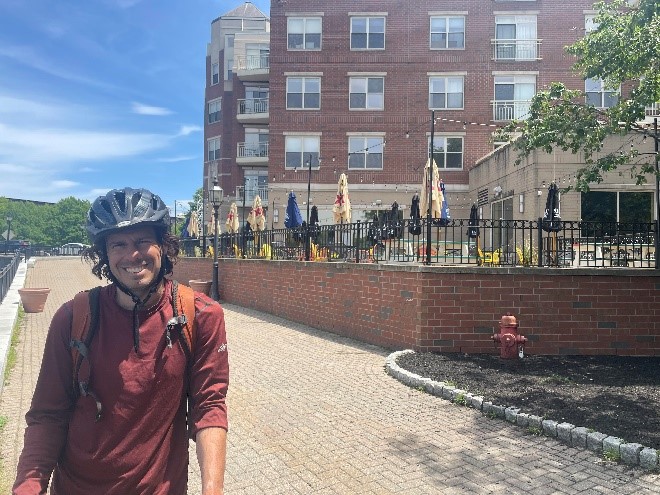
Yes, Geoff lives in a cold, cold place. Here he is with his beautiful wife, Pam, admiring the River Charles. And on a warmer day, above, enjoying the Charles from the comfort of his bike.
Go Geoff! And thank you for sharing. We know this is why our readers read this far into the newsletter.
| |
|
We have so many more pictures to share. But we’re going to save them because there is just too much going on over here today. We’ll give you this one and then we gotta go. | |
|
That’s it for this edition. ❤️ Hug your people and change the world.
If you like this piece, please stick with us. We’ll be back in about two weeks. If you don’t like it, please unsubscribe below. Comments for us? Please let us know. Want your own subscription? Request one here. All information shared is from public sources or used with express permission.
| |
Massena Associates provides process, policy, and implementation consulting on retirement savings programs and products.
Our clientele includes public entities, policy organizations, and private sector providers. Our specialty – efficient, targeted results. We are an active speaker on retirement security topics, including state-facilitated programs, MEPs and more.
If you’d like to explore working together, we welcome the conversation. Connect with us here, and at 339-236-0684.
| |
|
Looking for a great retirement savings innovation resource? Led by Dr. Alicia Munnell, the Center for Retirement Research at Boston College develops and hosts terrific content and proprietary research related to states, financial security, social security, and more.
The Georgetown Center for Retirement Initiatives, Exec Angela Antonelli, provides excellent information on state-based and other retirement security innovation and policy.
Pew’s Retirement Savings Project studies the challenges and opportunities for increasing retirement savings and is another great resource - check out the work of John Scott and his terrific team.
If you want a great source of broad-based, consumer-focused retirement news, Jeffrey H. Snyder’s The Morning Pulse is your ticket. You can subscribe here.
| | | | | |