This newspiece is generously supported by Newton Investment Management
|
|
RETIREMENT SECURITY MATTERS
A forum for retirement innovation information sharing focused on
states, supporters, and service providers.
Vol 50 | March 10, 2022
|
|
Greetings! welcome! to Retirement Security Matters – where we talk about retirement readiness innovation by the public sector, private sector, and policy organizations.
|
It’s a big week in the world. You can’t have retirement security if you don’t have physical security. The war in Ukraine is a close reminder that the world can be turned upside-down quickly. We support independence, and productive interdependence, and healthy sovereignty.
It’s Women’s History Month – and a belated shout-out to Black History Month, and Financial Wellness Month. Can we knit all these things together? Watch us! We appreciate the opportunity to reflect, to learn, and to celebrate our diversity. And more than anything we appreciate what everyone here is doing to create rooms that reflect a diverse set of experiences as we work together to create more financial wellness and retirement security. Whew! Did we do it?
And finally … RSM is turning 50! 50 editions, that is. So much has happened since Edition 1 in March 2019. *Thank you* extraordinary contributors, bold thought leaders, and especially you, lovely readers, for your support. We appreciate you ❤️.
OK! What is on deck? You need a cozy break. Grab yourself a drink of choice and settle in for a moment. Brain food:
-
What do fintech experts think about Auto IRAs and market-serving innovations: Aaron Schumm from Vestwell gets candid
-
The freshest state stats – is it true that assets are up 7.5x in about two years?
-
Updates from California, Colorado, Illinois, Maryland, New Jersey, New Mexico, Oregon, Virginia, Hawaii, and Pennsylvania
-
Employer buy-in … how much does it matter? Expert Joel Metlen weighs in.
-
Hot Sauce … Super caliente this week. We promise to bring mild next time.
-
Pix! After this spicy edition, you deserve some fun.
|
Comments or content suggestions? We welcome both. Have something about your program you’d like to share? We are all ears.
|
|
How Do We Build What People Need Today? |
|
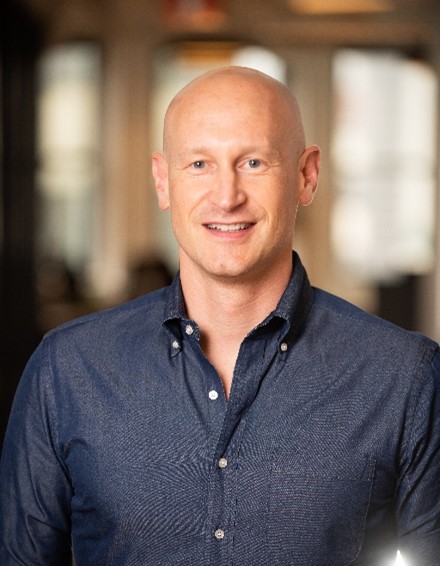
Aaron Schumm,
Founder and CEO, Vestwell
|
|
We first met Aaron Schumm in the rooms where nerdy people talk about the future of retirement savings, and how it might be made better, faster. As a private sector expert he is, of course, anything but nerdy. Aaron is the founder and CEO of Vestwell, “a modern engine powering savings and investment programs for small businesses and individual savers.”
Vestwell focuses on solutions that help people save for retirement, education, and healthcare. The company currently serves nearly 25,000 small businesses, more than a million savers, and $25 billion in assets across the 50 states.
We get to use the word “blockchain” in this conversation, which pleased us to no end. Alert! Tech ahead.
|
|
Aaron Schumm, you are a serial entrepreneur who founded a new savings-focused financial services firm in 2016. Who and what is Vestwell?
We are a fintech platform headquartered in New York City. We're focused on closing the savings gap across the country. We have built and are expanding a unified platform to power all aspects of savings within the workplace, and then to carry individuals beyond.
In a way we are a bit invisible: we are the engine powering 401(k)s, 403(b)s, 529s, ABLE plans, and Auto IRA programs. We think of this as happening through three distinct channels, where we are sitting at the intersection. Those channels are the financial service organizations, the workforce and their employers, and payroll providers. We bring all of those together into one ecosystem to help them engage on a level they haven't been able to engage before.
What's your current take on the retirement market -- where do you think we're doing well, Aaron, and where could we do better?
As “boring” as retirement can seem from the outside, it's quite exciting in our industry right now. I feel like progress is really being made.
On one hand you have government, both at the state and federal level, pushing forward changes intended to have a positive impact. You have individuals waking up and saying, Hey, I need to do something right now, which you didn't see before. We hire a lot of people and these days it’s common to hear our younger candidates asking us what we offer from a benefits and savings perspective. We didn't see that a few years ago.
It's exciting, but there's still a lot of work to do.
Vestwell recently acquired BNY Mellon’s Sumday division, the group servicing state Auto IRA programs. Why is this business important to you?
Yes. We closed the transaction on the last day of January 2022. We're excited. The whole team is here in the office together today. Like all of us, they haven't seen each other in person for two years, so it's nice to be in one place again.
(Get Aaron’s view on work ahead in the retirement space, on Vestwell and Sumday, and much more, here.)
Thank you so much, Aaron for sharing your current perspective and fresh thinking. Want more? You can connect directly with Aaron Schumm by email here. You can follow Aaron’s work at Vestwell here. You can also connect with Aaron at LinkedIn and on Twitter: @AaronSchumm.
|
|
*Fresh!* State Auto IRA Program Metrics |
|
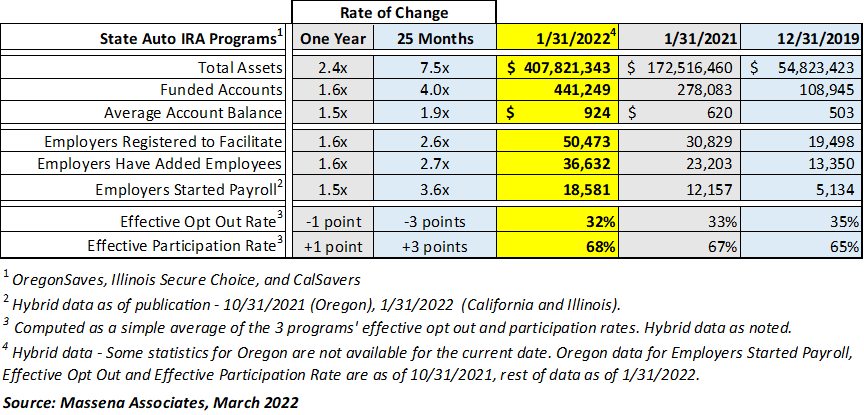
What is going on out there: Funded accounts are up 3% this year so far, to over 441,000. They’re up 1.6x in the last year and about 4x for the last 25 months. Yes, 25 months is an odd measurement period, but it takes us back to December 2019 so that’s why we’re using it.
The S&P 500 was down more than 5% for the month of January, but aggregate program assets held their own and are essentially unchanged year to date, at $407 million. Assets are up 2.4 times their year-ago value, and more than 7 times their two-years-ago levels. In fact we had to double-check that $54 million was the right number for 12/31/2019. It is.
Will aggregate program assets keep doubling every year? Only if and as new savers and new programs come aboard. Illinois is adding a new batch of savers late this year and CalSavers has a very big deadline coming up in about three months. We like the odds for 2022.
Not shown in this chart: current average savings rates for Oregon, Illinois, and California are as follows: 6.3%, 5.6%, and 5.1%. (Oregon’s program has experienced the largest number of auto-escalation events to date). Post-transition, OregonSaves is starting to show funded account growth again.
Across the three programs more than 50,400 employers are now registered to facilitate and over 18,500 have begun facilitating payroll deductions for covered workers.
|
|
State Facilitated Retirement Programs - Fresh Highlights |
|
California (workforce 19 million) – This month the US Supreme Court declined to hear an appeal of a lower court’s ruling that the CalSavers program is not preempted by ERISA. "It’s great that this matter is finally behind us after nearly four years,” said Executive Director Katie Selenski: “we never let it slow us down." California State Treasure Fiona Ma, who chairs the CalSavers Retirement Savings Board, reaffirmed that “CalSavers is a simple solution. Without this program, and programs like it across the country, millions of Americans would be left behind”. At the federal level, House Ways and Means Committee Chairman Richard E. Neal applauded the decision: “In declining to take up this case, the Supreme Court has delivered a major victory in our fight to put an end to the retirement savings crisis”.
|
|
|
|
If you’d like more color, check out the State Treasurer’s news release here and Chairman Neal’s statement here. For related posts see Bloomberg Law here and a follow-up piece on how retirement savings coverage is amplified by the court’s move here, the National Association of Plan Advisors (NAPA) here, Plan Sponsor here and Pensions & Investments here (subscription may be needed to view this piece).
|
|
The CalSavers Retirement Savings Board met on February 28, 2021. The agenda included reports on program participation, compliance enforcement efforts by wave, funding, risk, investment performance, contracting efforts, and recruitment (CalSavers is hiring – see their job posting here). Also included on the agenda was a report by Executive Director Katie Selenski on program growth and budget projections.
Among Selenski’s highlights: ahead of the coming June 30 deadline, the advance employer response rate is over 30%. The program is also engaging in employer compliance activity, including the delivery of penalty letters by the Franchise Tax Board to non-compliant employers. Selenski also provided an update on anticipated levels of funded accounts, assets, and facilitating employers, and the program’s forecast cash-flow positive timing.
|
|
Illinois (workforce 6.2 million) – Deadlines won’t be coming up until later in 2022 and 2023, but Illinois Secure Choice registration is now open for employers with 5 or more employees who do not otherwise offer a retirement plan. Programs have experienced solid early adoption rates from small businesses, so watch this space for program growth. Separately the program reports that in its first fully automated savings-rate escalation on January 1, 2022:
-
Nearly 52,000 accounts auto-escalated
- An estimated 98.5% of savers were auto-escalated to the next level
|
|
Maryland (workforce 3.1 million) – The MarylandSaves Retirement and Savings Program has begun the selection process for employers to participate in the program’s pilot this June, ahead of statewide launch. Key activities take place over the March to May time frame.
|
|
New Jersey (workforce 4.4 million) – The New Jersey Secure Choice Program is progressing – here’s a good place to stay informed. The program’s Board met in January, minutes here, and meets again on Friday, March 11. JD Supra reports on the program’s statutory March 2022 enrollment deadline, but wethinks the program is not quite ready to take employers on.
|
|
New Mexico (workforce 1 million) – The New Mexico Work & $ave Board met on March 3, 2022. The agenda included a summary of the 2022 legislative session. Executive Director Claudia Armijo reported on the status of New Mexico and Colorado partnership, and upcoming outreach presentations. The Board approved recommendations regarding an RFI on public relations, outreach & marketing, and for FY 2022 and FY 2023 expenditure priorities, and the draft of the program's first annual report. (BOLO, we’ll have that report for you here when it’s available). The proposed Auto-IRA Partnership Agreement with Colorado is projected to significantly accelerate the time for implementation of services and reduce program costs.
Progressing its Marketplace offering, the New Mexico State Treasurer’s Office, on behalf of the New Mexico Work and $ave Board, has issued an RFQ for website design services. Responses are due March 11, 2022. You can access the RFQ here.
|
|
Hawaii (workforce 647,000) – Don’t miss a great article by expert John Scott of the Pew Charitable Trusts’ Retirement Savings Project on their technical assistance efforts to the Hawaii Retirement Savings Tasks Force. Pew’s analysis highlights the fiscal impact of shifting demographics —and an aging population in the state that’s driving an increasing fiscal impact due to under-saving. Hawaii’s retirement savings bill has been passed unanimously out of Senate Committees and heads to the House this week.
|
|
Pennsylvania (workforce 6.2 million) – State Treasury Stacy Garrity spoke on behalf of a Keystone Saves Auto IRA program during a recent Senate Appropriations Committee budget hearing for Fiscal Year 2022-23. “I do think Keystone Savings is a game-changer,” said Garrity when asked whether this program is needed. The program is targeted to the more than two million Pennsylvanians who don’t currently have access to retirement savings through their employer. House Bill 2156 is the enabling legislation, currently referred to the Commerce Committee.
|
|
COMING UP
-
Oregon (workforce 2.1 million) – The next meeting of the OregonSaves Board is scheduled for May 17, 2022.
-
California (workforce 19.0 million) –The next meeting of the CalSavers Board is scheduled for May 24, 2022.
|
|
Six Ways to Create Employer Buy-in: It Matters
|
|
Employer buy-in is essential to the success of state-sponsored Auto IRA programs like CalSavers, OregonSaves, and Illinois Secure Choice. The goal of these programs is to help workers without access to traditional workplace retirement plans save with every paycheck.
The sooner workers can start saving, the better, thanks to the power of compound earnings, so it’s important that employers know about the program, register, and start making payroll deductions for employees in a timely manner.
Getting the attention of busy employers, however, isn’t easy, especially across different geographies and industries. So how do you find them and help them get on board? Here are six proven tactics to get you where you want to be:
|
|
… It often takes many contacts with employers before they take action, and in Oregon, we found that this was true for almost every step of the process, from creating general awareness to registering for the program, to making payroll deductions. Learning a new program and getting used to integrating into business processes takes time. Some may have no trouble starting up, but others will need various forms of assistance along the way, including in person.
Auto-IRA program staff can’t create personal relationships with every employer, but they can focus on building great customer service, to ensure employers get the info and help they need in the ways that they need it.
More to come! / Joel
|
|
Columnist and Senior Associate Joel Metlen is based in Oregon. Joel is a pioneer of the state facilitated retirement savings space, woven into a career of public service and innovation. At OregonSaves, Joel’s responsibilities ranged from marketing and employer engagement to operations and data analysis. You’ll see his insights from that experience, and more, here.
|
|
Conference Season Swings Again.
If you will be at NAST LegCon in DC next week, we will see you there. Please save a spot for us in line when it’s time to peek into famous “Room 214” at the Watergate Hotel. We also expect we will see you the next day when Treasurer Deb Goldberg and Kathleen Kennedy Townsend and other luminaries from the space discuss The Future of Retirement. In the afternoon you’ll have two chances to hear the states providing an update on their State Retirement Savings Programs.
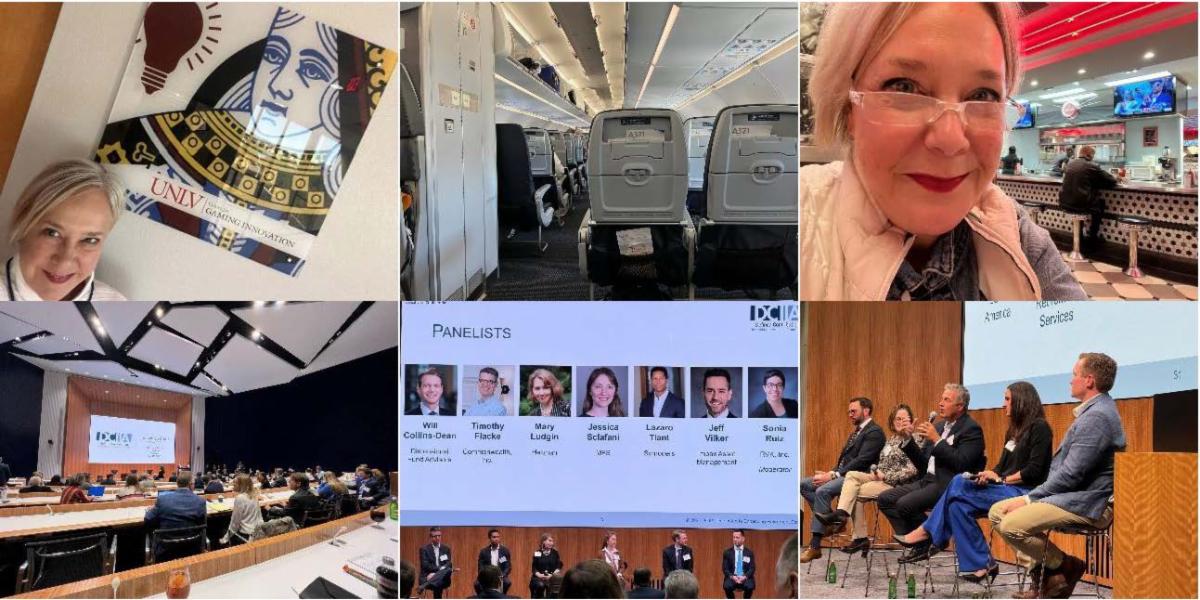
It was our pleasure to join DCIIA – the Defined Contribution Investment Industry Association – for their 2022 Innovation Forum in Charlotte last week. A round of excellent speakers covered new thinking and services related to ESG, retirement income, mass customization, and data. Our *very favorite* segment was hosted by Mikaylee O'Connor of PGIM, featuring Millennial and Gen Z panelists telling all about where they get financial information, who they trust, and how they learn. We have two words for you: TikTok. YouTube. That old way of sharing information and prospecting for your financial products? VERY OLD SCHOOL. #wemightbedinosaurs
Cool Stuff You'll Like.
Spotlight Yahoo Finance spoke with our thought leadership guest Aaron Schumm, founder and CEO of Vestwell, about how states are taking an ‘active role’ in encouraging people to save for retirement. The easiest way to begin to save for retirement is through the workplace, Aaron said. “We need to focus on helping Americans save upfront and plan for the future in the most seamless way possible”. You can watch the video here.
-
The Honorable Stacy Garrity, Treasurer, Commonwealth of Pennsylvania
-
The Honorable Josh Gotbaum, Chair, MarylandSaves
-
Mary Morris, CEO, Virginia529 and the VA Retirement Savings Program
-
John Scott, Retirement Savings Project Director, The Pew Charitable Trusts
-
Katie Selenski, Executive Director, CalSavers Retirement Savings Board
-
The Honorable Dave Young, Treasurer, State of Colorado, and Chair, Colorado
- Secure Savings Program Board
Other Stuff.
We were thinking the other day about where we could send our contribution to make a difference for folks impacted by the war in Ukraine, or Russia’s special military operation, depending on where you are sitting. There are lots of choices, and we are taking action. But it also occurred to us that the most powerful and influential individuals right now are our federal legislators. What they can do is HUGE compared to what we can do, and FAST.
We don’t usually talk about nukes in these pages, but we do have a favorite podcast on the subject. If you’re curious about the current state of affairs and what experts think, you might like Arms Control Wonk. We learned some useful stuff here. These guys are chatty, play this baby at 1.25 or 1.5 speed.
“Change the Subject Please!” OK, we hear you. Here is a cool thing we knew nothing about, but all you conferencers are going to love it. Our favorite Minority Money podcaster Emlen Miles-Mattingly kicks off Women’s History Month with Sonya Dreizler and Liv Gagnon, founders of Choir, an organization focused on diversity in the financial and wealth management industry. Our industry. This looks powerful, proactive, needle-moving. Give it a listen, look it up, think about what you can do to advance the Choir Pledge standards. They just make sense.
One More and then we’ll give you some TikTok. Are you feeling a little off-kilter in this period of transition from something that used to be, to something that is emerging and will be a new, valued, normal? You might like What do to with the space in between from Todd Henry, the Accidental Creative.
TikTok Please. You are so demanding. OK.
|
|
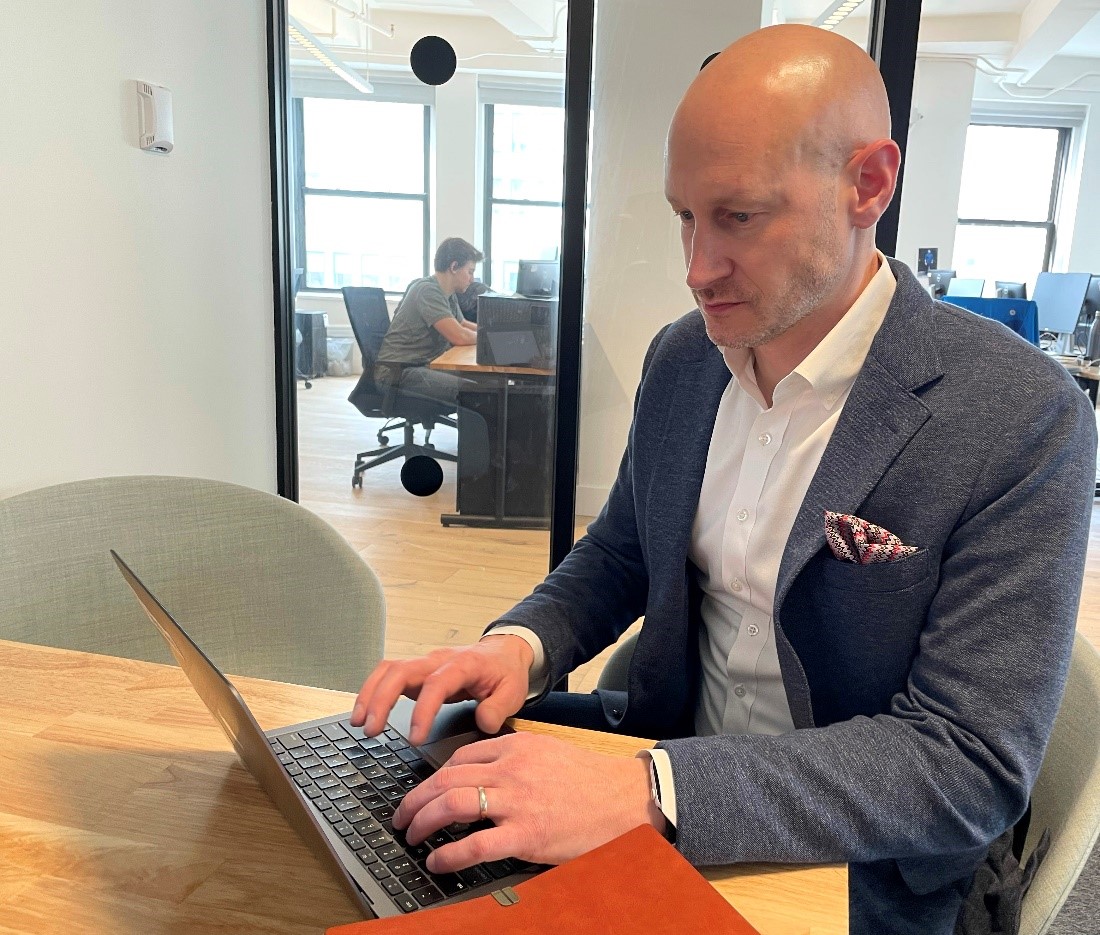
We joke that every edition of this newsletter is so long it’s like reading War and Peace. Arguably, this time, it really is. But you made it! So next we’re going to have a little fun with Aaron Schumm. We asked Aaron to share a day in the life photo.
|
|
What do we like about this pic? It takes place in an office. With no masks. And with suits (well the suits we’re not too sure about). Surely life is about to get back to some form of normal. And it does not surprise us that our fintech friends are getting there first. #masksoff in Oregon this Friday. Thank you Aaron, for showing us how it’s done.
Here’s another bit of normalcy this spring:
|
|
Good ideas. In person. And maybe a little food at a diner, on the side. If you look very closely, you’ll see our friend Tim Flacke on the dais. Not pictured, John Mitchem, who hosted a snappy bit about direct indexing (coming soon to a plan near you), and Lew Minsky, cruising in the background making sure that all things were going to plan and all people felt welcome.
And after all that work …
|
|
|
|
It’s possible we said
we were in a meeting.
Must have been
a board meeting.
|
|
That’s it for this edition. ❤ Hug your people and change the world.
If you like this piece, please stick with us. We’ll be back in about two weeks. If you don’t like it, please unsubscribe below. Comments for us? Please let us know. Want your own subscription? Request one here. All information shared is from public sources or used with express permission.
|
|
Massena Associates provides process, policy, and implementation consulting on retirement savings programs and products.
Our clientele includes public entities, policy organizations, and private sector providers. Our specialty – efficient, targeted results. We are an active speaker on retirement security topics, including state-facilitated programs, MEPs and more.
If you’d like to explore working together, we welcome the conversation. Connect with us here, and at 339-236-0684.
|
|
Looking for a great retirement savings innovation resource? Led by Dr. Alicia Munnell, the Center for Retirement Research at Boston College develops and hosts terrific content and proprietary research related to states, financial security, social security, and more.
Pew’s Retirement Savings Project studies the challenges and opportunities for increasing retirement savings and is another great resource - check out the work of John Scott and his terrific team.
|
|
|
|
|
|
|