National Ribbon Skirt Day | |
|
January 4th, 2023 was the first National Ribbon Skirt Day as declared in a Bill by Mary Jane McAllum, a member of Cree First Nation and a Manitoba Senator. The Day was a result of the activism of Isabella Kulak, a member of the Cote First Nation in Saskatchewan, who was shamed for wearing a ribbon skirt to a school event in 2020.
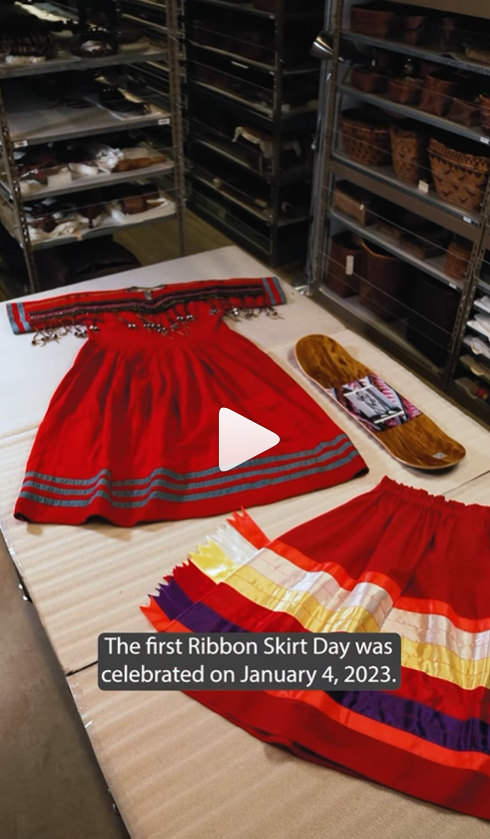
Ribbon skirts and dresses have been worn by Indigenous women in Canada since the early 1800s. Large amounts of ribbon were imported by the Hudson's Bay Company in the 19th Century for the Indigenous wives of fur traders and their children. The clothing made with ribbon has become an important part of Indigenous culture. Ribbon dresses continue to represent the wearer’s identity and are viewed as symbols of resilience.
This short video showcases a few different skirts. The dress is from the Northern Plains (Canada), likely Siksikaitsitapi (Blackfoot) from Southern Alberta. The skateboard comes from Colonialism Skateboards featuring Nation Skate Youth founder Rosie Archie, from Tsq'escen' (Canim Lake) of the Secwepemc (Shuswap) Nation, wearing a jingle dress made by her cousin, Mary Archie.
The red skirt belongs to Jamie Smallboy/Nohtikwew pisim. Jaimie is Plains Cree but lives in Vancouver. In 2019, she started Red Sisters Gathering, which sews red ribbon skirts for the families of Murdered and Missing Indigenous Women and Girls—and those skirts are worn at the Women’s Memorial March. This skirt was sewn by Jaime’s sister Josephine when Jamie was home for ceremony after a death in the family.
In 2021, Jaime founded the non-profit society Sweetgrass Sisters Healing, which now administers the Red Ribbon Skirt Project. The MOV created a Digital Now film about Jamie and the red ribbon skirt project, which you can watch here. The Red Ribbon Skirt Project is about to start up again and they’ll be looking for volunteers! Learn more about it on their Facebook page.
| |
The Mahogany Project: Curatorial Tour
February 11, 2024
| |
|
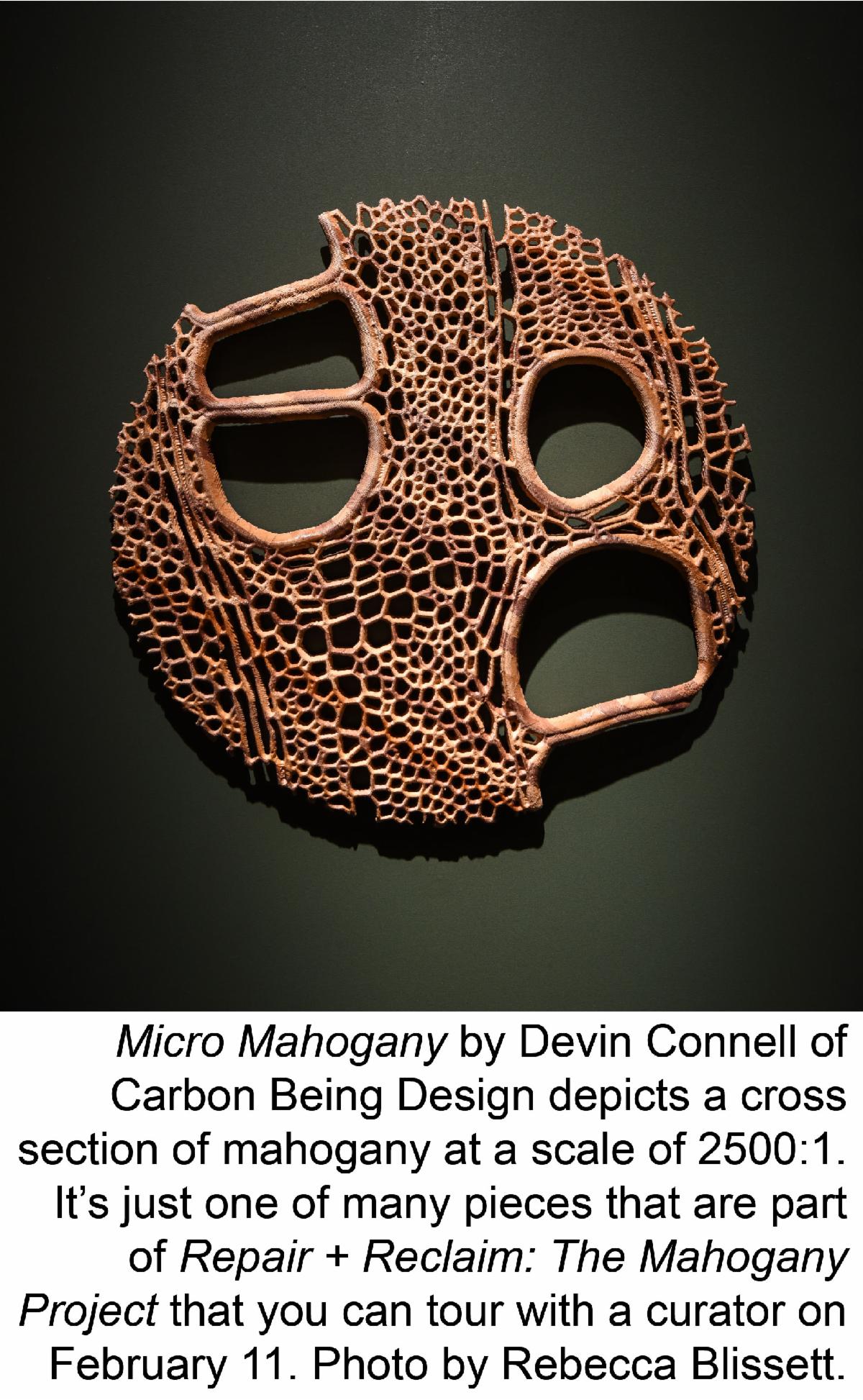
When the Museum of Vancouver was gifted a stockpile of vintage mahogany, we knew it was a treasure. It was in exceptional condition. Mahogany is durable, beautiful to work with, rot-resistant and it’s a tonewood—meaning it’s used for musical instruments, as well as furniture and boat construction. But the wood had been harvested in the 1950s, ‘60s and ‘70s, during a period of overharvesting in Central America. As such, accepting it came with responsibility.
The Museum partnered with Propellor Studio, Western Living Magazine’s 2023 Industrial Designers of the Year. We’d worked with Propellor before, and their commitment to sustainability, combined with their focus on multi-disciplinary design, made them perfect co-curators for Reclaim + Repair: The Mahogany Project.
Toby Barratt, one of Propellor’s three partners and designers, will lead a tour through the exhibition on Sunday, February 11th. Toby will talk about Propellor’s role in curating the exhibition, how they selected the artworks and the circular economy inherent to this project. Purchase your tour ticket now!
And don’t forget, all the pieces in the exhibition are for sale too! Visit our sales page for prices and details on how to make a purchase. A third of the money raised will go towards Indigenous-led reforestation efforts in Central America.
| |
SAGE: Sustainable Arts & Green Ecosystems | |
|
When you walk through a museum or gallery, do you ever think about the materials used to display artifacts and objects? Do you ever wonder, “Where did that wood and plastic for that plinth or display box come from? Where will it go when the exhibition closes?”
Probably not. But we do.
One of the Museum of Vancouver’s “pillars of engagement” is the environment and sustainability. Our goal is to be a more sustainable and environmentally friendly organization. One way we’re doing this is through the recently launched SAGE project.
Sustainable Arts and Green Ecosystems (SAGE) collaborates with the museum, gallery and theatre sectors as well as makers, used and surplus materials suppliers, students and sustainability scholars at post-secondary institutions, city planners, and waste management entrepreneurs. Together, we collaborate on initiatives and solutions to develop design and fabrication practices that emphasize material longevity, as well as reuse and repair for the creation of theatrical, film and exhibition productions. This will help advance environmental performance, reduce greenhouse gas emissions and promote circular materials use.
For example, Repair & Reclaim: The Mahogany Project used reclaimed wood for the art and design pieces themselves, but also the risers on which the art sits, and the walls separating the pieces are upcycled from trade shows and movie sets. And they will be reused in future projects!
The MOV has also signed the Museum Materials Pledge, a commitment to making informed choices with sustainability in mind. Not long ago, Viviane Gosselin, our Director of Collections and Exhibitions, presented the Museum’s work as part of a webinar on the Pledge. You can watch it here (Viviane’s presentation starts at the 5:35 mark).
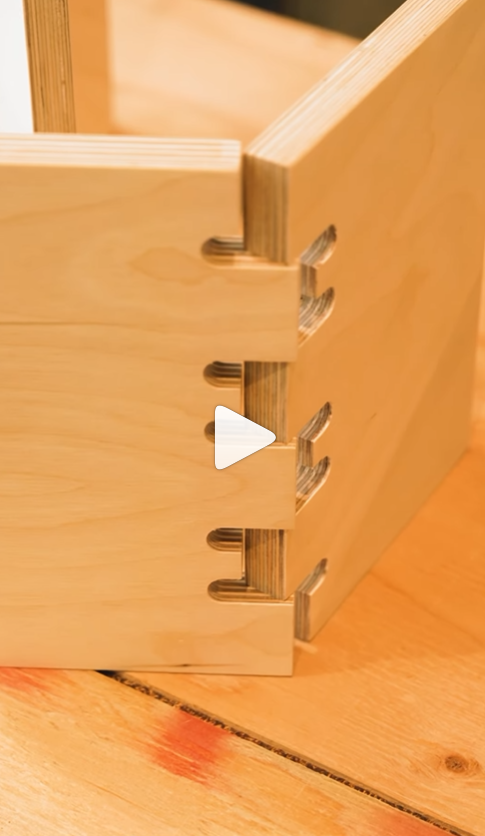
The next step for SAGE is developing display cases with modularity and disassembly in mind. Designers Michael Lis and Josh Doherty worked on prototypes that were recently shared with the SAGE partners. Click the video (or here) to see them. And stay tuned for more updates as we move along this sustainability journey.
| |
Refuge Canada Closing February 2nd | |
|
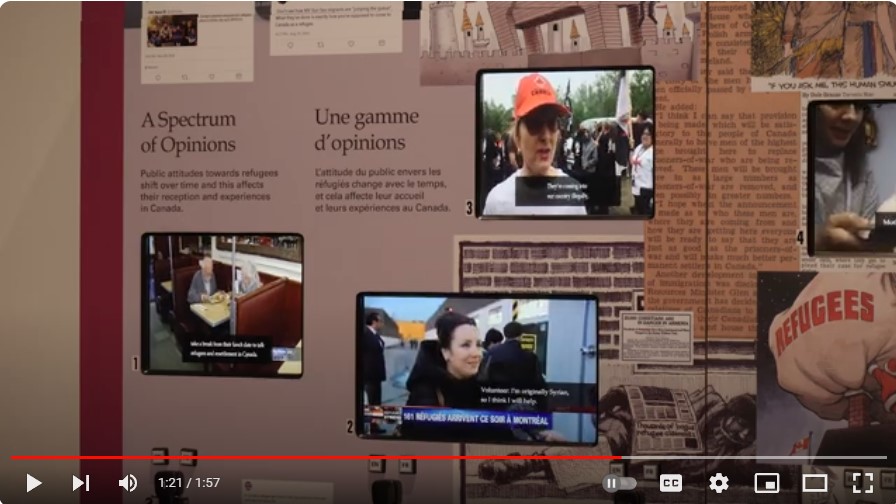
Produced by the Canadian Museum of Immigration at Pier 21, Refuge Canada will soon be closing at the Museum of Vancouver. During its time here, the exhibition has garnered some media attention:
The Shaw Multicultural Channel interviewed Director of Collections and Exhibitions, Viviane Gosselin, for a spot as part of their Community and Events highlights. Viviane spoke about how Refuge Canada includes stories from people who came to Canada as refugees over the years, as well as the wall of media coverage that shows the mixed reception from Canadians.
New Canadian Media highlighted the exhibition, mentioning key images, as well as where the exhibition has travelled to, and where it will be in the near future.
The Tyee published an interview with Dan Conlin, who curated Refuge Canada for the Canadian Museum of Immigration at Pier 21. In it, Dan talks about the consultation process with different refugee groups, the interactive elements, and the inclusion of the story of two-year-old Alan Kurdi, who drown trying to escape the Syrian Civil War in 2015.
This important exhibition, which provides insight into the experience of refugees, is only on until February 2nd. Visit the Museum to see it.
| |
|
Know before you go:
-
Museum of Vancouver is open from Sunday-Wednesday 10:00am-5:00pm and Thursday-Saturday 10:00am-8:00pm.
- Please note that ticket sales end 45 minutes before closing.
- Visit on the first Sunday of the month and pay what you can for admission.
- Visit on the last Sunday of the month for Low Sensory Sundays.
-
The MOV is located at 1100 Chestnut Street in Vanier Park in Kitsilano.
- The Museum is wheelchair, stroller and scooter accessible, including washrooms, ramps and elevators, and wide entrances and exits.
-
When booked in advance, groups of 10 or more are eligible for a discounted rate. Learn more.
-
The Museum is accessible by Mobi Bike Share, TransLink (#2 bus), Evo Car Share and False Creek Ferries.
-
Car parking is available in the parking lot run by EasyPark. Please remember to pay for parking before entering the building. Street parking is also available. Learn more.
- Admission is free for people who self-identify as Indigenous.
| |
We acknowledge that MOV is located within the unceded, ancestral territories of the xʷməθkʷəy̓əm (Musqueam), Sḵwx̱wú7mesh (Squamish), and səlilwətaɬ (Tsleil-Waututh) Nations. | | |
604-736-4431
1100 Chestnut Street
Vancouver, BC
V6J 3J9
| | | | |