The Global Matchup: Rice Modeling Around the World | | |
This year’s World Cup has recently wrapped up with a summer filled with camaraderie, cultural exchanges, and outstanding competition. While many may have enjoyed it solely for the sport, we at Waterborne relished this chance to speak with our clients around the world on such an exciting topic. Inevitably, conversations left soccer and turned back to science, our first love, and then to a subject important on almost every continent: growing rice.
Over the years, Waterborne’s scientists have worked diligently to first identify and then minimize rice’s agriculture impact around the world. As one of the few agricultural commodities that purposely discharge drainage to open waters, rice farming requires additional steps to protect aquatic species both within the rice fields (e.g., crawfish aquaculture, migratory birds, etc.) and downstream aquatic ecosystems. Among the best mechanism for evaluating potential adverse effects associated with its growth is rice modeling, and it is through modeling that our scientists are able to design management systems for safer, responsible use of agrochemicals. With this in mind, we hope you’ll join us on a glo(oaaaaalll)bal trek through rice paddies as we look at rice modeling’s evolution.
| |
In yet another tie-in with the World Cup, each one of these rice systems offer special features that can address specific needs. While they may not boast names like Messi and Haaland, make no mistake: these experiences are the superstars of the rice agricultural industry around the world.
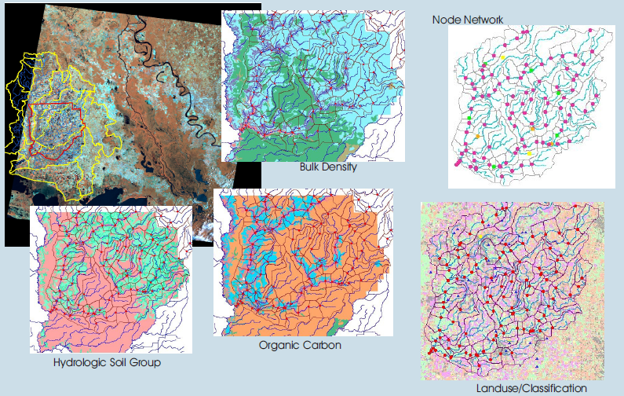
Rice agriculture presents a unique problem with respect to agrochemical runoff because of the high seasonal rainfall, water management practices, and proximity of cropland to surface-water bodies typical of rice-growing areas. Therefore, rice models have been developed to predict chemical residues in rice fields. Some rice models are linked to models that can simulate the transport of water and chemical residues from the rice field to a receiving waterbody or simulate groundwater.
Waterborne's Rice Water Quality Model (RICEWQ), developed in 1991, was among the first specialized models to evaluate the dissipation of a chemical in rice agriculture. The model was developed to simulate water and chemical mass balance associated with the unique flooding conditions, overflow, and controlled releases of water that are typical of rice production...
>> Read the full article
| | Beyond the Spectacle: the Environmental Effects of Fireworks | | |
Like shooting stars zooming across the night sky, fireworks instill a sense of wonder and excitement. Their bold colors and expressive shapes illuminate our summers in backyards, small towns, and big cities all across America. This July, our country's 250th anniversary led to bigger, bolder shows that broke global records. Once the show is over and the smoke clears, however, the damage these spectacles cause to our environment, particularly our waterways, becomes clear.
Firework formulations rely on a variety of chemical compounds to produce their dazzling color and visual effects. Manufacturers mix metals such as barium, strontium, copper, aluminum, magnesium, and titanium, alongside oxidizers such as perchlorates to help sustain combustion. When one considers that beyond the metals and oxidizers, each firework's bang creates a slew of physical debris, including paper, cardboard, plastic, and shell fragments, it's easy to see how these could cause environmental harm. Each firework's by-products have to land somewhere, and tend to accumulate in rivers, lakes, estuaries, and coastal environments.
Wildlife does not share our love of fireworks. Loud explosions and bright flashes may disrupt nesting birds, fish, amphibians, and other aquatic species during sensitive breeding and feeding...
>> Read the full article
| | Waterborne at ACS Fall 2026 | | |
Join Waterborne at this year's American Chemical Society (ACS) Fall 2026 Meeting on August 24th in Chicago, Illinois as our Principal, Exposure Modeling and Risk Assessment, Nathan Snyder, along with collaborators from Bayer CropScience, Corteva Agriscience, BASF Agricultural Solutions, and CropLife America, will present:
Evaluating Refined Pesticide Exposure Using EPA's Tier-3 Scenarios: Potential Impact on Mitigation Under ESA
The presentation examines EPA's Tier-3 Pesticide in Water Calculator (PWC) scenarios as a science-based approach for refining pesticide exposure assessments and supporting Endangered Species Act (ESA) evaluations. As described in the abstract:
"This study evaluated EPA's Tier-3 Pesticide in Water Calculator (PWC) scenarios as a potential science-based approach for refining pesticide exposure estimates and informing, at a detailed spatial scale, potential mitigations in support of the agency's Endangered Species Act review efforts."
The research explores how Tier-3 refinements account for critical landscape and environmental factors, including soil characteristics, slope, and weather conditions, that influence predicted environmental exposure concentrations in aquatic habitats. By systematically evaluating compounds with varying sorption and degradation properties across multiple crops, the study provides insight into the broader applicability of Tier-3 scenarios within the current regulatory framework.
Would you like to meet with Nathan during ACS? Contact us to schedule a time!
| | |
Waterborne Environmental is a renowned consulting firm that has provided innovative solutions to the world’s most complex environmental problems since 1993. Our experienced, unbiased scientists and engineers work across industries to evaluate environmental, ecological, and human risks. Our work spans across industry and regulatory agencies to support the balance in the needs of a growing population with the environmental impact on our valuable natural resources.
Our The Current Newsletter is published monthly. Visit us online to find more articles, videos, and information about our work. Click here to contact us.
| | |
Waterborne Environmental Inc.
CORPORATE HEADQUARTERS
893-C Harrison Street SE
Leesburg, VA 20175
Phone: +1 (703) 777-0005
| | | | | | |