"Pain is temporary. Pride is forever."
|
|
"Ride Ohio" and Get a Chance to Win a Month of Unlimited Rides!
Are you ready for a FUN FITNESS CHALLENGE? Well, we have just what you are looking for!
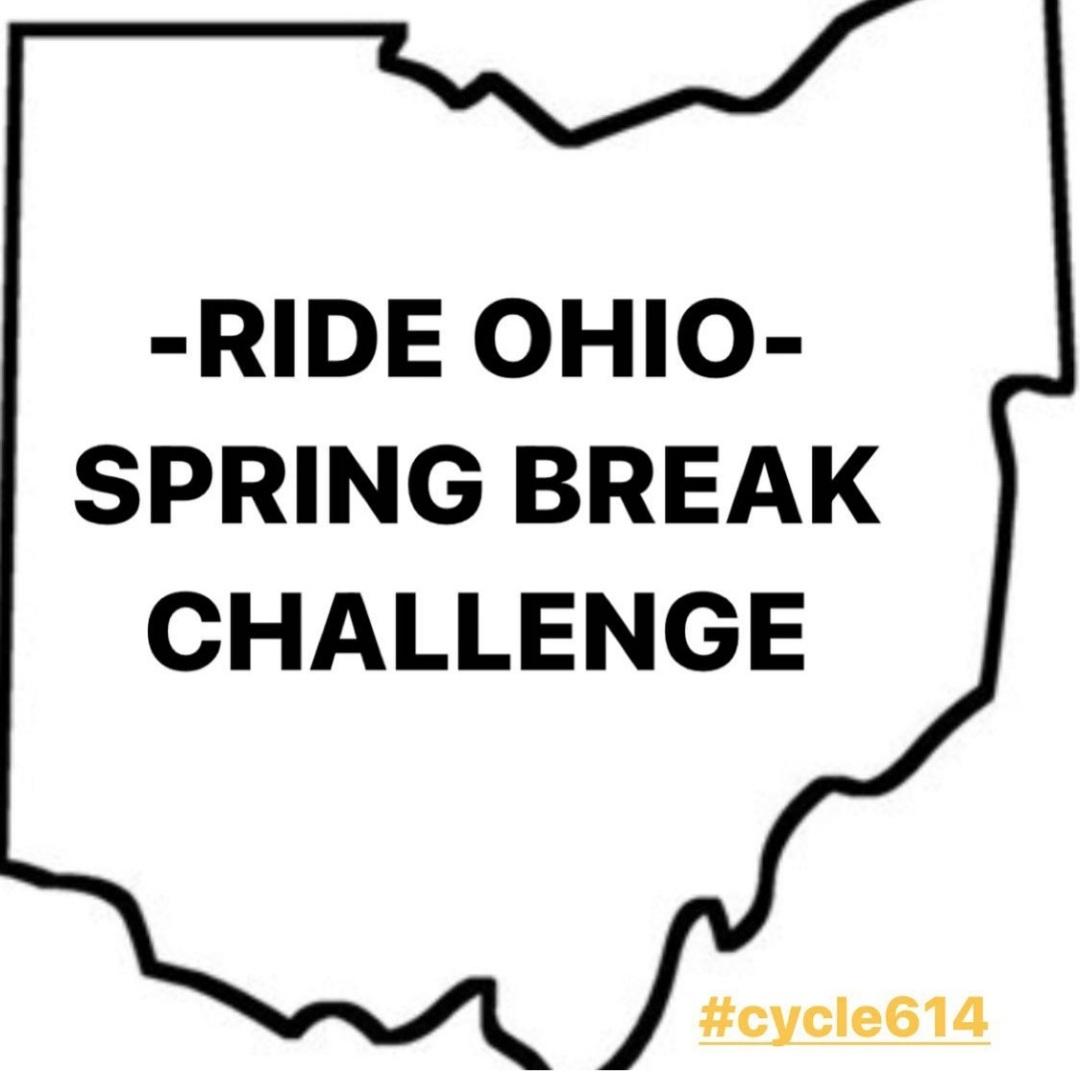
Join us for CYCLE614'S RIDE OHIO-SPRING BREAK CHALLENGE. It runs from today through March 22.
- Your goal is to ride 102 miles (C-BUS to CINCY) You can keep track of the miles you ride via your stats for each class
- Email info@cycle614 to sign up or let Guest Services know and we will add you to the list (It's free to sign up so let's challenge ourselves and do this!)
- Once you hit the goal of 102 miles let us know and you will receive a raffle ticket.
- First three riders to hit 102 miles gets an additional ticket.
- If you hit the goal more than once during the time period, you will receive an additional raffle ticket.
- We will have a random drawing on March 25th and three tickets will be chosen: GRAND PRIZE will be a MONTH OF UNLIMITED RIDES!
|
Only 7 Days Left to Get the We Love You Special!
Buy 5 Rides & Get 1 Free
This Sunday is the last day you can get our We Love You Special.
Buy 5 rides & get 1 free. That's 6 rides for $85 - the price of our regular 5-ride package. This offer is only good until Sunday, February 28. Rides expire one year after purchase.
|
10 "Healthy Eating" Rules You Can Throw Out Immediately
We've heard a lot of these since we were kids. Avoid processed foods. Don't eat after 8 p.m. Well, it turns out these rules need a second look. In a recent SELF article, Carolyn L. Todd explains why. Here's an excerpt.
Arbitrary food rules are ubiquitous in our society, thanks to diet culture and skewed views of what "healthy eating" actually is. These rules often manifest as specific commands and sweeping maxims about what, when, and how we should be eating. Some of these food rules are well-intentioned suggestions, and can indeed be genuinely helpful-to some people, some of the time - when used as guiding principles, as opposed to hard-and-fast rules. But a lot of food rules are, frankly, total B.S. They're unnecessarily restrictive, unrealistic, or unscientific-and, often, potentially bad for your relationship with food.
The problem is that rules are by definition one-size-fits-all, while we know that healthy eating is anything but. Our different bodies, nutritional needs, tastes, cultures, medical histories, food access, budgets, and lifestyles all factor into the best food choices for any one individual. So it naturally follows that rigid, generic rules about eating aren't going to work for everyone. With that in mind, we talked to a few R.D.s about the food rules they wish people would realize they can actually toss out-or, at the very least, be a helluva lot more flexible about. We also asked them to explain why, exactly, they think these rules are worth ignoring (besides the fact that rules just suck). Get ready to add some items to your Things IDGAF About list. 1. "Avoid processed foods." "This rule is incoherent, and not necessarily helpful for making the best food choices," Marina Chaparro, R.D., M.P.H., certified diabetes educator, founder of Nutrichicos, and author of Diabetes & Pregnancy: A Real Guide for Women With Type 1, Type 2, and Gestational Diabetes, tells SELF. There's a ton of hubbub in the food world around the word "processed," but all it really means, according to the Food and Drug Administration, is that the food has been combined with at least one other ingredient, or changed in any way from its natural state (for instance: canned, mixed, cut, or pasteurized). So "unless you're eating a raw [whole] food diet where you don't cook anything, you are consuming processed foods," Chaparro explains. That includes nutrient-rich foods like yogurt, whole wheat bread, almond butter, and smoked salmon, she points out. "Instead of avoiding processed foods, I would focus on teaching people how to read a label and not generalizing food as good or bad." (Thinking about some foods as "good" and others as "bad" is essentially assigning food a moral value, which can make you feel like a bad person for eating something that seems "too processed" or otherwise unhealthy.) If you haven't heard of this food rule before, here's the gist: This grocery shopping principle is meant to steer people toward adding more produce and fresh foods in their diets. Those are typically in the aisles on the perimeter of a store, whereas other items (like packaged snacks and frozen foods) tend to be in the middle. Adding more produce and fresh food to your shopping cart when possible can be great. However, this rule also implores folks to keep packaged and shelf-stable foods out of their carts, Cara Harbstreet, M.S., R.D., L.D. of Street Smart Nutrition, tells SELF. "In reality, this is an unrealistic way to shop and cook for many people, who turn to the convenience, affordability, and flavor of foods found in the inner aisles," she says.
This rule is especially unfeasible in the coronavirus era, Harbstreet points out, when many people want or need to limit their trips to the store due to COVID-19. Her advice? "Toss this outdated advice and curate a shopping list based on what you need-packaged and shelf-stable foods included." Some people stop eating at a certain time because they've heard eating before bed is bad for you. But unless eating before bed gives you indigestion, it's not really inherently worse for your body, as SELF has previously reported. More to the point is the reality that for many of us, our schedules are just not conducive to finishing eating by 6, 7, or 8 p.m. "Many people are eating dinner very early and going to bed super late, so it is natural to need [food] because your body still needs energy while it is awake," Dalina Soto M.A., R.D., L.D.N., bilingual dietitian and founder of Nutritiously Yours and Your Latina Nutrition, tells SELF. Others implement a cutoff time to thwart their late-night cravings for snacky, "bad" foods. "The interesting thing is, this arbitrary rule might actually be contributing to your late-night cravings," Vincci Tsui, R.D., anti-diet dietitian and certified intuitive eating counselor, tells SELF. "We all know that the more we tell ourselves that we can't have something, the more that we want it, right?" When you give yourself permission to head to the kitchen at any hour, late-night snacks can become less "naughty" and enticing.
Click here to read the rest of the article. RULES
|
|
|
Make sure you are safe out there! And please remember, If we can ever serve you better, or if you just have a great idea, come see one of us. Or email us at info@cycle614.com. Your feedback is always welcome!
Demi & Mark
Co-Owners
Cycle614 |
|
|
|
|
Copyright © 2021. All Rights Reserved.
|
|
|
|